
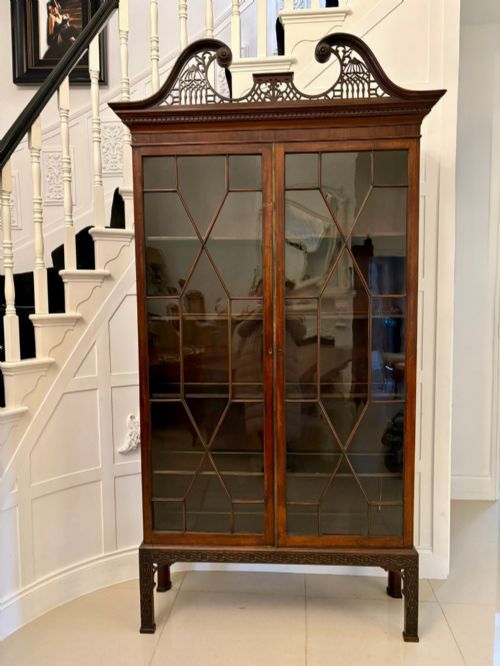
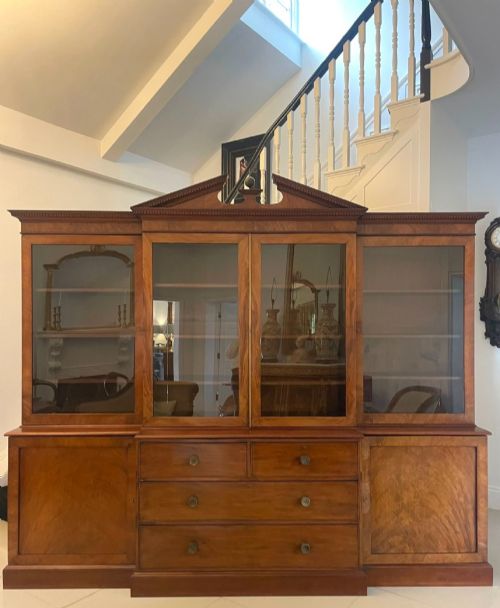
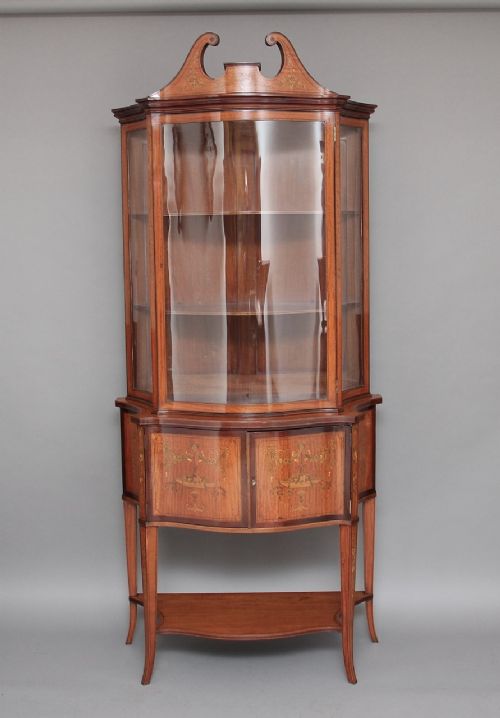
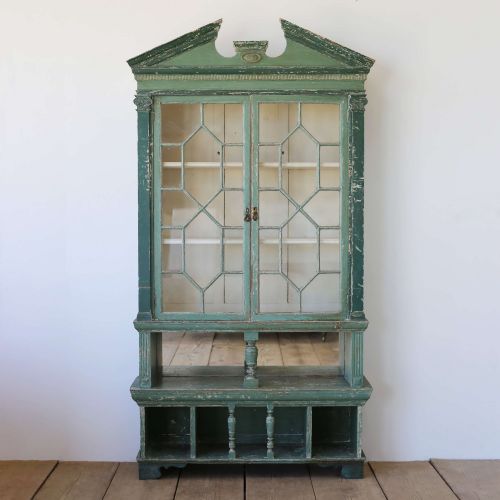
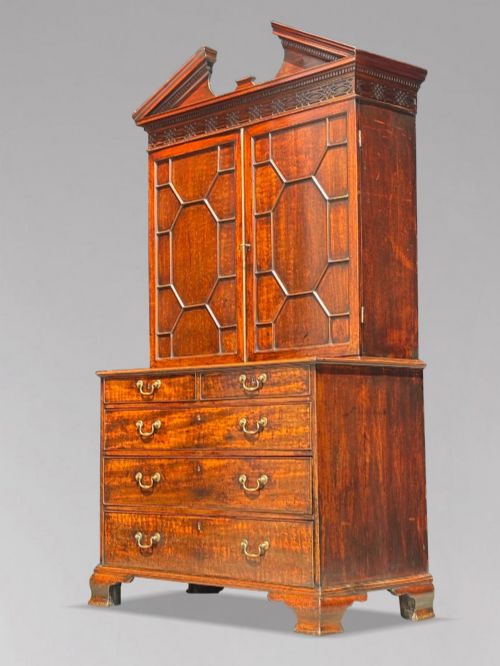
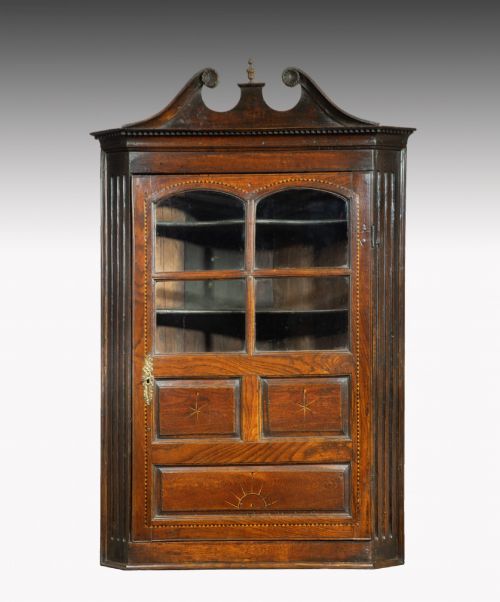
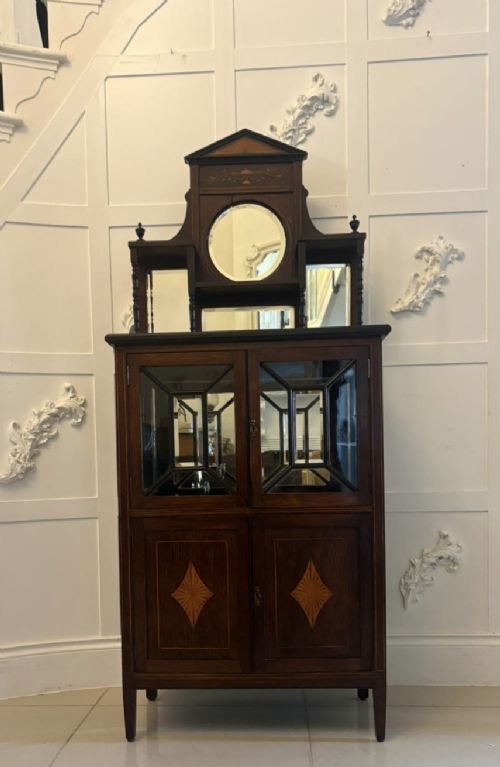
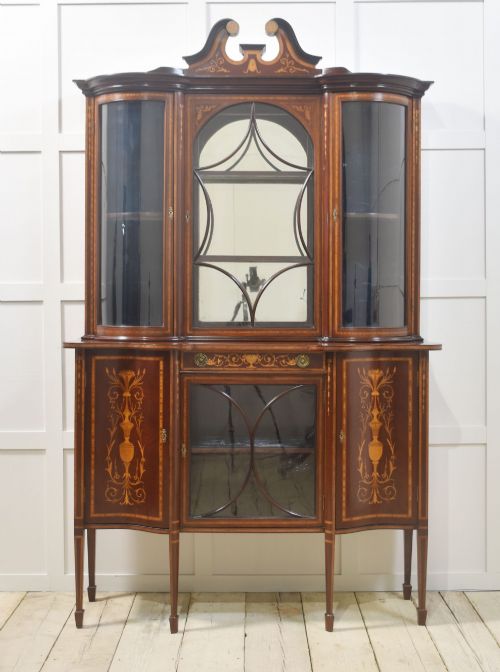
Pediment Glazed Cabinet
A pediment glazed cabinet marries structural architecture with transparent display, offering a refined way to exhibit books or porcelain.
Pediment Glazed Cabinet
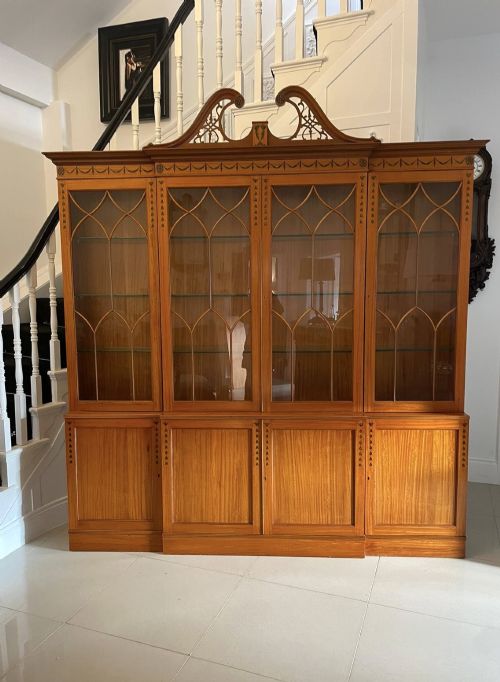
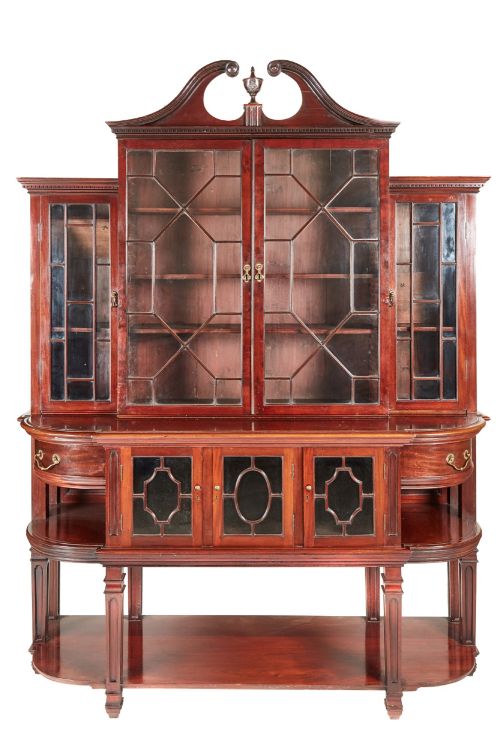
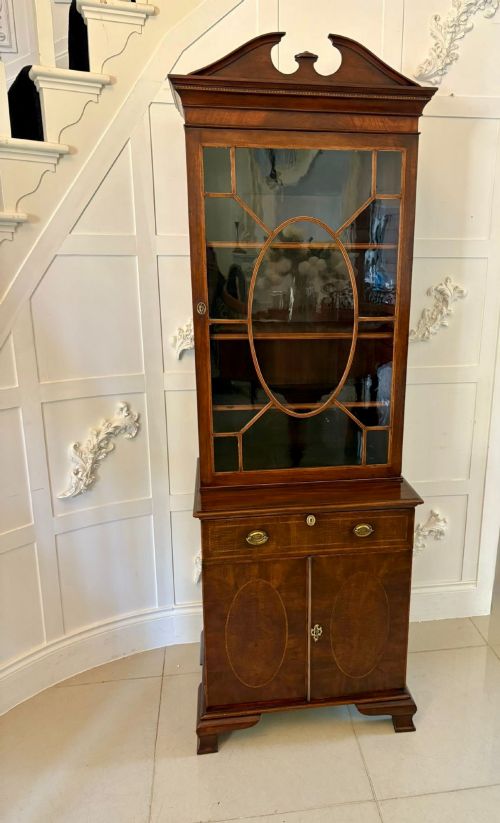
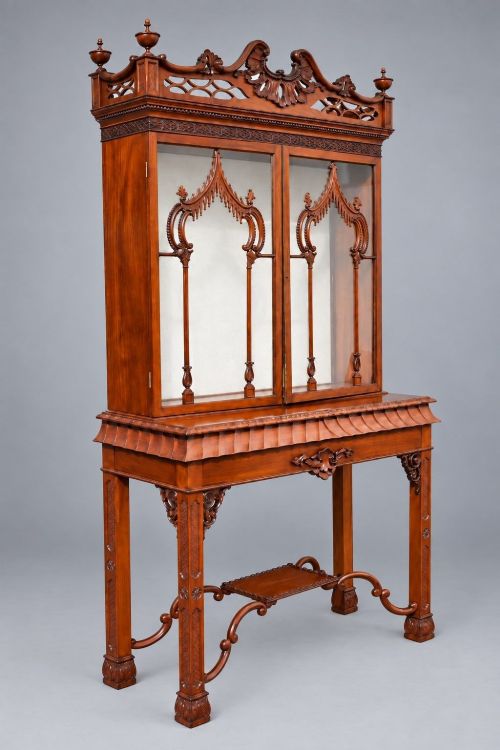
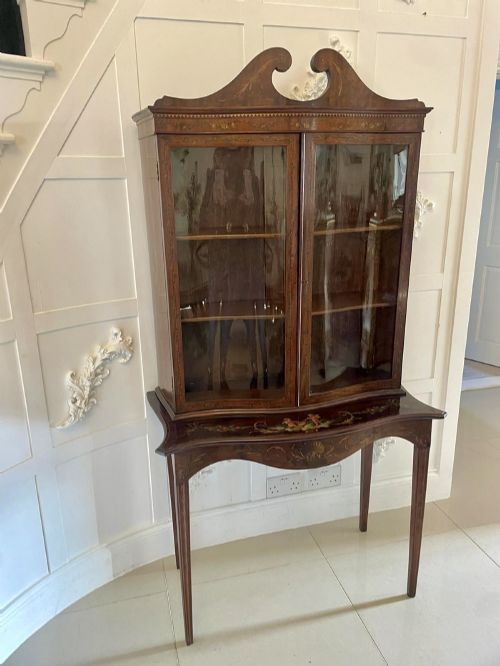
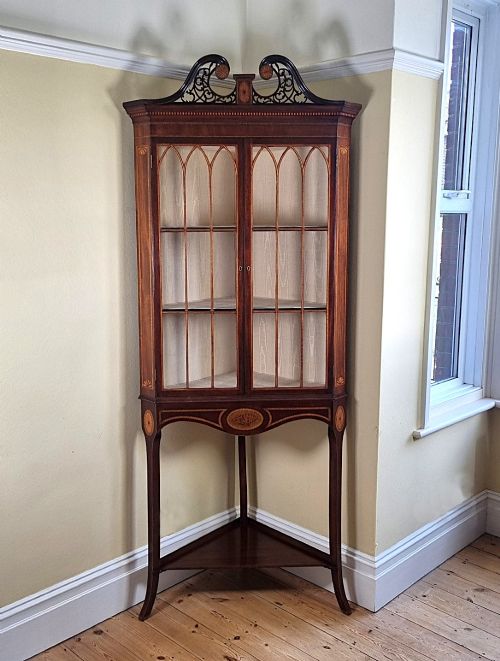
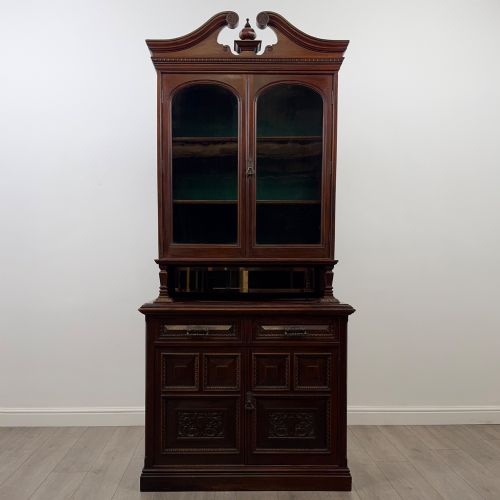
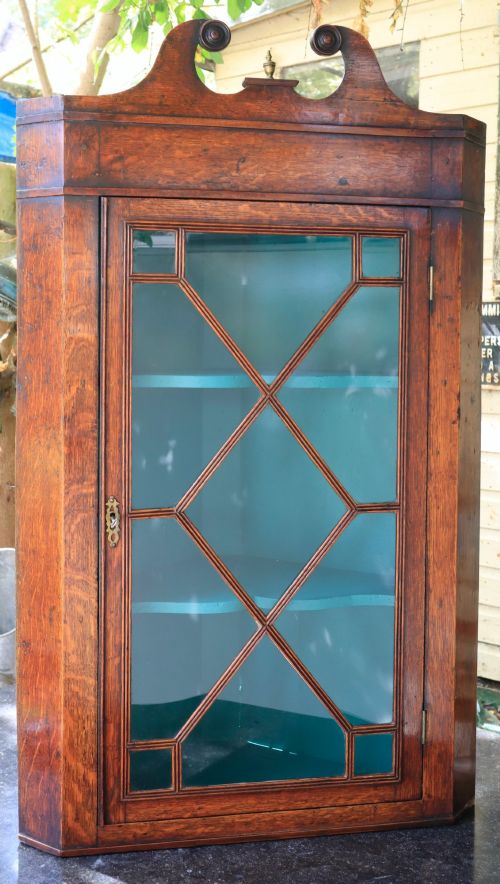
A pediment glazed cabinet stands as a substantial piece of furniture designed to protect and display collections behind glass doors topped by architectural crests. When exploring pediment glazed cabinet options, buyers encounter formats ranging from towering breakfront bookcases to compact corner cupboards.
The pieces on this page span the Georgian, Victorian, and Edwardian periods, with styles drawing heavily on George III, Regency, and Chippendale traditions. Tall bureau bookcases and secretaire variants appear frequently alongside simpler wall-hanging and freestanding display cabinets.
Origins stretch from the eighteenth century through to the early twentieth century, showing a strong preference for domestic forms built to house libraries and treasured objects.
Materials and Technique
Makers relied primarily on solid mahogany and oak as structural timbers, frequently applying fine veneers of satinwood and walnut to create decorative surfaces. Brass hardware and mirrored backs appear alongside fabric linings within the display sections.
Glazing techniques utilise timber astragals to divide the glass into distinct panes, forming geometric or tracery patterns across the doors. Marquetry inlay and painted decoration provide surface detail on late nineteenth and early twentieth-century examples.
Listings feature mahogany predominantly, accompanied by oak, satinwood, and walnut across Georgian, Victorian, and Edwardian periods.
Judging Quality
Quality rests in the precision of the cabinetwork, visible in the tightness of the joinery and the selection of figured timber veneers. Superior examples display crisp architectural carving on the pediment and well-proportioned astragal bars framing the glass.
The integrity of original painted decorations, brass fittings, and glass panes elevates an item above standard production. Proportion and balance dictate the visual success of breakfront and bureau formats.
Edwards and Roberts·Thomas Chippendale
The Pediment Glazed Cabinet Glossary
- Astragal
- Moulding profile used to hold panes of glass in a window or cabinet door. These narrow timber strips create the characteristic grid pattern seen on period glazed doors.
- Breakfront
- Furniture design where the central section projects forward from the flanking wings. This configuration adds architectural depth to large bookcases and display cabinets.
- Pediment
- Triangular or arched architectural crown positioned at the very top of a piece. It echoes classical building facades in miniature.
- Marquetry
- Decorative veneer work formed by fitting together small pieces of tinted wood, shell, or ivory to create pictorial or geometric patterns.
- Secretaire
- Desk form incorporating a drop-front writing drawer that conceals small compartments and pigeonholes. It combines the utility of a bureau with the storage of a bookcase.
Pediment Glazed Cabinet: Frequently Asked Questions
What is a pediment glazed cabinet?
A pediment glazed cabinet is a timber storage piece featuring glass-fronted doors and a decorative architectural pediment at the summit.
These pieces served traditionally to protect valuable books and display porcelain collections while keeping dust at bay.
How do I date a glazed cabinet?
Dating relies on identifying timber choices, construction methods, and stylistic cues associated with periods like the Georgian or Edwardian eras.
Secondary woods, handle types, and the method of glass manufacture also offer clues to the decade of production.
Where should I place a corner cabinet?
A corner cabinet fits neatly into empty room junctions, utilising vertical space that standard rectangular furniture leaves vacant.
Hanging versions mount directly to wall studs, while floor-standing models anchor themselves in dining rooms or studies.
How do I care for antique mahogany?
Maintenance involves keeping timber away from direct heat sources and sudden humidity shifts to prevent veneer lifting or wood splitting.
Applying occasional wax polish helps nourish the surface and preserves the depth of the mahogany grain.