
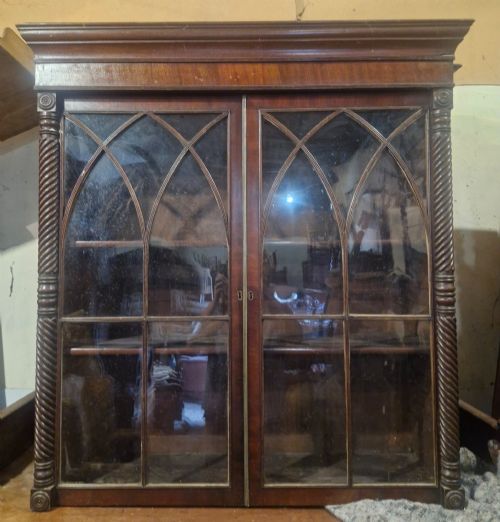
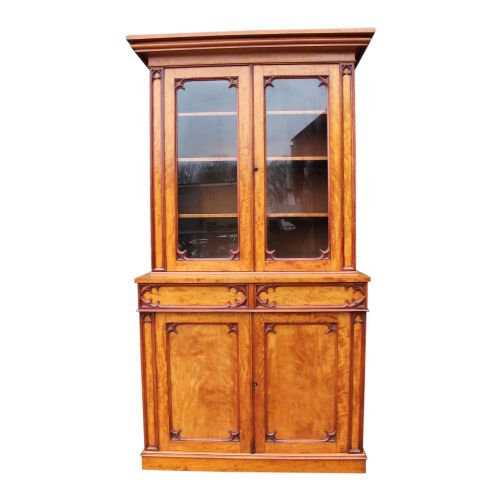
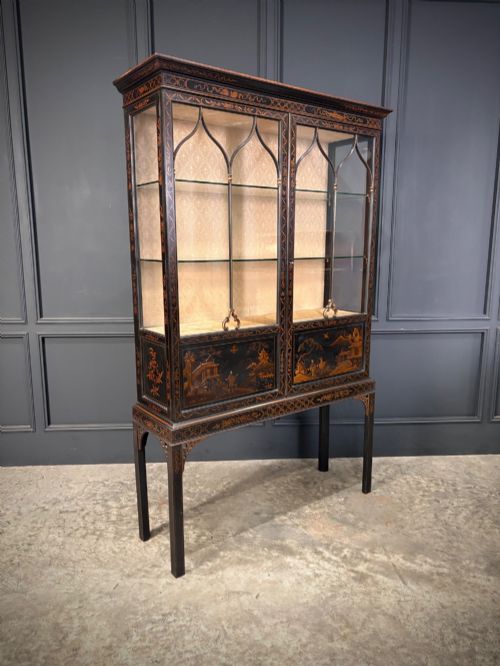
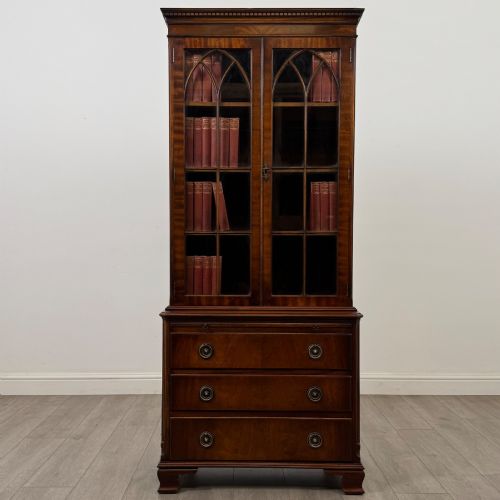

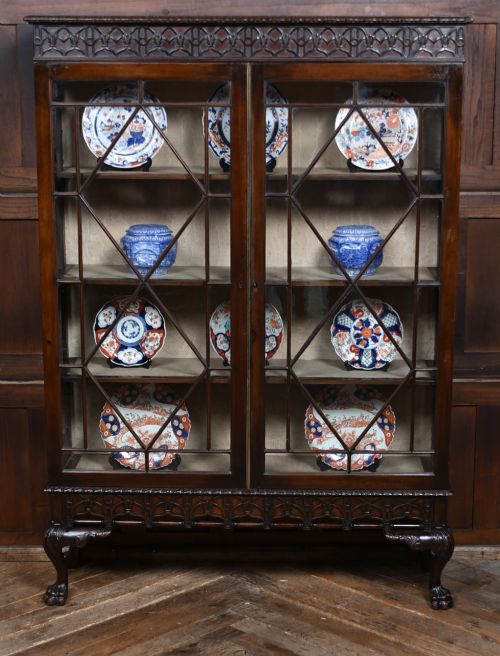


Gothic Glazed Door Cabinet
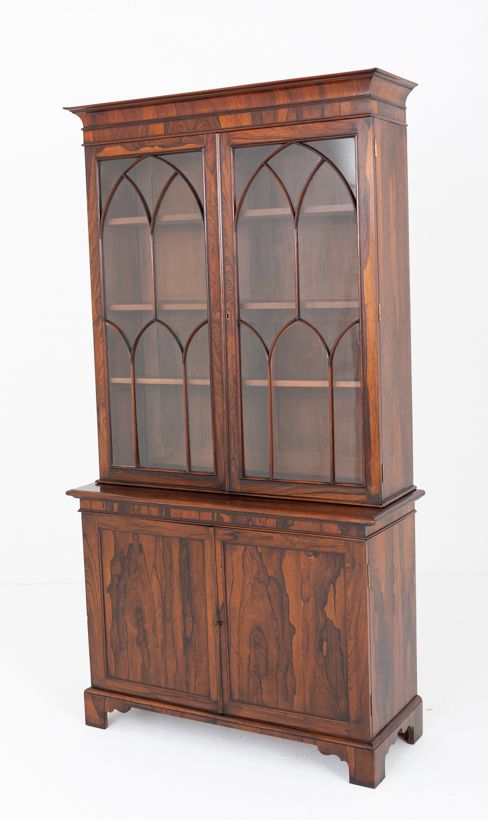
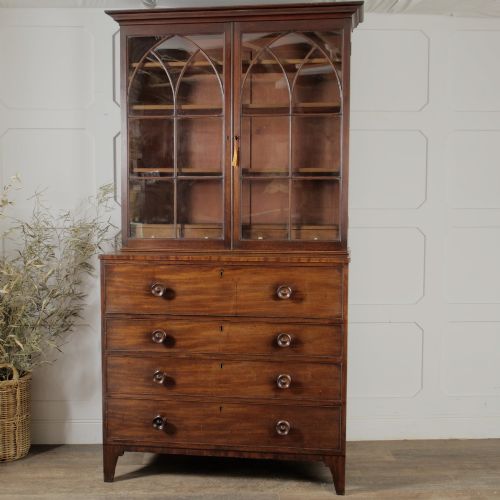
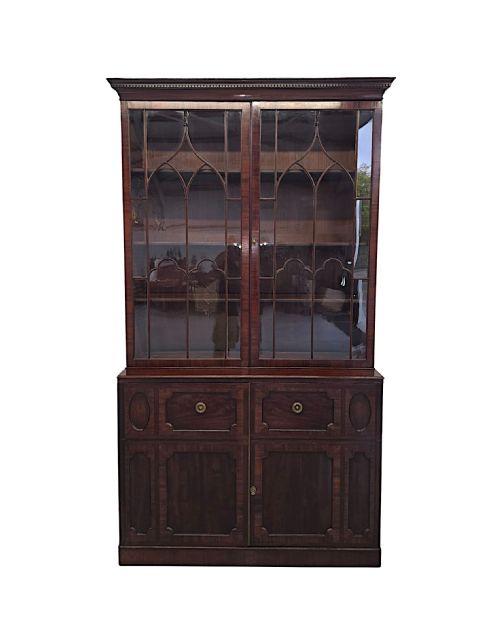
A gothic glazed door cabinet brings architectural drama and structured display to a room, combining pointed tracery with visible shelving.
Gothic Glazed Door Cabinet
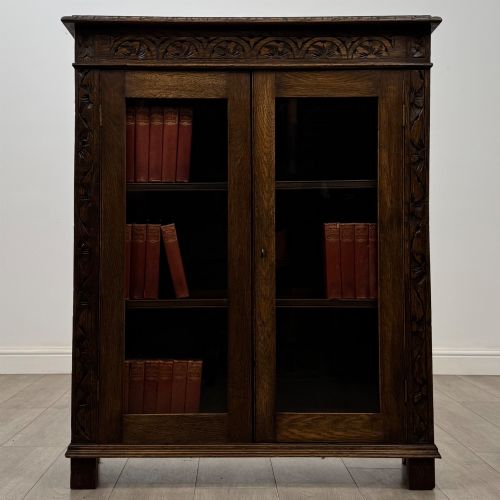
When you search for a gothic glazed door cabinet, you are looking at substantial storage furniture built primarily for books and display. The pieces on this page span the Georgian, Regency, Victorian, and Edwardian periods, stretching from the early nineteenth century into the twentieth.
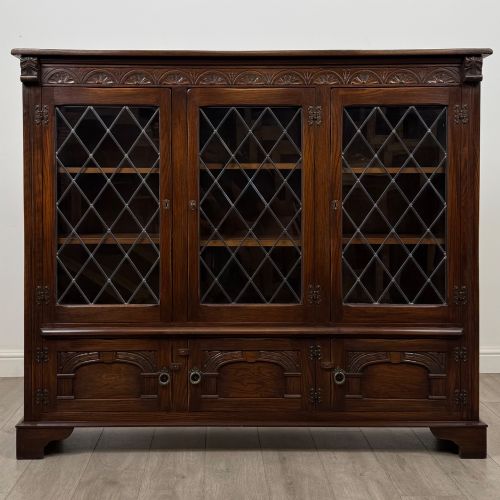
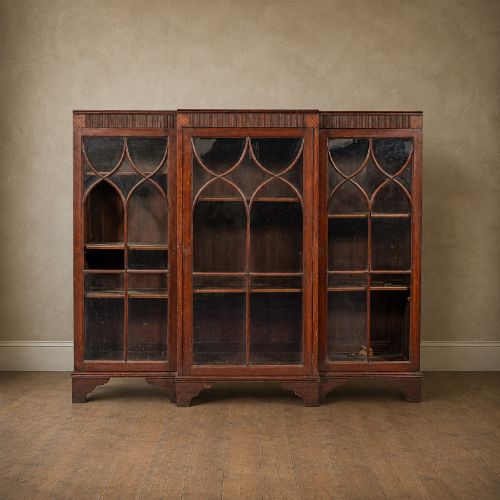
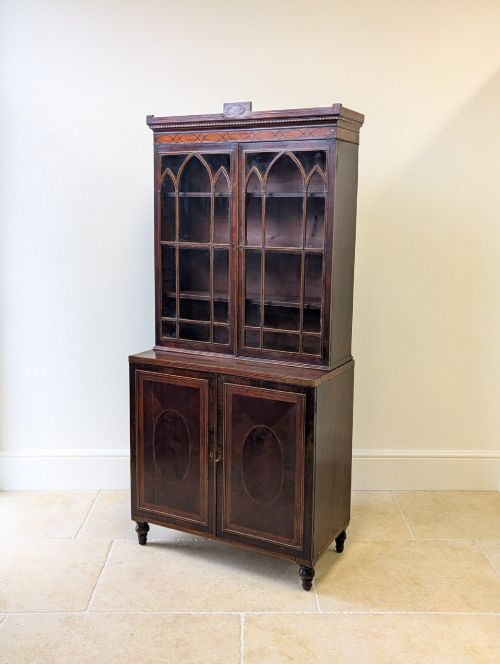
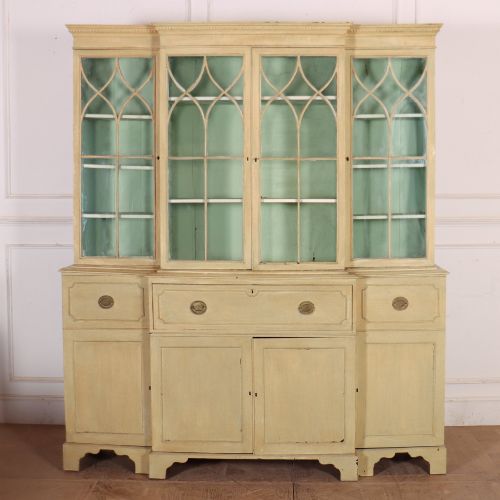
You will most frequently meet mahogany and oak forms framed in styles ranging from Gothic Revival and Victorian Gothic to Regency and Chippendale Revival. These cabinets vary from smaller two-door cupboards and side cabinets to monumental breakfront bookcases and display cabinets.
Origins include English country houses and continental workshops, incorporating periods such as William IV and George III alongside later revivals. The forms function simultaneously as libraries, display cases, and architectural statements.
Materials and construction methods
Makers built these cabinets using dense native and imported timbers, predominantly mahogany, oak, walnut, and rosewood, often selected for figured grains like flame mahogany. Secondary woods provided structural stability inside the large carcasses.
Glazing bars divided the glass panels into intricate geometric or pointed arched patterns characteristic of the Gothic style, fitted alongside brass hardware and iron fixtures. Carved ornamentation, such as crenelated cornices and tracery, was worked directly into the solid timber or applied as mouldings.
Listings feature woods spanning mahogany, oak, walnut, and rosewood, paired with glass, brass, and iron.
Craftsmanship and design differentiation
Quality rests in the precision of the timber selection, such as matched flame mahogany veneers or heavy solid oak timbers, paired with the architectural ambition of the carved details. Finer examples exhibit crisp, hand-carved tracery along the cornices and doors rather than simplified cast ornamentation.
The integrity of the glazing bars and the proportion of the breakfront or bookcase carcass determine the visual balance. Superior pieces maintain original glass panes, balanced door alignment, and cohesive period hardware that reflects the specific revival style.
James Winter and Sons
The Gothic Glazed Door Cabinet Glossary
- Breakfront
- A large cabinet design where the central section projects forward from the flanking wings. This configuration creates architectural depth and allows for varied internal storage.
- Glazing bars
- The narrow wooden strips that hold individual panes of glass within a door. In Gothic pieces, these bars frequently form pointed arches or quatrefoil patterns.
- Secretaire
- A cabinet incorporating a pull-down writing drawer fitted with small pigeonholes and compartments. It conceals a desk surface behind the main facade.
- Tracery
- Architectural stonework ornamentation adapted into woodwork, featuring intersecting ribwork and pointed curves. It defines the decorative appearance of Gothic cabinet doors.
- Crenelated cornice
- A top moulding shaped to resemble the battlements of a castle. This feature provides a distinctly medieval architectural silhouette to the upper edge of a bookcase.
Gothic Glazed Door Cabinet: Frequently Asked Questions
Where should I place a large bookcase cabinet?
These tall pieces demand solid wall space and sufficient ceiling height, particularly breakfront designs and monumental nineteenth-century bookcases.
Keep them out of direct sunlight to protect antique timber veneers and historical glass panes from fading or thermal stress.
How do I distinguish Regency Gothic from Victorian Gothic?
Regency and early nineteenth-century pieces tend to feature restrained classical proportions combined with pointed arches, utilising rich rosewood or flame mahogany.
Victorian interpretations often display heavier carved oak, more exuberant architectural ornament, and references to Pugin or heavy revivalism.
What is the difference between a display cabinet and a bookcase?
Bookcases were traditionally constructed to house bound volumes behind protective glazed doors, often including lower wooden cupboards or secretaire drawers.
Display cabinets focus primarily on the exhibition of collections, sometimes featuring glass on the sides as well as the front.
How do I care for antique wood and glass?
Maintain a stable room temperature and humidity level to prevent the timbers and veneered surfaces from splitting or warping.
Clean the glass gently with appropriate solutions while avoiding moisture contact on aged wood finishes and historic brass fittings.