

Antique Library Storage
Antique library storage comprises sturdy bookcases, cabinets, and steps designed to house books and papers.
Antique Library Storage
When buyers search for antique library storage, they are looking for functional pieces that organise books and documents in domestic or institutional settings. These items include large breakfront bookcases, open shelving units, music cabinets, and library steps.
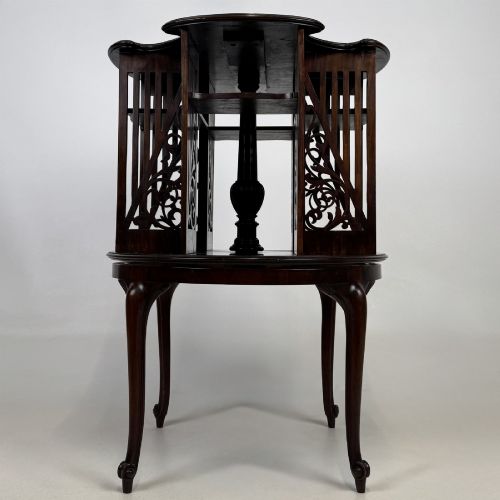
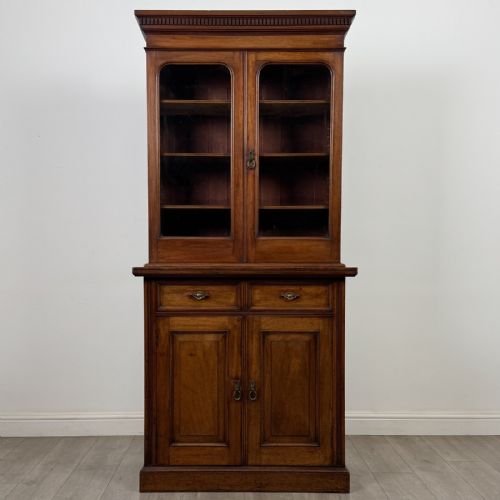
The pieces on this page span the Regency, Victorian, Edwardian, and early twentieth-century periods, showing the evolution of domestic study spaces. Mahogany, oak, and walnut predominate, often shaped into glazed cabinets, revolving bookcases, and stacking barrister designs.
Victorian and Edwardian versions appear most frequently, offering practical solutions like adjustable shelves and enclosed cupboards. Alongside standard bookcases, buyers encounter specialist items such as mahogany bedsteps and multi-drawer teak cabinets.
How they were made
Cabinetmakers constructed these pieces primarily using solid timbers and veneers of mahogany, oak, and walnut, frequently enhancing surfaces with figured mahogany or burr walnut. Brass hardware, glass doors, and painted finishes appear across various styles from the Regency period to the 1930s.
Joinery techniques varied by form, ranging from the interlocking sections of stacking barrister bookcases to the pegged construction of earlier oak pieces and the fine cabinetry of breakfront displays.
Antique Library Storage Retail Price Guide 2026
Typical asking prices for library storage among the pieces listed under this phrase on Sellingantiques today, from the lower quarter to the upper quarter. They describe what is for sale here now, not the wider market.
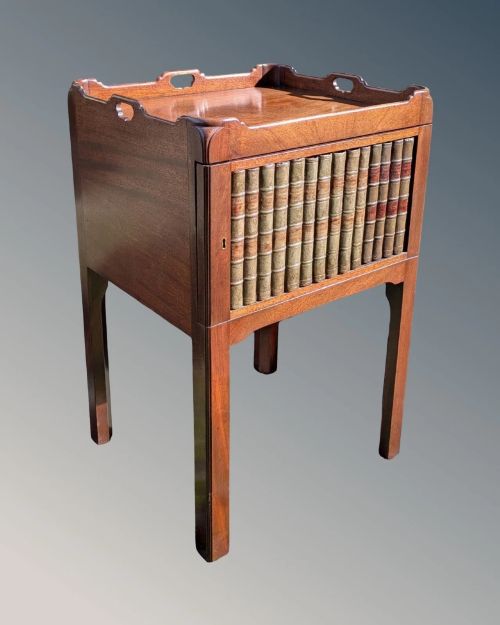
Some library steps double as clever storage stands, proving that even a climb to the top shelf deserves a hidden compartment.
What varies in quality
The standard of timber selection largely defines the upper tier of these pieces, particularly where figured mahogany or burr walnut displays rich grain patterns. Finer examples also feature sophisticated carved detailing, such as those attributed to Gillows.
Structural integrity and original mechanisms, including working brass fittings, smooth-sliding drawers, and functioning adjustable shelving systems, separate robust utilitarian items from master cabinetwork.
Gillows·Maple & Co.·Globe Wernicke
The Antique Library Storage Glossary
- Breakfront
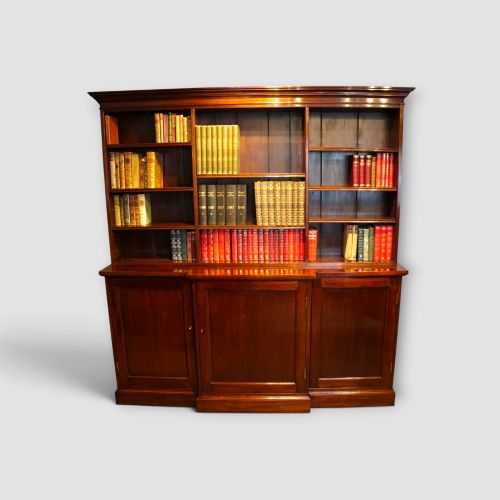
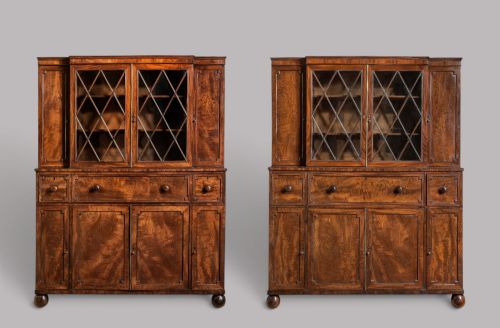
- A large piece of furniture where the central section projects forward from the flanking wings. This layout creates depth and prominence in larger bookcases.
- Waterfall bookcase
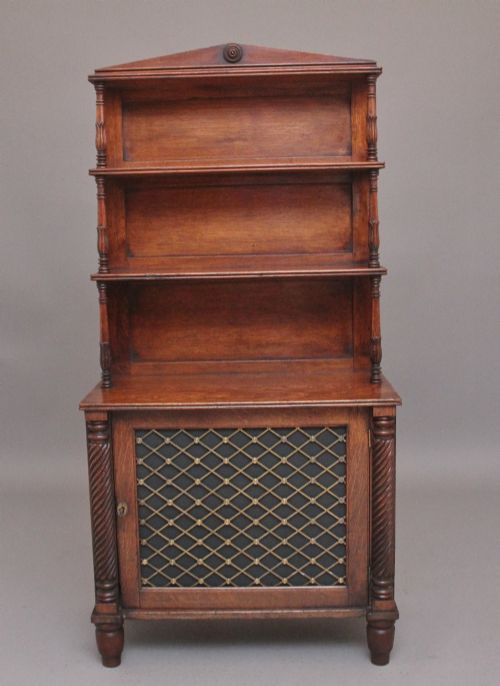
- A shelving unit where each successive shelf steps back from the one below it, creating a cascading profile. These often appear in mahogany or walnut.
- Barrister bookcase
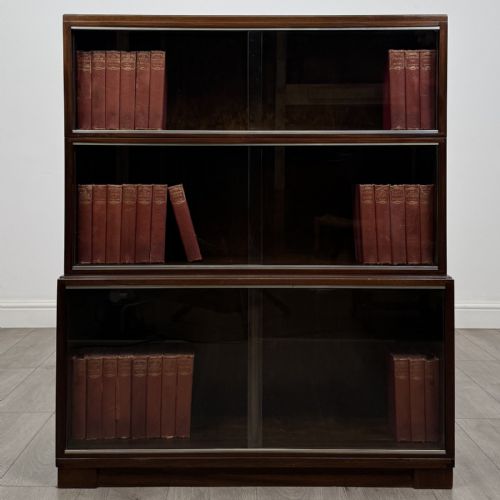
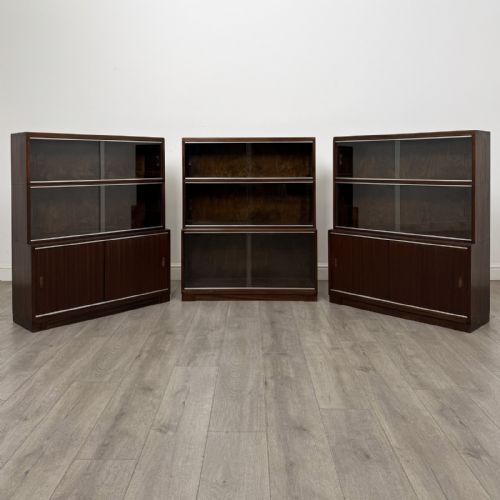
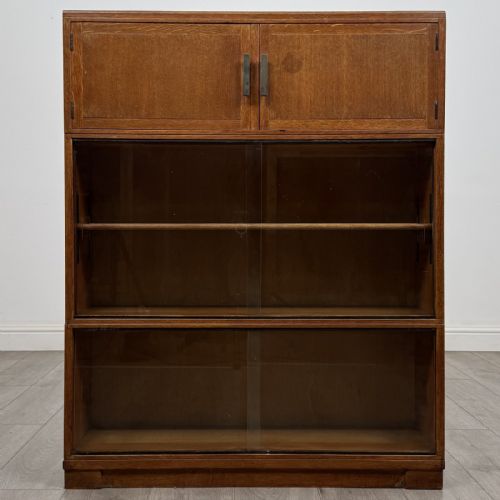
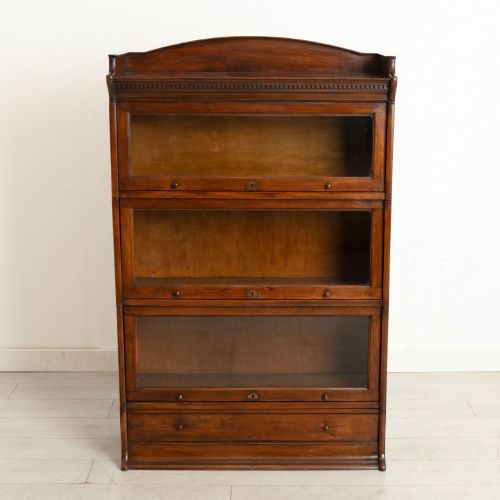
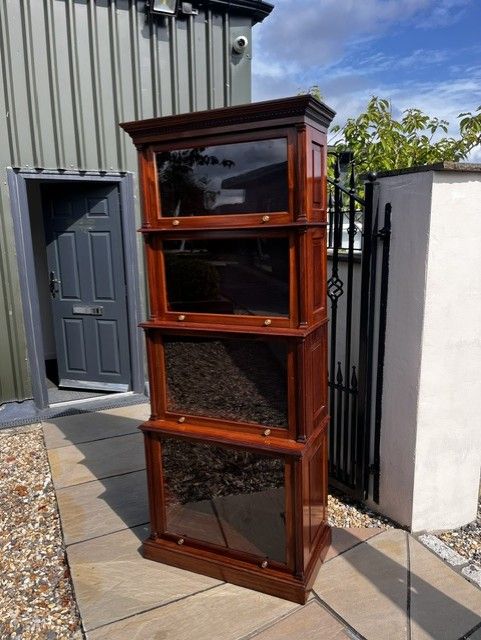
- A modular storage unit with glazed stacking sections that lift and slide upwards into the case. This design protects books from dust while allowing modular expansion.
- Canterbury
- A low cabinet or stand traditionally used for holding sheet music or books, typically featuring partitioned sections and sometimes a drawer below.
- Bedsteps
- A set of small steps originally designed to reach high beds, often hinged or fitted with internal storage compartments.
Antique Library Storage: Frequently Asked Questions
How do I choose the right size bookcase?
Measure your available wall space and ceiling height carefully before selecting a piece, keeping in mind that breakfront and multi-door cabinets require considerable floor depth. Consider the volume of books you need to store and whether open shelving or glazed doors better suit your room.
Larger Edwardian and Victorian cases offer substantial vertical storage, whilst smaller revolving bookcases or waterfall units fit into compact corners without dominating a room.
Were barrister bookcases used in homes?
Barrister bookcases originated in professional offices and law courts during the late nineteenth and early twentieth centuries to protect heavy legal volumes from dust. Their modular, stacking design made them practical for transporting and expanding library collections.
Over time, homeowners adopted these practical stacking units for domestic studies and living rooms because their glass-fronted tiers kept private libraries organised and accessible.
How are adjustable shelves configured?
Many Victorian and Edwardian bookcases feature internal wooden or metal ratchets and battens that allow shelves to be moved to different heights. This flexibility accommodates books of varying sizes, from small pocket volumes to large folios.
When inspecting these systems, check that the supporting pins or vertical tracks slide freely and hold the shelf weight securely without sagging.
What is a breakfront bookcase?
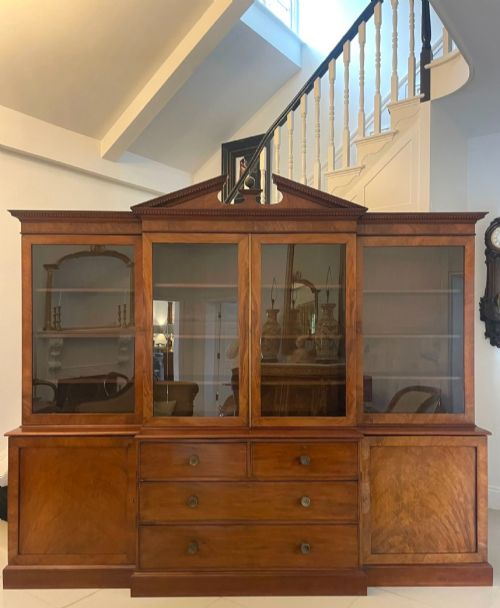
A breakfront bookcase is a large cabinet where the central section projects forward past the flanking sections, creating a distinctive architectural silhouette. These substantial pieces typically incorporate glazed upper display doors and lower wooden cupboards for concealed storage.
Cabinetmakers built breakfront units from fine timbers like mahogany and walnut to anchor formal libraries and grand Victorian reception rooms.
How do I care for antique wood storage?
Maintain antique timber and veneer by keeping pieces away from direct sunlight and heat sources, which can dry out the wood and cause splitting. Dust regularly with a soft, dry cloth and apply appropriate wax sparingly to preserve the finish.
Ensure that glass panels in Edwardian and Victorian doors are cleaned gently without harsh chemical sprays that might damage surrounding wooden frames.