
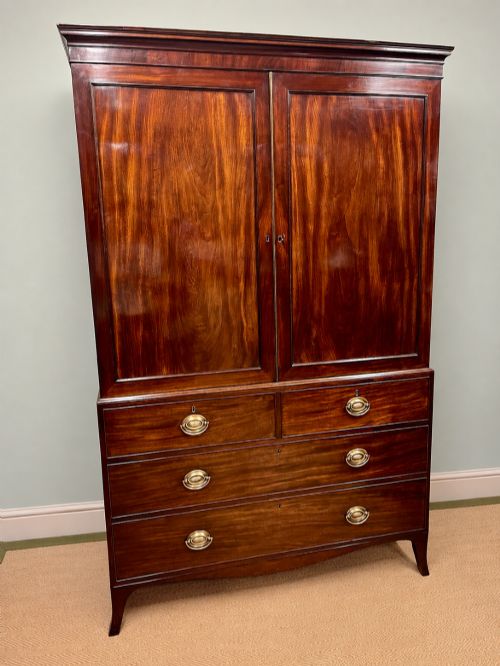
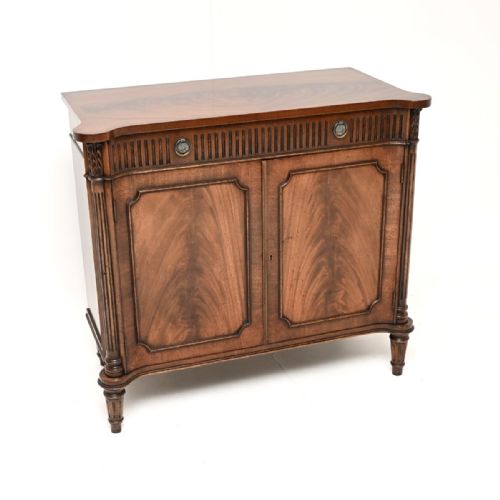


Flame Veneer Cabinet
A flame veneer cabinet commands attention in a room through the swirling grain of its timber.
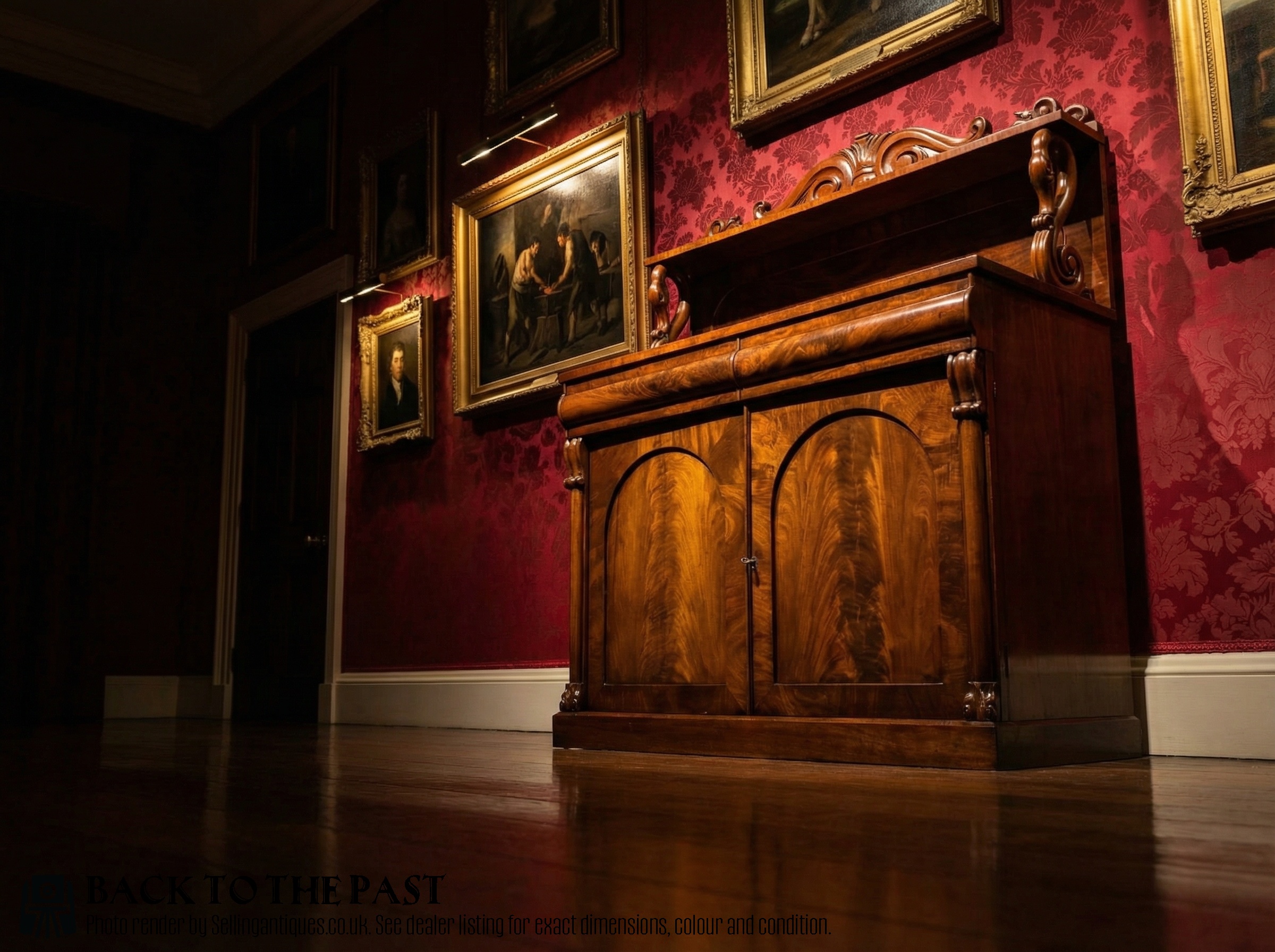
Flame Veneer Cabinet
When you search for flame veneer cabinet forms, you encounter storage furniture clothed in rich figuring from the heart of the tree. The pieces available here span the nineteenth century, Regency, William IV, Victorian, Biedermeier, and Edwardian eras. They take the shape of linen presses, sideboards, chiffoniers, pedestals, console tables with mirrors, music cabinets, and bookcases.
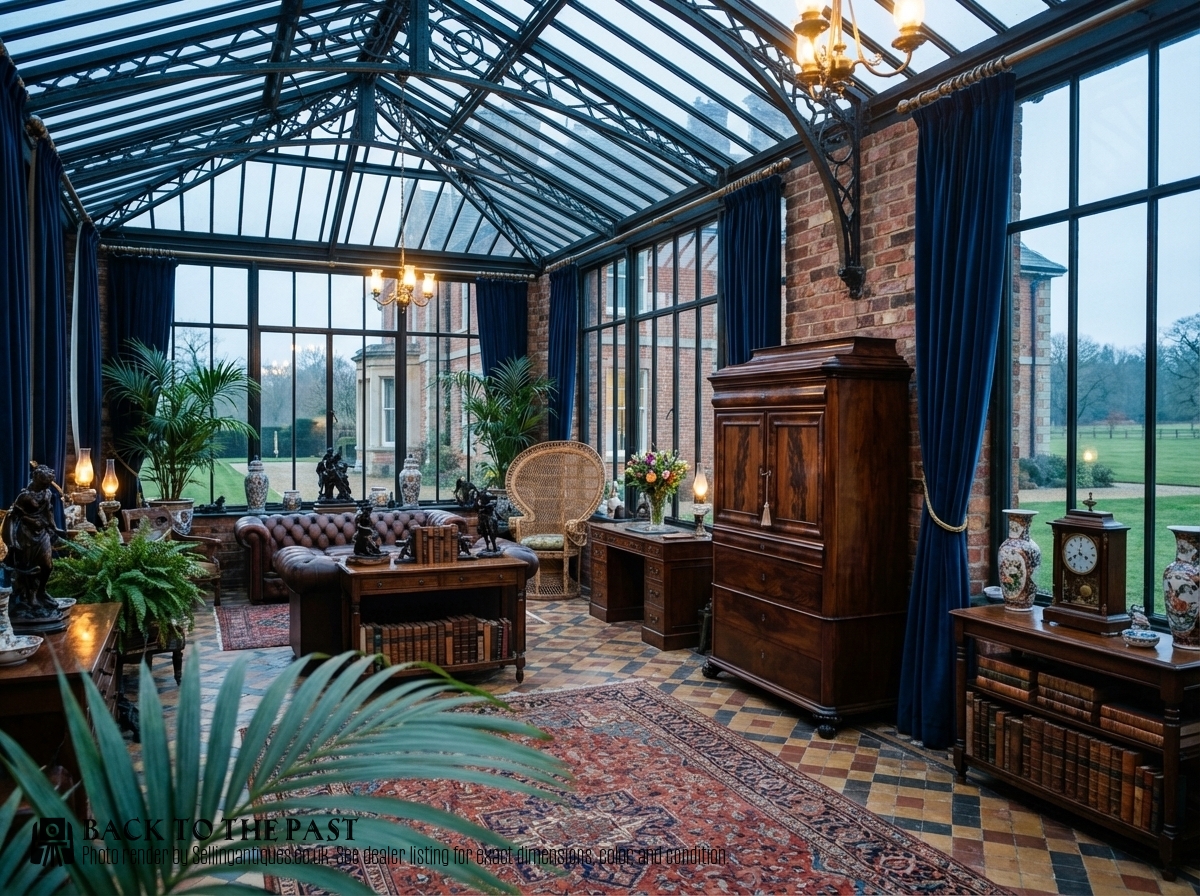
The Regency and nineteenth-century examples dominate the selections, alongside mid-nineteenth-century chiffoniers and Biedermeier designs. These items serve primarily to store linen, books, or tableware while acting as architectural anchors in a dining room, library, or drawing room. The focus remains on timber surfaces that display dramatic movement and deep reddish-brown tones.
Materials and construction
Cabinet makers constructed these pieces using solid timbers and secondary woods as a foundation, applying thin slices of figured mahogany or satinwood veneer to the primary visible surfaces. The distinctive flame pattern emerges from slicing across the branch forks or specific growth points of the tree to create symmetrical or repetitive motifs.
Makers reinforced the structures with brass fittings, glass panels in bookcase doors, and occasionally fabric inserts behind glazed doors or within music cabinets. Joinery methods of the Regency and Victorian periods ensured the stability of large door panels and carcases against seasonal humidity shifts.
Flame Veneer Cabinet Retail Price Guide 2026
Typical asking prices for flame veneer cabinet among the pieces listed under this phrase on Sellingantiques today, from the lower quarter to the upper quarter. They describe what is for sale here now, not the wider market.
Listings feature mahogany, walnut, and satinwood veneers applied to nineteenth-century linen presses, chiffoniers, and music cabinets.
Judging the standard of manufacture
Quality rests principally on the selection and matching of the veneer slices across the front of the doors and drawers. Finer examples display book-matched or flame patterns that flow logically and symmetrically across the elevation without interruptions or awkward patches.
The integrity of the underlying carcase construction and the crispness of applied mouldings separate standard production from superior work. Cabinets that retain their original brass hardware, functional locks, and sound internal shelving demonstrate better overall preservation.
The Flame Veneer Cabinet Glossary
- Flame veneer
- A thin layer of wood sliced from the fork of a tree where the grain twists and creates a tongue-like, flickering pattern. This decorative surface defines the aesthetic of the entire piece.
- Linen press
- A tall storage piece comprising upper cupboard doors enclosing sliding trays for textiles, set above a base of wider drawers. It provides substantial vertical capacity for household linens.
- Chiffonier
- A low sideboard or cabinet developed in the early nineteenth century, featuring shelves or a panelled back above a cupboard base. It functions as serving furniture or general storage in reception rooms.
- Biedermeier
- A Central European style spanning the mid-nineteenth century characterised by clean architectural lines and warm veneers. It prioritises domestic comfort and timber figuring over heavy ornamentation.
- Book-matching
- A technique of placing adjacent slices of veneer face to face so that the grain pattern mirrors itself down a central seam. This method enhances the visual symmetry of cabinet doors.
Flame Veneer Cabinet: Frequently Asked Questions
What is a flame veneer cabinet?
A flame veneer cabinet is a piece of storage furniture surfaced with figured wood showing a flickering grain pattern.
These items range from linen presses and chiffoniers to music cabinets dating across the nineteenth century.
How do I date a cabinet?
Dating relies on observing stylistic markers such as Regency curves, Biedermeier simplicity, or Victorian proportions.
Construction methods and timber choices also help place a piece within specific nineteenth-century decades.
Where were chiffoniers used?
Chiffoniers served in dining rooms and drawing rooms for storing tableware, linens, or books.
The top surface often displayed decorative objects or served as a sideboard during meals.
How do I care for veneer?
Veneered surfaces require stable indoor humidity away from direct sunlight and heat sources to prevent warping.
Regular dusting with a dry cloth maintains the polished finish of the timber.