
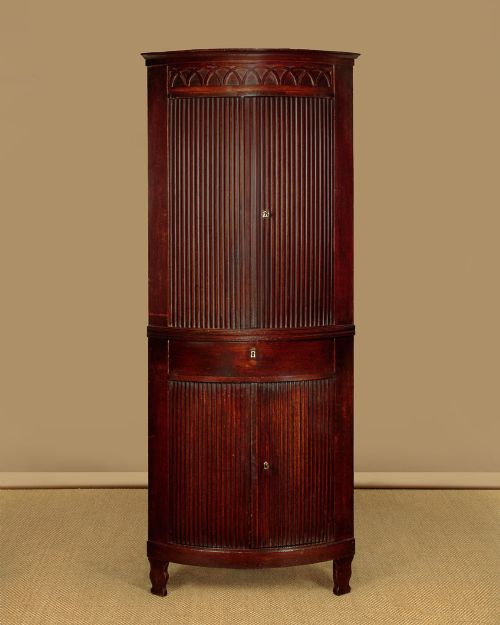
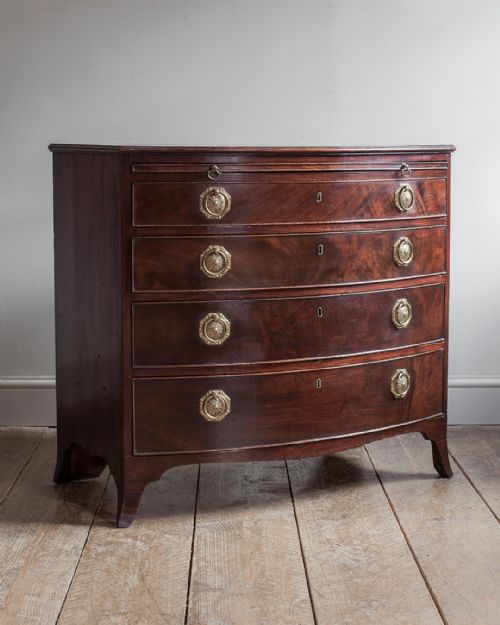
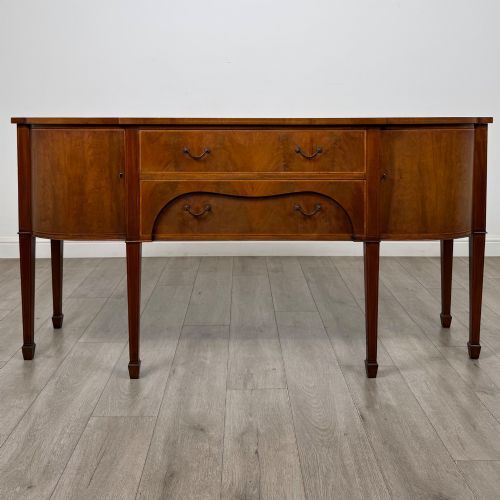
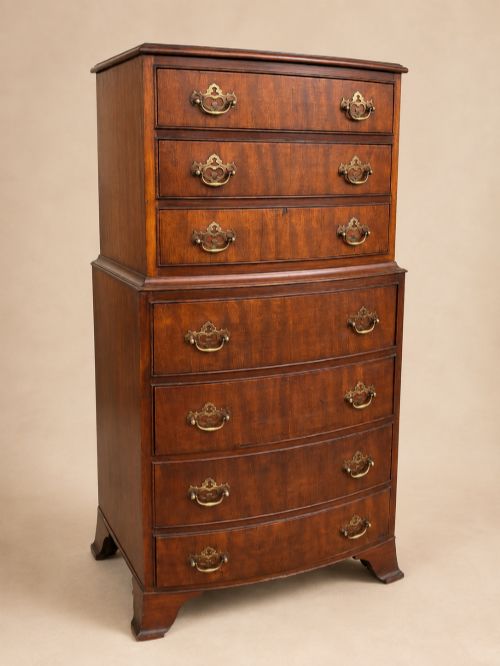
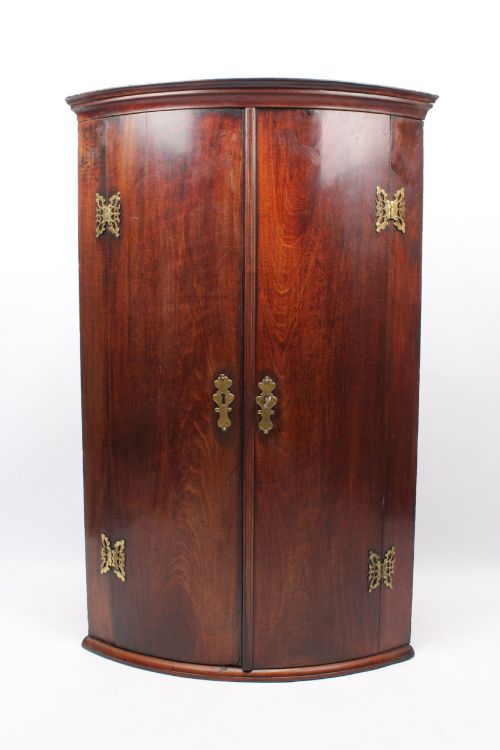
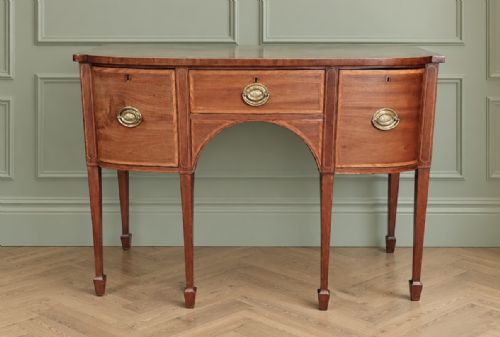
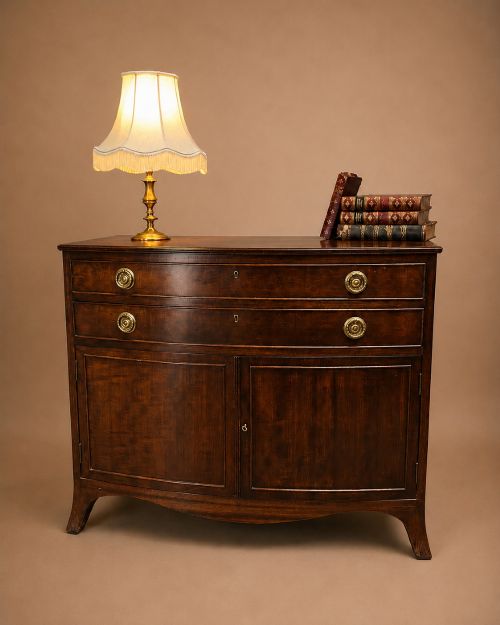
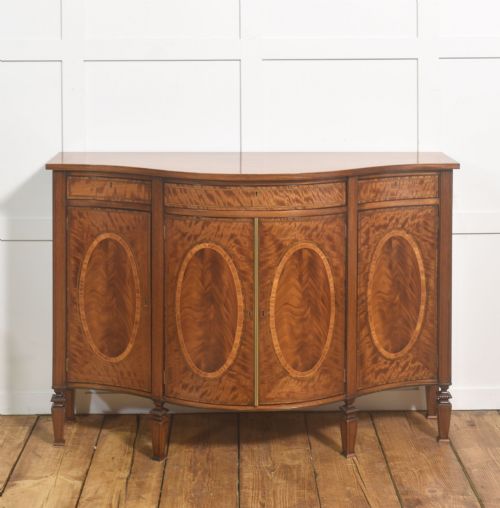
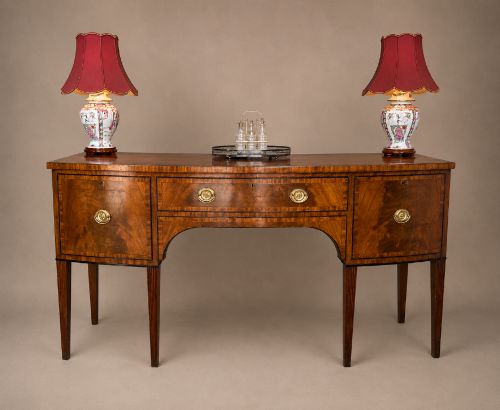
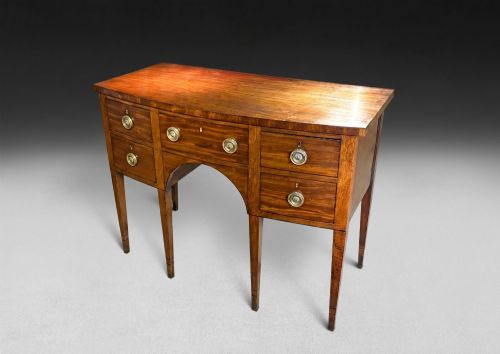
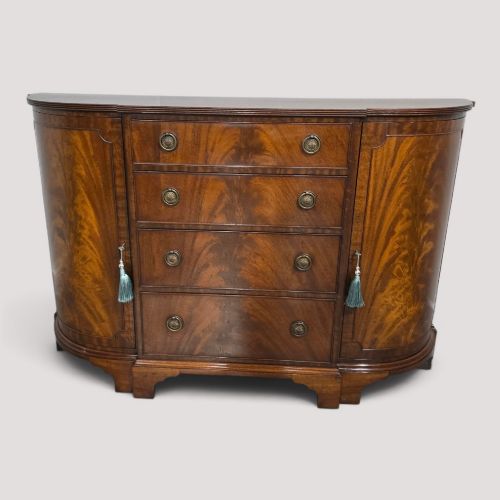
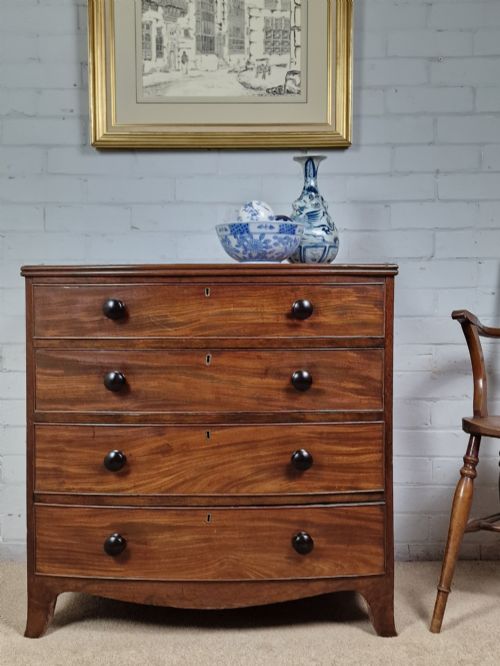
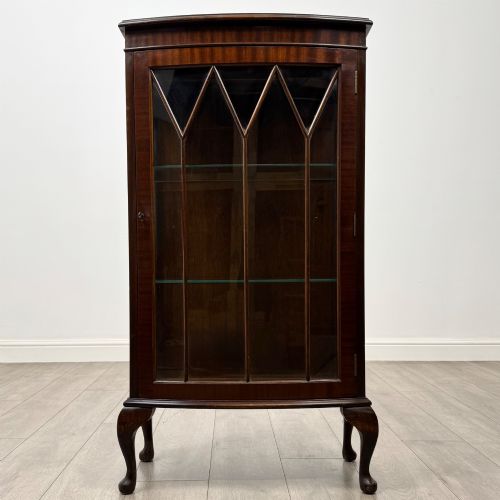
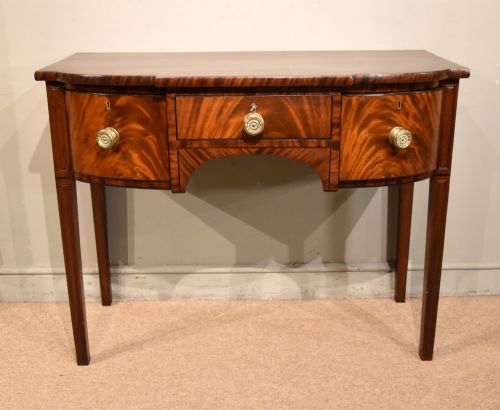
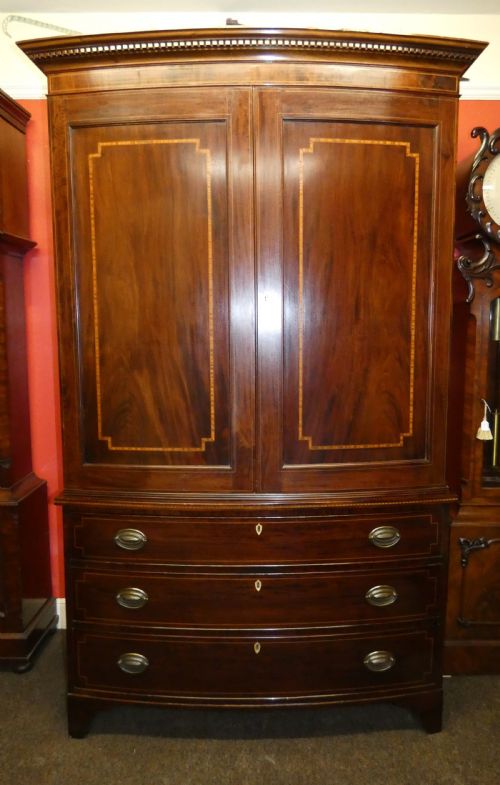
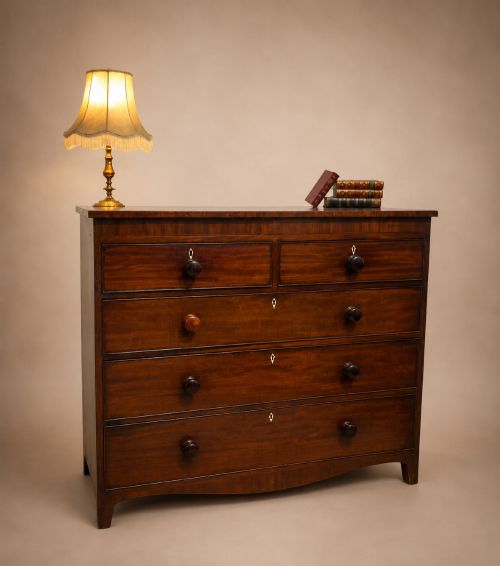
Georgian Mahogany Bowfront Cabinet
A georgian mahogany bowfront cabinet brings curved fronts and rich timber tones into a room, offering practical storage disguised by elegant lines.
Materials and construction
Solid mahogany and flame mahogany supply the primary structure and figured surfaces, often selected for deep grain patterns and warm natural tones. Cabinet makers supplemented these foundational timbers with secondary woods such as oak for drawer linings and internal framing.
Inlay work introduces contrasting colours through boxwood and satinwood, creating geometric borders, stringing, and occasional marquetry panels. Brass hardware, including drop handles and escutcheons, completes the construction alongside fitted glass panes in display variants.
Distinctions in execution
The sophistication of the timber selection dictates much of the visual weight, with highly figured flame mahogany and crisp boxwood inlay standing apart from plain grain surfaces. Fine craftsmanship shows in the seamless bending of timber around the curved front and the tight fit of drawer joints.
Proportion and scale distinguish superior examples, particularly where the sweep of the bowfront meets the frame without awkward overhangs. Original brasses and untouched patination elevate pieces above those altered or stripped during later centuries.
Listings feature mahogany, oak, satinwood, and brass across periods spanning the Georgian era, Regency, Victorian times, and early twentieth-century revivals.
The Georgian Mahogany Bowfront Cabinet Glossary
- Bowfront
- A convex curved cabinet front that swells outward from the corners, softening the rectangular profile of the furniture.
- Flame mahogany
- Timber cut from the fork of the mahogany tree where branches meet the trunk, producing a distinctive flickering flame pattern in the grain.
- Stringing
- Thin bands of contrasting wood inlay used to outline drawers, doors, and tabletops for decorative definition.
- Linen press
- A tall storage cabinet featuring upper sliding trays or shelves originally intended for household linens, sitting above a chest of drawers base.
- Corner cupboard
- A triangular cabinet designed to fit directly into the corner of a room, maximising floor space.
Georgian Mahogany Bowfront Cabinet: Frequently Asked Questions
What rooms suit a bowfront cabinet?
These cabinets suit dining rooms, living areas, and hallways where curved fronts soften angular spaces. Their varied forms allow them to function as sideboards for serving or chests for general storage.
Smaller corner cupboards and hanging cabinets fit neatly into compact spaces or transitional hallways without dominating the floor plan.
How do I identify the period?
Dating relies on timber choice, construction methods, and stylistic cues such as inlay patterns and hardware. Georgian and Regency pieces typically show hand-cut dovetails and older patination on solid mahogany.
Revival pieces from the Edwardian era or the 1920s often use machine-cut joints alongside lighter satinwood timbers and Sheraton Revival motifs.
Are corner cupboards freestanding or wall-mounted?
Both formats exist within the selection, offering flexibility depending on room layout. Hanging models mount directly to walls to utilise empty corners above floor-standing furniture.
Double-height or floor-standing corner cupboards rest directly on the ground, providing massive internal capacity across multiple stacked compartments.
What is flame mahogany?
Flame mahogany is a decorative veneer harvested from the junction where branches branch out from the main tree trunk. This specific cut creates a dramatic, rolling pattern resembling flickering fire.
Cabinet makers applied these figured veneers to drawer fronts and door panels to catch the light and add visual depth.