
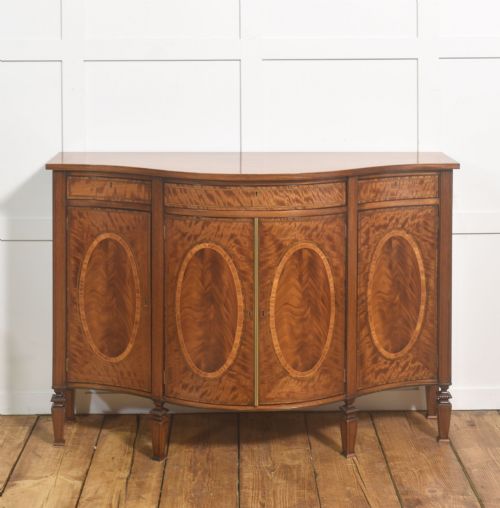
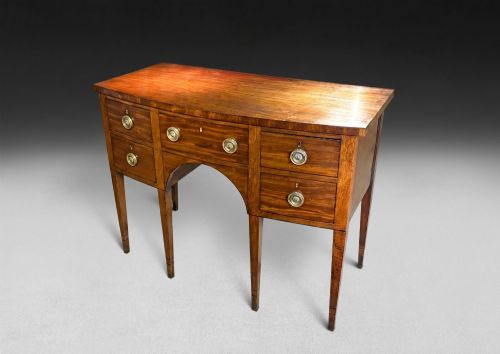
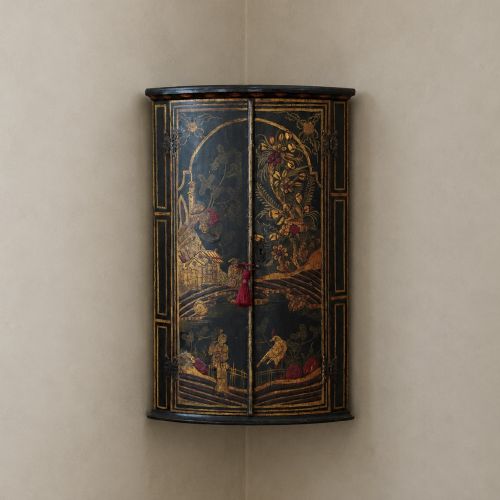
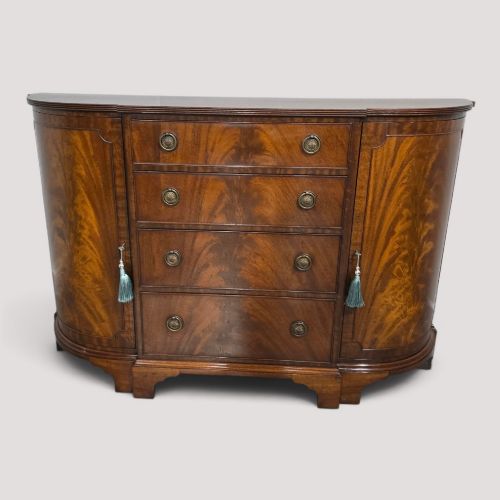
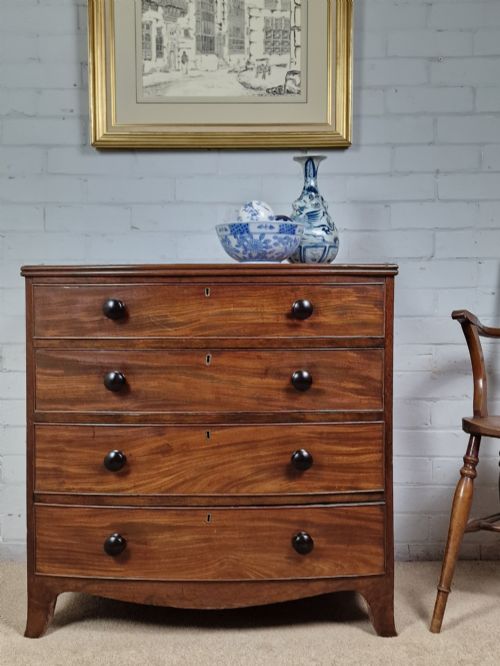
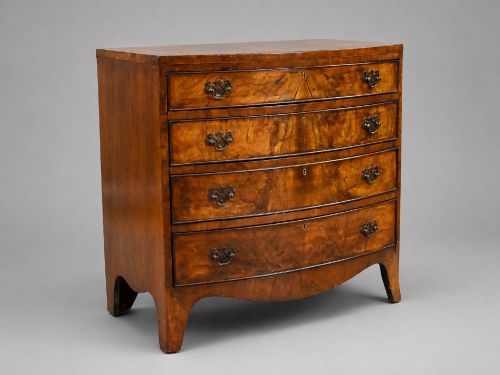
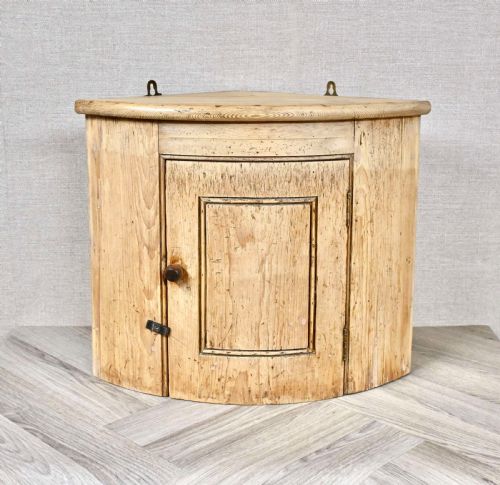
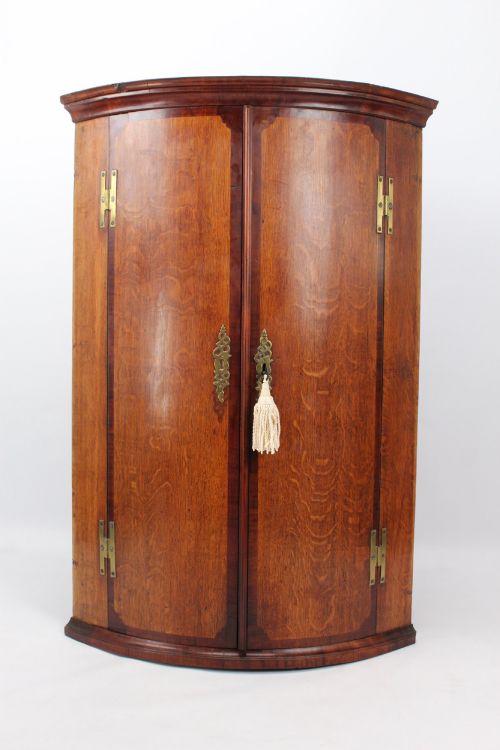
Georgian Bow Front Cabinet
A georgian bow front cabinet brings curved elegance and generous storage to a room through its polished timber facade.
Georgian Bow Front Cabinet
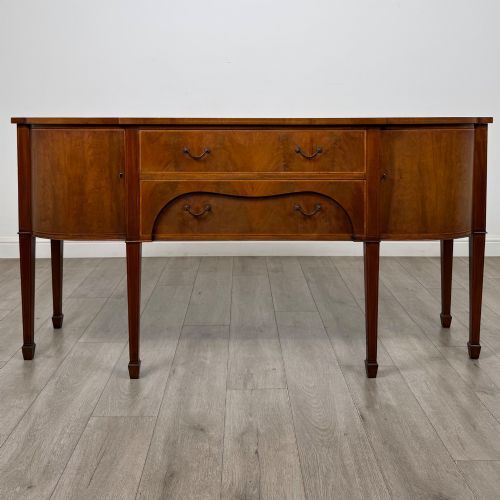
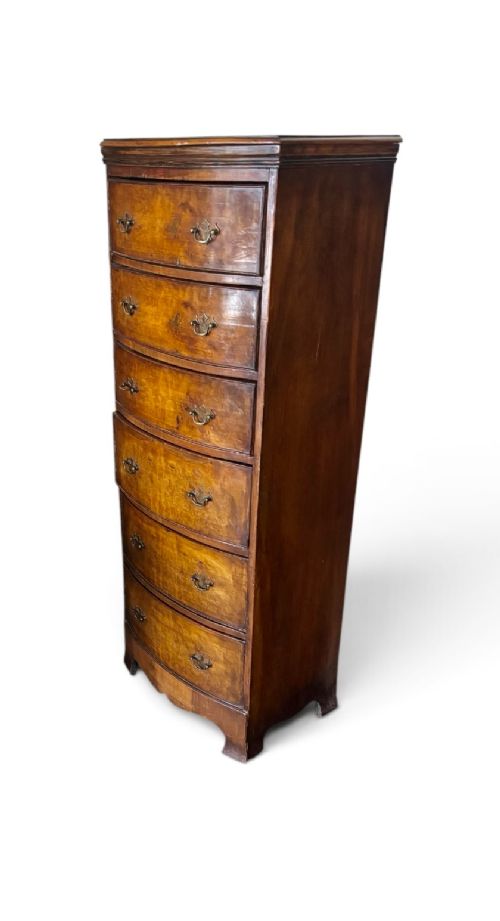
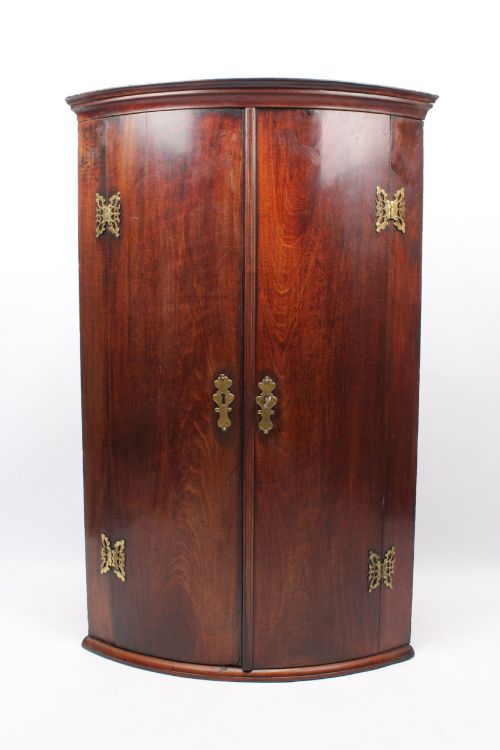
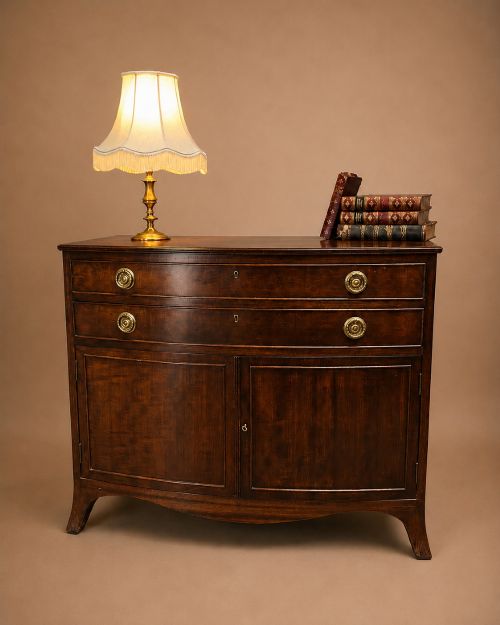
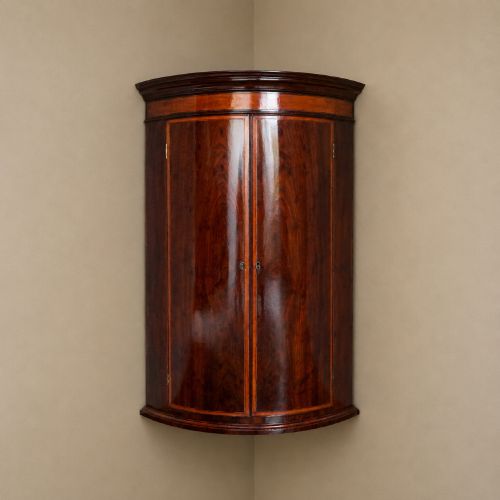
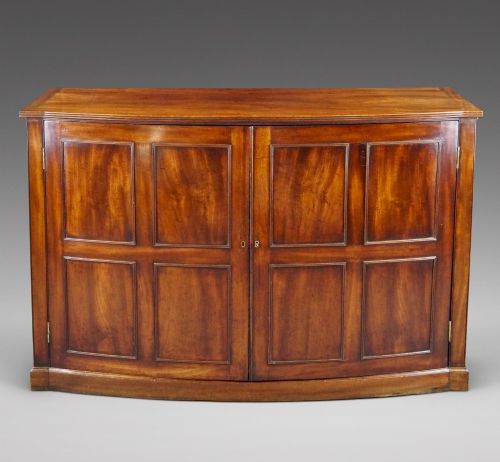
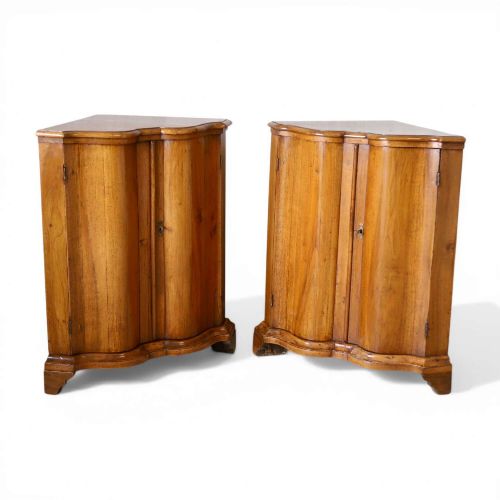
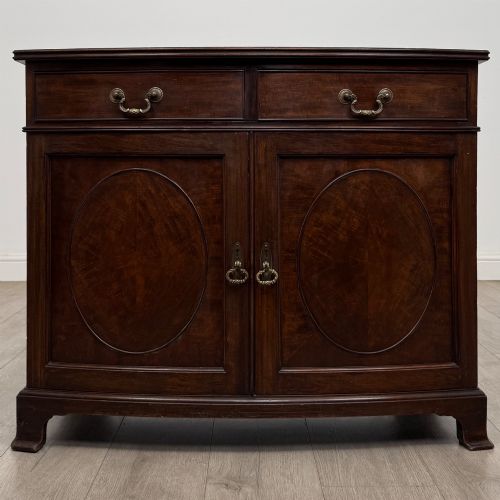
A georgian bow front cabinet encompasses a range of curved storage forms, predominantly corner cupboards, sideboards, and chests of drawers originating from the Georgian, Regency, and later revival periods.
Corner cupboards designed for wall hanging or floor placement appear frequently alongside serving sideboards and bedroom chests, utilising the convex curve to soften room angles.
The material palette spans native oak and mahogany to imported satinwood and walnut, reflecting both provincial utility and refined drawing-room taste.
How They Were Made
Cabinetmakers constructed the characteristic curved fronts using solid timbers or built-up laminates shaped to hold a smooth, even radius without warping.
Veneers of flame mahogany, plum pudding mahogany, and figured walnut were laid over secondary woods to create dramatic grain patterns on the doors and drawer fronts.
Inlays of boxwood, satinwood, and darker stringing added linear contrast, while brass escutcheons and handles finished the structural assembly.
Listings feature mahogany, oak, walnut, and satinwood across periods spanning the 18th century to the Edwardian era.
What Varies in Quality
The refinement of a piece rests on the selection of the timber grain, where matched flame veneers or dense plum pudding mahogany elevate standard construction into high craft.
Subtlety in stringing and marquetry inlay demonstrates the maker's hand, distinguishing simple provincial work from sophisticated urban design.
Proportion and the integrity of the curved joinery determine the overall success of the form, ensuring the doors and drawers close with crisp alignment.
The Georgian Bow Front Cabinet Glossary
- Bow front
- A convex curved cabinet or drawer front that projects outward from the frame. This shape softens rigid room lines while increasing internal volume.
- Stringing
- Thin inlaid lines of contrasting wood used to outline panels, drawers, or door edges. It provides a crisp border for the main timber surface.
- Corner cupboard
- A triangular cabinet designed to fit directly into the corner of a room. These pieces maximise spatial efficiency in domestic interiors.
- Linen press
- A tall storage piece comprising upper cupboard doors concealing sliding trays and lower drawers for textiles. George III examples often incorporate the characteristic curved front.
Georgian Bow Front Cabinet: Frequently Asked Questions
Where should I place a corner cabinet?
These pieces fit directly into room corners, making use of otherwise vacant angles while displaying their curved fronts to the main living space.
Wall-hanging versions secure directly to structural studs, whereas floor models anchor firmly against skirting boards for stability.
How do I care for mahogany surfaces?
Maintain the timber by dusting with a dry, soft cloth and applying a traditional beeswax polish sparingly twice a year. Avoid placing antique furniture near direct heat sources or strong sunlight.
Keep humidity levels stable to prevent the solid timber and delicate veneers from drying or splitting over time.
What is the difference between George III and Regency styles?
George III pieces typically display classic proportions with restrained mahogany veneers and delicate boxwood stringing. The cabinetwork prioritises architectural harmony and traditional bracket feet.
Regency examples often introduce bolder ebonised details, darker woods, and more dramatic grain patterns influenced by classical Roman forms.
Can I store heavy items inside?
Internal fixed shelving in corner cupboards and sideboards holds everyday tableware and books securely. Wall-mounted variants depend entirely on the strength of the fixings used in the wall.
Check the wall construction before hanging larger timber cabinets to ensure adequate weight support.