



Fitted Corner Cabinet
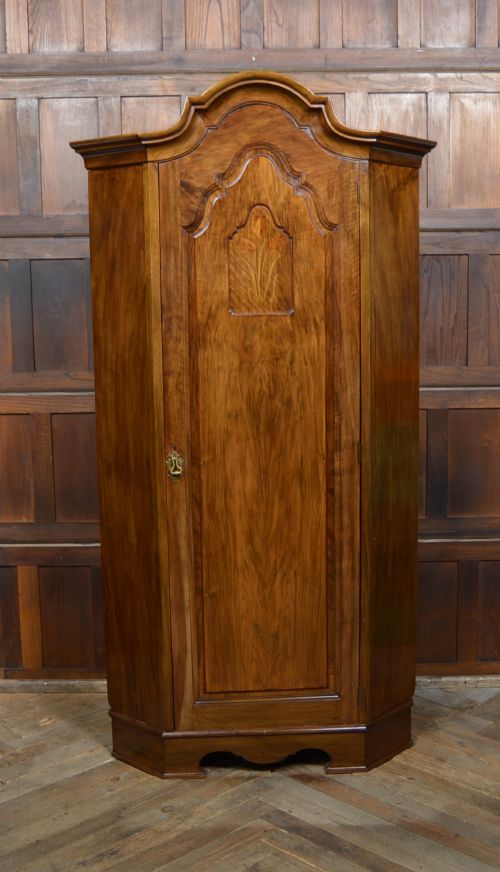
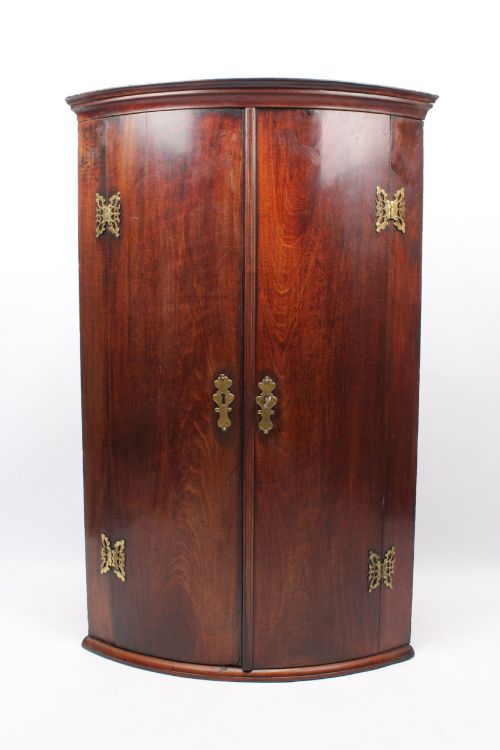
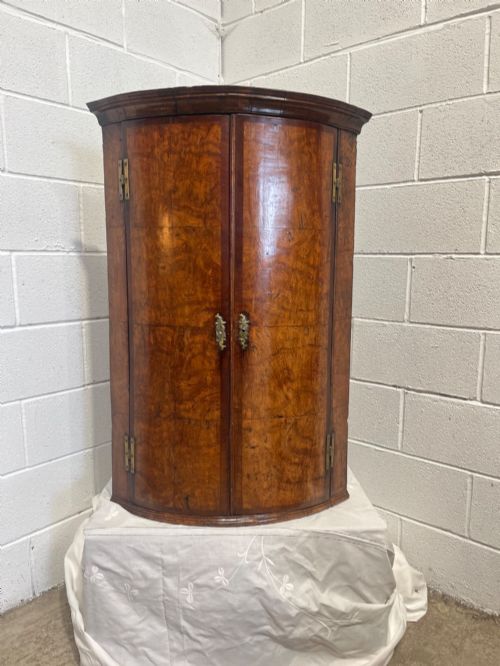
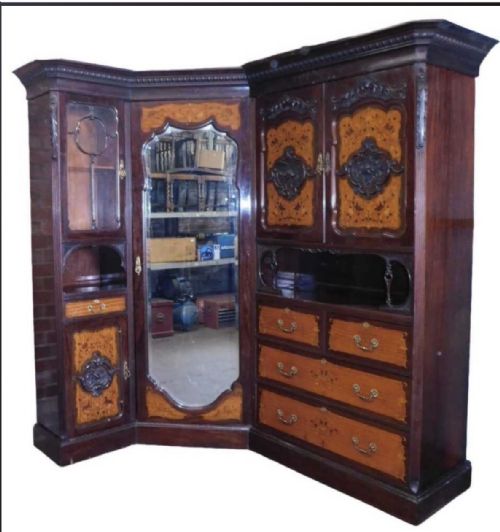
These fitted corner cabinet examples span the Georgian, Victorian, and 1930 periods, offering practical storage for awkward spaces.
Fitted Corner Cabinet
A fitted corner cabinet makes use of domestic angles, appearing in forms such as corner cupboards, display cabinets, and bookcases.
The selections available here range from Georgian mahogany bow front pieces and burr oak corner cupboards to later Victorian and 1930 iterations.
Makers utilised various object types, including corner robes, compactum wardrobes, and cocktail cabinets to suit the architectural needs of domestic interiors.
Materials and construction methods
Craftsmen built these pieces using timbers like mahogany, walnut, burr oak, oak, pine, and satinwood, occasionally applying marquetry for decorative effect.
Hardware and structural detailing frequently incorporated brass, whilst glass featured prominently in doors and display sections.
Fitted Corner Cabinet Retail Price Guide 2026
Typical asking prices for fitted corner cabinet among the pieces listed under this phrase on Sellingantiques today, from the lower quarter to the upper quarter. They describe what is for sale here now, not the wider market.
The listings span multiple centuries, covering Georgian, Victorian, 1870, 1930, and 18th Century periods.
Assessing quality and craftsmanship
Quality rests upon the selection of timbers like burr walnut or figured mahogany, alongside the precision of satinwood inlay and brass mounts.
John Stow Ltd of Bradford·Goodhall Lamb and Heighway·Waring and Gillow
The Fitted Corner Cabinet Glossary
- Bow front
- A convex curved cabinet face that projects forward from the corners. This shape demands precise joinery to follow the sweeping line.
- Compactum
- A multi-functional wardrobe combining hanging space, drawers, and shelving within a single fitted unit. It provides comprehensive clothing storage.
- Marquetry
- The art of applying pieces of veneer to a structure to form decorative patterns. Craftsmen use contrasting woods to achieve pictorial designs.
- Campaign
- Furniture designed to dismantle easily for travel, typically featuring recessed brass handles and corner brackets for protection.
Fitted Corner Cabinet: Frequently Asked Questions
What rooms suit a fitted corner cabinet?
These pieces fit neatly into unused room junctions, transforming dead space into practical storage. They work well in dining rooms, studies, and drawing rooms for display or containment.
Their angular footprints allow them to anchor room layouts without protruding into main thoroughfares. Smaller tabletop versions sit easily on existing surfaces.
How do I identify a Georgian piece?
Georgian examples often display timber selections like mahogany and burr oak, featuring clean architectural lines and bow fronts. Construction methods from this era rely on traditional joinery.
Later Victorian and 1930 versions introduce distinct stylistic elements such as Art Nouveau curves or satinwood inlay, separating them from earlier utilitarian forms.
Are these cabinets difficult to install?
Corner furniture is specifically proportioned to slot directly into ninety-degree wall junctions. Most pieces stand independently, though some heavier wardrobes require careful positioning.
Checking dimensions against your specific room angles ensures the piece sits flush against both walls without obstructing skirting boards.
What is a compactum wardrobe?
A compactum is a fitted wardrobe designed to hold multiple types of garments within one combined footprint. It typically houses hanging sections alongside internal drawers and shelves.
Examples from the Victorian period demonstrate advanced internal planning to maximise storage capacity in domestic settings.