



Georgian Loving Cup
A georgian loving cup is a twin-handled vessel for shared ale or wine, designed for communal toasts at celebrations.
Georgian Loving Cup
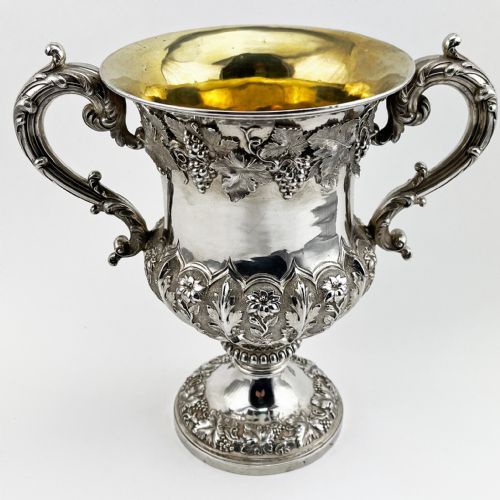
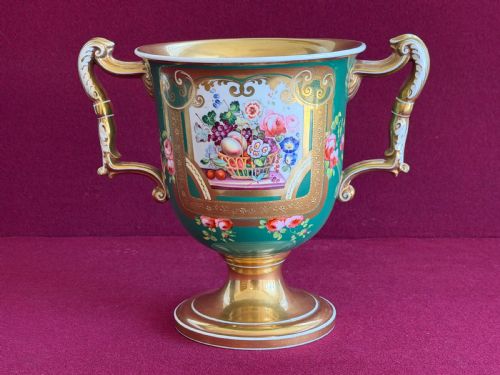
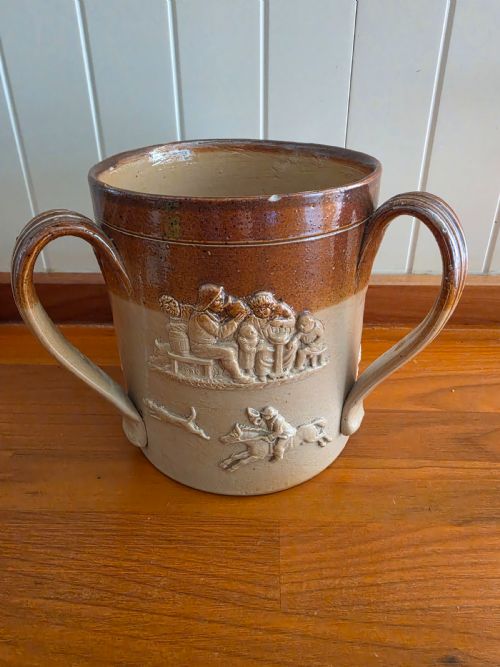
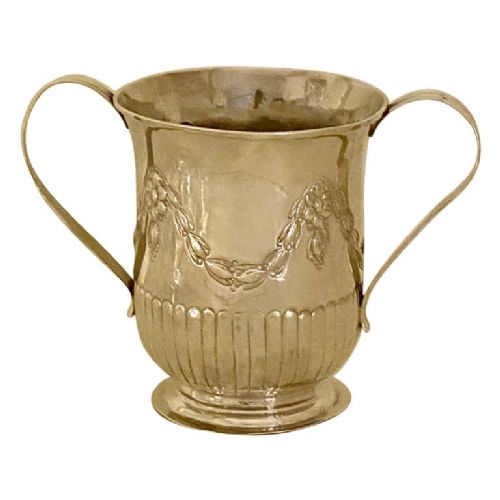
When you search for a georgian loving cup, you encounter heavy sterling silver or silver gilt trophy cups alongside earthenware pottery vessels from the eighteenth and nineteenth centuries. These drinking vessels typically feature two or three handles, intended to be passed safely between hands during toasts and communal gatherings.
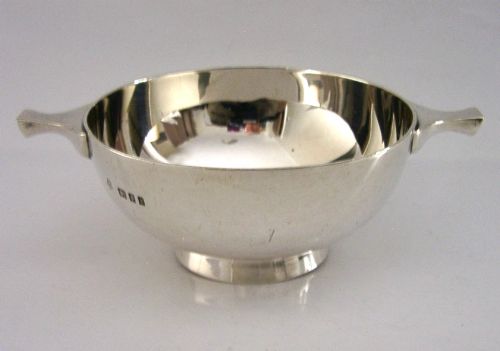
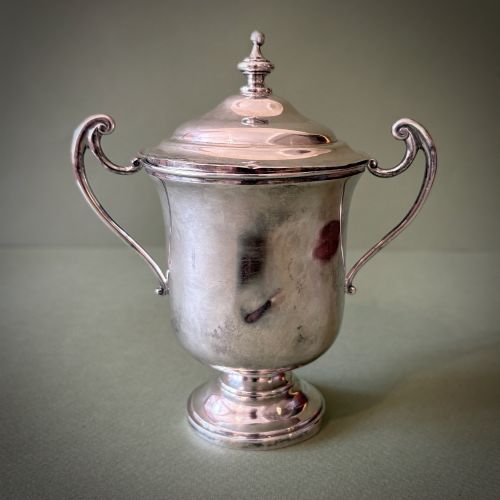
The pieces on this page span the georgian, george iii, william iv, and regency periods, with origins including english country pottery and early american silver. You will find forms ranging from campana-shaped cups to traditional porringers, ale tankards, and ceramic tygs.
How they were made
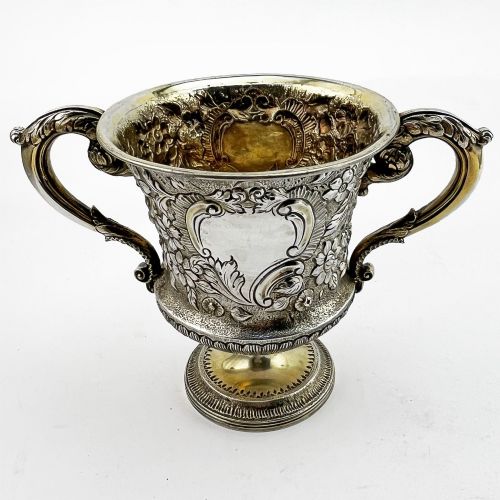
Silversmiths constructed sterling silver and silver gilt loving cups by hammering metal into form, casting handles separately, and soldering them securely to the body. Older pieces often incorporated internal liners or employed vermeil finishes to protect the metal from acidic drinks.
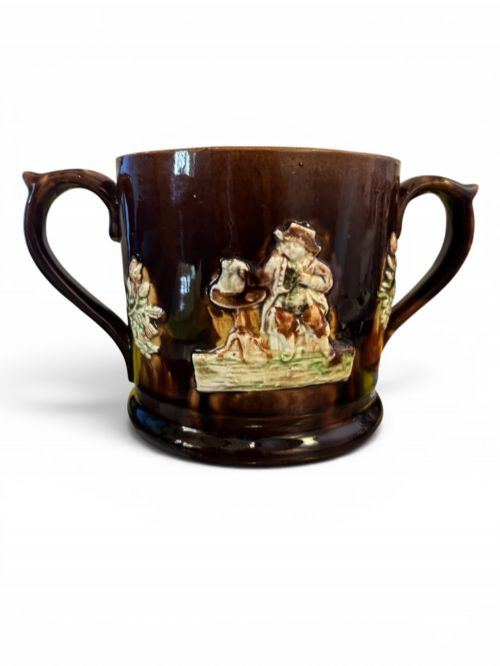
Potters shaped earthenware, stoneware, and pearlware vessels on the wheel or in moulds before applying glazes and hand-painted details. Makers sometimes added whimsical interior elements such as moulded frogs, newts, or surprise spitting figures.
Some ceramic drinking vessels conceal moulded frogs and newts inside the base to surprise drinkers as the ale drains.
What varies in quality
Quality rests on the crispness of the maker's mark and the weight of the silver or the fineness of the ceramic body. Pieces with clear hallmarks and well-preserved hand-painted decoration stand apart from heavily worn examples.
Proportion and the balance of the twin handles dictate visual appeal. Silver cups with intact liners and pottery vessels retaining their original glaze lustre represent the upper tier.
H & R Daniel·Richard Gurney·Thomas Sutton·Peter William Bateman·William and James Priest·Benjamin Cartwright I·Joseph Bell I
The Georgian Loving Cup Glossary
- Campana
- A bell-shaped vessel profile widening towards the rim. This classical form appears frequently in silver trophy cups.
- Tyg
- A ceramic drinking vessel with three or more handles. It allowed multiple drinkers to pass the cup without sharing the same grip.
- Porringer
- A small, shallow bowl with one or two horizontal flat handles. These vessels were utilised for broths or individual portions.
- Vermeil
- Sterling silver plated with a layer of fine gold. This finish combined the lustre of gold with the structural strength of silver.
- Pearlware
- A refined earthenware developed in the late eighteenth century. It featured a pale blue-tinted glaze that pooled slightly around decorations.
Georgian Loving Cup: Frequently Asked Questions
What is a loving cup?
A loving cup is a large drinking vessel equipped with two or three handles on opposite sides. It was traditionally passed among guests at weddings, banquets, and feasts for shared toasts.
The multiple handles allowed drinkers to hold the vessel securely with both hands as it circulated around the company.
Why do some cups have three handles?
Three-handled vessels, known as tygs, allowed three people to steady the cup simultaneously. Each drinker held a handle, leaving the remaining handle positioned for the next person in rotation.
This design prevented spills and ensured the heavy ceramic vessel passed steadily from hand to hand during gatherings.
How do I care for silver loving cups?
Sterling silver requires periodic gentle cleaning with a soft cloth and specialised polish to maintain its finish. Avoid harsh abrasive cleaners that remove the delicate hallmarks or thin silver gilt layers.
Store silver in a stable environment away from high humidity to prevent tarnishing and protect any internal liners.
Can I still drink from these cups?
While these vessels are sturdy enough for occasional use, many owners choose to display them as decorative objects or collections. Silver and ceramic vessels from this era may react to acidic liquids or show wear from historical use.
If you use a ceramic cup with interior painted figures, ensure the glaze remains intact and clean the interior gently by hand.