
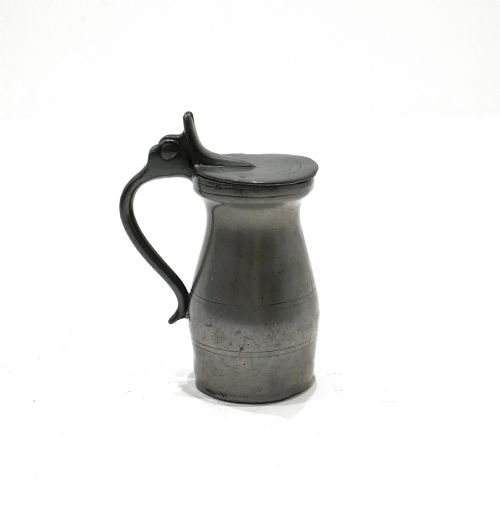
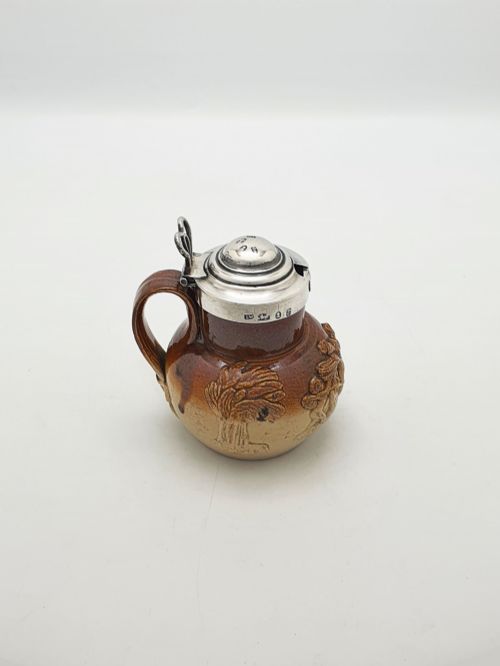


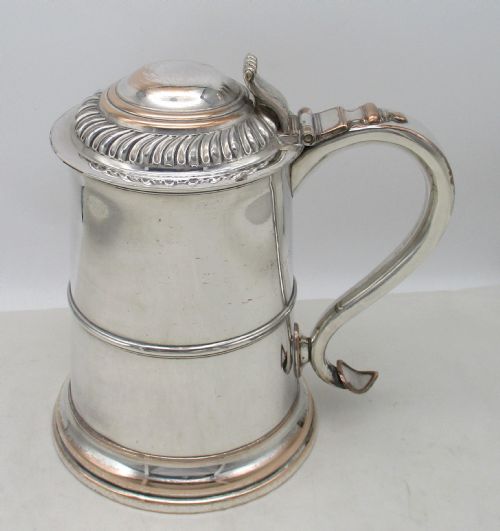


Georgian Lidded Flagon
A georgian lidded flagon is a sturdy, hinged vessel crafted for serving liquor or ale during the eighteenth and nineteenth centuries.
Georgian Lidded Flagon
A georgian lidded flagon encompasses heavy tavern tankards, ecclesiastical church flagons, and domestic pitchers designed with secure hinged covers. These pieces served functional roles in households, public houses, and parishes across Britain and Ireland.
The domestic and ecclesiastical variations found here typically span the eighteenth century and the early decades of the nineteenth century. Buyers encounter forms ranging from monumental copper pitchers to pewter spirit measures and sterling silver communion vessels.
Makers shaped these drinking vessels in distinct regional styles, producing tall spire flagons, crested tappit hens, and silver tankards with prominent handle scrolls. Each object reflects the drinking customs and metalworking standards of its period.
How they were made
Metalworkers utilised pewter, sterling silver, copper, and old Sheffield plate to construct these lidded vessels. Pewter examples relied on casting and hammering alloys of tin and lead or copper, while silver and copper items required careful smithing and soldering.
Old Sheffield plate combined a thin layer of silver fused to a copper base, creating durable vessels that imitated solid silver at a lower weight. Hinges and collars were hand-fitted to stoneware bodies or metallic lids to ensure a tight seal for liquids.
Scottish makers named one of their traditional pewter measures after a mother hen, ensuring every round came with a bird on top.
What varies in quality
The distinction between standard domestic items and high-end pieces rests on the weight of the metal and the crispness of maker marks. Heavy-gauge silver and thick pewter retained their structural integrity better through centuries of daily service.
Refinement in the construction of the hinged lid and thumbpiece separates basic tavern ware from masterwork church and presentation pieces. Original markers' stamps and clear regional provenance add considerably to the historical weight of an individual flagon.
John Heaney of Dublin·Robert Iles of London·John De St Croix
The Georgian Lidded Flagon Glossary
- Flagon
- A large drinking vessel with a handle and a lid, often associated with church services or communal tavern drinking. These pieces hold substantial volumes of liquid.
- Old Sheffield Plate
- A composite material made by fusing a thin sheet of sterling silver onto a thicker copper base. This technique preceded modern electroplating.
- Tappit Hen
- A traditional Scottish type of pewter drinking measure featuring a lid with a knob resembling a nesting hen. These vessels held specific regional capacities like the Scots pint.
- Spirit Measure
- A standardised metal container used to gauge and pour alcohol in taverns and households. Smaller examples held fractions of a gill.
- Spire Flagon
- A tall, tapered ecclesiastical flagon topped by a steep, conical lid. These liturgical vessels were common in English churches.
Georgian Lidded Flagon: Frequently Asked Questions
How were these lidded flagons used?
These vessels served to store, measure, and pour ale, wine, or spirits in homes, inns, and churches. Larger pieces transported liquids to the table or communion rail, while smaller measures dispensed individual portions.
The hinged lids kept contents covered between pours, protecting drinks from dust and insects in bustling eighteenth-century environments.
What is the difference between silver plate and old Sheffield plate?
Old Sheffield plate involves fusing a visible layer of solid silver onto a thick copper core under high heat. This method produces a durable sandwich of metals rather than a thin electroplated skin.
Later silver plate utilises electrochemical processes to deposit a microscopic layer of silver over a base metal like brass or white metal.
How can I tell a church flagon from a tavern tankard?
Church flagons generally feature taller, more slender profiles such as spire tops and large capacities designed for sacramental wine. They often display ecclesiastical inscriptions or ownership marks related to parishes.
Tavern tankards and measures appear broader, shorter, and carry touchmarks from secular pewterers or capacity stamps.
How do I care for antique pewter and silver?
Antique metalware requires gentle cleaning with warm water and mild soap, followed by thorough drying to prevent corrosion. Aggressive metal polishes strip away historical patinas and wear down soft pewter surfaces.
Store these vessels in stable humidity environments away from direct heat sources to protect soldered joints and fitted lids.