

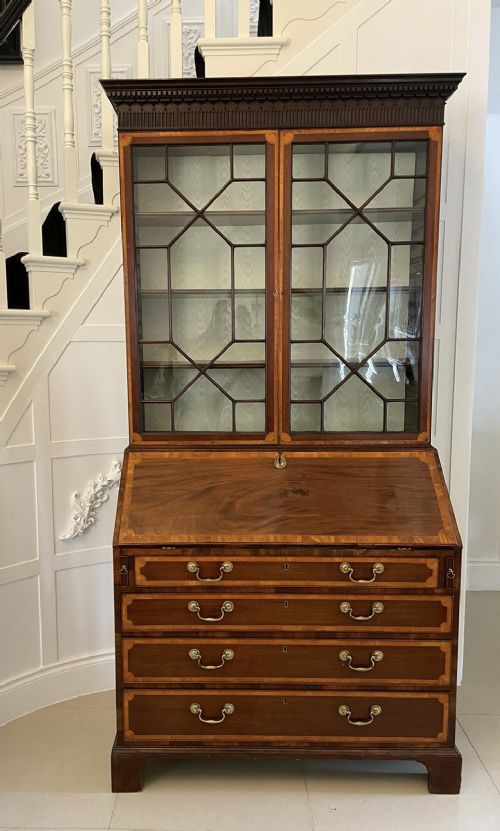
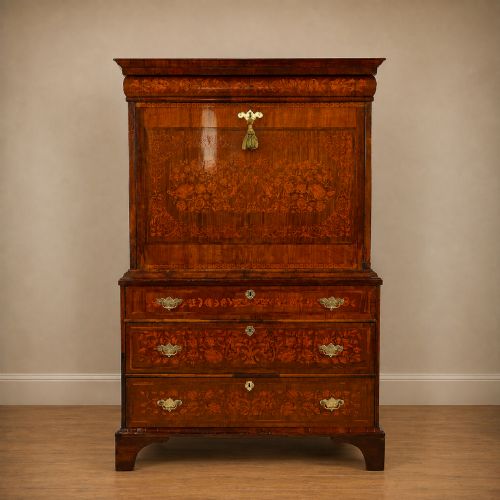
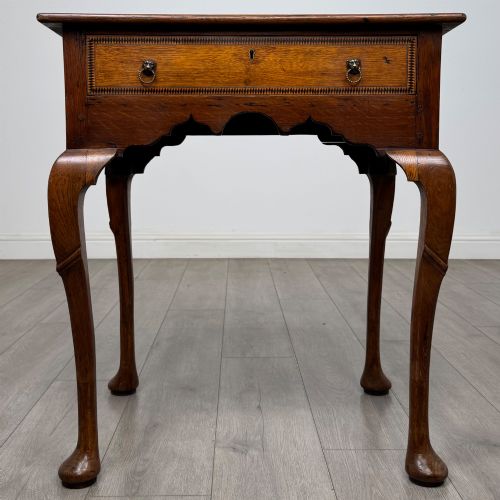
Georgian Inlaid Writing Desk
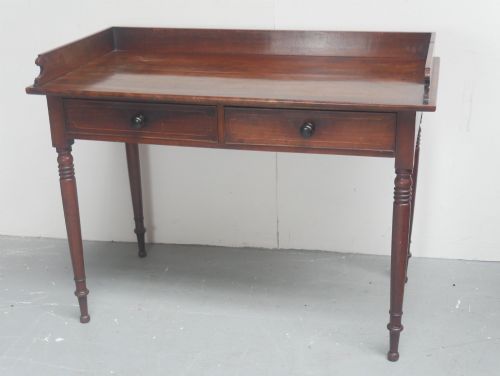
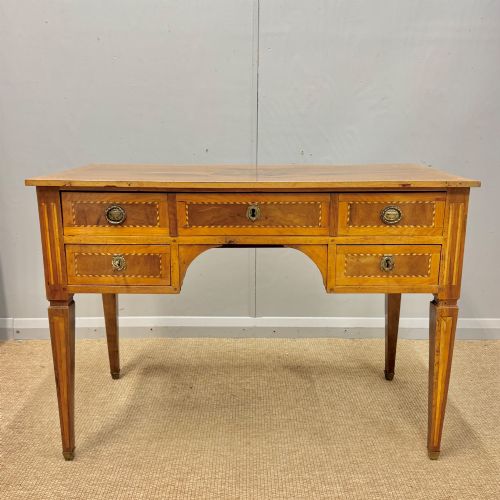
A georgian inlaid writing desk brings together rich timber and precise cabinetwork to form a practical workspace built to last centuries.
Georgian Inlaid Writing Desk
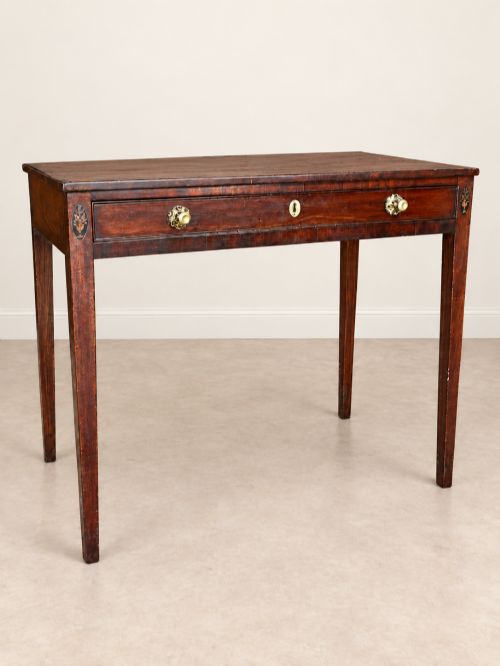
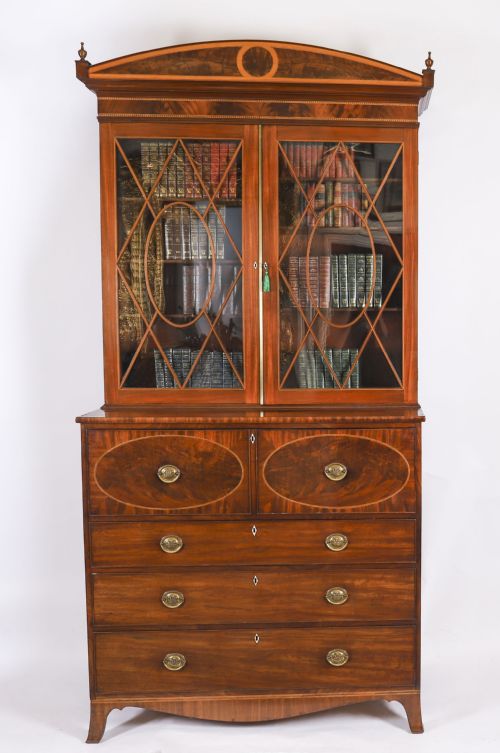
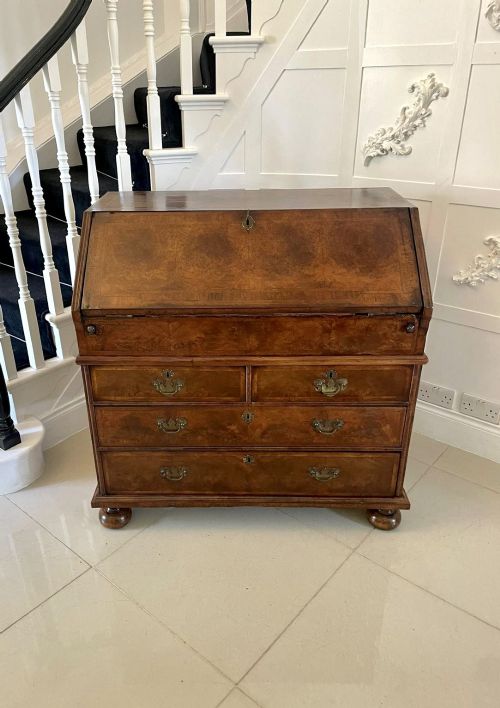
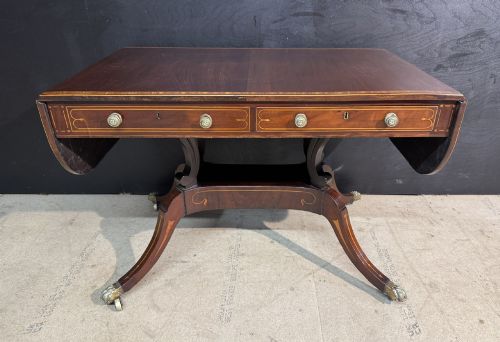
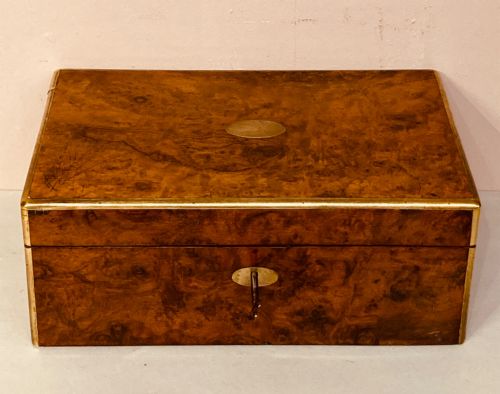
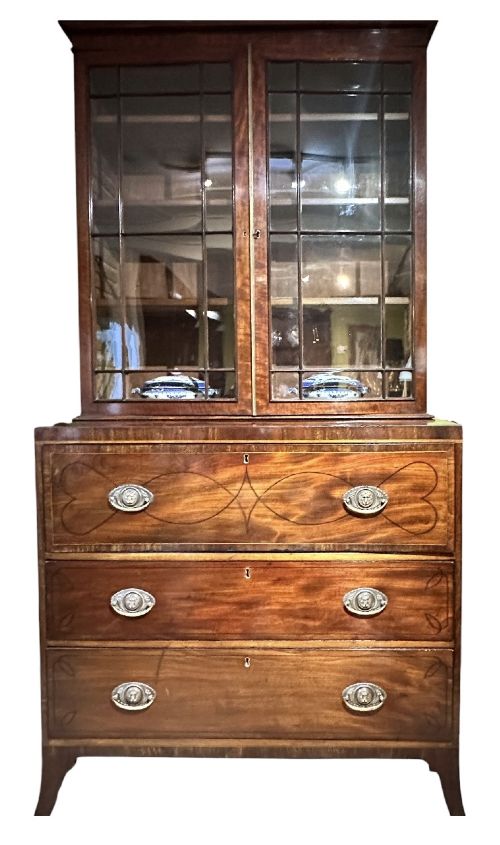
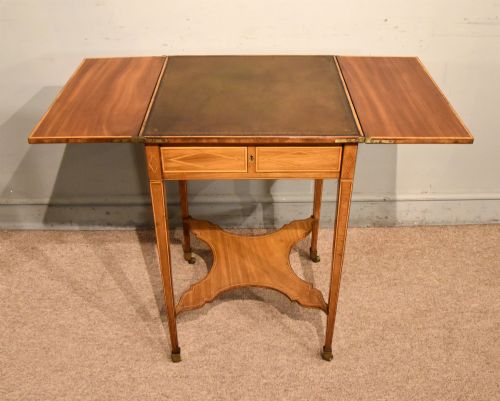
A georgian inlaid writing desk appears in several functional shapes, including slope-front bureaux, writing tables, and expansive secretaire bookcases designed for domestic study or correspondence. These pieces originate predominantly from the Georgian, Regency, and later revival periods, spanning the eighteenth and nineteenth centuries.
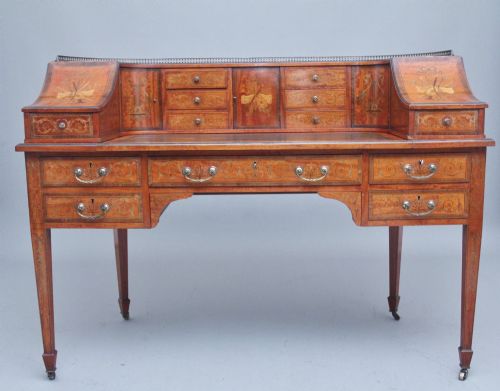
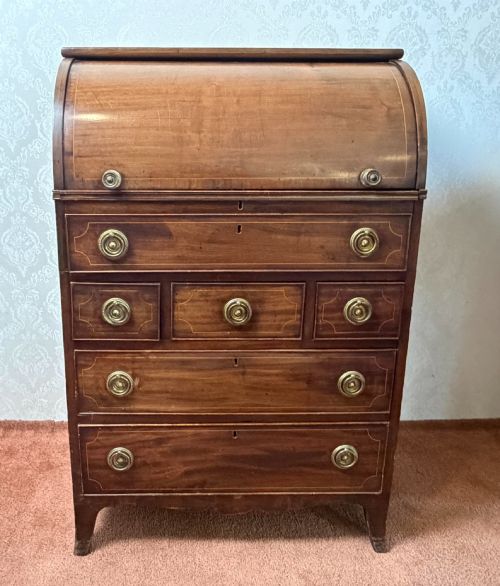
Buyers will most frequently encounter mahogany examples detailed with contrasting timber stringing or panels, alongside occasional pieces fashioned from oak, walnut, and satinwood. The forms range from compact tabletop writing slopes to large freestanding library tables and cylinder desks equipped with fitted interior compartments.
Materials and Construction
Makers constructed these pieces using solid timbers and figured veneers, selecting dense woods like mahogany, walnut, and oak for structural stability and rich grain patterns. Surfaces received intricate ornamentation through contrasting stringing and marquetry using satinwood, fruitwood, and other pale or exotic materials.
Secondary elements incorporated brass handles, escutcheons, and fitted leather writing surfaces to complete the functional aspects of the desk. Cabinetmakers joined carcases with traditional dovetail joints, ensuring durability across drawers and internal compartments.
Form variations on this site range from compact tabletop writing slopes to large cylinder desks and secretaire bookcases.
Distinctions in Execution
Quality rests upon the precision of the cabinetwork and the selection of the timber grain, where highly figured flame mahogany or burr walnut elevates a piece. The crispness of the inlaid details and the harmonious integration of secondary woods demonstrate the maker's level of skill.
Proportion and structural integrity define the higher tiers of surviving examples, distinguishing workshop pieces intended for refined interiors from simpler utility furniture. Retaining original hardware, fitted interiors, and undisturbed surfaces further separates superior examples from heavily altered pieces.
The Georgian Inlaid Writing Desk Glossary
- Marquetry
- Decorative patterns formed by fitting together contrasting pieces of veneer into a wooden background. This technique creates elaborate floral or geometric designs across drawer fronts and desk tops.
- Secretaire
- A cabinet or chest of drawers featuring a pull-down writing flap that conceals small drawers and pigeonholes. It combines storage capacity with a dedicated writing surface.
- Tambour
- A sliding door made of narrow vertical strips of wood glued to a fabric backing, allowing it to curve around corners. It is commonly found on cylinder desks and writing cabinets.
- Stringing
- Thin lines of contrasting wood inlaid into the surface of a piece to outline panels or drawers. This linear detail defines the edges of geometric decoration on Georgian furniture.
- Writing Slope
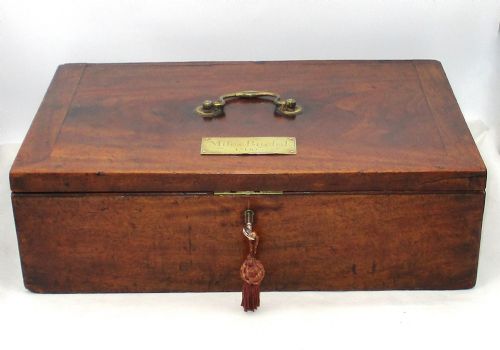
- A portable or stationary slant-topped box designed to hold writing paper and writing implements. When opened, the hinged lid provides an inclined surface for correspondence.
Georgian Inlaid Writing Desk: Frequently Asked Questions
How do I care for the leather top?
Maintain the leather surface by dusting gently with a dry cloth and applying occasional neutral leather balms to prevent drying. Avoid placing liquids or hot items directly on the hide.
Protect the material from direct sunlight to prevent fading and cracking of the original or period-replacement hide.
How do I identify a genuine period piece?
Examine the construction methods, looking for hand-cut dovetails on drawer sides and timber shrinkage that matches centuries of age. Period pieces utilise native and imported hardwoods appropriate to their stated era without modern fixings.
Inspect the interior secondary woods, such as oak or pine, which should display consistent wear and tooling marks corresponding to historic cabinetmaking practices.
Where should I place a writing desk?
Position the desk away from direct heat sources like radiators and fireplaces to prevent the timber from warping or splitting. Stable room temperatures protect both solid woods and delicate veneers.
Arrange the piece to receive natural light from the side rather than harsh direct sunlight, preserving the colour and finish of the mahogany or satinwood.