

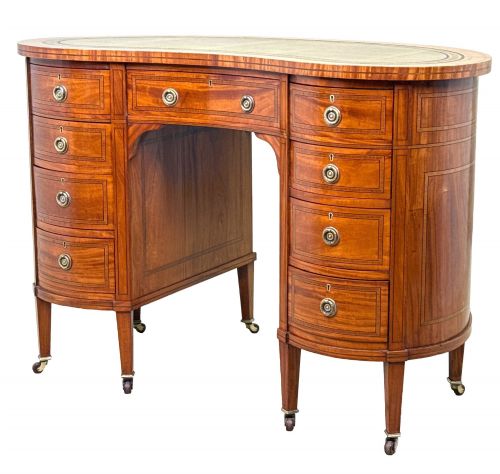
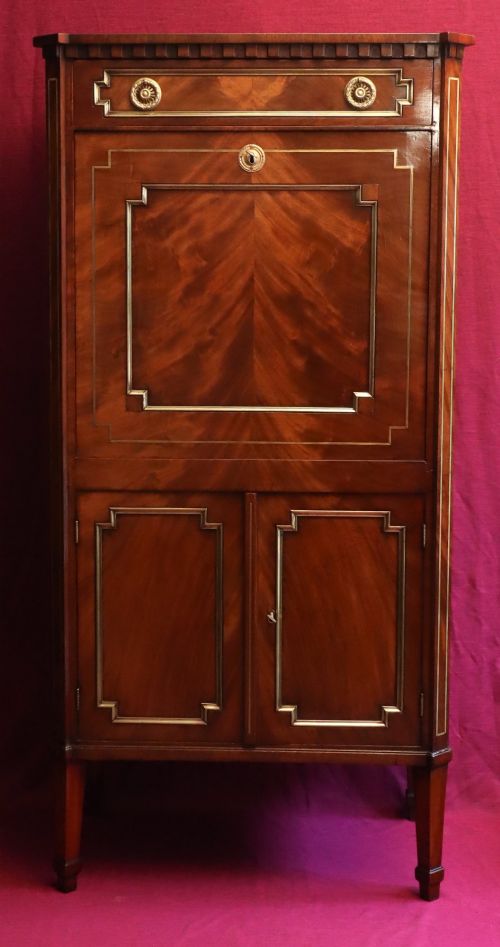
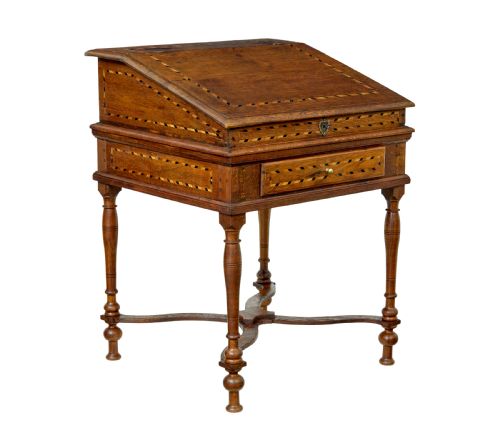
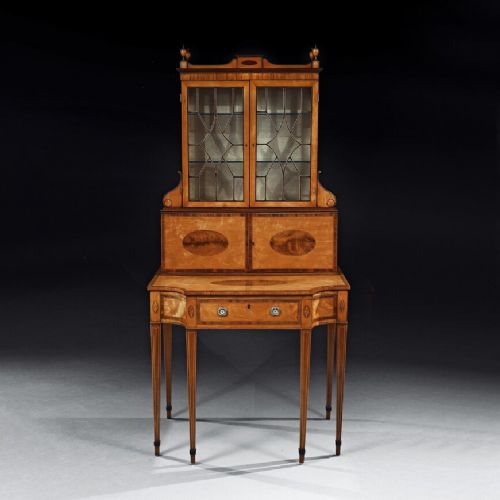

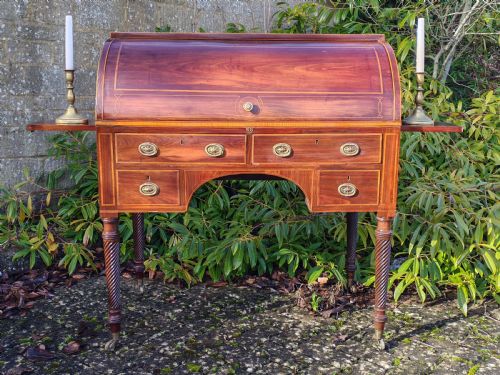
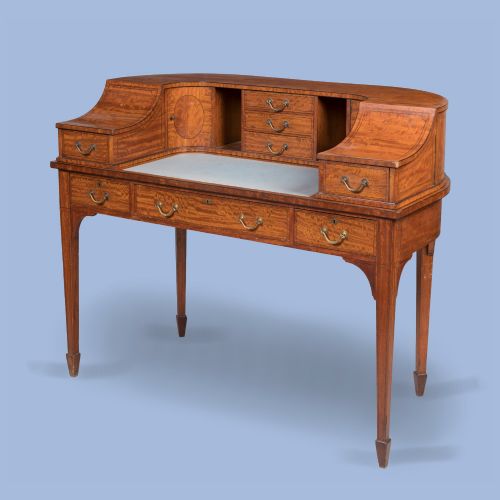
Georgian Inlaid Writing Bureau
A georgian inlaid writing bureau provides a fitted drop-front writing surface combined with refined cabinetwork and decorative wood veneers.
Georgian Inlaid Writing Bureau
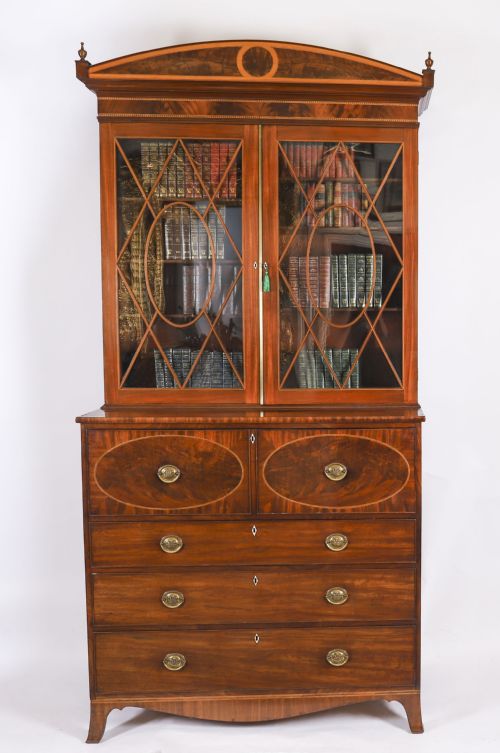
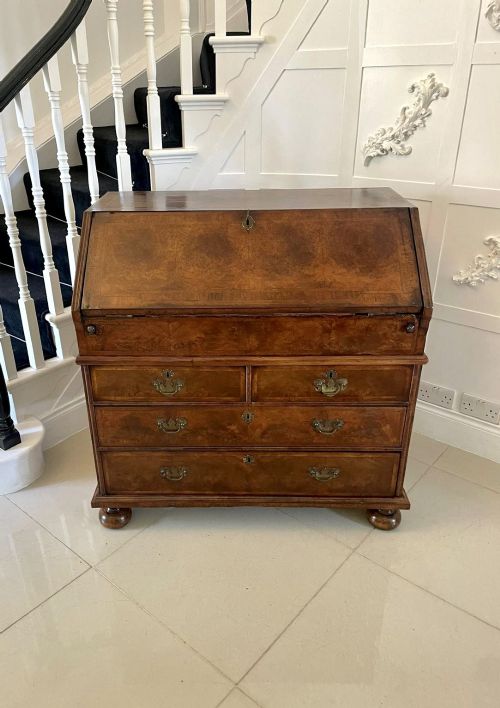
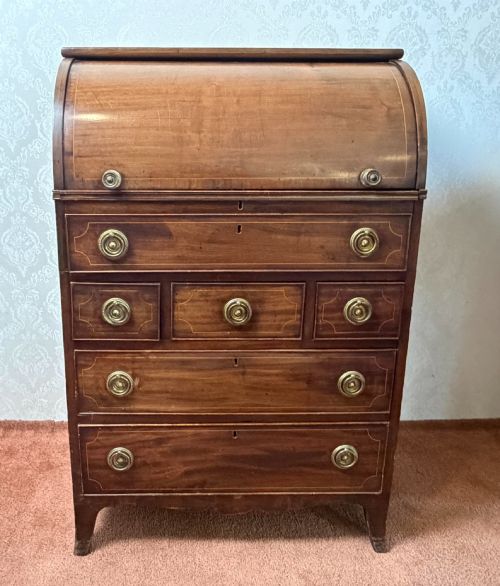
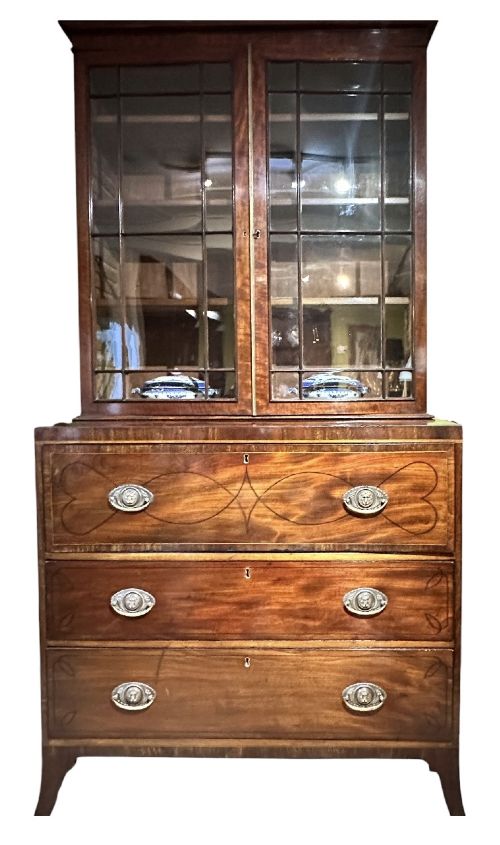
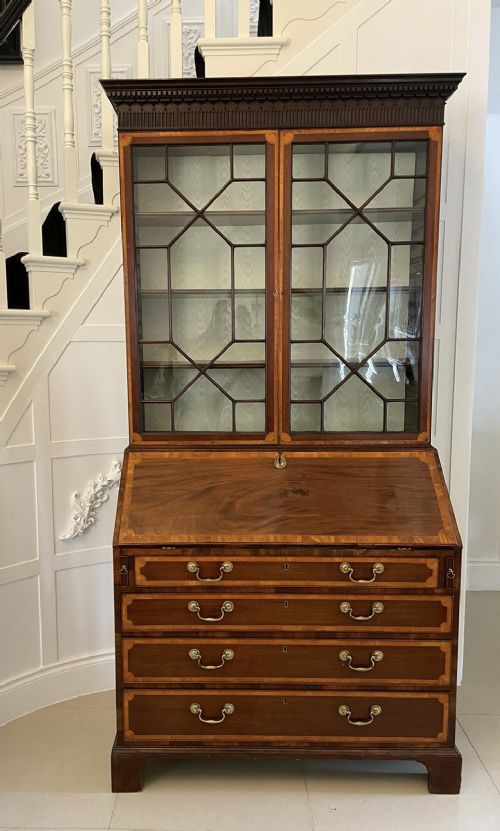
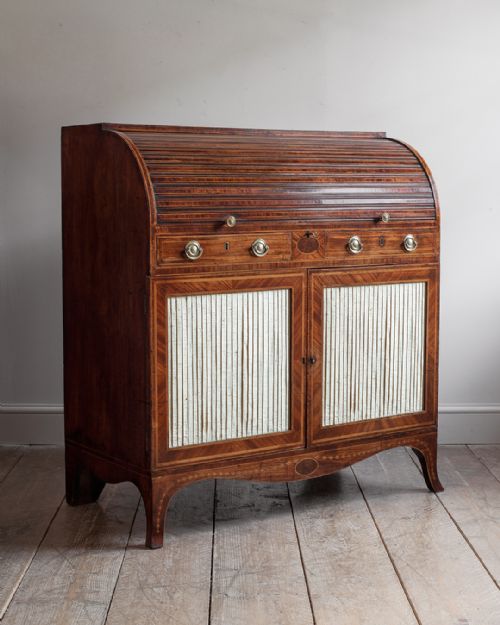
A georgian inlaid writing bureau brings together functional workspace and disciplined storage through a hinged writing flap that conceals inner drawers and pigeonholes. The selection encompasses forms ranging from compact slant-front writing desks to towering bureau bookcases and refined cylinder desks.
Pieces from this category date primarily from the eighteenth and nineteenth centuries, spanning Georgian, Regency, and later Edwardian revival periods. Mahogany, walnut, and oak form the structural foundation of most examples encountered here, enriched by contrasting wood details.
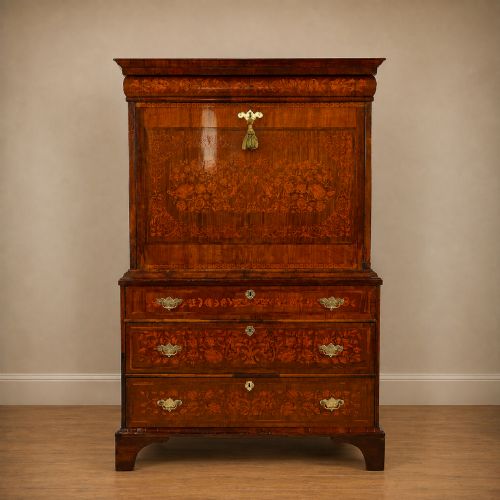
Makers utilised various regional interpretations, producing English cabinetwork alongside Dutch and Maltese marquetry variants. The primary focus remains on drop-front writing desks and taller bookcase combinations designed for domestic studies and libraries.
Materials and construction techniques
Cabinetmakers constructed carcass frames using solid timbers such as mahogany, oak, walnut, and fruitwood, applying figured veneers to principal display surfaces. Flame mahogany and burr walnut frequently provide rich grain patterns across primary panels.
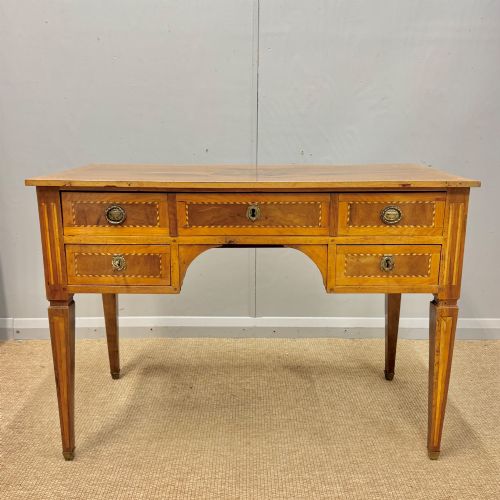
Decorative enrichment relies on contrasting timber inlays, including satinwood, partridgewood, and ebony, alongside detailed floral marquetry and herringbone banding. Metal hardware such as brass ring handles and escutcheons complement the woodwork, while writing surfaces often incorporate inset leather.
Several desks conceal miniature secret drawers behind sliding pigeonhole partitions, designed to keep private correspondence safe from prying eyes.
Assessing construction standards
Quality rests on the selection and matching of wood veneers, particularly where flame mahogany or burr walnut wraps around curved cylinder fronts and drop flaps. Precise execution of satinwood inlay and marquetry panels distinguishes standard workshop production from finer cabinetwork.
Internal organisation within the writing compartment reveals the maker's attention to detail, demonstrated by shaped pigeonholes, secret compartments, and small drawers constructed with clean dovetails. The integration of glazed upper bookcase sections and original brass hardware further separates notable pieces from simpler domestic desks.
The Georgian Inlaid Writing Bureau Glossary
- Bureau
- A desk featuring a sloping hinged flap that opens to reveal a fitted interior of small drawers and pigeonholes. It typically sits on a chest of drawers or a stand.
- Secretaire bookcase
- A tall cabinet combining a fitted writing drawer or drop-front desk compartment with upper shelving enclosed by doors. These pieces served dual functions for writing and library storage.
- Tambour
- A flexible sliding shutter formed from narrow vertical strips of wood glued to a canvas backing. It conceals pigeonholes and writing slides on cylinder desks.
- Marquetry
- Decorative veneer work forming pictorial or geometric patterns using various coloured woods. It differs from simple inlay by covering the entire surface in a mosaic design.
- Escritoire
- A standing writing cabinet fitted with a drop front or falling flap. The term frequently applies to continental and eighteenth-century examples.
Georgian Inlaid Writing Bureau: Frequently Asked Questions
What is a georgian inlaid writing bureau?
A georgian inlaid writing bureau is a traditional desk featuring a hinged writing flap that drops down to reveal internal compartments, supported by a chest of drawers or cabinet base.
These pieces typically incorporate decorative wood veneers and contrasting bandings, combining practical writing space with domestic storage.
How did people use bureau bookcases?
Bureau bookcases served as multifunctional furniture for correspondence, record-keeping, and book storage in the home. The upper glazed sections displayed bound volumes, while the lower writing compartment provided a private desk surface.
The fitted interior compartments held stationery, account books, and letters securely behind locked doors and flaps.
How do I care for antique wood surfaces?
Antique mahogany, walnut, and satinwood benefit from stable indoor humidity away from direct sunlight and heat sources. Regular dusting with a soft, dry cloth preserves the polished finish.
Applications of appropriate wax polish help maintain the moisture balance of vintage timber without building up heavy residue.
How do I distinguish eighteenth-century pieces from later revivals?
Earlier eighteenth-century pieces display construction methods such as hand-cut dovetails, native secondary timbers, and period-specific cabinet proportions. Stylistic details often follow strict Georgian or Sheraton design canons.
Edwardian Sheraton revival items from later decades typically show lighter structural framing, machine-processed secondary elements, and distinct twentieth-century finishing materials.