
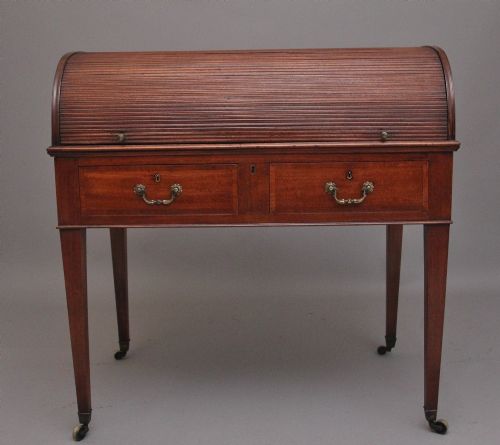


Georgian Roll Top Bureau
A georgian roll top bureau combines the security of a cabinet with a fitted writing slope, offering a clever enclosed workspace.
Georgian Roll Top Bureau
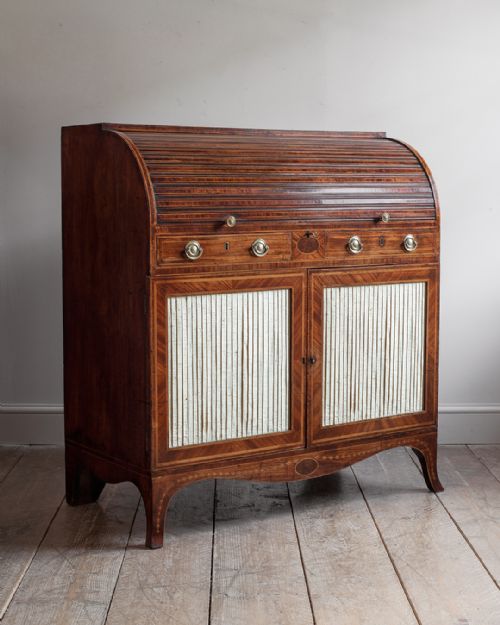
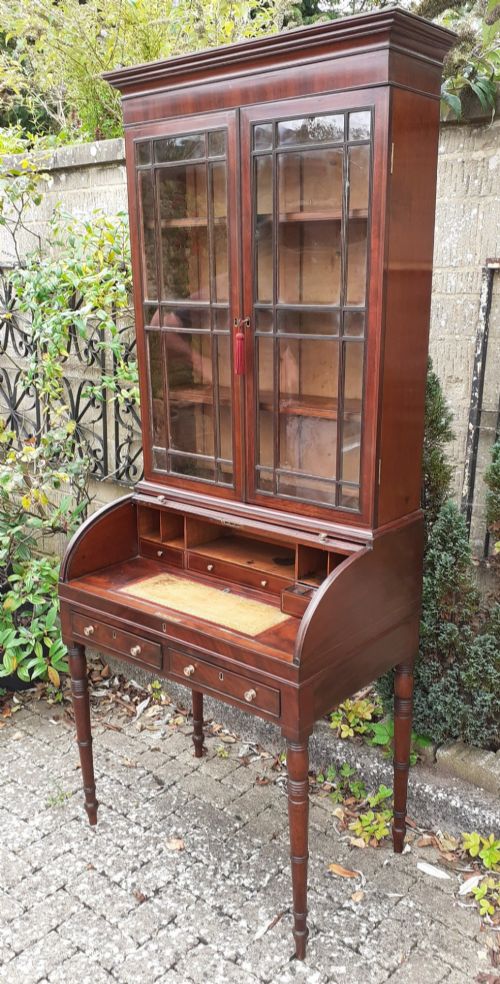
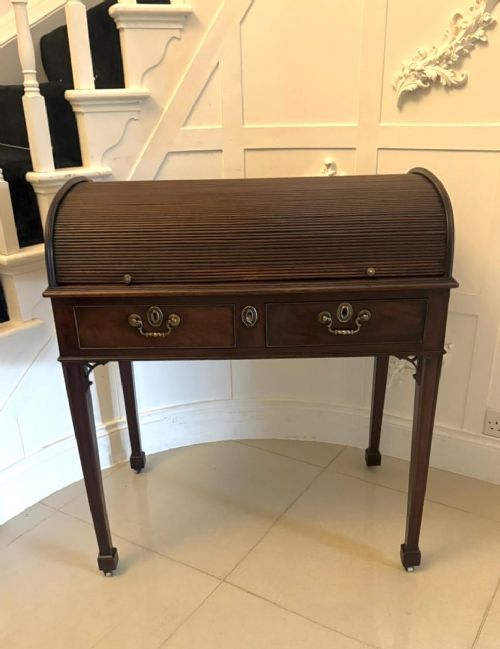
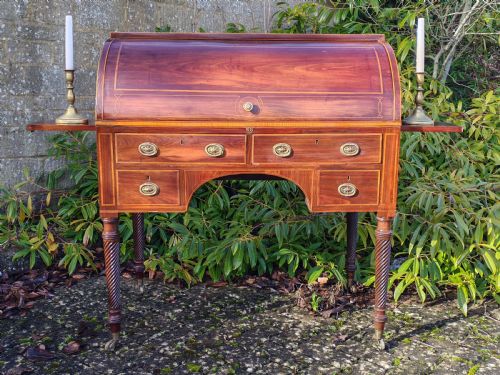
A georgian roll top bureau takes many forms on this page, including compact cylinder desks, ladies writing tables, and large bureau bookcases. These pieces date across the Georgian, Regency, and early 19th-century periods, capturing an era of refined domestic administration.
The primary forms utilise a rolling or cylindrical shutter that conceals pigeonholes, small drawers, and pull-out writing slides lined with leather or textile. Buyers frequently encounter mahogany examples alongside more decorative satinwood, rosewood, and inlaid variations.
Craftsmen built these desks for private correspondence and estate management, reflecting the changing social habits of the period. The selection ranges from modest writing cabinets to architectural bookcase combinations fitted with glass doors.
Materials and Construction
Cabinetmakers constructed the foundational carcases of these desks using solid mahogany, alongside decorative secondary timbers such as satinwood, rosewood, and yew wood. The sliding cylinder mechanism required precise carpentry so the curved slats or solid panel moved smoothly within concealed tracks.
Surface decoration relies upon fine cabinetmaking techniques including satinwood inlay, floral marquetry, and contrasting stringing. Metalwork components typically feature brass ring handles and fitted locks to secure the personal papers stored within.
Listings on this page feature multiple examples from the George III and Regency periods, utilising mahogany, satinwood, and rosewood.
Factors of Quality
The distinction between standard cabinet work and exceptional craftsmanship lies in the selection of figured timbers and the precision of the internal stationery fittings. Superior examples display thoughtful integration of satinwood crossbanding, delicate inlay, and well-proportioned secret compartments.
The mechanical action of the cylinder top indicates the skill of the original maker, where a balanced weight and effortless glide separate fine workshops from heavier commercial output. Original brass hardware, intact leather writing surfaces, and matched grain patterns further elevate the standing of a piece.
Tudor & Burrey·John Mclean
The Georgian Roll Top Bureau Glossary
- Tambour
- A flexible shutter made from narrow strips of wood glued to a canvas backing, allowing the cover to slide around a curved track. This mechanism conceals the writing surface and interior drawers.
- Cylinder desk
- A writing desk featuring a quarter-circle or half-cylinder solid wooden lid that rolls back into the body of the desk. It functions similarly to a tambour but uses a rigid curved panel.
- Secretaire
- A piece of furniture designed for writing, often incorporating a fall-front or cylinder mechanism that opens to reveal internal compartments and small drawers.
- Crossbanding
- A decorative border technique where veneer is laid so the grain runs at right angles to the surrounding wood. It frames the primary panels of tabletops and drawer fronts.
- Bonheur du jour
- A light lady's writing desk featuring a small cabinet or set of drawers on top of the writing surface. These desks appeared frequently during the late 18th century.
Georgian Roll Top Bureau: Frequently Asked Questions
What is the difference between a tambour and a cylinder desk?
A tambour desk uses a flexible curtain of small wooden slats that slide around a track to cover the desk interior.
A cylinder desk uses a single curved solid panel that rotates backward into the body of the furniture on a pivot axis.
How do I identify a Georgian bureau?
Georgian pieces display the proportion, timber selection, and construction methods characteristic of the 18th and early 19th centuries. Look for secondary woods like oak or pine inside drawers alongside period brass hardware.
Stylistic cues include Hepplewhite or Sheraton influence, evident in tapered legs, delicate stringing, and contrasting satinwood veneers.
Were these desks used by women or men?
Cabinetmakers built various sizes to suit different domestic roles, ranging from large estate writing desks for gentlemen to smaller satinwood examples designated for ladies.
Compact versions placed in private parlours served for correspondence, while substantial bureau bookcases managed household and business accounts.
How should I care for a satinwood cylinder desk?
Protect antique timber surfaces by maintaining stable room humidity and keeping desks away from direct sunlight and heat sources. Natural wax polish applied sparingly preserves the finish without building up residue.
Avoid placing liquids directly on leather or wood writing surfaces to prevent staining the historic materials.