
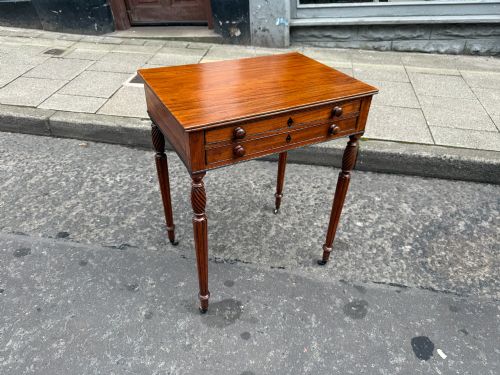
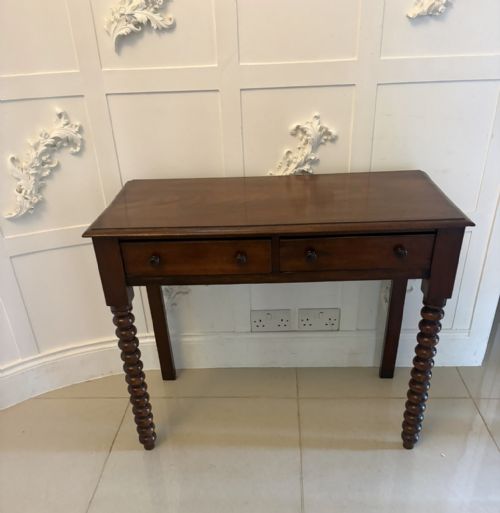
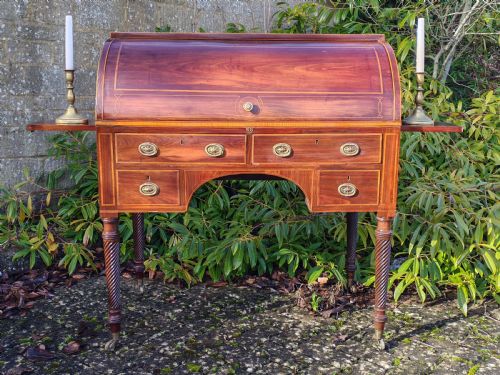


Spiral Turned Leg Desk
A spiral turned leg desk brings tactile warmth to a room, offering sturdy construction and enduring architectural detail.
Spiral Turned Leg Desk
A spiral turned leg desk combines a functional writing surface with the distinctive twisted woodwork seen across seventeenth-century and nineteenth-century pieces. Buyers searching for a spiral turned leg desk encounter varied forms including Georgian and Victorian variations.
The physical evidence on this page demonstrates that desks and writing tables appear alongside side tables and chairs featuring similar turned woodwork. This layout shows how the twisted turning motif crosses multiple furniture forms within the inventory.
Makers working during the Regency and Victorian eras adopted these traditional turns for their writing furniture. Selecting a piece means choosing between compact nineteenth-century examples and earlier seventeenth-century forms.
Materials and construction
Cabinet makers constructed these pieces using dense hardwoods such as mahogany and oak, applying walnut veneers and intricate marquetry for decorative effect. Brass fittings frequently complete the construction of writing tables and desks.
Turning timber on a lathe created the characteristic spiral profiles found on the legs and supports. Craftsmen then joined these turned members to the main carcase using traditional joinery methods.
Assessing quality
Quality rests upon the precision of the timber turning and the depth of the grain in the mahogany or oak. Superior examples display crisp definition along the spiral twists without excessive sanding smoothing away the original contours.
The integrity of the structural joints and the quality of secondary timbers dictate the longevity of the desk. Master craftsmen ensured that the turned legs bore the weight of the writing surface evenly and securely.
The Spiral Turned Leg Desk Glossary
- Spiral turn
- A woodworking technique where timber is cut and shaped into a continuous helical twist resembling a screw. This decorative form defines the legs of seventeenth-century and later furniture.
- Marquetry
- The art of applying decorative pieces of veneer to a structural carcase to form geometric or floral patterns. Eighteenth-century examples utilise this technique on tabletops.
- Cylinder top
- A desk design featuring a curved rolling shutter that encloses the writing surface and pigeonholes. This mechanical form protects correspondence when closed.
- Carver arm chair
- A wooden seating item with armrests, designed to match a set of dining chairs or to stand at a desk. These chairs appear in Regency and Georgian inventories.
- Side table
- A small functional table designed to stand against a wall. Examples in this inventory feature parquetry and barley twist legs.
Spiral Turned Leg Desk: Frequently Asked Questions
What periods do these desks date from?
The pieces span from the late seventeenth century through the Regency, Georgian, and Victorian eras.
Craftsmen across these periods utilised traditional turning techniques on oak, mahogany, and walnut furniture.
Are these desks suitable for daily use?
Most writing tables and desks provide stable working surfaces for modern stationery and laptop computers.
Buyers should consider the height and kneehole clearance of each specific nineteenth-century or earlier desk before daily use.
How do I distinguish a Georgian desk?
Georgian desks typically exhibit restrained classical proportions, premium mahogany construction, and refined drawer dovetailing.
Makers of this era focused on functional elegance rather than excessive surface ornamentation.
What is the difference between a side table and a desk?
A side table offers a flat surface with or without drawers, designed primarily for display or serving.
A desk incorporates fitted interiors, drawers, or sloping writing surfaces intended specifically for correspondence and paperwork.