


Georgian Hand Mirror
A georgian hand mirror is a portable looking glass from the eighteenth or nineteenth century, offering fine painted lacquer and rich timber framing for personal grooming.
Georgian Hand Mirror
When you search for georgian hand mirror, you find portable looking glasses dating from the Georgian period through to later revivals like the Regency era, Victorian times, and early twentieth century interpretations. These pieces appear in forms designed for handheld use, travel, or dressing table grooming, often featuring double-sided plates or small folding easel backs.
The versions you are most likely to meet on this page span styles from Chinoiserie and Neoclassical to Continental Rococo and George I style. Makers utilised various woods and metals, creating objects that served practical daily vanity alongside decorative display in period interiors.
How they were made
The evidence records materials such as glass, mirror glass, wood, lacquered wood, metal, gilt, paint, boxwood, mahogany, teak, and giltwood. Makers applied these through specialised techniques, combining hand-carved decoration with painted silk, hand-cut mirror plates, and intricate lacquer work.
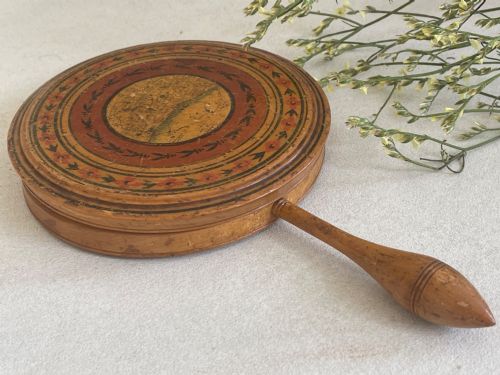
Framing often involved turned or carved timbers, sometimes enhanced with brass handles, old paper labels, or inset hand-painted foliate panels. Construction ranged from solid hardwoods to ebonised finishes and delicate Tunbridge Ware detailing.
Listings feature periods spanning from the 18th Century and Georgian era through Regency, Victorian, 1900, and 1920.
What varies in quality
Quality in these looking glasses rests upon the original condition of the glass plate and the execution of the decorative surface, whether that involves hand-carved giltwood or detailed Chinoiserie lacquer. Pieces retaining their original mirror plate or early painted panels command greater interest from collectors.
The choice of materials and the finesse of the joinery further distinguish the pieces, with substantial hardwoods and crisp hand-carved ornamentation marking out the better examples from simpler painted alternatives.
The Georgian Hand Mirror Glossary
- Chinoiserie
- European decorative style inspired by Chinese artistic traditions, frequently featuring painted lacquer scenes on furniture and mirrors.
- Giltwood
- Timber that has been coated with a thin layer of gold leaf or gilt, common in decorative mirror frames of the period.
- Tunbridge Ware
- Small wooden objects decorated with characteristic mosaic woodwork formed from tiny polychrome wood blocks.
- Ebonised
- Wood finished with a dark stain or polish to imitate the appearance of expensive ebony.
Georgian Hand Mirror: Frequently Asked Questions
How were hand mirrors used?
These portable mirrors served for personal grooming and dressing at a time when fixed wall looking glasses were less common in private chambers.
Owners carried them between rooms or packed them into travelling cases for use on journeys.
How do I spot a Regency mirror?
Regency pieces often display classical motifs, ebonised finishes, or giltwood frames influenced by nineteenth-century design trends.
Look for double-sided handheld formats and distinct joinery traits typical of the early eighteen hundreds.
Are all these mirrors eighteenth century?
The selection includes genuine Georgian pieces alongside later nineteenth-century interpretations, Victorian revivals, and early twentieth-century examples.
Stylistic revivals frequently copied earlier Georgian and Regency forms using traditional construction methods.
What is foxed mercury glass?
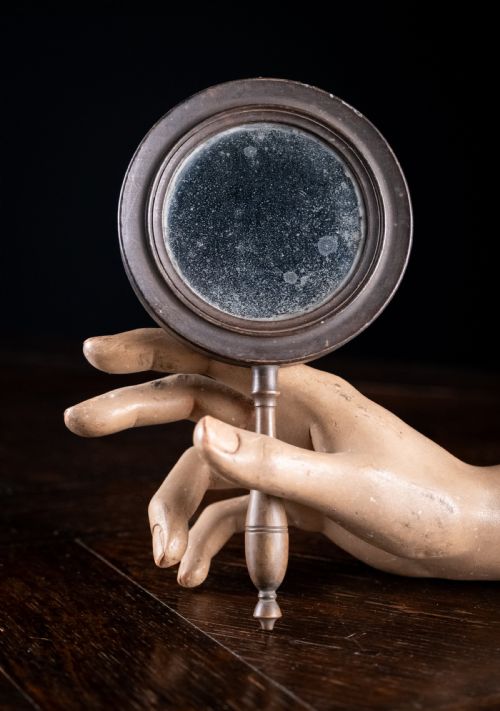
Foxing refers to the natural ageing spots and discoloration that develop behind old mirror glass over long periods.
Original mercury plates often display this charming speckling as a sign of considerable age.