
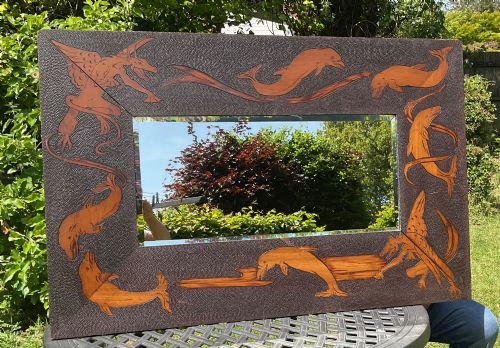


Wooden Hand Mirror
A wooden hand mirror is a tactile object of daily grooming that brings traditional craftsmanship to a modern dressing table.
Wooden Hand Mirror
When you search for a wooden hand mirror, you encounter portable looking glasses framed in timbers like oak, walnut, teak, and limewood. These pieces range from Georgian and Regency double-sided vanity designs to Victorian carved works.
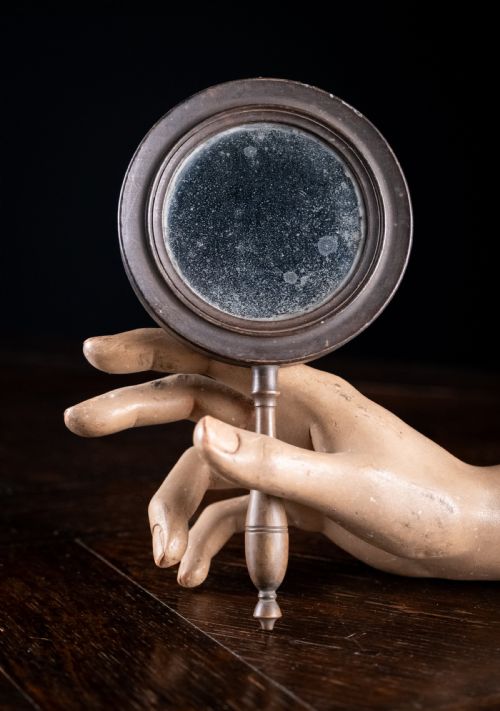
While many listings describe wall-mounted pieces or larger frames, portable hand-held variants survive from the Regency period, often featuring pivoting plates and ebonised finishes.
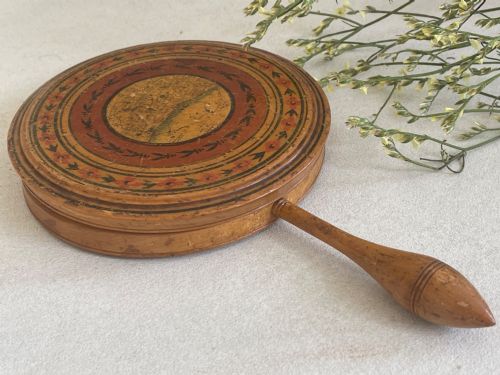
The materials span European hardwoods alongside regional specialisms such as Anglo-Indian teak and Tunbridge Ware, demonstrating a broad geographical spread in domestic timber accessories.
Materials and construction
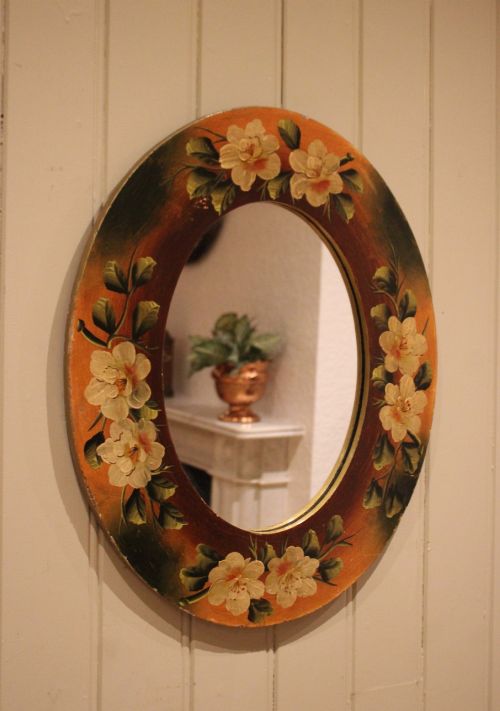
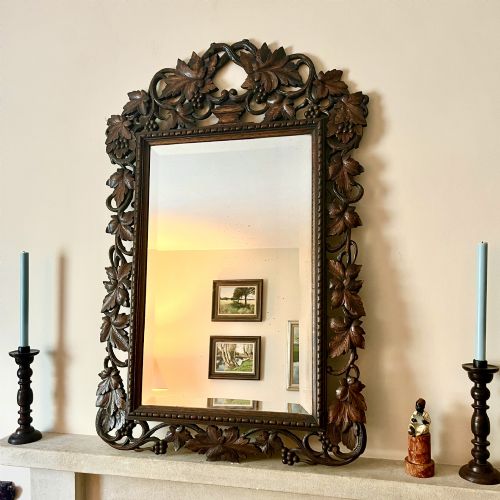
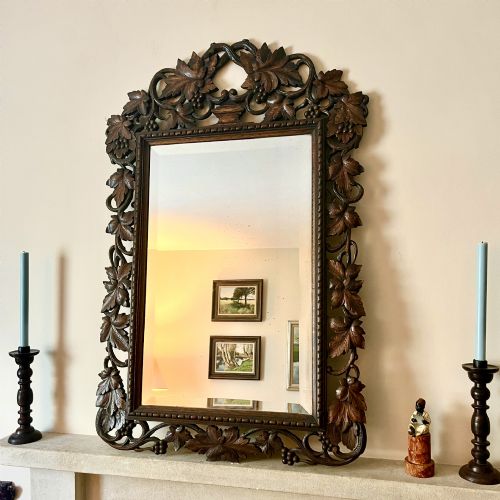
Makers utilised solid timbers including oak, walnut, teak, and limewood, shaping the frames through manual carving and joinery. Carved motifs range from floral painted surfaces to deep relief work seen in Black Forest examples.
Reflecting the period, mercury or early mirror glass plate is set within the timber housing, sometimes secured with original backing boards and labels.
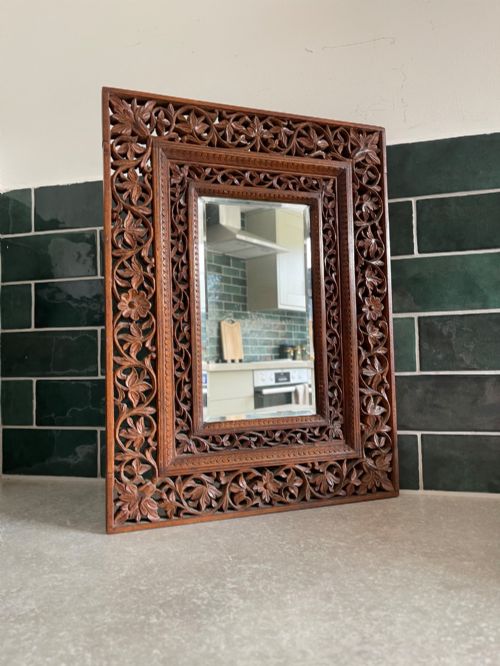
The listings combine British periods like Georgian and Regency with global influences including Anglo-Indian teak and North Indian craftsmanship.
Assessing quality
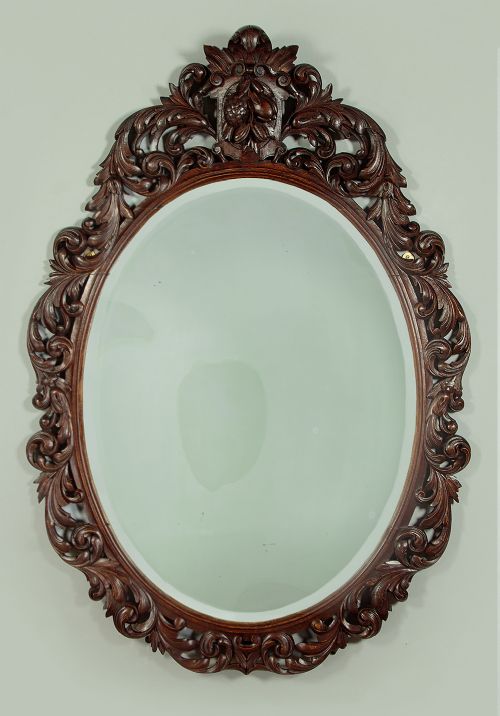
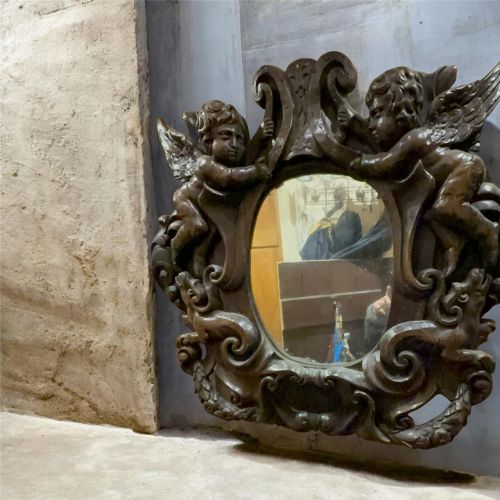
Quality rests in the depth and crispness of the timber carving, distinguishing simple turned surrounds from deeply articulated foliage, birds, or figurative motifs. The integration of the glass plate into the wooden rebate also marks the standard of the maker's hand.
Condition of the original mirror plate and the stability of the timber grain dictate the standing of an individual piece, alongside the preservation of original paint or ebonised finishes.
The Wooden Hand Mirror Glossary
- Ebonised
- Wood treated with a dark stain or finish to imitate ebony. This technique was popular in Regency and Victorian frames for high contrast.
- Tunbridge Ware
- Small wooden objects decorated with mosaic woodwork formed from tiny geometrically arranged coloured wood segments. It originates from Kent in England.
- Limewood
- A pale, fine-grained timber favoured by carvers because it resists splitting and allows for intricate undercut details. It appears frequently in nineteenth-century decorative frames.
- Mirror plate
- The glass panel that provides the reflection. Older plates often display slight foxing or distortion inherent to historical manufacturing methods.
- Regency
- A British design period spanning the early nineteenth century. Pieces from this era often incorporate classical restraint alongside bold geometric forms.
Wooden Hand Mirror: Frequently Asked Questions
How do I date a wooden mirror?
Dating relies on examining the timber species, the method of joint construction, and the characteristics of the glass plate itself. Subtle tool marks and backing materials often point directly to Georgian or Victorian workshops.
Style indicators such as Regency ebonisation or Black Forest carving further narrow the decade of production.
Are these mirrors meant for daily use?
While sturdy enough for careful handling, historical hand mirrors function best as decorative display items on a dressing table or vanity. The vintage glass plates and aged timber frames require gentle treatment to preserve their integrity.
Keeping them out of direct sunlight prevents the wood from drying out and cracking.
What is Black Forest carving?
Black Forest carving refers to highly detailed wooden ornaments produced in the Brienz region of Switzerland during the nineteenth century. These pieces typically feature naturalistic animals, birds of prey, and deeply carved foliage.
The style is easily recognised by its dramatic three-dimensional depth and dark-stained timber.
How do I clean an antique frame?
Cleaning requires a soft, dry cloth to remove dust from the carved wooden recesses without disturbing the patina. Water and chemical polishes should be avoided entirely to protect the historic finish and any painted details.
Glass plates can be wiped gently with a minimal amount of specialist cleaner applied to the cloth rather than the glass.