




Turned Wood Vanity Mirror
A turned wood vanity mirror offers a clear reflection through time, combining timber and glass in a portable format.
Turned Wood Vanity Mirror
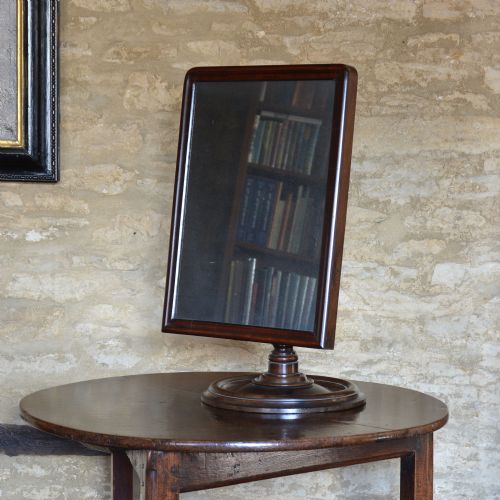
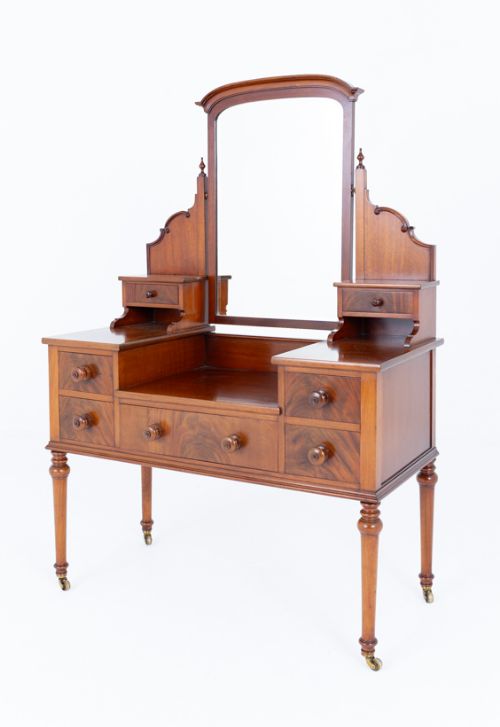
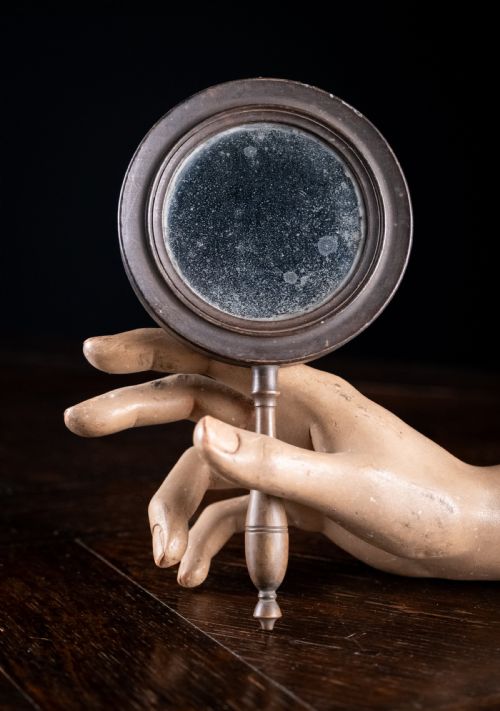
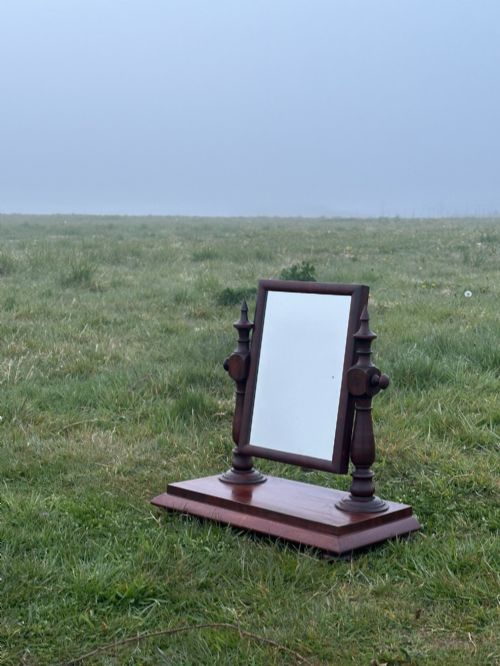
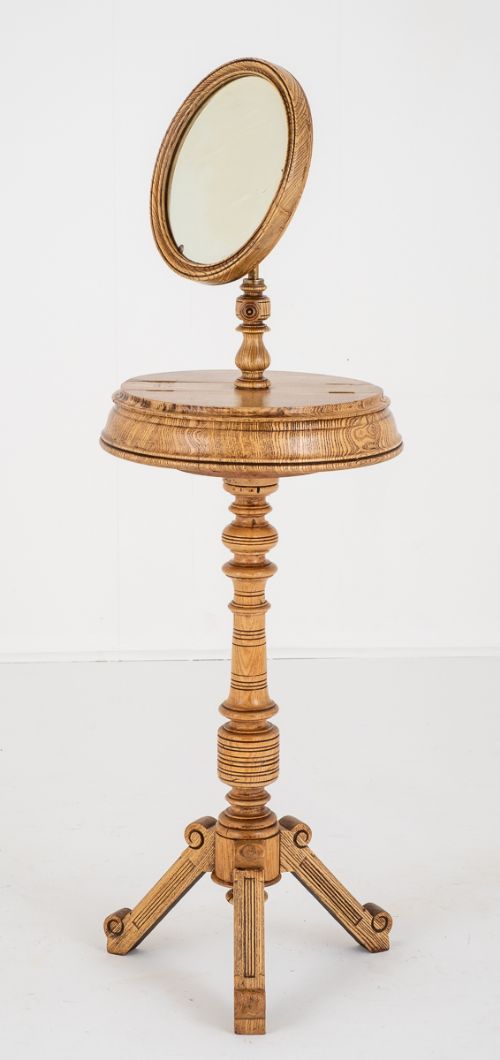
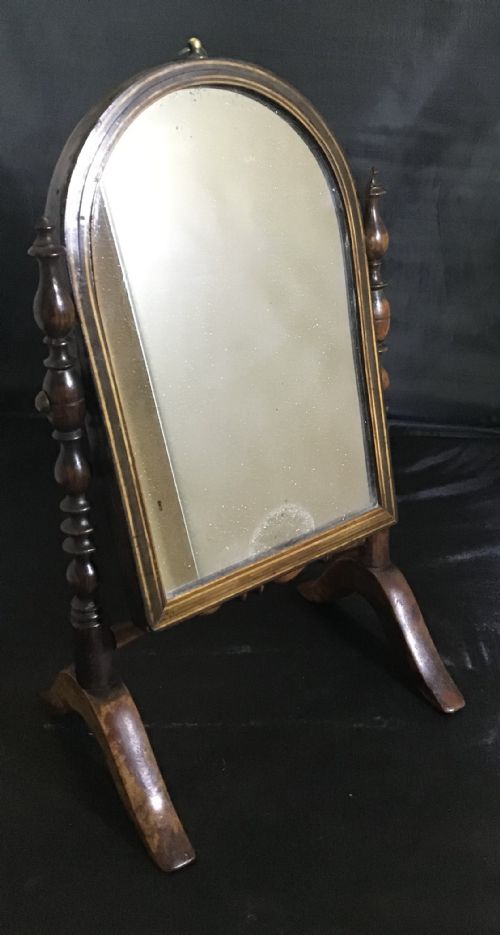
A turned wood vanity mirror is a reflective glass surface supported by a turned wooden frame, designed for personal grooming on a table or dressing surface. These pieces appear in forms ranging from handheld accessories to larger swing mirrors and shaving stands.
The turned wood vanity mirror on this page spans several distinct eras, drawing from seventeenth-century origins through Georgian, Regency, Victorian, and late nineteenth-century styles. The most common varieties are portable dressing mirrors and handheld glasses framed in turned timbers.
Makers utilised various timber types to mount the glass plates, creating functional objects that doubled as decorative items for the boudoir or dressing table. Each example reflects the prevailing taste of its period, from simple utilitarian items to more elaborate travelling cases.
How they were made
Cabinetmakers shaped woods such as mahogany, walnut, boxwood, ash, and ebonised timber on a lathe to create the distinctive turned frames and supports. These turned elements provided both structural integrity and decorative profiles around the glass.
The reflective surfaces consist of traditional mirror glass or original plates set securely into wooden housings, often supplemented by brass fixtures or boxwood stringing. Travelling versions integrated protective wooden covers or stands for safe transit.
Some antique travelling mirrors came equipped with old paper labels tucked inside, proving that even centuries ago, owners liked to keep their receipts.
What varies in quality
The sophistication of the woodturning and the selection of timber dictate the distinction between standard items and finer examples. Richly figured walnut, mahogany, and contrasting boxwood inlay elevate the visual weight of the frame.
The preservation of the original glass plate and the smooth articulation of the swing mechanism influence the overall integrity of the piece. Superior construction ensures the mirror holds its angle firmly without sagging.
The Turned Wood Vanity Mirror Glossary
- Swing mirror
- A glass plate suspended within a frame that tilts on vertical pivots between two upright supports. This allows the user to adjust the viewing angle easily.
- Ebonised wood
- Timber treated with a dark finish to imitate expensive ebony. It provides a striking contrast against reflective glass.
- Boxwood
- A dense, pale wood frequently used for contrasting stringing, inlay, or turned details. Its fine grain permits intricate lathe work.
- Cheval mirror
- A large, free-standing full-length glass supported in a frame. These tall mirrors allow a person to view their entire outfit.
- Tunbridge ware
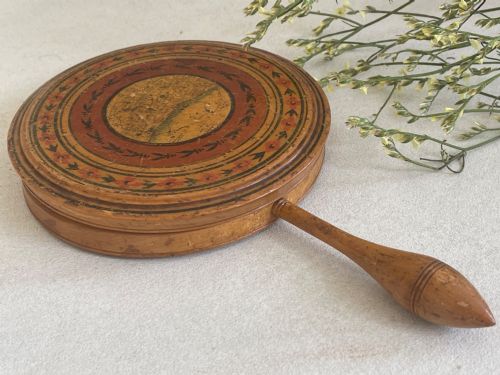
- Small wooden objects decorated with intricate mosaic patterns made from tiny segments of various naturally coloured woods. This technique created detailed geometric or pictorial designs on the surface.
Turned Wood Vanity Mirror: Frequently Asked Questions
What is a turned wood vanity mirror used for?
These mirrors serve as functional accessories for personal grooming, hair styling, and applying cosmetics. They provide a portable or tabletop reflective surface that can be adjusted to suit the user.
Historically, smaller handheld versions and travelling mirrors allowed individuals to maintain their grooming routines away from large stationary furniture. Larger table swing mirrors became permanent fixtures on dressing tables and chest of drawers.
How do I identify the period of a mirror?
Dating relies heavily on the timber used, the style of the woodturning, and the construction methods of the frame. Earlier pieces from the seventeenth and eighteenth centuries often feature walnut or boxwood, while nineteenth-century examples frequently utilise mahogany, ash, or ebonised finishes.
Examining the glass plate and the fittings can also provide clues to the age of the object. Hand-beveled edges, original mirror plates, and period brass hardware help anchor the piece to a specific era.
Where should I place a vanity mirror?
A vanity mirror sits comfortably on top of a dressing table, chest of drawers, or a dedicated shaving stand. Positioning it near a natural light source ensures optimal illumination for daily grooming tasks.
Because many examples are portable or feature swinging frames, you can easily adjust their position throughout the room. Ensure the supporting surface is stable to prevent the mirror from tipping.
What maintenance do these mirrors require?
Routine care involves gently dusting the turned wood frame with a soft, dry cloth to prevent dust accumulation. Avoid using harsh chemical sprays or excess water on the timber or the mirror plate.
Period glass can be fragile, so clean the surface sparingly with a mild glass cleaner applied to the cloth rather than directly to the mirror. Check the pivot screws periodically to ensure they remain secure.