

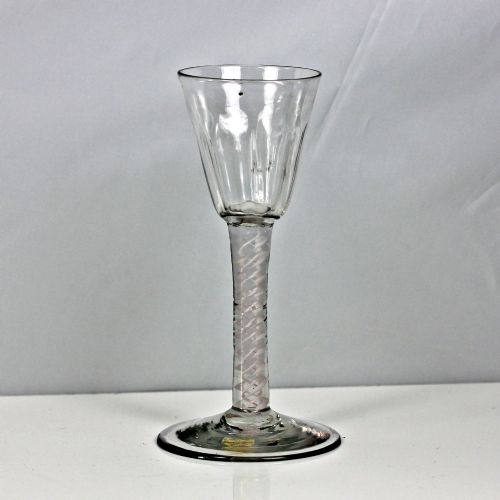
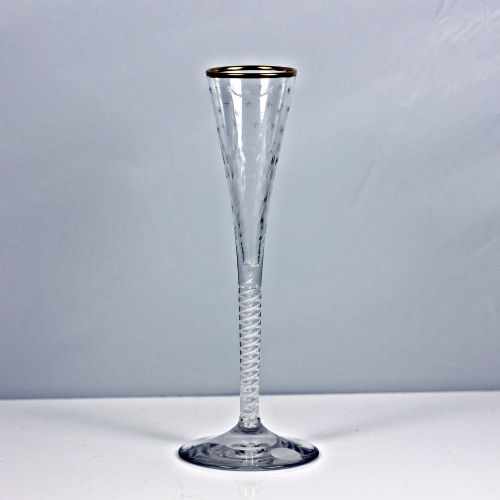
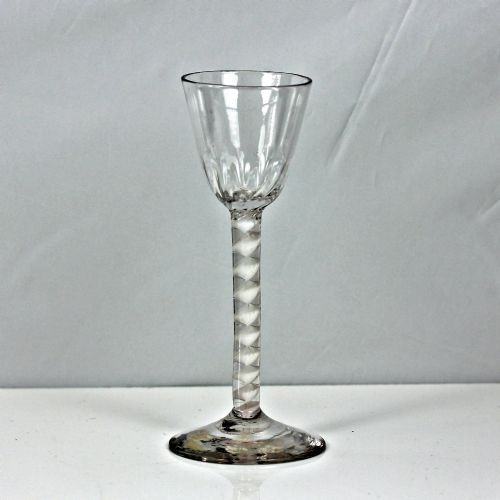
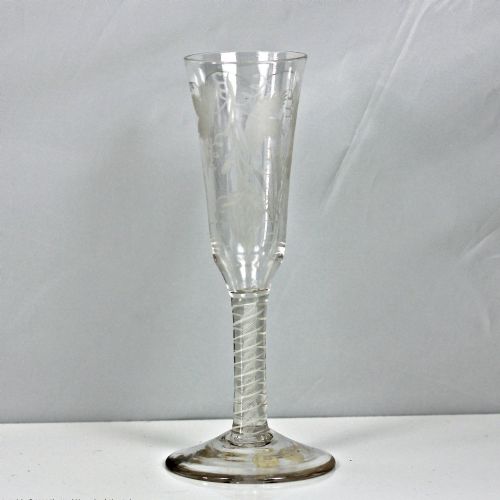






Georgian Fluted Drinking Glass
A georgian fluted drinking glass brings eighteenth-century craftsmanship to the table, offering tactile historical character through slender stems and moulded bowls.
Georgian Fluted Drinking Glass
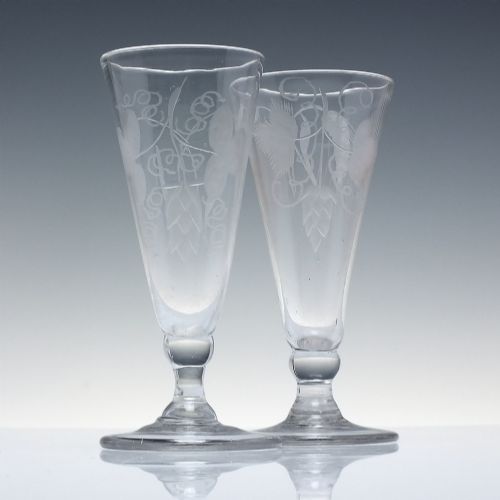
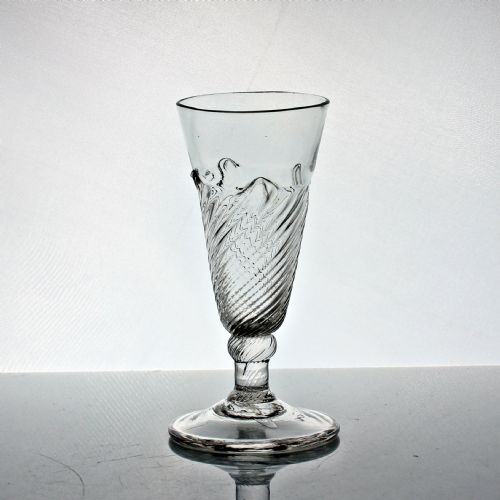
A georgian fluted drinking glass encompasses tall wine flutes, ale glasses, and ratafia glasses primarily originating from the eighteenth century. These pieces feature delicate optic moulding, flute-moulded bowls, and slender stems designed for formal dining and social toasts.
The selection ranges from dwarf ale glasses and champagne flutes to wine glasses with rounded funnel or ogee bowls. English examples from this era demonstrate distinct forming techniques, including folded feet and facet-cut stems.
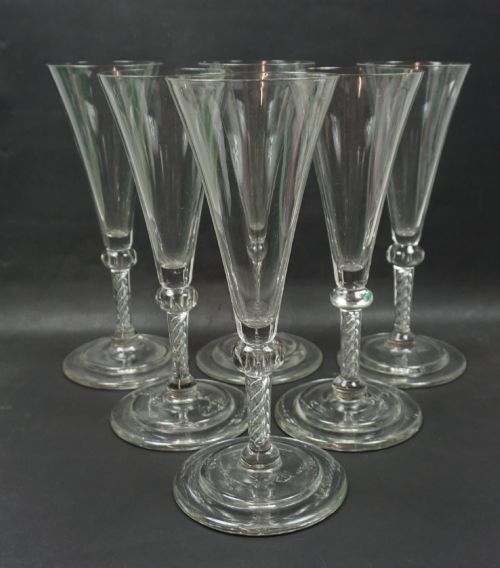
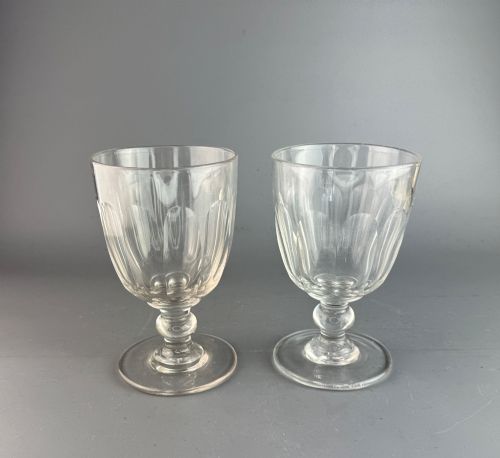
Later revivals and nineteenth-century rummers also appear alongside the core eighteenth-century pieces. Buyers frequently encounter air twists, opaque twists, and mixed twists within the stem formations.
What varies in quality
Quality rests on the crispness of the optic moulding and the symmetry of the twist formations within the stem. Superior examples display fine control in the thread distribution of opaque and air twists without distortion.
The depth and clarity of hand-engraving differentiate finer drinking vessels from simpler utility pieces. Well-balanced proportions, such as folded feet and evenly drawn metal, mark the upper tier of period production.
Georgian Fluted Drinking Glass Retail Price Guide 2026
Typical asking prices for georgian fluted drinking glass among the pieces listed under this phrase on Sellingantiques today, from the lower quarter to the upper quarter. They describe what is for sale here now, not the wider market.
Listings feature lead glass and flint glass spanning the eighteenth century, Victorian era, and the 1930s Georgian Revival.
The Georgian Fluted Drinking Glass Glossary
- Opaque twist
- A stem formation created by enclosing white enamel glass threads within clear lead glass. These threads are drawn and twisted into single or double series patterns during manufacture.
- Air twist
- A stem style containing elongated bubbles drawn into spirals inside the glass. This technique creates a shimmering effect when the glass catches the light.
- Flute-moulded
- A decorative vertical fluting applied to the lower portion of a bowl. It adds both structural rigidity and visual texture to the vessel.
- Ogee bowl
- An S-profile bowl shape curving outward at the rim and inward toward the stem. This form was widely utilised for fine wine and ale service.
- Ratafia glass
- A tall, slender glass designed for sweet liqueurs and cordials. These vessels often feature long bowls and intricate stems.
Georgian Fluted Drinking Glass: Frequently Asked Questions
What is a georgian fluted drinking glass used for?
These glasses served specific eighteenth-century beverages including ales, wines, champagne, and cordials. Taller flutes and ratafia glasses held sparkling or sweetened drinks during formal gatherings.
Today, collectors appreciate them as display items or utilise them carefully for special toasts. Their historic forms reflect the dining customs of the Georgian period.
How do I identify an 18th-century twist stem?
Twist stems contain either internal air channels or opaque white enamel threads shaped into spirals. Examining the interior of the glass reveals whether the twist is part of the solid drawn stem.
Earlier examples from the mid-eighteenth century often combine these twists with heavy lead glass metal. Tool marks at the pontil scar on the base further indicate period manufacture.
What does flute-moulded mean on these glasses?
Flute-moulding refers to vertical impressions or ribs running up the lower body of the bowl. Makers created this texture by blowing the hot glass into a ribbed dip-mould before expanding the shape.
This technique strengthens the vessel while scattering light across the drink. It appears frequently on eighteenth-century wine and ale glasses.
Are these glasses safe to use today?
While eighteenth-century lead glass is chemically stable, historic pieces require gentle handling due to their age and delicate structure. Hand washing in lukewarm water is essential to preserve the fragile metal.
Sudden temperature changes should be avoided to prevent thermal shock. Many collectors prefer to reserve them for display or occasional ceremonial use.