



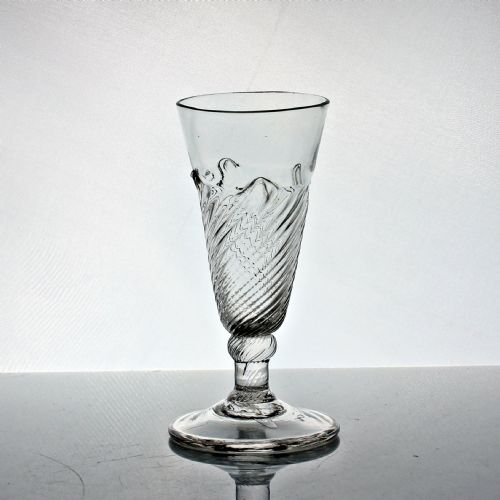


Georgian Engraved Ale Glass
A georgian engraved ale glass is a historic drinking vessel holding the grain motifs of its era, valued for its tactile stem and wheel-engraved bowl.
Georgian Engraved Ale Glass
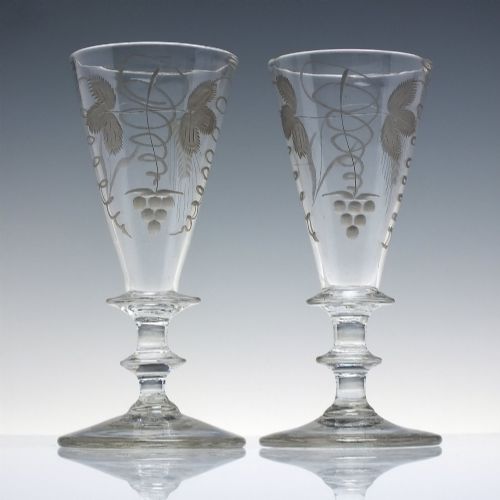
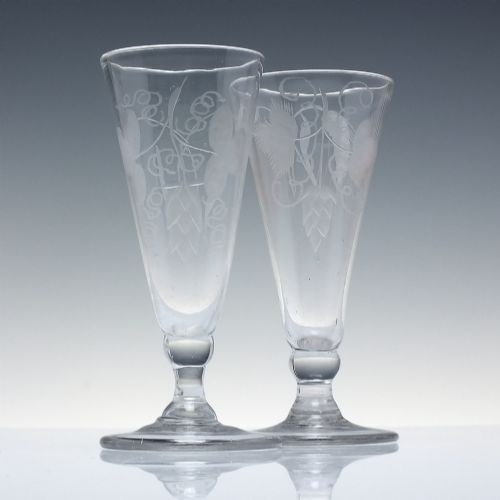
A georgian engraved ale glass is a historic drinking vessel designed for malt beverages, typically featuring a tall, slender bowl decorated with hops and barley. The versions most commonly found here date from the eighteenth century into the early nineteenth century, encompassing styles from plain stems to complex twists.
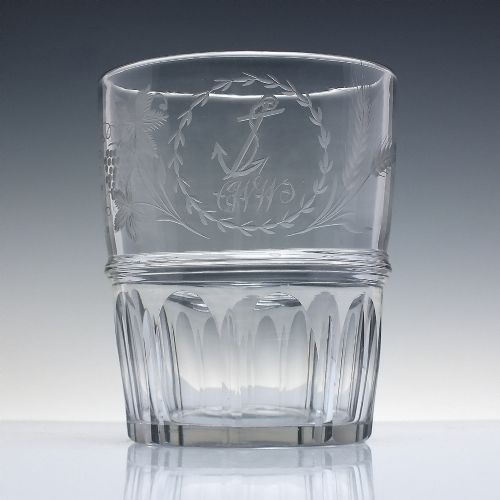
These glasses appear in various forms, including dwarf ales, flutes, rummers, and tumblers. Many carry detailed wheel engravings of botanical motifs related to the drink they once held, reflecting the tavern and domestic drinking habits of the period.
Materials and construction
Makers shaped these drinking vessels from lead glass, lead crystal, flint glass, and clear glass, sometimes incorporating enamel decoration. The heavy metal content of the lead metal gave the vessels clarity and weight in the hand.
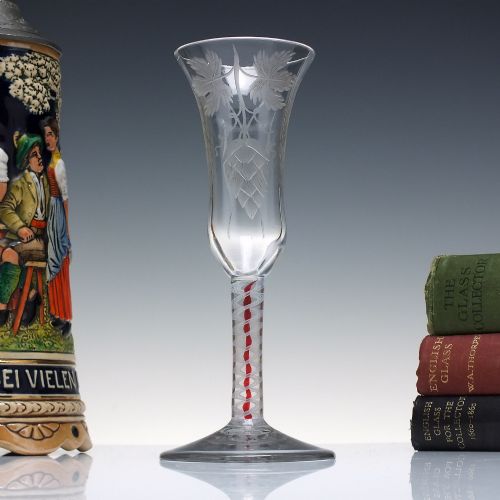
Stem construction involved drawing the glass or joining the bowl to air twist, opaque twist, colour twist, facet cut, or plain stems. Glassmakers manipulated air bubbles within the molten metal to form spiral threads inside the stem.
Assessing quality and form
Quality rests in the precision of the stem formation and the depth of the wheel engraving on the bowl. Crisp execution in air and opaque twists or clean geometric facet cutting distinguishes finer examples.
Proportion and metal weight also separate standard drinking vessels from exceptional pieces. Clarity of the clear or flint glass and the artistic merit of the hop and barley motifs dictate desirability.
The Georgian Engraved Ale Glass Glossary
- Air twist
- A stem containing internal spiral channels of trapped air formed during manufacture. These threads catch the light as the vessel turns.
- Opaque twist
- A stem enclosing fine threads of white or coloured enamel glass within the clear metal. This technique created dense, milky ribbons running through the stem.
- Flint glass
- A heavy, high-clarity glass containing lead oxide that replaced lighter potash metal. It provided the brilliant refractive quality seen in eighteenth-century drinking vessels.
- Facet cut
- Geometric planes ground and polished onto the surface of the bowl or stem. This decorative technique catches light and adds texture to the glass.
- Rummer
- A large, robust drinking glass with a short stem or footed base used for heavy ales and spirits. These sturdy vessels often feature hop and barley engravings.
Georgian Engraved Ale Glass: Frequently Asked Questions
What is a georgian engraved ale glass?
A georgian engraved ale glass is an eighteenth or early nineteenth-century drinking vessel created for malt beverages. These vessels typically feature tall bowls decorated with wheel-engraved hop and barley motifs.
Such pieces range from simple tavern glasses with plain stems to complex examples with air twists or opaque twist stems. They represent the domestic and social drinking customs of the Georgian period.
How do you date an ale glass?
Dating relies on the combination of stem construction, bowl shape, and engraving style. Plain stems and balustroid forms generally point towards the earlier eighteenth century, while facet cutting and colour twists emerge later.
The metal itself provides clues, as heavy lead glass and flint glass changed in composition and weight over the decades. Engraving motifs also evolved from simple floral lines to detailed botanical representations of hops and barley.
Were these glasses used for beer?
These vessels served for drinking ale, beer, and barley wine in homes and taverns. The narrow bowl shape was intended to preserve the head and aromas of the fermented grain.
Engravings of hops and barley directly reference the contents. Larger variants such as rummers and flip glasses handled stronger brews and larger measures.
What are air twist stems?
Air twist stems are formed by drawing out molten glass containing elongated air bubbles into helical threads. These internal spirals appear as shimmering ribbons inside the clear stem.
Makers combined single, double, or multi-spiral air twists with various bowl forms. This intricate technique required considerable skill from the glassblower.