

Georgian Drop Front Bureau
A georgian drop front bureau offers a hinged writing slope that opens to reveal fitted drawers and pigeonholes, combining practicality with enduring elegance.
Georgian Drop Front Bureau
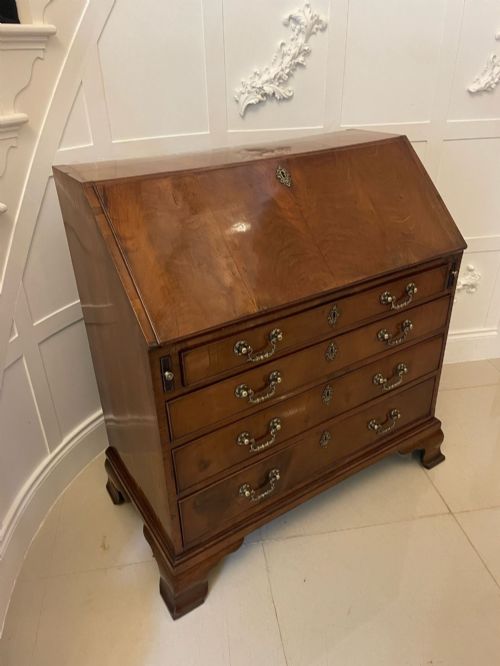
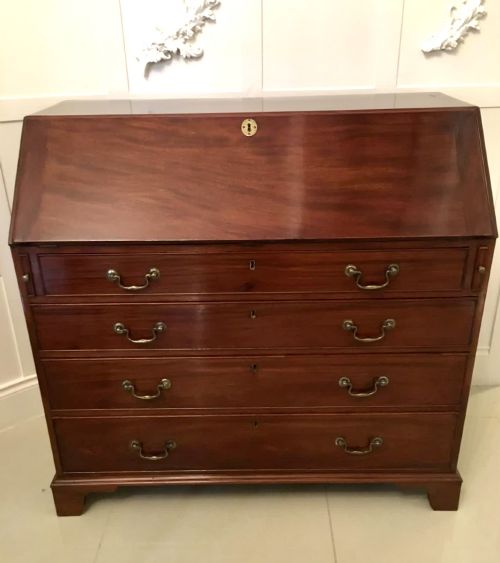
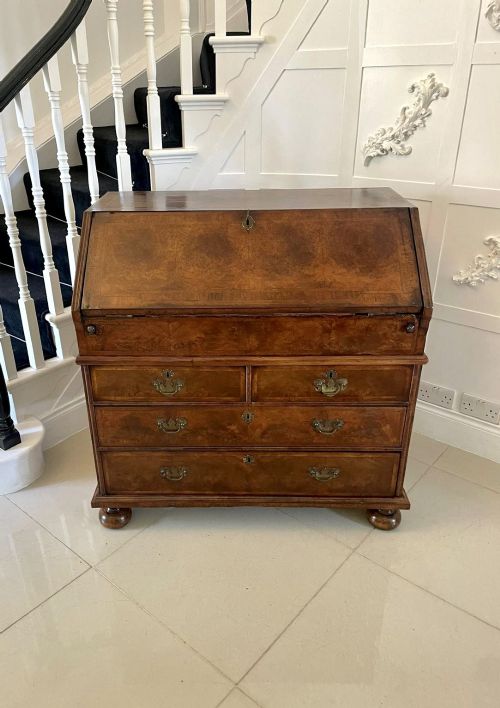
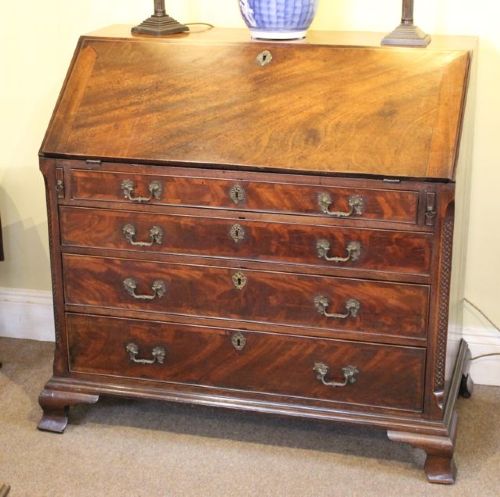
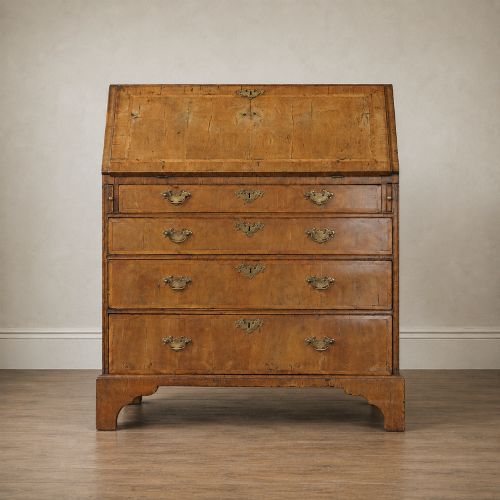
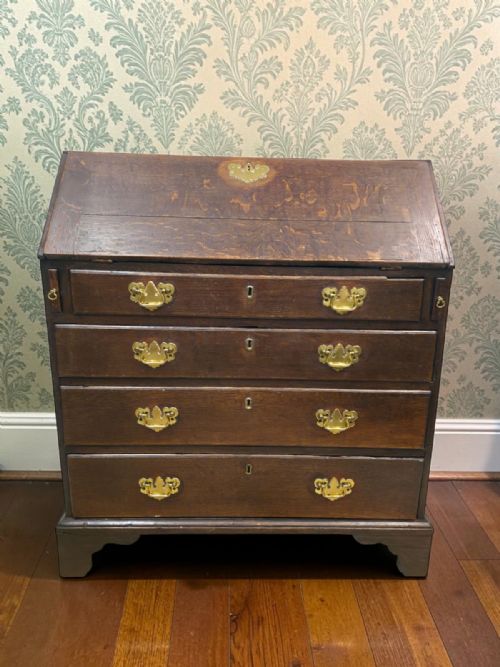
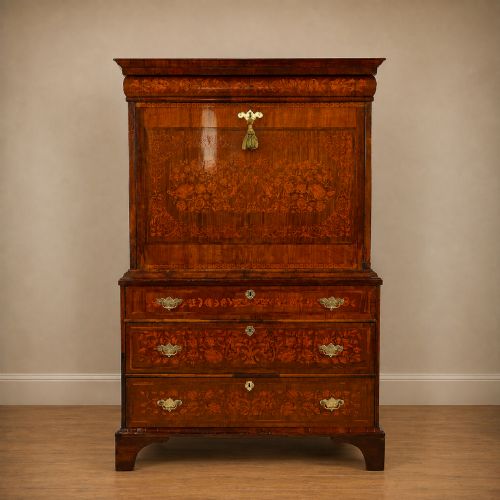
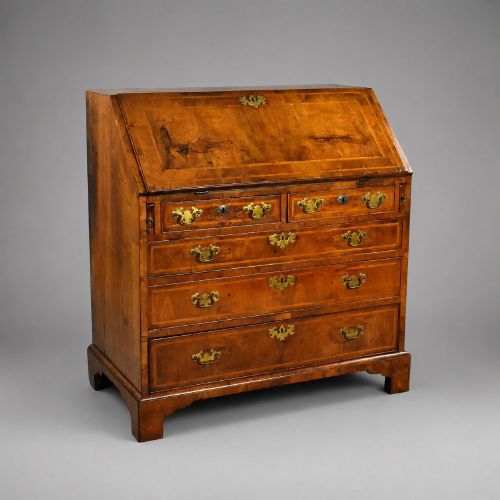
A georgian drop front bureau is a writing cabinet featuring a sloping lid that drops down to form a desk surface, often paired with upper bookcase sections or standing on bracket feet. These pieces span the eighteenth century and into the nineteenth century, reflecting periods such as George III, George II, and Regency styles alongside revival iterations.
Makers and workshops of the era produced these desks to serve both domestic and professional writing needs, incorporating internal compartments known as nests to secure correspondence and valuables.
Materials and construction methods
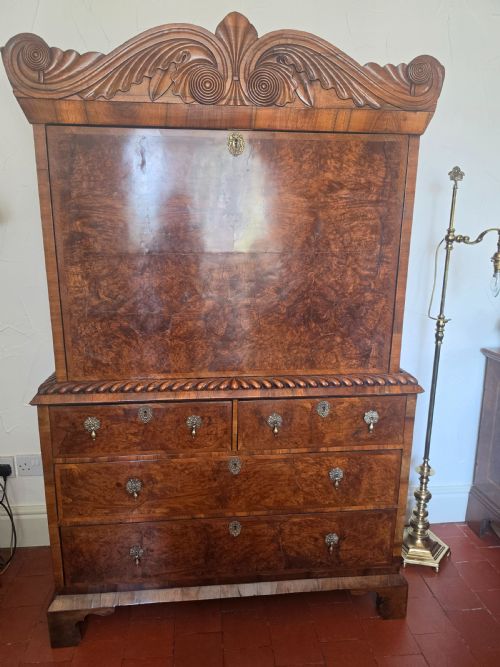
Construction relies heavily on dense hardwoods such as mahogany and walnut, frequently selected for figured grains, burr patterns, or enhanced through herringbone inlay and marquetry decoration. Timber is traditionally applied over robust secondary woods, utilising dovetail joints on drawer construction and solid brass hardware for handles and escutcheons.
The fall front itself requires precise joinery to bear weight when open, supported by lopers or hinges that distribute strain evenly across the carcass of the desk.
Georgian Drop Front Bureau Retail Price Guide 2026
Typical asking prices for georgian drop front bureau among the pieces listed under this phrase on Sellingantiques today, from the lower quarter to the upper quarter. They describe what is for sale here now, not the wider market.
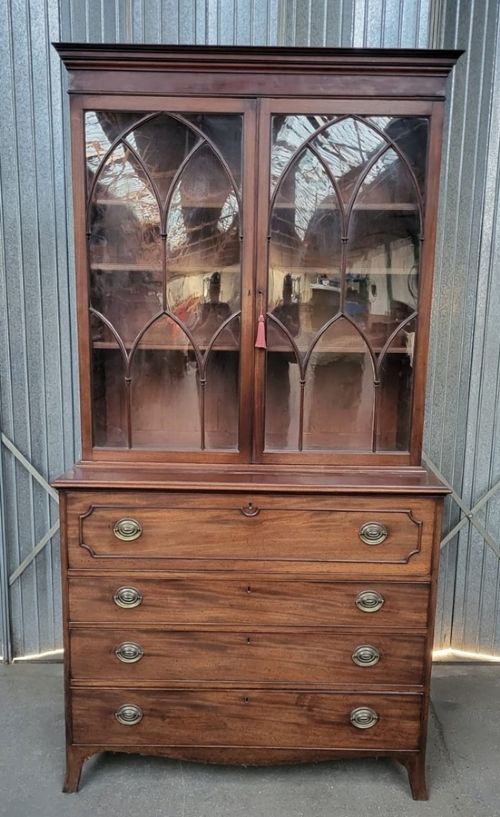
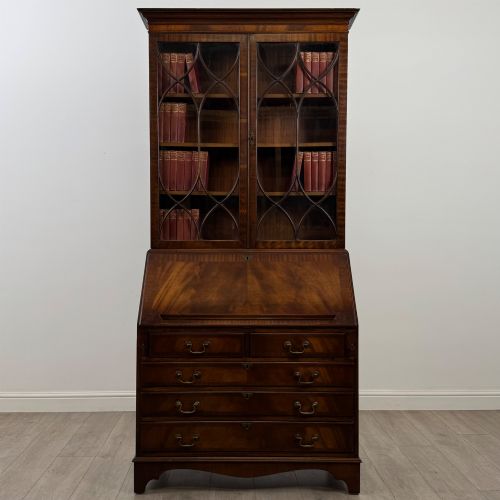
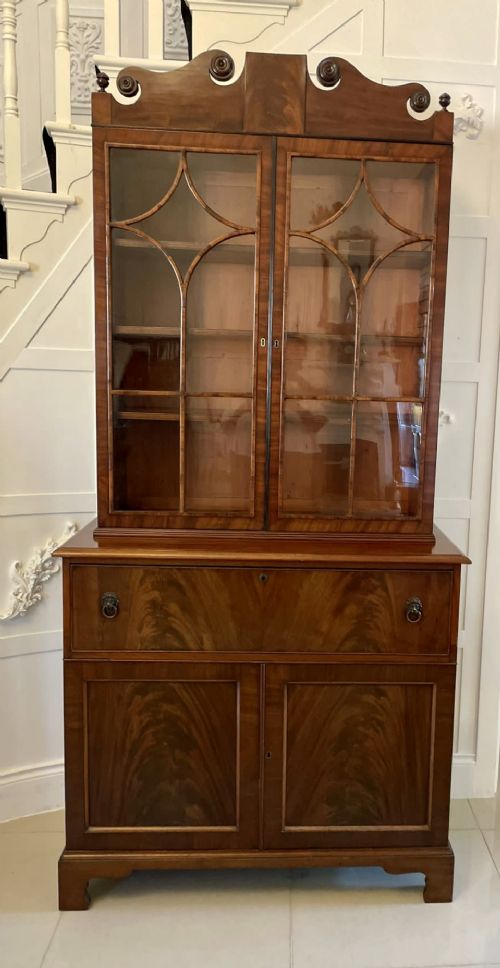
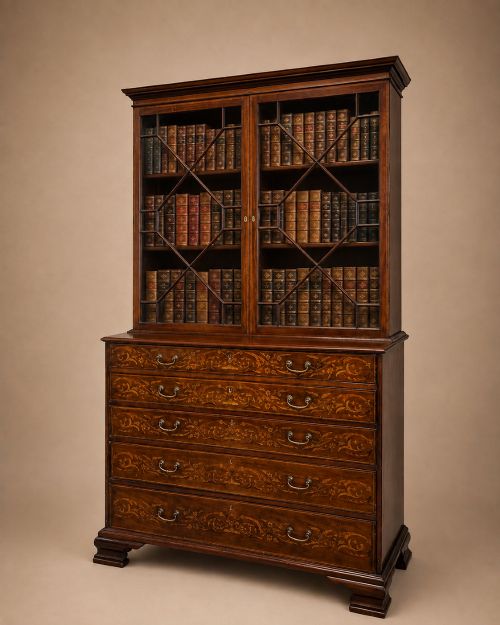
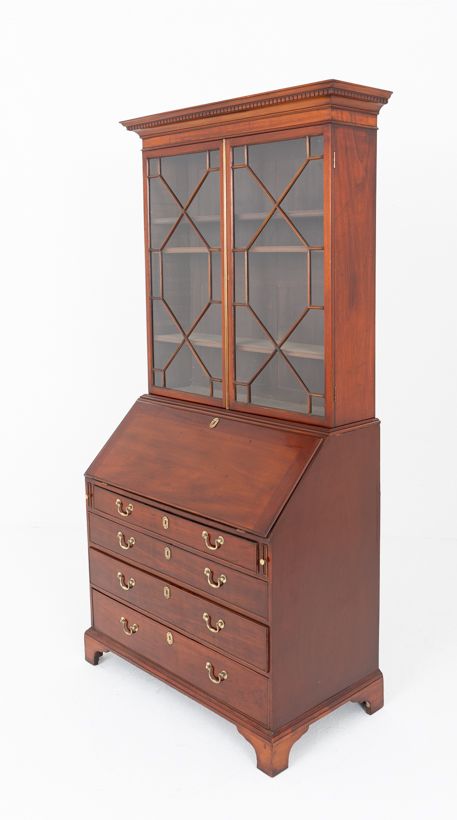
Formats on this page range from diminutive freestanding slope desks to towering two-part secretaire bookcases with glazed upper doors.
Judging quality in period writing furniture
Quality rests upon the selection of timber veneers and the crispness of internal drawer configuration, where secondary woods like oak indicate higher standard regional or London workshop production. Superior pieces display thoughtful grain matching across the fall front and drawer fronts, maintaining visual harmony when the writing flap is closed or open.
The integrity of internal fittings, including secret compartments and well-carved pigeonholes, separates standard utilitarian desks from exceptional cabinetmaker pieces intended for affluent households.
Gillows of Lancaster
The Georgian Drop Front Bureau Glossary
- Bureau
- A writing desk featuring a sloping fall front that conceals internal drawers and pigeonholes. This form evolved significantly throughout the eighteenth century.
- Escritoire
- An alternative term for a writing cabinet or bureau, frequently associated with tall walnut or rosewood examples from the seventeenth and eighteenth centuries.
- Lopers
- Wooden pull-out brackets positioned beneath the fall front to support the weight of the writing flap when opened. They slide directly into the upper carcass of the bureau.
- Secretaire bookcase
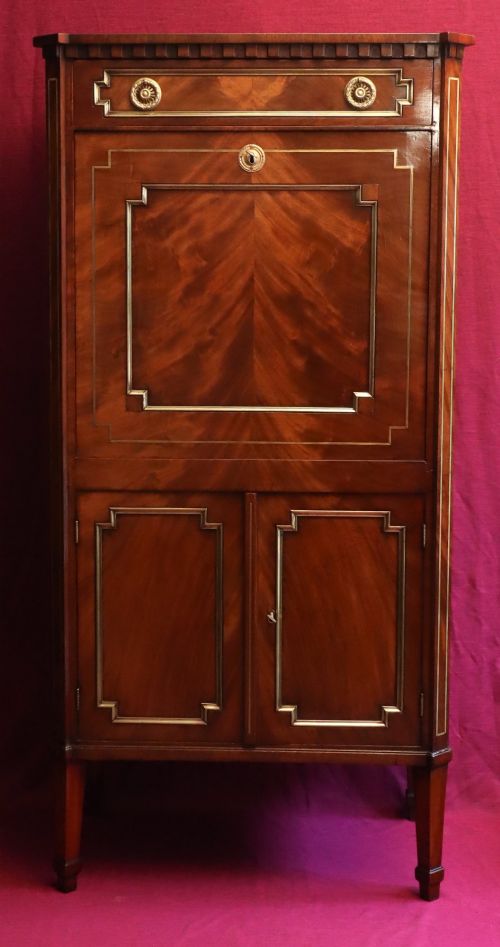
- A tall cabinet combining a bureau writing section in the lower portion with glazed shelving doors above for the storage of books.
Georgian Drop Front Bureau: Frequently Asked Questions
What is a georgian drop front bureau?
A georgian drop front bureau is a domestic writing desk from the eighteenth or early nineteenth century featuring a hinged flap that pulls down to create a writing surface. Inside, small drawers and pigeonholes organise stationery and correspondence.
These pieces range from simple standalone sloping desks to large bureau bookcases with glazed upper cabinets for displaying volumes.
How were these desks used historically?
These desks served as private writing stations for managing correspondence, household accounts, and personal documents. The lockable fall front ensured sensitive papers remained secure.
Upper bookcase sections allowed owners to store prized library collections alongside writing equipment.
How do I fit a bureau into a modern room?
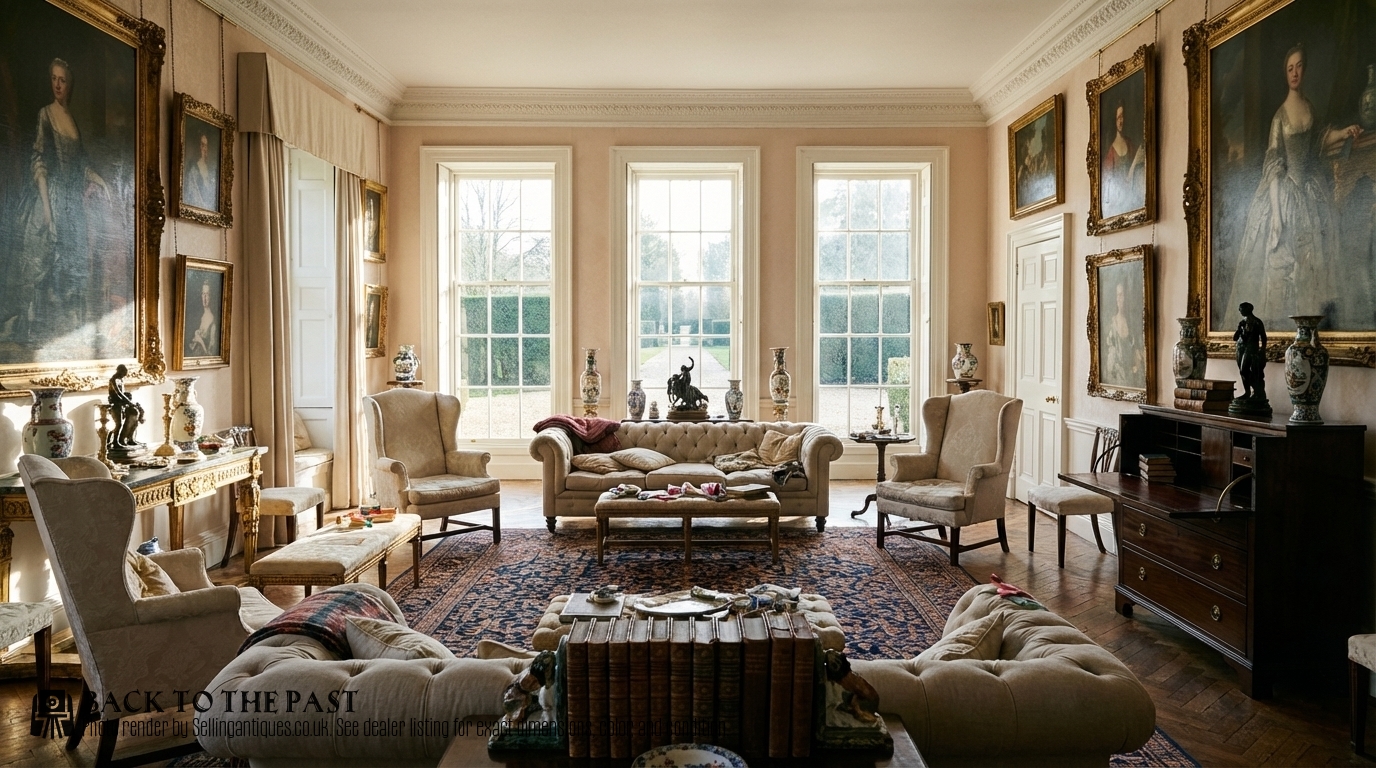
A bureau provides compact workspace while concealing clutter behind its closed wooden slope, making it suitable for living rooms or home offices. The shallow depth relative to standard modern desks helps it fit neatly against walls.
Keeping the fall front closed transforms the working area into a tidy cabinet surface when not in use.
How do I distinguish walnut from mahogany pieces?
Walnut pieces typically date from earlier periods, displaying rich brown tones with varied figuring or decorative marquetry inlay. Mahogany became predominant later in the eighteenth century, showing a straighter red-brown grain.
Examining the timber colour and weight helps identify the primary wood used in construction.