




Georgian Dressing Stand
These pieces for a georgian dressing stand span tall floor-standing cheval mirrors and compact tabletop toilet glasses used for personal grooming.
Georgian Dressing Stand
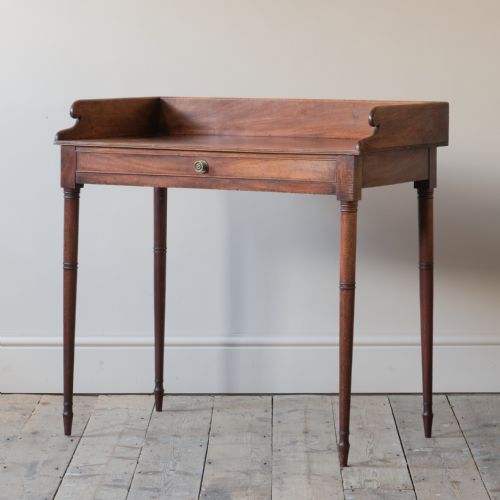
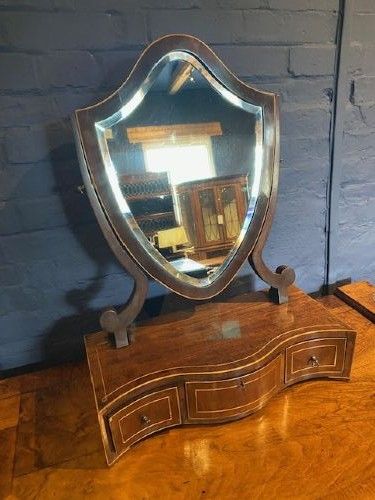
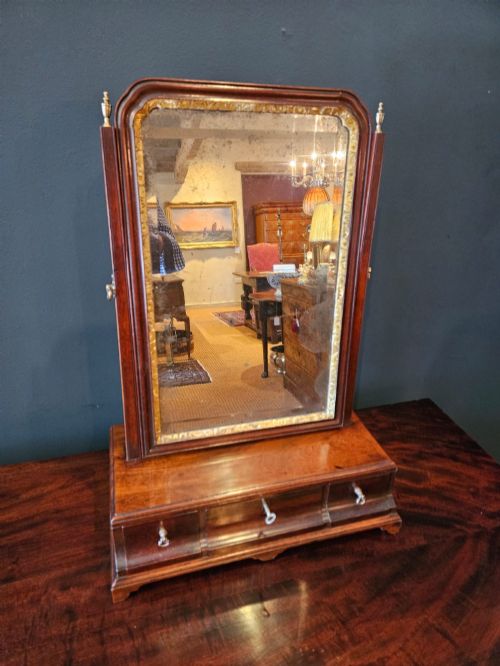
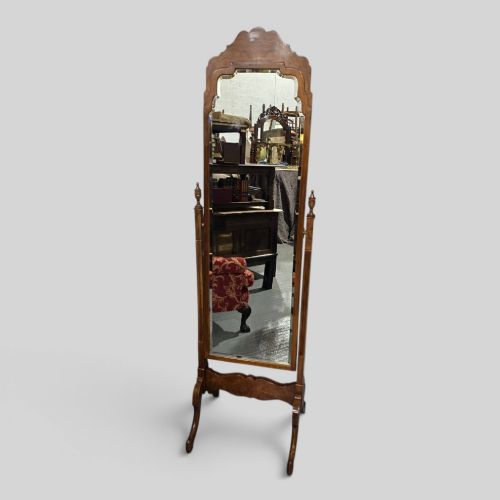
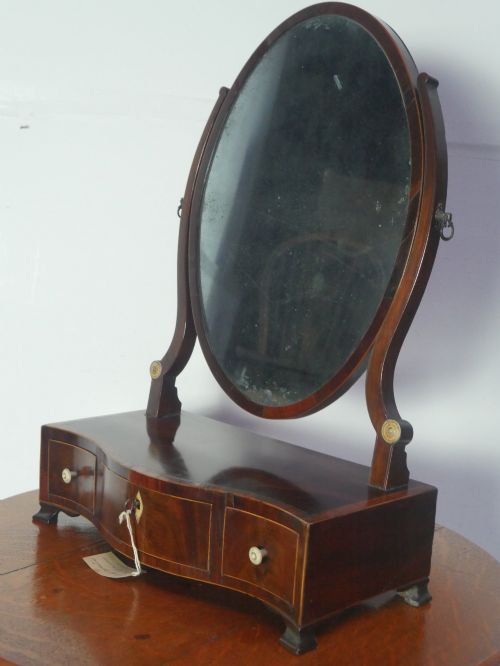
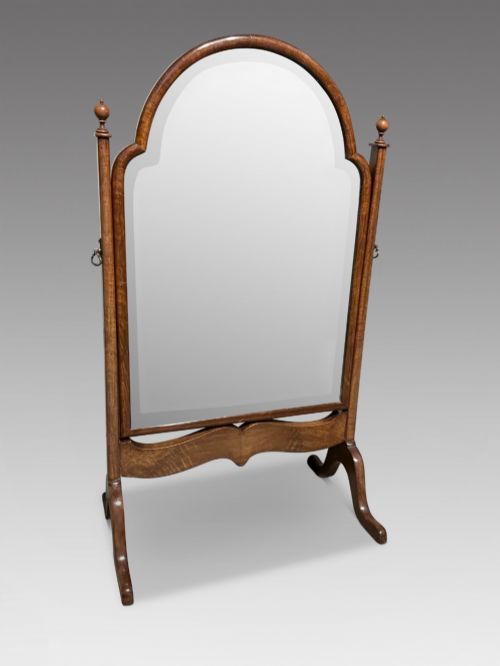
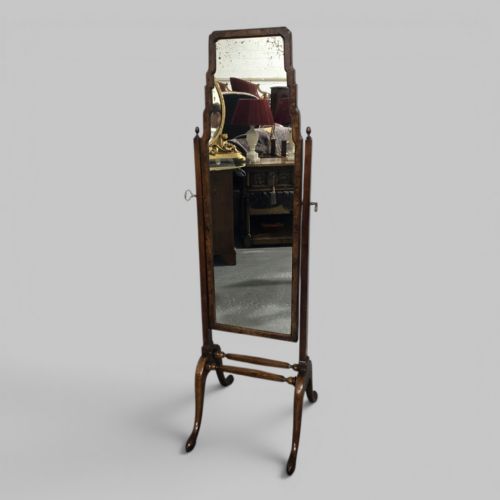
When you search for a georgian dressing stand, you meet a variety of forms including cheval mirrors, dressing table mirrors, toilet mirrors, and washstands. These items served different functions in the bedroom, from checking full-length attire to holding basins or small cosmetic items.
The pieces appearing on this page cover periods ranging from the eighteenth century through to later revivals, executed in forms such as swing mirrors and campaign washstands. They demonstrate how personal grooming furniture evolved over successive design eras.
Tabletop versions typically feature small drawers within their base for storage, whilst floor-standing cheval mirrors tilt on vertical frames. Both types reflect the domestic habits and interior arrangements of past centuries.
Materials and construction
Cabinetmakers constructed these pieces primarily using dense timbers such as mahogany and walnut, occasionally incorporating satinwood veneers or giltwood details. Selected hardwoods provided the structural strength required for supporting pivoting mirror frames and washing basins.
Hardware details such as brass sabots, castors, and mirror glass were integrated into the design to aid mobility and reflection. Artisans also utilised secondary woods and intricate joinery techniques suited to each specific period style.
Early patch stands provided a dedicated spot for ladies to rest their artificial beauty spots made of velvet or silk.
Judging quality in dressing stands
The calibre of a piece rests upon the crispness of its timber carving, the proportion of its frame, and the integrity of its original mirror plate. Superior examples display thoughtful grain selection in veneers like burr walnut or satinwood.
Mechanical elements such as the pivoting pivots on a cheval mirror or the operational smoothness of small drawers indicate the level of care taken by the maker. Original brass fixtures and uncompromised structural joints elevate an individual piece.
Gillow·Muirhead Moffat Co
The Georgian Dressing Stand Glossary
- Cheval mirror
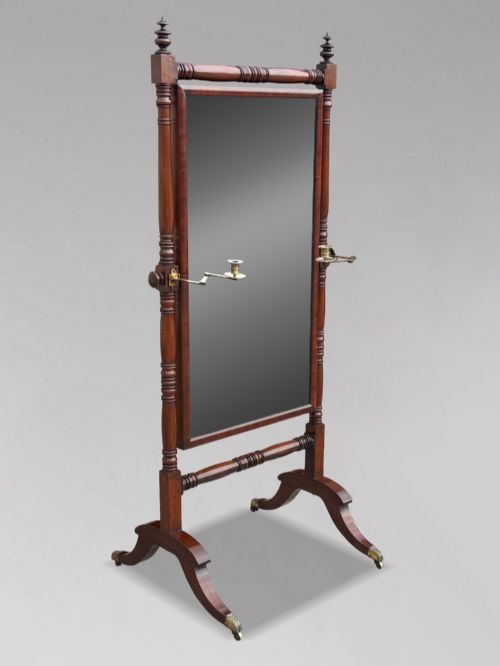
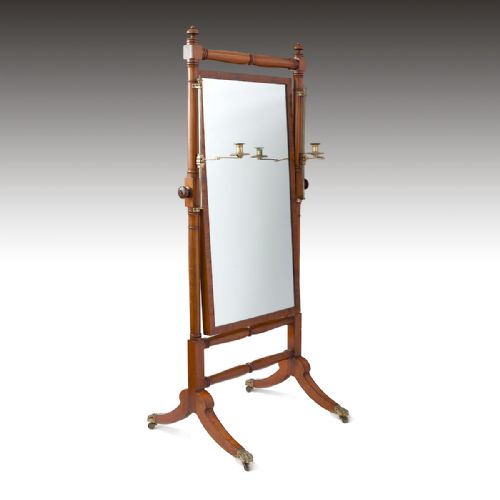
- A large, full-length mirror suspended on a vertical frame that allows the glass to tilt. These freestanding pieces became prominent during the Regency period.
- Toilet mirror
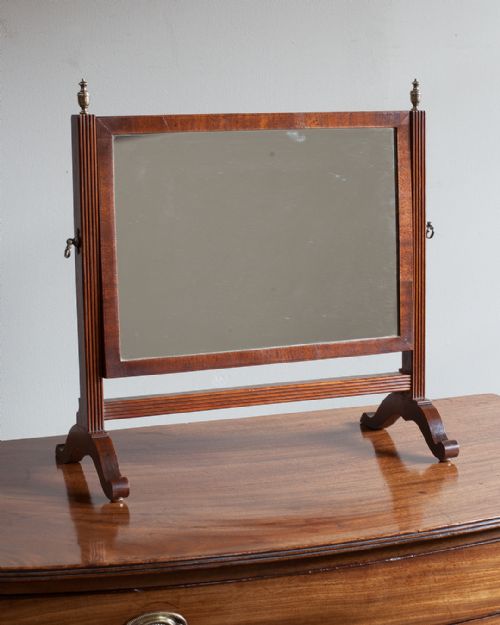
- A smaller mirror designed to sit atop a dressing table or chest of drawers, frequently equipped with small storage drawers in the base.
- Washstand
- A piece of furniture designed to hold a wash basin and pitcher, sometimes incorporating cabinets or folding tops for gentleman's use.
- Sabot
- A metal sleeve, usually made of brass, fitted to the foot of a furniture leg to protect the timber and provide decoration.
- Tilt dressing glass
- A mirror plate mounted on pivots between two upright posts, allowing the user to adjust the viewing angle.
Georgian Dressing Stand: Frequently Asked Questions
What is a cheval mirror?
A cheval mirror is a tall, floor-standing dressing glass mounted within a frame that allows the entire plate to tilt on pivots.
These pieces were designed for full-length viewing in bedrooms and dressing rooms during the Georgian and Regency eras.
How do toilet mirrors differ from dressing mirrors?
Toilet mirrors are compact tabletop versions featuring small drawers in the base, intended for placement on a chest or table.
Dressing mirrors encompass both these tabletop variants and larger freestanding floor models.
What woods were used in these pieces?
Cabinetmakers predominantly utilised mahogany and walnut, occasionally incorporating exotic woods like satinwood for decorative veneers.
Secondary timbers were used internally for drawer linings and structural framing.
Are these pieces suitable for modern bedrooms?
Their classic proportions and functional designs allow them to integrate seamlessly into contemporary domestic spaces as practical mirrors.
They serve both decorative and functional roles in modern hallways and dressing areas.