



Mahogany Campaign Washstand
These mahogany campaign washstand examples are clever, collapsible pieces designed for travel, offering officers and travellers a practical morning routine.
Mahogany Campaign Washstand
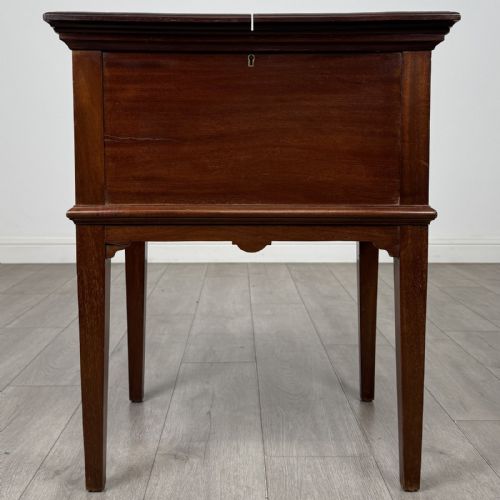
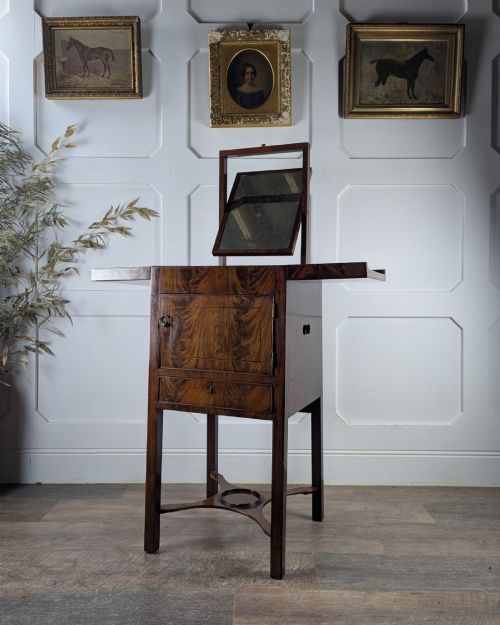
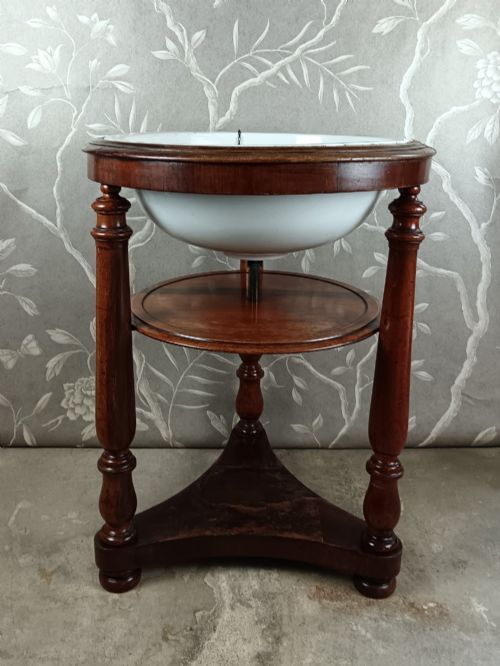
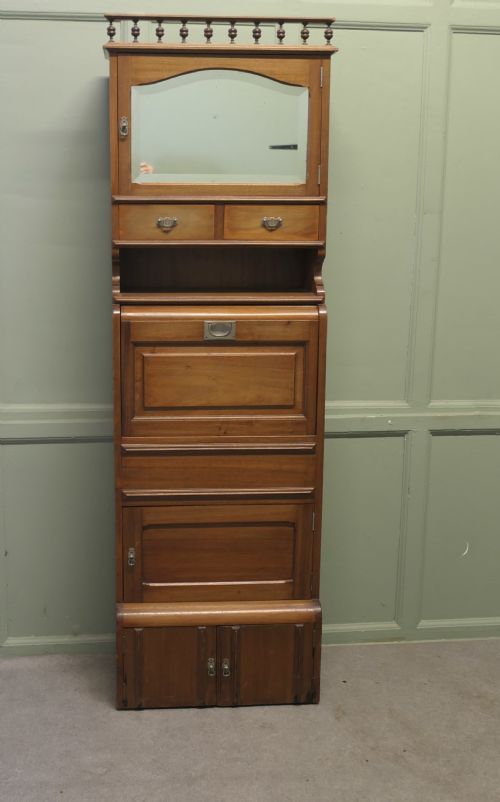
When you search for a mahogany campaign washstand, you encounter practical furniture designed for officers on the move during the nineteenth century. These pieces include round stands, fold-away tables, and multi-purpose dressing chests equipped for travel.
You are most likely to meet Georgian and Victorian examples on this page, often showing the sturdy timber and clever engineering of military and maritime life. Many incorporate brass mounts, ceramic basins, and glass elements tailored for use on ships, yachts, or in tents.
How they were made
Cabinet makers utilised dense timber such as Cuban mahogany and satinwood to withstand the rigours of transit. Brass corners, hinges, and carrying handles reinforced the joints and protected the edges during repeated packing.
Clever folding mechanisms, pull-out basin rings, and fitted compartments allowed these stands to collapse into compact units. Ceramic bowls and glass water bottles integrated neatly into the wooden frames for daily ablutions.
Mahogany Campaign Washstand Retail Price Guide 2026
Typical asking prices for mahogany campaign washstand among the pieces listed under this phrase on Sellingantiques today, from the lower quarter to the upper quarter. They describe what is for sale here now, not the wider market.
An officer could wash, shave, and pack his entire bathroom away before the morning bugle sounded.
What varies in quality
The sophistication of the folding mechanism and the tightness of the joinery separate the finer examples from standard utility pieces. Finer specimens feature crisp brass detailing, perfectly matched mahogany grains, and maker stamps that denote superior London or regional workshops.
The integrity of the internal fittings, including original ceramic basins and glass bottles, influences the overall character. Altered interiors or missing brass elements reduce the original coherence of the design.
Gillows Lancaster·Army And Navy
The Mahogany Campaign Washstand Glossary
- Campaign furniture
- Portable furniture built for military officers, travellers, and officials on the move. These items often feature folding legs, dismantling frames, and protective brass mounts.
- Cuban mahogany
- A dense, richly figured timber harvested in Cuba during the eighteenth and nineteenth centuries. Cabinet makers favoured it for high-end furniture due to its deep colour and durability.
- Triform stand
- A piece of furniture supported by three legs or a triangular base. This configuration provided stability on uneven floors found in tents or ship cabins.
- Bidet stool
- A low, form-fitting seat designed for personal hygiene during the Georgian and Victorian periods. In campaign contexts, these often included enclosed ceramic liners and folding wooden covers.
Mahogany Campaign Washstand: Frequently Asked Questions
How do these washstands fold down?
Many examples feature hinged frames, removable basin rings, and legs that unscrew or fold inward. This allowed officers to pack the entire assembly into a compact box for transport.
Simpler round stands relied on triform bases that separated from the top ring, requiring no complex mechanical joints.
Where were these pieces used?
Officers utilised them on military campaigns, aboard naval vessels, and during colonial postings where permanent furniture was unavailable. Yacht owners also employed marine vanity cabinets tailored for small spaces.
Their modular design ensured that gentlemen maintained their standard of grooming in temporary quarters.
How do I date a campaign washstand?
Georgian and George III pieces generally display cleaner architectural lines and finer satinwood stringing. Late nineteenth-century Victorian versions often incorporate heavier brass fittings and utilitarian maritime adjustments.
Checking for stamps, timber grain, and construction methods helps determine the precise era.
Are the basins and bottles original?
Ceramic basins and glass water vessels frequently suffered breakage during transit or decades of use. Surviving original fittings add significant historical completeness to the piece.
Replacements are common, so inspecting the fit within the wooden aperture helps ascertain authenticity.