


Georgian Double Corner Cupboard
A georgian double corner cupboard solves awkward architectural spaces while offering two distinct tiers of storage for china and glassware.
Georgian Double Corner Cupboard
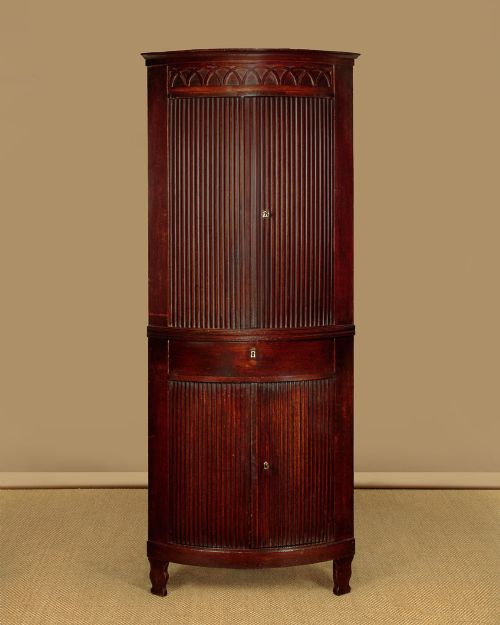
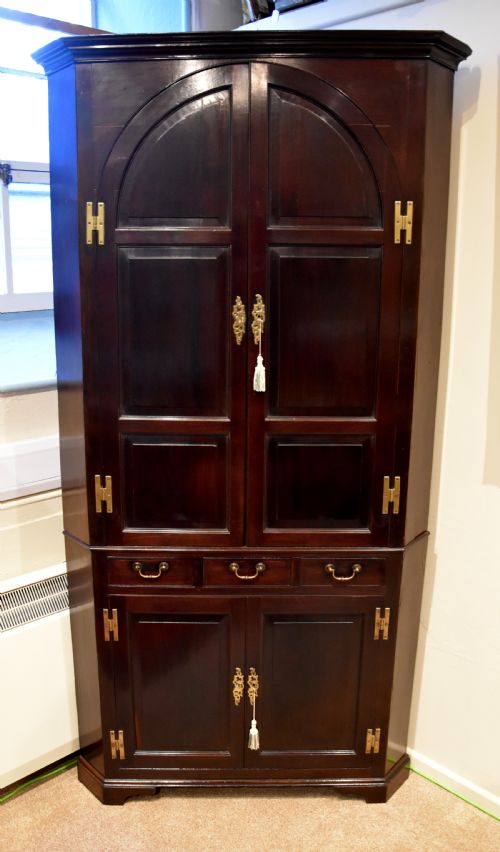
A georgian double corner cupboard is a substantial two-part or double-height standing cabinet designed to fit neatly into the right angle of a panelled room. These pieces utilise vertical space effectively by stacking upper and lower shelving compartments, frequently enclosed by paired timber doors or glazed panels.
The versions most commonly met on this page span the eighteenth and nineteenth centuries, taking the form of floor-standing floor-standing two-part cupboards. They appear in regional timbers like oak and elm alongside dense imported hardwoods such as mahogany and Cuban mahogany.
Makers of the period built these cabinets to display prized tablewares in the upper section whilst concealing utilitarian items behind solid lower doors. The architectural proportions reflect the changing interior tastes across the Georgian, Regency, and George I revival eras.
Materials and construction methods
Cabinet makers constructed these architectural cupboards using solid native timbers including oak, elm, and walnut alongside imported figured woods like Cuban mahogany. Timbers were selected for strength in the carcass and decorative grain in the fielded door panels.
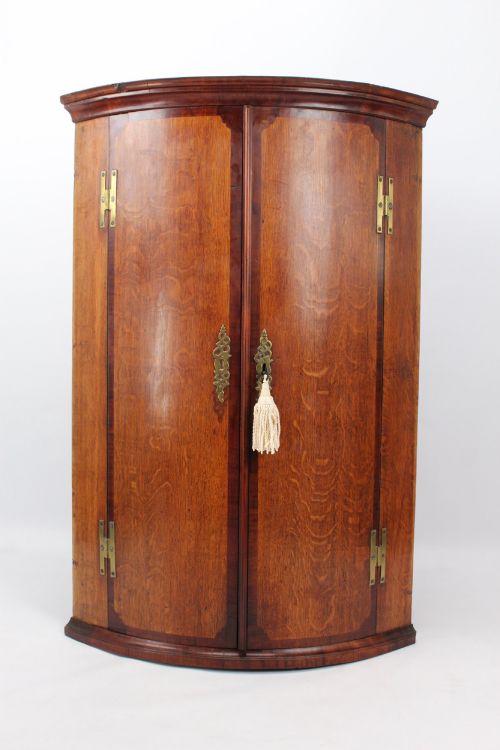
Joinery techniques relied on dovetailed construction, pegged tenons, and panel-in-frame assembly to accommodate seasonal timber movement in large corner units. Brass H-hinges, butterfly hinges, and working brass escutcheons secure the heavy doors while providing structural articulation.
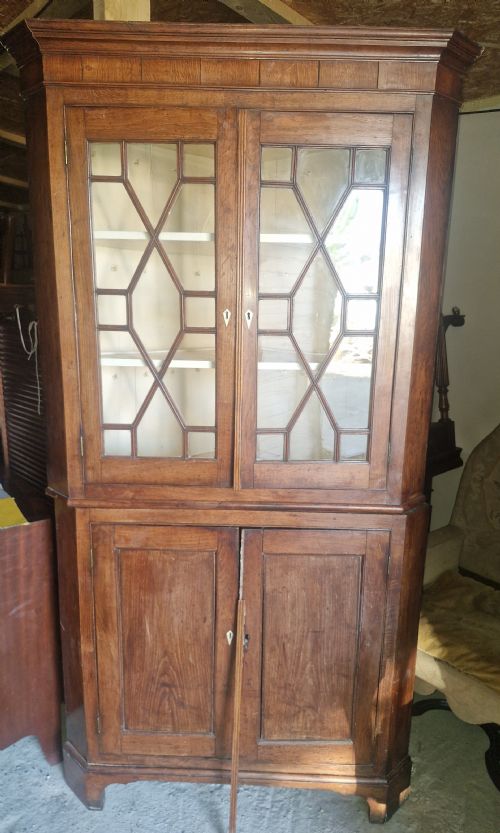
Glazing bars divide the upper door lights into geometric patterns such as ovoid and diamond interlacings, holding individual panes of glass securely within rebated wooden frames.
Listings feature oak, mahogany, walnut, elm, and limed oak across Georgian, Regency, and George I revival styles.
Distinctions in construction and finish
The choice of primary timber dictates much of the visual hierarchy, distinguishing plain regional oak or elm builds from finely figured Cuban mahogany and polished walnut examples. Finer pieces employ dense timber selections that take a deep, reflective surface finish.
The sophistication of the upper door glazing bars and interior shelving contours marks the distinction between vernacular workshop production and high-style cabinet making. Delicate interlaced glazing and shaped interior shelves require advanced carpentry skill compared to simple boarded doors.
Proportion and architectural detailing, including dentil cornices, brass hardware retention, and the crisp execution of panel mouldings, separate standard utility furniture from exceptional cabinet work.
The Georgian Double Corner Cupboard Glossary
- Double corner cupboard
- A two-part standing cabinet featuring an upper and lower tier of doors designed to fit a room corner. This form maximises vertical display and storage space.
- Bow front
- A convex curved cabinet facade that projects outward from the corner walls. This profile softens the sharp angles typical of standard triangular corner furniture.
- Glazing bar
- A narrow wooden strip holding individual glass panes within a door sash. Complex intersecting bars create geometric window patterns.
- Cuban mahogany
- A dense, heavy tropical hardwood prized for rich colour and dark figuring. Cabinet makers utilised this timber for high-status eighteenth-century furniture.
- Escutcheon
- A protective metal plate surrounding a keyhole opening. These brass mounts often complement the hinges and door hardware.
Georgian Double Corner Cupboard: Frequently Asked Questions
How do I clean the interior?
Dust interior shelving gently with a soft, dry cloth to protect aged timber surfaces. Avoid modern liquid polishes that leave residues on historical wood finishes.
Allow natural air circulation periodically by leaving cabinet doors ajar in dry rooms. This prevents moisture accumulation within enclosed corner spaces.
Where should I place it?
Position the cabinet firmly against a ninety-degree interior wall junction where both side panels meet the plaster evenly. Ensure the floor is level so the heavy two-part structure remains stable.
Keep the timber away from direct heat sources and strong sunlight to prevent wood shrinkage and finish fading.
Are shelves adjustable?
Most period interiors feature fixed wooden shelving secured into housing dadoes or supported by permanent wooden cleats. Altering shelf heights requires professional carpentry intervention.
Early tiers often incorporate shaped plate grooves designed to hold ceramic platters upright.
How do I secure the doors?
Original brass locks operate with barrel keys that throw internal bolts into the cabinet frame. Ensure the door rests squarely against the rebate before turning the mechanism.
Standing units rely on stable floor contact rather than wall fixings, though heavy upper sections benefit from balanced weight distribution.