
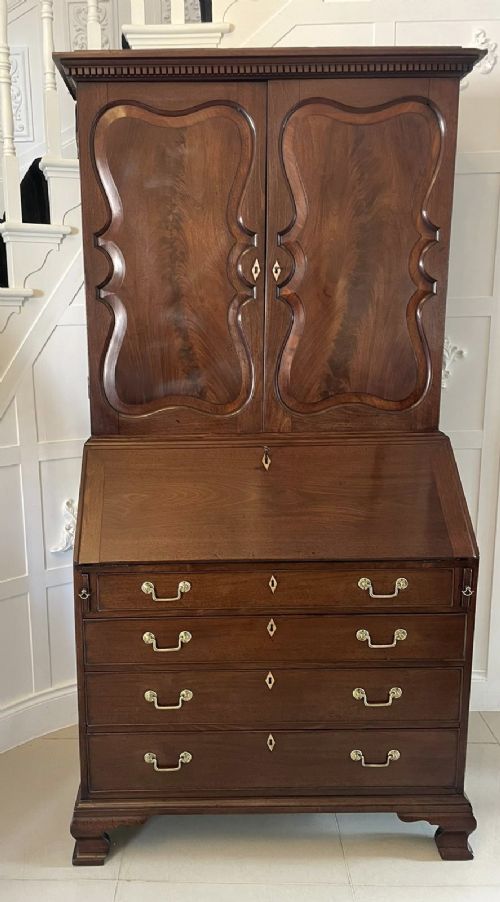
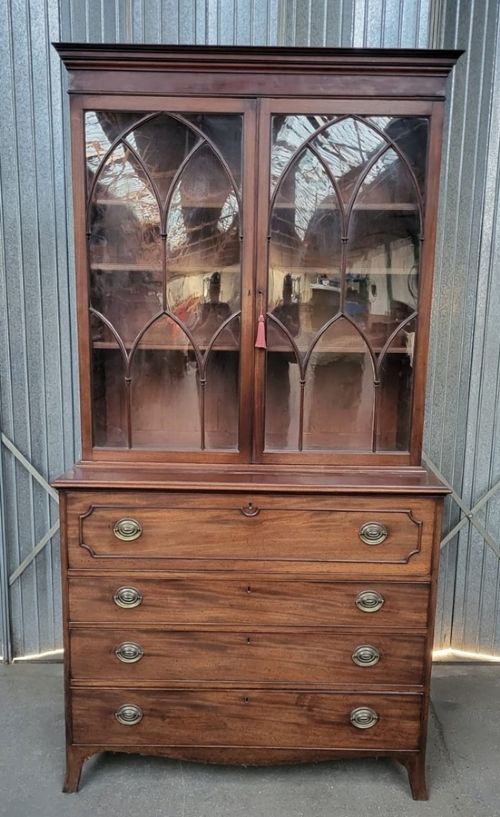
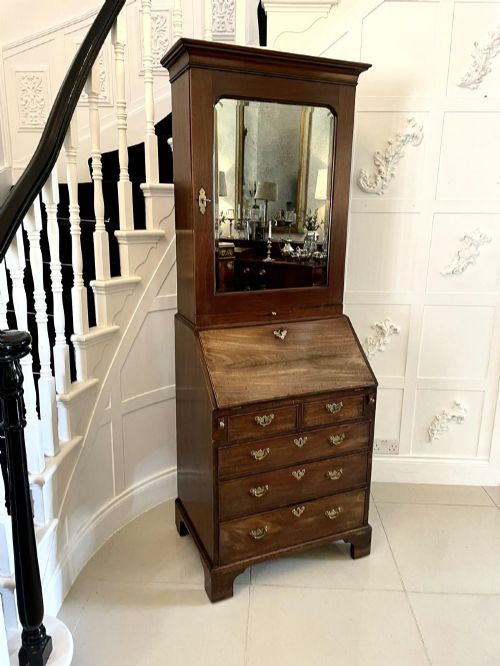
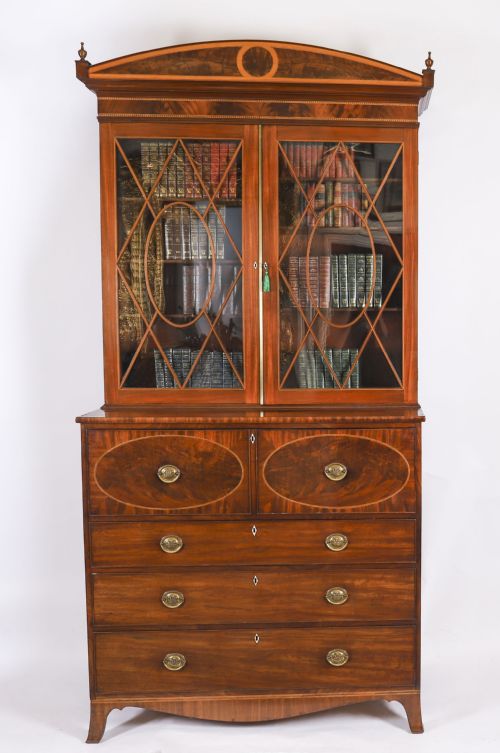

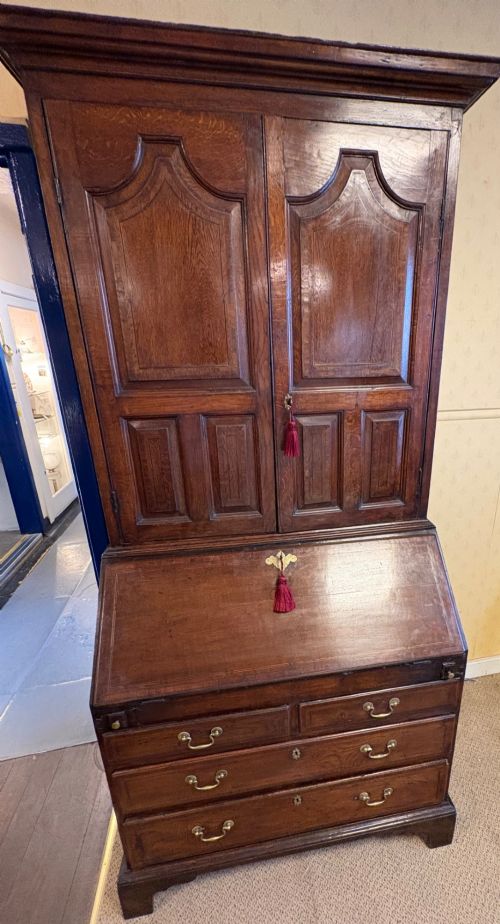
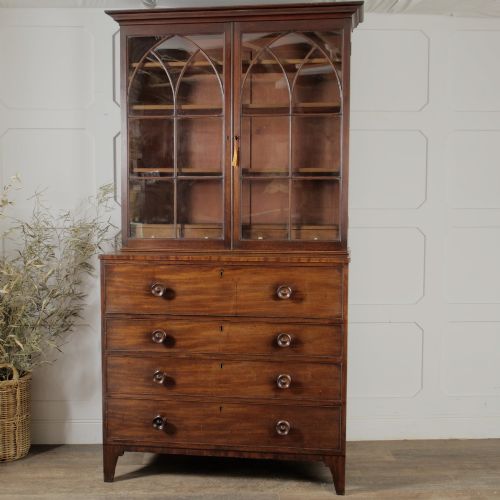
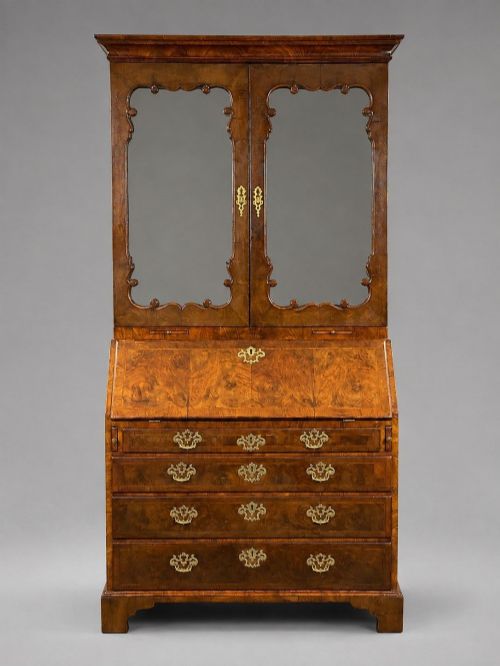
Georgian Desk with Bookcase
A georgian desk with bookcase combines a writing bureau with upper display shelves, offering practical storage and workspace rooted in eighteenth-century design.
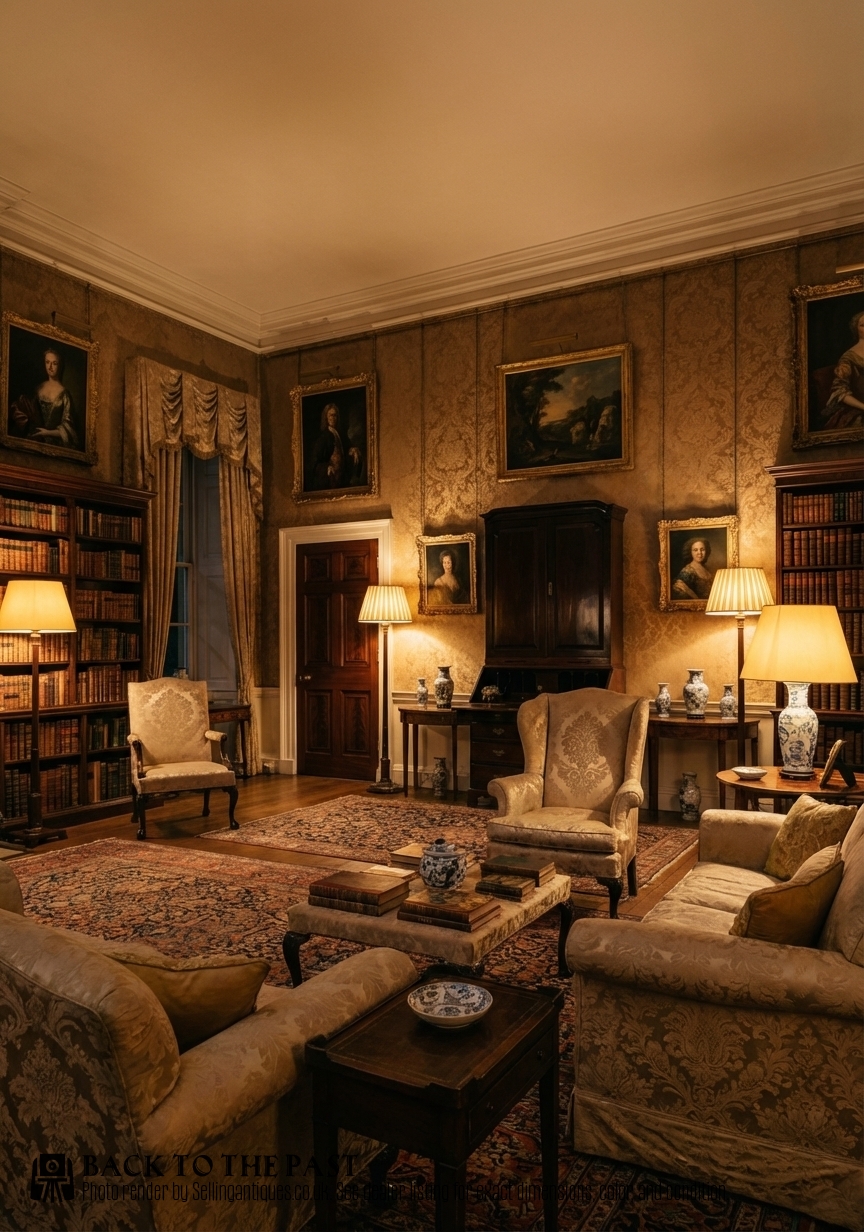
Georgian Desk with Bookcase
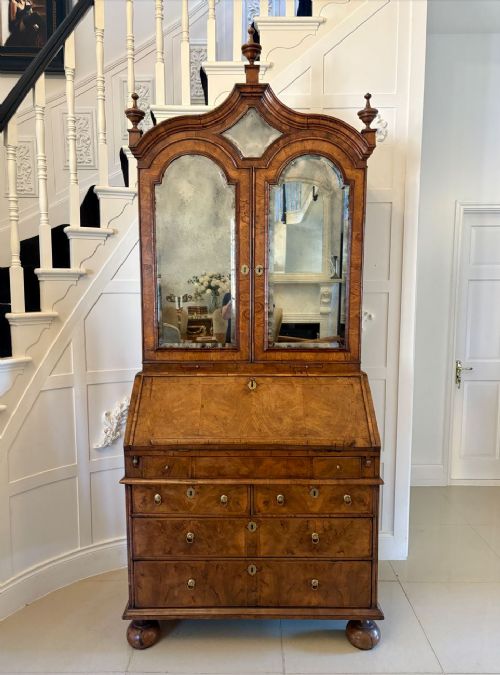
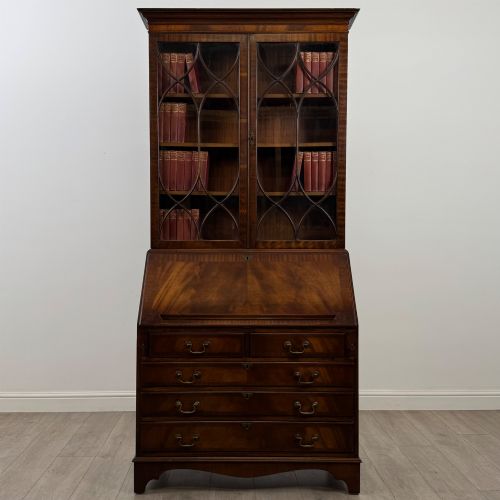
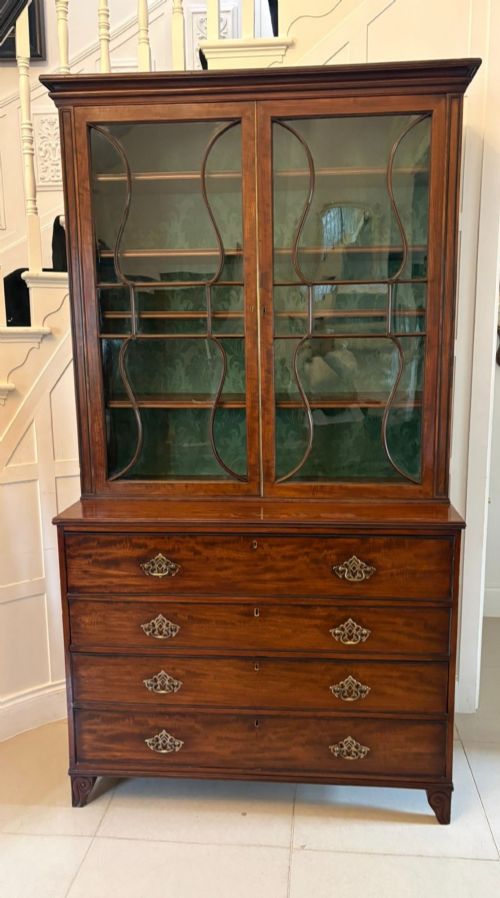
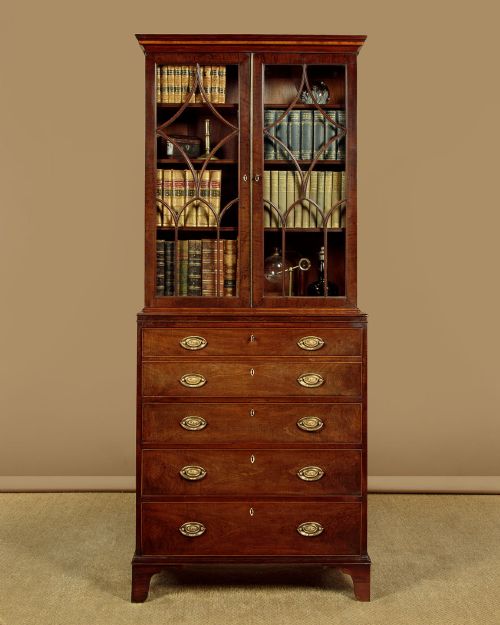
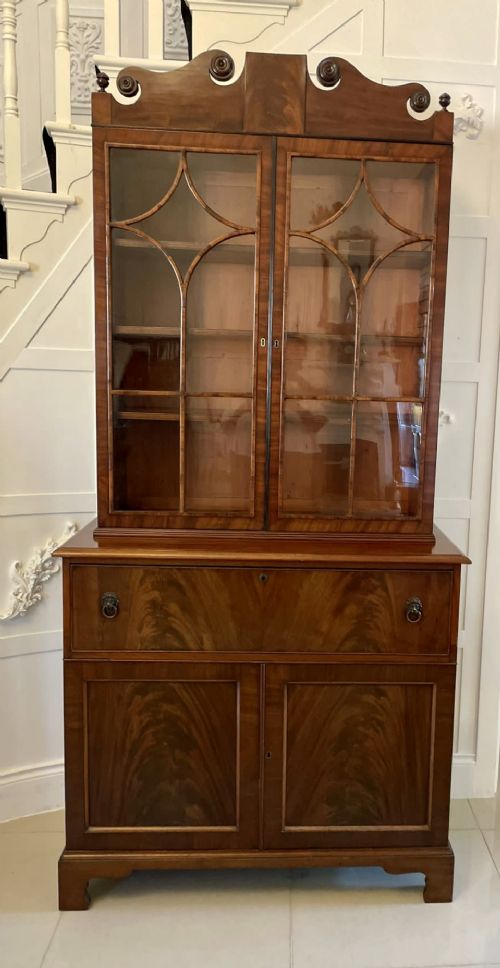
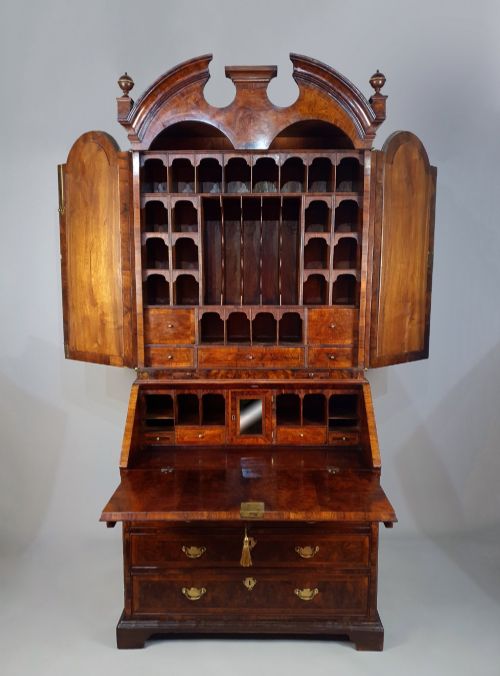
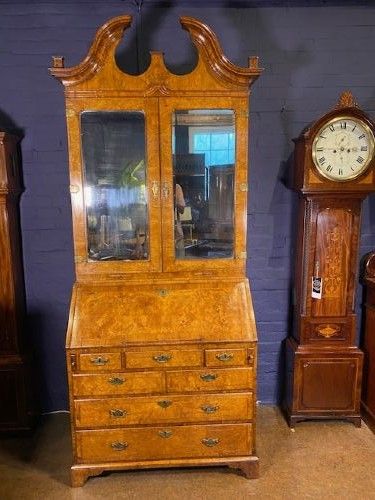
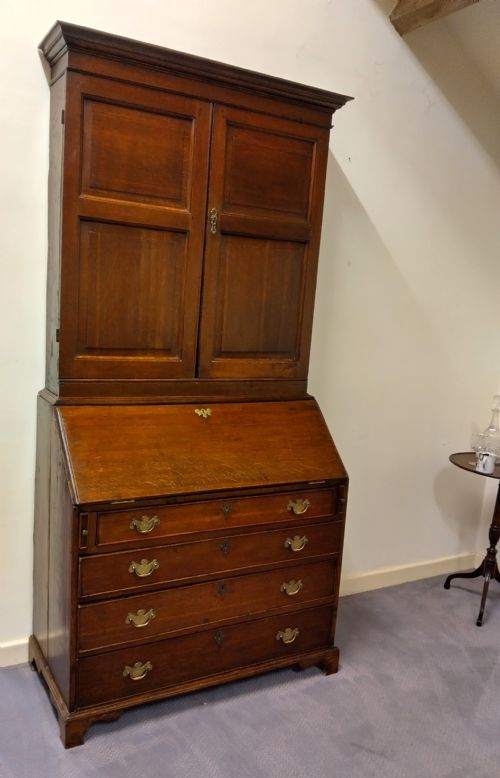
When you search for a georgian desk with bookcase, you encounter tall dual-purpose furniture pieces designed to hold books above while providing a sloping writing flap or pull-out drawer for correspondence below. These items appear in various formats including bureau bookcases, secretaire bookcases, and bureau cabinets across multiple periods.
The version you are most likely to meet on this page is constructed from mahogany or walnut, featuring glazed doors on the upper section and a fitted interior with small drawers and pigeonholes behind the writing surface. Oak and satinwood examples also surface alongside pieces from the Regency and nineteenth-century periods.
Makers designed these double-height pieces to serve as both private writing spaces and elegant libraries for homes. The upper cabinet usually houses shelves behind wooden or glass panelling, while the lower section conceals compartments for papers and ink.
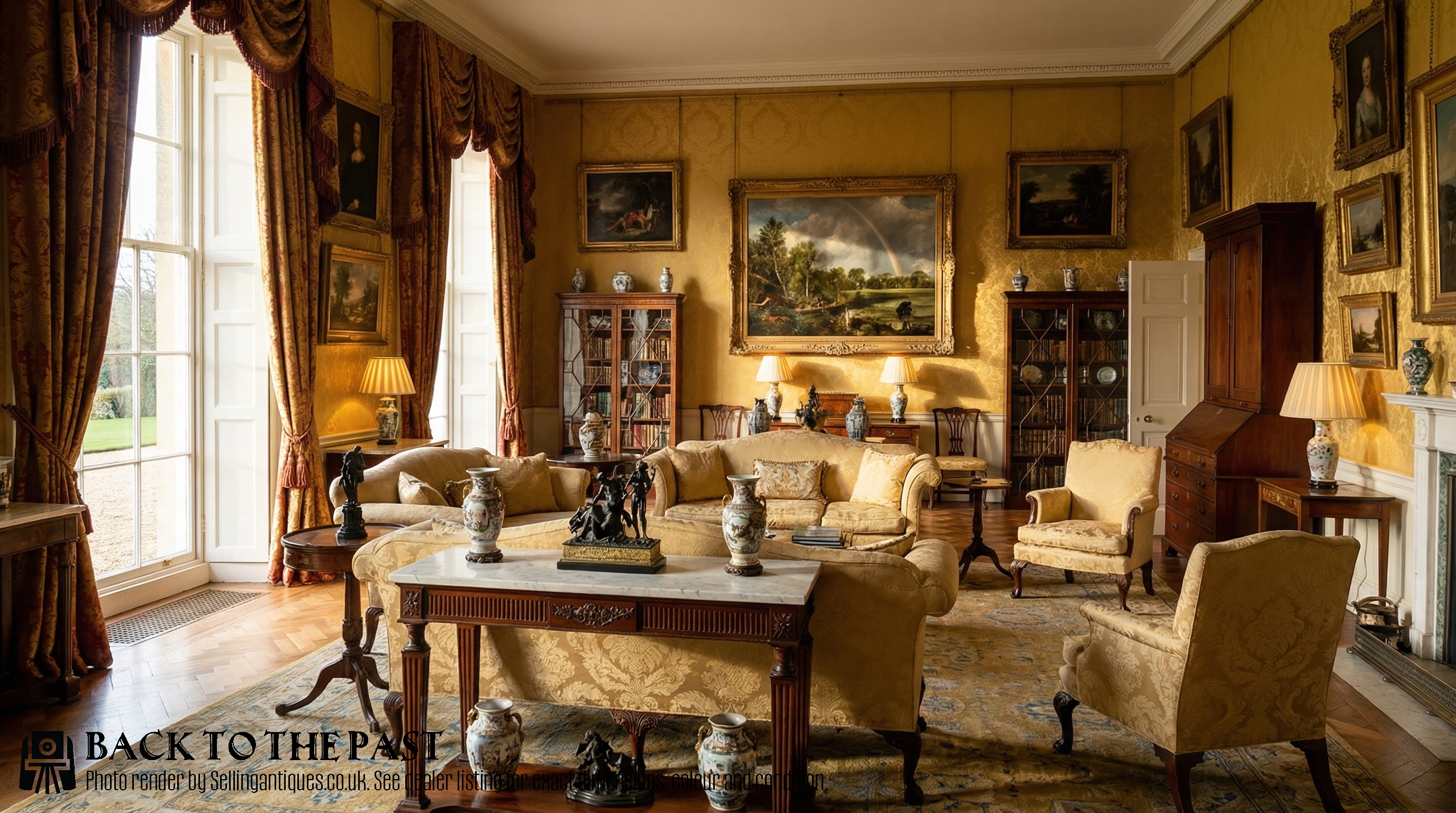
Materials and construction
Cabinetmakers built these pieces using solid timbers and decorative veneers such as figured mahogany, burr walnut, and satinwood applied over secondary woods like oak. Workshops utilised brass for handles, escutcheons, and hinges, while glass was cut for the upper cabinet doors.
Joinery techniques involved dovetailed drawer construction and panelled doors to accommodate seasonal wood movement. Interiors of the bureau sections featured intricate stepped layouts with secret compartments, small drawers, and pigeonholes constructed with fine craftsmanship.
Listings feature mahogany, walnut, oak, burr walnut, satinwood, and rosewood across eighteenth and nineteenth-century periods.
Assessing quality
The standard of timber selection dictates visual appeal, with highly figured mahogany, burr walnut, and matched grain patterns representing the finer end of production. Craftsmanship in the interior configuration, such as smoothly operating secret compartments and finely dovetailed small drawers, separates standard examples from superior ones.
Proportion and original surface patination influence the character of each piece. Original glass panes, harmonious hardware, and intact cornices maintain the integrity of the design, whereas later alterations or heavy restoration change the historical balance of the cabinet.
Tudor & Burrey
The Georgian Desk with Bookcase Glossary
- Secretaire
- A writing drawer or compartment that pulls out or drops down to reveal fitted interiors. This mechanism allows a chest or bookcase to function as a desk without using a traditional sloping lid.
- Bureau bookcase
- A combination furniture form consisting of a sloping-front desk base beneath an enclosed shelving cabinet. It serves both writing and book storage functions.
- Burr walnut
- A highly decorative wood veneer taken from the knotted growths of walnut trees. It displays swirling patterns prized by cabinetmakers.
- Glazed doors
- Glass-fronted upper cabinet doors designed to display books while protecting them from dust. They often feature wooden lattice work or astragals.
- Fall-front
- A writing flap hinged at the bottom that pulls down into a horizontal position for writing. It conceals internal compartments when closed.
Georgian Desk with Bookcase: Frequently Asked Questions
How were these pieces used in eighteenth-century homes?
Owners used these cabinets in parlours, studies, or libraries to manage correspondence, keep accounts, and store treasured volumes. The upper glass doors kept dust off leather-bound books while displaying them to visitors.
The private interior compartments inside the desk section held sensitive documents, inkwells, and stationery away from general view.
How do I tell an eighteenth-century piece from a nineteenth-century revival?
Examining the secondary woods, drawer construction methods, and timber patination reveals the age of a cabinet. Eighteenth-century examples often display hand-cut dovetails and timber characteristics consistent with period hand-tooling.
Revival pieces from later periods sometimes show machine-sawn elements or different interior construction techniques that reflect nineteenth-century manufacturing methods.
How do I fit a tall bureau bookcase into a modern room?
Measuring both ceiling height and floor space is essential because these pieces are substantial and tall. Placing them against a stable wall away from direct heat sources helps protect the timber and veneers from drying out.
Leave adequate clearance in front of the piece so the writing flap or secretaire drawer can open fully without obstruction.