
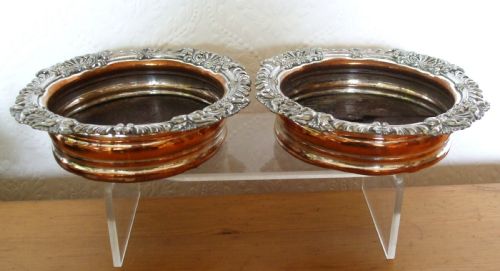


Georgian Decanter Coasters
Georgian decanter coasters protect polished dining tables while keeping wine bottles and decanters close at hand during the dessert course.
Georgian Decanter Coasters
The selections range from single bottle stands to larger multiple bottle holders and wheeled trolleys. These barware accessories span the Georgian, Regency, Victorian, and later periods up to the early twentieth century.
How they were made
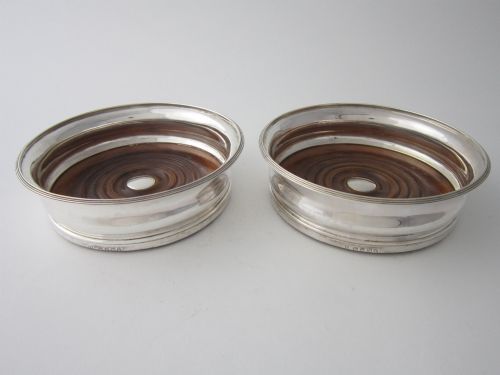
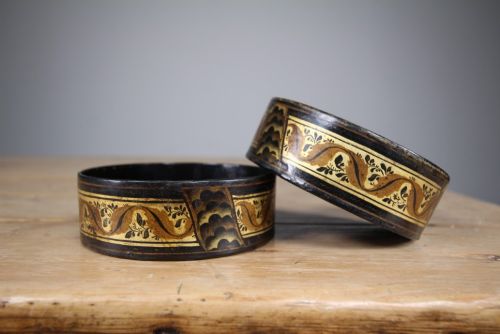
Silversmiths and metalworkers shaped sterling silver and Old Sheffield plate, often fusing thin sheets of silver over copper bases. Cabinetmakers turned dense timbers like mahogany and rosewood on lathes, while papier-mache makers pressed paper pulp and lacquer.
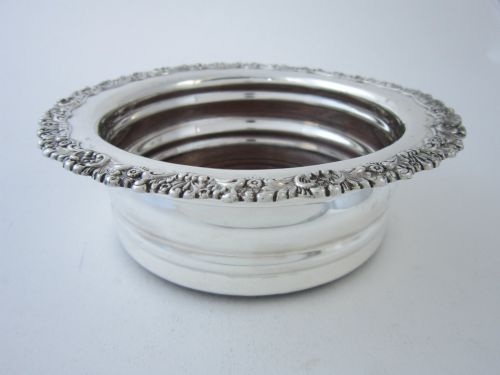
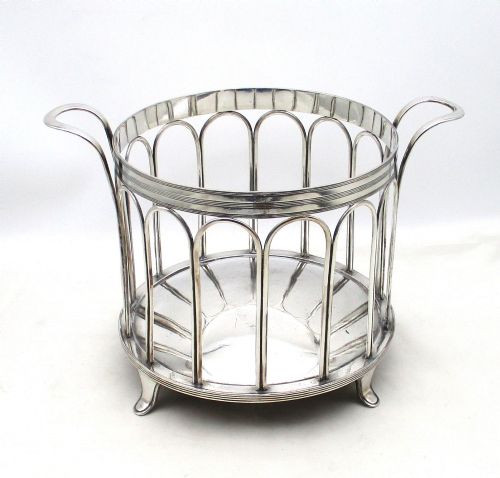
Many examples incorporate turned wooden bases with green baize on the underside to glide smoothly across mahogany dining surfaces. Metal mounts feature chased floral borders, pierced galleries, and applied heraldic crests.
Materials span sterling silver, Old Sheffield plate, mahogany, rosewood, copper, and papier-mache across multiple centuries.
What varies in quality
The distinction between standard examples and the finest pieces lies in the crispness of the metal chasing and the weight of the silver or plate. Heavier gauges of silver and deep-relief borders indicate superior workshops and more ambitious output.
Proportion and material choice also define the upper tier, particularly in multi-bottle trolleys and freestanding stands. Intricate craftsmanship in turned wood or papier-mache with gilded decoration separates ordinary items from exceptional ones.
Matthew Boulton·John and Thomas Settle·Asprey
The Georgian Decanter Coasters Glossary
- Old Sheffield Plate
- A fused metal technique involving a layer of silver melting onto a heavier copper base. This method produces durable tableware typical of the Georgian period.
- Decanter Trolley
- A wheeled carriage designed to roll port or wine bottles around the dining table. These frames often hold multiple coasters linked together.
- Baize
- A woven woolen material glued to the underside of coaster bases. This fabric protects dining tables from scratches.
- Papier-mache
- A composite material made from paper pulp mixed with glue and resin, then pressed and lacquered. It provides a smooth dark surface suitable for gilded decoration.
- Gallery
- The pierced or solid vertical rim surrounding the edge of a coaster. This rim prevents the bottle from sliding off the stand.
Georgian Decanter Coasters: Frequently Asked Questions
What is the purpose of a decanter coaster?
These vessels catch condensation and drips from wine bottles, preventing rings on polished wooden dining tables. They also allow guests to slide bottles easily along the table surface during dinner.
Heavier examples feature turned wooden bases or small wheels to facilitate smooth movement. The raised rims keep the decanter secure while the table is in motion.
How do I date a Georgian wine coaster?
Dating relies on assay office marks for silver pieces, stylistic details, and construction methods. Georgian and Regency pieces display specific neoclassical motifs, gadrooned borders, or pierced galleries.
Old Sheffield plate items often show copper showing through the worn silver highlights, while wooden and papier-mache versions rely on period characteristics and turned profiles.
Can I use these coasters for modern wine bottles?
Most standard Georgian coasters accommodate traditional wine bottles and standard decanter bases quite comfortably. Magnum coasters and multi-bottle holders fit wider Bordeaux bottles or larger vessels.
Measuring the internal diameter of the coaster ensures proper clearance for contemporary wine bottle shapes. Taller decanters sit securely within deep galleries without tipping.
What is Old Sheffield plate?
Old Sheffield plate is an early nineteenth-century fusion process where a thin sheet of sterling silver is united with a copper ingot under heat. This composite metal combines the appearance of solid silver with the structural rigidity of copper.
Items made this way frequently reveal thin lines of base copper along high points and edges where centuries of polishing have worn the silver layer.