
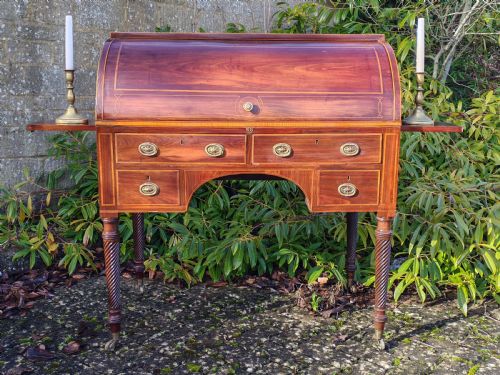
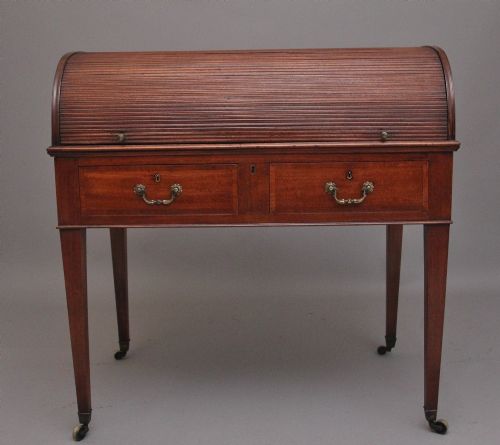


Georgian Cylinder Desk
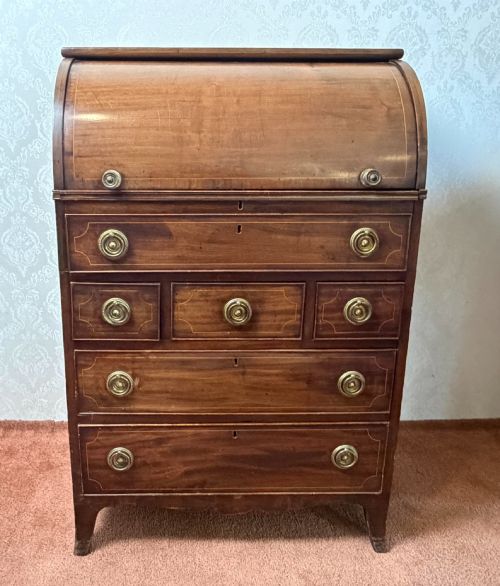
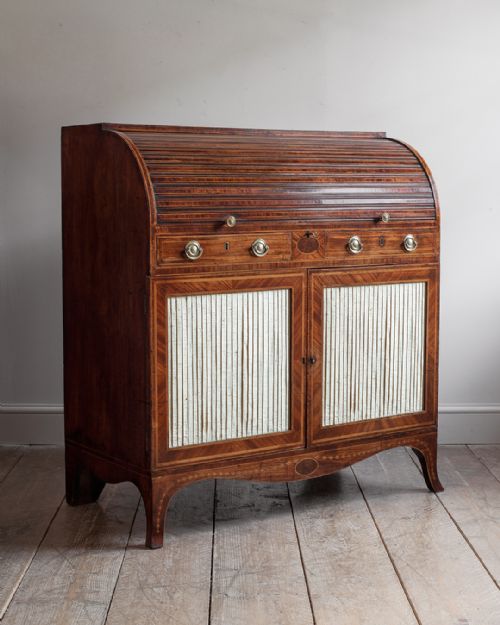
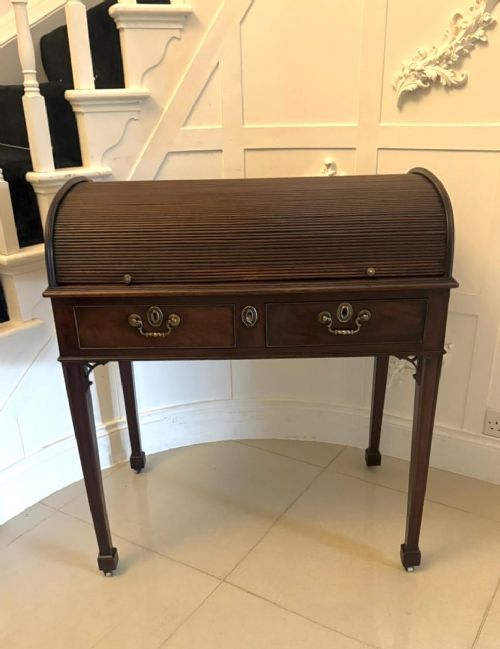
A georgian cylinder desk offers a sliding curved rolltop that conceals fitted writing drawers and pigeonholes.
Georgian Cylinder Desk
A georgian cylinder desk provides a dedicated writing space with a rolltop cylinder closure, keeping correspondence private when closed. These pieces appear frequently in mahogany and satinwood, dating across the 18th century, the Georgian period, and the Regency era.
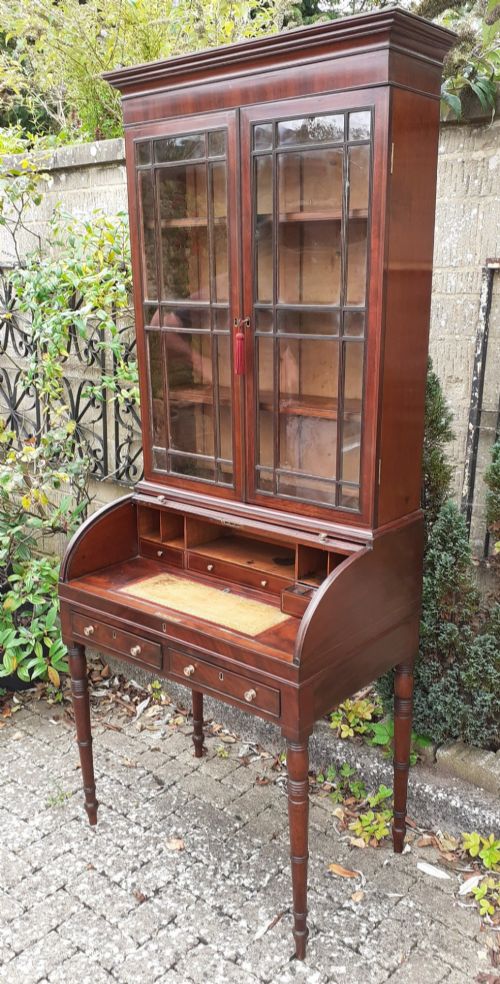
Most examples feature a pull-out writing slide paired with internal drawers and pigeonholes. Bureau bookcases and secretaire cabinets combine the cylinder mechanism with upper shelving behind glass or solid doors.
How They Were Made
Cabinetmakers constructed these desks using solid timbers like mahogany, walnut, and rosewood, often applying satinwood, partridgewood, or yew wood veneers. Details include intricate marquetry, ebony inlay, and brass ring handles.
The curved cylinder mechanism requires precise joinery to glide smoothly within its tracks. Writing surfaces frequently incorporate fitted leather panels and pull-out wooden slides for extra workspace.
Georgian Cylinder Desk Retail Price Guide 2026
Typical asking prices for georgian cylinder desk among the pieces listed under this phrase on Sellingantiques today, from the lower quarter to the upper quarter. They describe what is for sale here now, not the wider market.
Miniature mahogany bookcases join full-sized estate desks, proving that grand cabinetmaking sometimes came in small packages.
What Varies in Quality
Quality rests on the choice of timber and the precision of the cabinetwork. Finely figured mahogany and detailed satinwood marquetry indicate superior workshop production.
The smoothness of the cylinder mechanism and the integration of internal compartments separate standard utilitarian pieces from high-status cabinetmaker commissions.
Tudor & Burrey·John Mclean
The Georgian Cylinder Desk Glossary
- Cylinder desk
- A writing desk featuring a curved, rolling wooden shutter that encloses the desktop surface. This mechanism slides backward into the desk body to reveal inner pigeonholes and small drawers.
- Tambour
- A flexible shutter formed of narrow vertical strips of wood glued to a canvas backing. It runs in a grooved track to open and close curved furniture fronts.
- Secretaire
- A cabinet or desk designed specifically for writing, usually incorporating a fold-down or pull-out writing surface. Many examples include upper bookcase sections.
- Marquetry
- Decorative woodwork where pieces of various coloured veneers are fitted into a ground material to form intricate patterns. Floral and geometric designs appear frequently on these surfaces.
- Partridgewood
- A dense, exotic timber displaying distinctive speckled markings reminiscent of partridge feathers. It was utilised for high-end cabinet veneers during the Sheraton period.
Georgian Cylinder Desk: Frequently Asked Questions
How do you open a cylinder desk?
The curved wooden cylinder slides along internal tracks, usually operated by a pull handle or linked to the main writing slide.
Pulling the writing drawer forward often retracts the cylinder automatically in certain mechanical configurations.
Where were cylinder desks used?
These desks served as private writing cabinets in domestic libraries, drawing rooms, and studies. Wealthy individuals used them to manage correspondence and financial records.
Ladies desks offered a more compact writing station suited for private correspondence in secondary reception rooms.
What is the difference between a bureau and a cylinder desk?
A traditional bureau relies on a hinged flap that folds down at an angle to create a sloping writing surface. A cylinder desk uses a rounded, rolling shutter that glides back into the body of the cabinet.
Cylinder desks maintain a closed, architectural cylinder profile while keeping the interior workspace organised.