
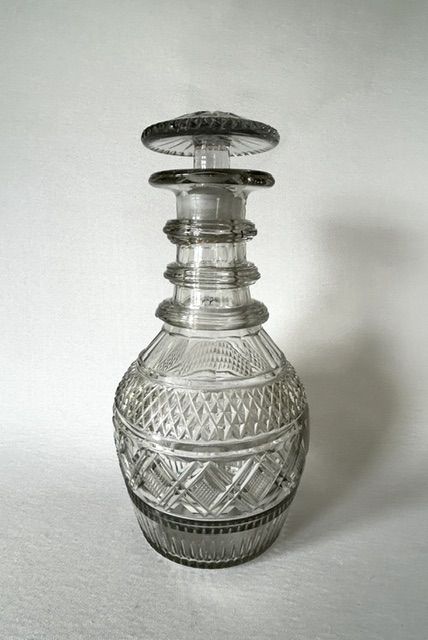


Georgian Cut Crystal Decanter
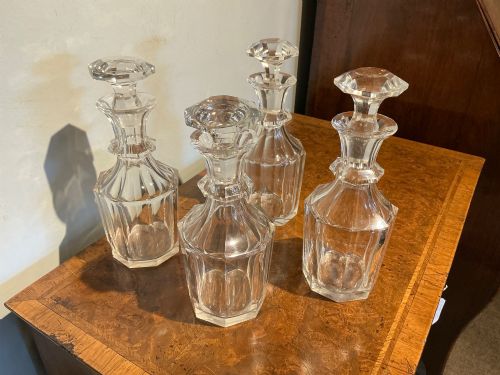
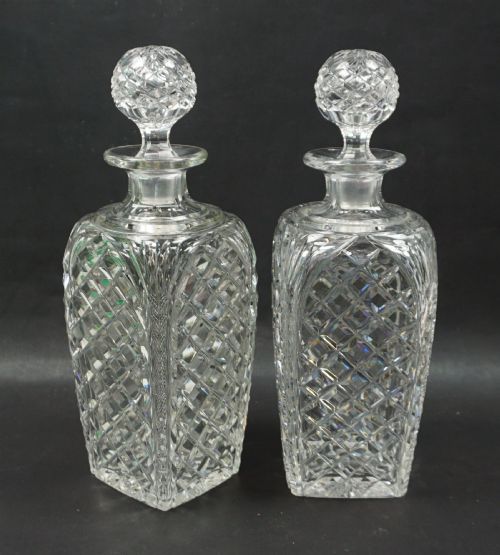
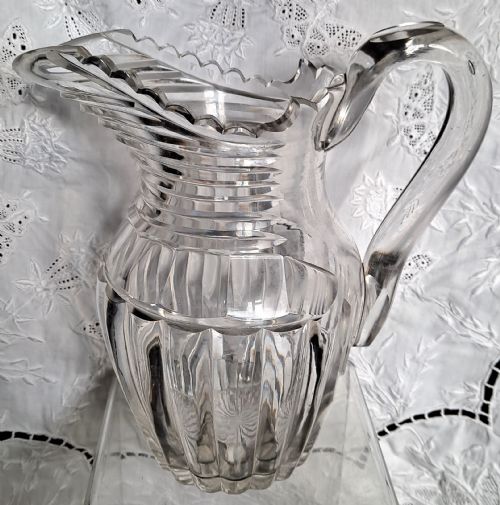
These georgian cut crystal decanter examples bring brilliant light and heavy substance to the table, formed by English glassmakers across the eighteenth and nineteenth centuries.
Georgian Cut Crystal Decanter
When you search for a georgian cut crystal decanter, you encounter vessels designed to hold wine and spirits securely upon the dining table. The selection spans periods from the Georgian and Regency eras through to the Edwardian period, alongside occasional nineteenth-century pieces.
Most items originate from English workshops, with distinct examples noted as Irish production. These vessels combine functional storage with decorative faceting intended to catch candlelight during dining.
Materials and Working Methods
Makers utilised lead crystal, lead glass, and clear glass to achieve weight and clarity in each piece. The heavy metal content in lead crystal allowed artisans to cut deep facets without compromising the structural integrity of the vessel.
Workshops applied techniques including wheel-cutting, pillar cutting, and surface etching to create geometric patterns and rings around the neck. Stoppers were individually ground to fit each neck, ensuring a tight seal for the contents.
Materials recorded across the inventory include lead crystal, cut glass, clear glass, and silver plate.
Distinctions in Standard
The depth and crispness of the wheel-cut facets separate standard items from finer works. Sharp, well-defined cuts refract light cleanly, whereas softer edges indicate lighter glass and less meticulous finishing by the cutter.
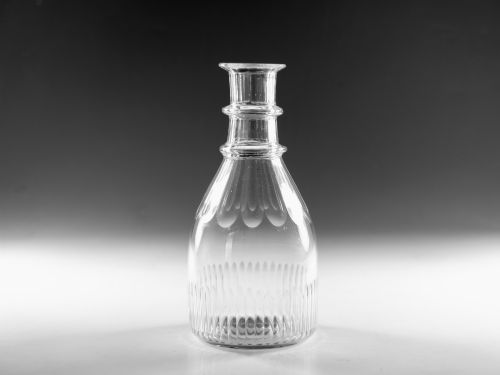
Proportion and symmetry in the form, particularly around the three neck rings and the matching stopper, dictate the visual balance of the decanter. Original matching stoppers that fit snugly into their designated necks elevate the integrity of the piece.
The Georgian Cut Crystal Decanter Glossary
- Prussian style
- A decanter shape characterised by a tapering body and multiple neck rings, popular during the Georgian and Regency periods. This form allowed a secure grip when pouring.
- Ship's decanter
- A wide-based vessel designed with a low centre of gravity to remain stable on a rolling table at sea. The broad base prevented the bottle from toppling during dining.
- Lead crystal
- Glass containing lead oxide, which increases the weight, refractive index, and ringing sound of the material. This composition permitted deep, sharp cutting by the artisan.
- Pillar cut
- A decorative technique featuring vertical, fluted facets running down the body of the vessel. These cuts created strong geometric shadows and highlights under candlelight.
- Ring neck
- Raised horizontal bands encircling the neck of a decanter, typically numbering two or three. They provided a firm grip for the hand during pouring.
Georgian Cut Crystal Decanter: Frequently Asked Questions
How do I clean an old decanter?
Residue inside can be gently removed using warm water and non-abrasive cleaning beads rather than harsh detergents. Care must be taken with historic lead glass to avoid thermal shock.
After washing, the vessel should be left inverted on a drying rack until completely dry inside before inserting the stopper.
Are these decanters safe for modern wine?
These vessels were originally made for storing and serving wine or spirits during historic dining services. Many people continue to use them for contemporary dining.
Checking the interior for cloudiness or residue helps determine whether the bottle is suitable for holding beverages today.
How do I identify a ship's decanter?
A ship's decanter is immediately recognised by its distinct conical profile, featuring a very broad base that narrows sharply toward the top. This geometry kept the vessel upright on rolling dining tables.
Such pieces also typically feature sturdy ring necks and thick glass walls designed to withstand active use.
What is the purpose of neck rings?
The raised rings around the neck of a decanter provided a secure grip for fingers that might otherwise slip on polished crystal. They also served as a decorative boundary below the pouring rim.
Most Georgian and Regency examples feature either two or three distinct rings executed by the glass cutter.