



Flint Glass Spirit Bottle
These flint glass spirit bottle examples combine heavy lead metal with crisp wheel-cutting, offering a tactile piece of historic drinking culture for the modern sideboard.
Flint Glass Spirit Bottle
When you search for a flint glass spirit bottle, you are looking at heavy, bright serving vessels designed to hold whisky, wine, or spirits safely on the dining table. The pieces found here span the Georgian, Regency, and Victorian eras, alongside Edwardian and Arts and Crafts examples, covering everything from sugarloaf beer decanters to tall shoulder vessels.
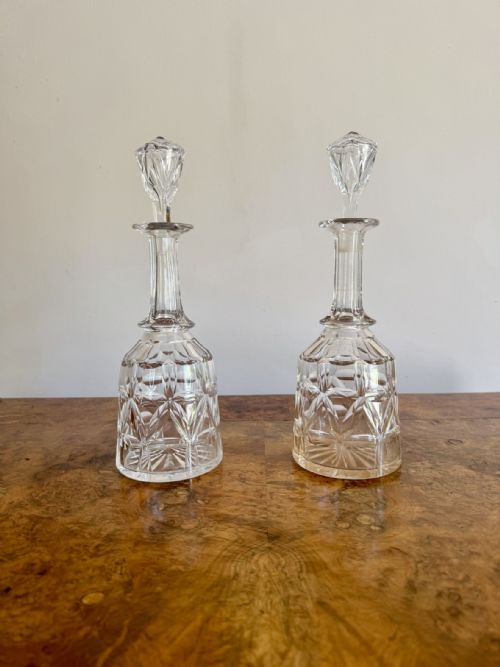
You are most likely to meet clear glass and lead crystal decanters featuring cut glass decoration, alongside pairs from the nineteenth century and specific regional bottles like Scottish whisky decanters. Forms vary from bell shapes to three-ring necks, showing how domestic service changed across the decades.
The origins stretch from English workshops to Scottish makers, taking in both modest serving bottles and grand magnum decanters. Each specimen reflects the prevailing style of its period, whether that is the formal cutting of the Georgian years or the optically blown forms of the late nineteenth century.
How they were made
Makers utilised heavy lead glass and crystal compositions, which gave the material its high refractive index and substantial weight in the hand. Glass was blown, sometimes optically to create internal patterns, before being finished on the wheel.
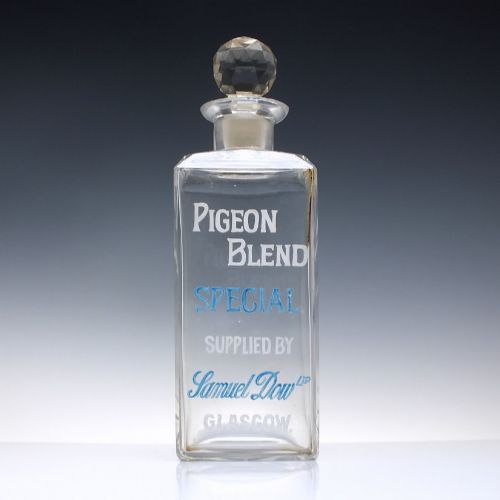
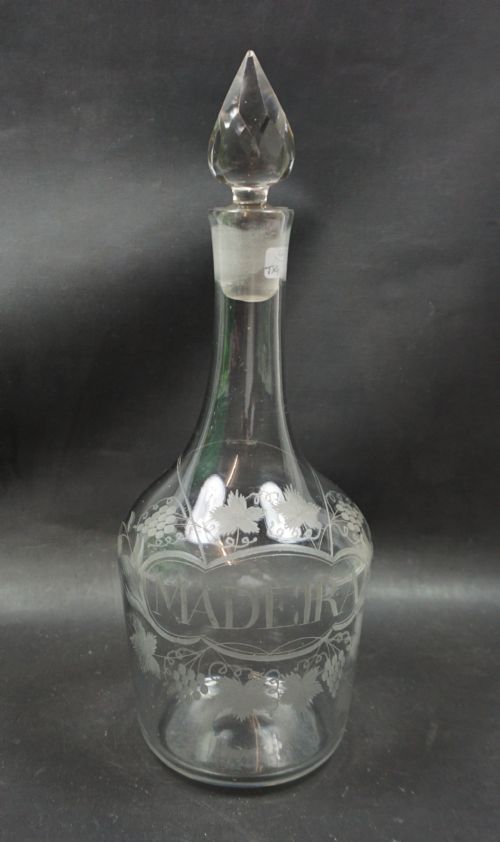
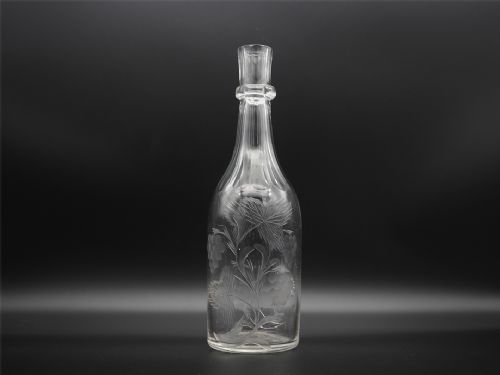
Surface decoration relied heavily on cutting and engraving, producing geometric facets or labelled panels for contents such as Madeira. Enamel was also applied to specific vessels, adding opaque lettering or detail directly onto the clear body.
Listings feature lead glass and crystal across Georgian, Regency, Victorian, and Edwardian periods, utilising cut glass, enamel, and blown techniques.
What varies in quality
The clarity of the metal separates the top of the range from the bottom, where lesser examples suffer from cloudiness, grey tones, or heavy bubbles in the material. Superior vessels possess a brilliant, ringing transparency that catches the light cleanly.
The crispness of the wheel-cut facets dictates the grade of the piece, with sharp, well-defined edges contrasting against soft, rounded cutting on simpler items. Matching sets and pairs also command greater interest than stray bottles.
James Powell
The Flint Glass Spirit Bottle Glossary
- Lead glass
- Glass containing lead oxide, which increases the weight, brilliance, and soft workability of the material for cutting. This composition is fundamental to the sparkle seen in period decanters.
- Three-ring decanter
- A bottle featuring three distinct horizontal glass rings or collars around the neck, typical of the Regency period. These rings provided a secure grip for pouring when hands were damp.
- Sugarloaf decanter
- A heavy-bottomed vessel shaped broadly like a traditional cone of refined sugar. This early form offered stability on shipboard or dining tables during the eighteenth century.
- Optically blown
- A technique where hot glass is blown into a ribbed or patterned mould before being expanded, creating subtle internal fluting. It appears on Arts and Crafts pieces to give texture to the walls.
- Enamelled
- Decorated with fused glass powder paints fired onto the surface of the bottle. This method allowed makers to label specific spirits directly onto the clear body.
Flint Glass Spirit Bottle: Frequently Asked Questions
What is a flint glass spirit bottle?
A flint glass spirit bottle is a heavy, lead-rich glass container made to hold and serve alcohol at the table. These pieces range from eighteenth-century sugarloaf forms to Victorian cut glass decanters.
They combine practical storage with decorative brilliance, designed to sit on sideboards or dining tables during formal meals.
How do I date an old decanter?
Dating relies on observing the neck rings, cutting style, pontil mark on the base, and overall silhouette. Georgian and Regency examples often feature distinct neck collars and deep wheel-cutting.
Victorian and Edwardian versions introduce different proportions, clearer metal, and sometimes enamel labeling or Arts and Crafts blowing techniques.
Were these bottles used for storage?
These vessels were primarily intended for serving spirits and wine at the table rather than long-term cellar storage. They held the contents brought up from the cask or bulk container.
Stoppers kept the contents fresh during the course of an evening, though they were rarely airtight by modern standards.
How should I clean antique glass?
Cleaning requires warm water and mild detergent, avoiding sudden temperature changes that can crack old lead glass. Stubborn internal stains are traditionally treated with warm water and rice or specialised beads.
Harsh abrasive scrubbers and modern dishwashers should be avoided entirely to preserve the original surface polish.