


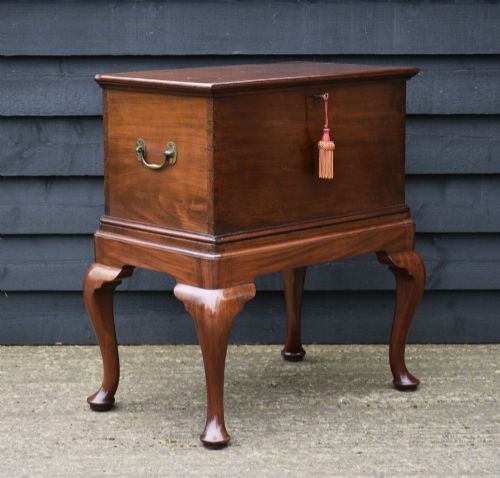
Georgian Coffer Trunk
A georgian coffer trunk provides sturdy domestic storage, bringing enduring craftsmanship and traditional utility into modern interiors through solid timber construction.
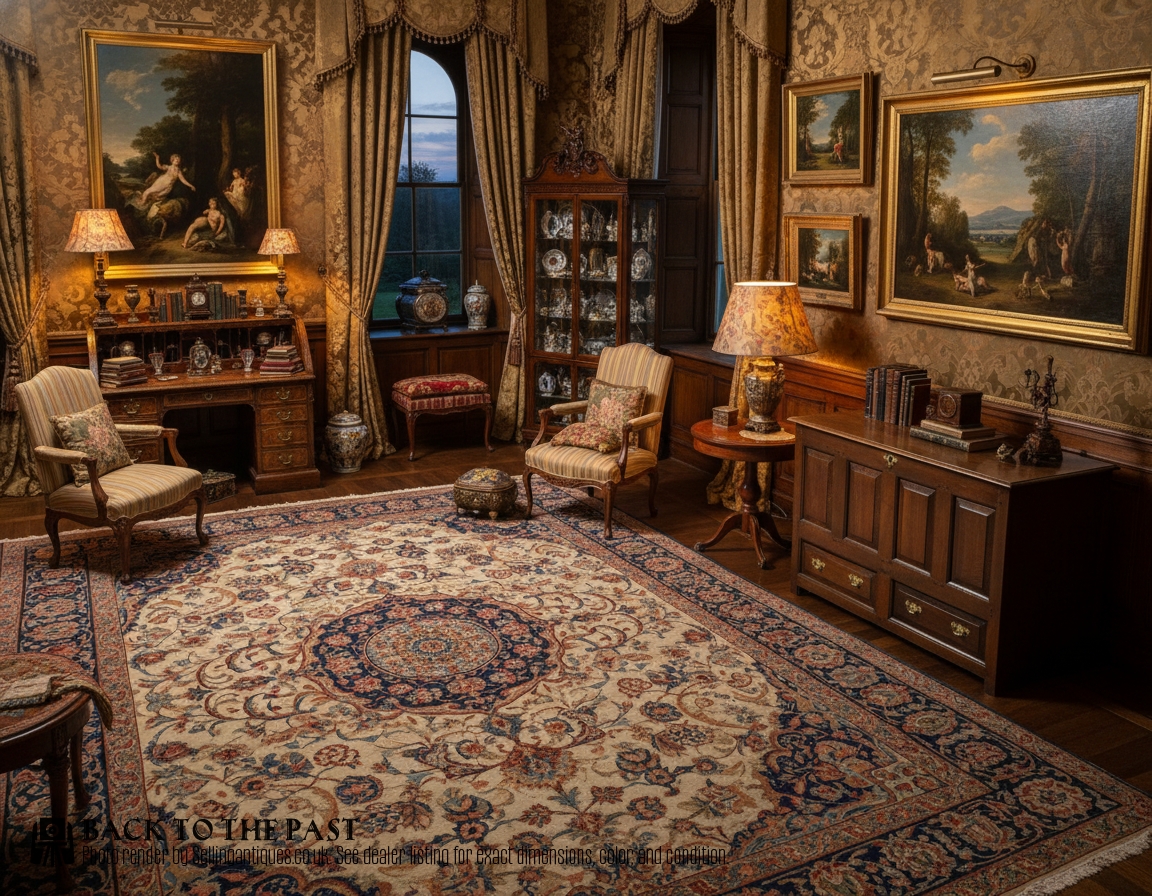
Georgian Coffer Trunk
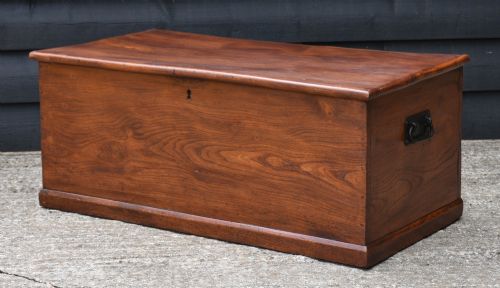
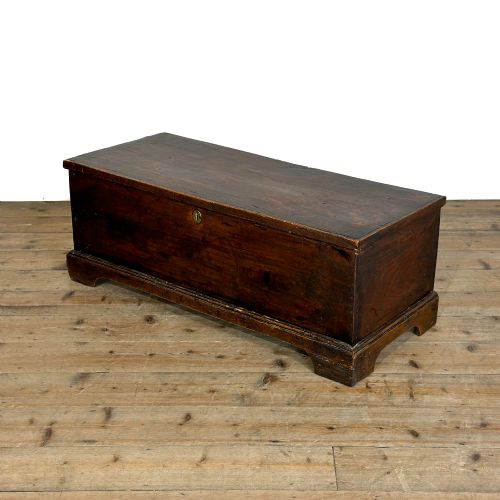
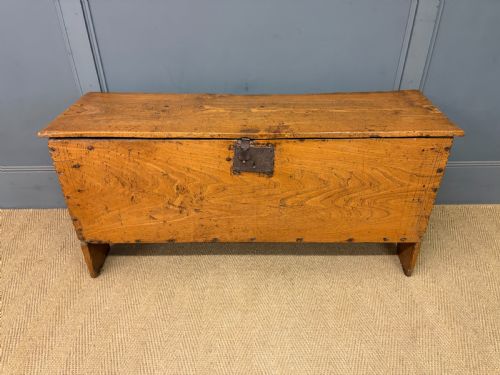
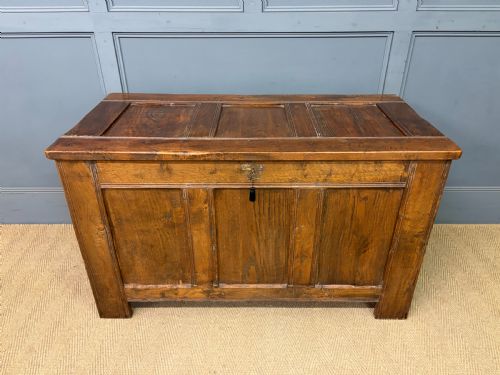
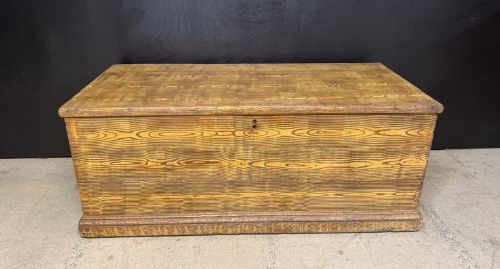
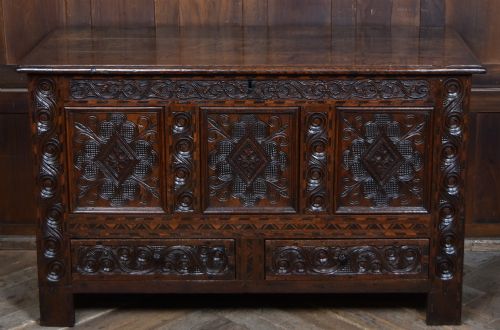
A georgian coffer trunk is a functional timber chest intended for storing household linens, blankets, and personal belongings. These items range from plain utilitarian boxes to elaborate joined furniture pieces.
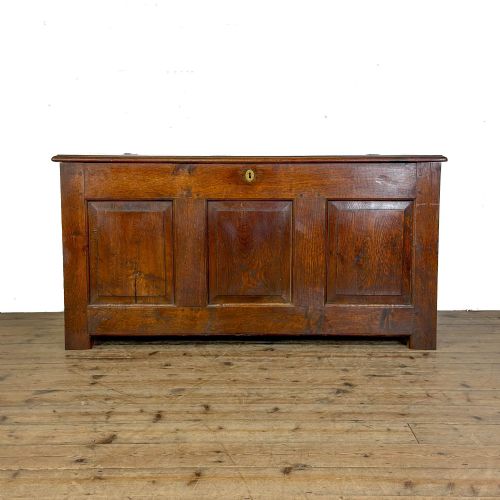
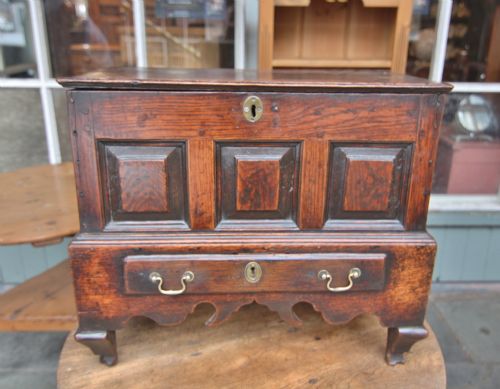
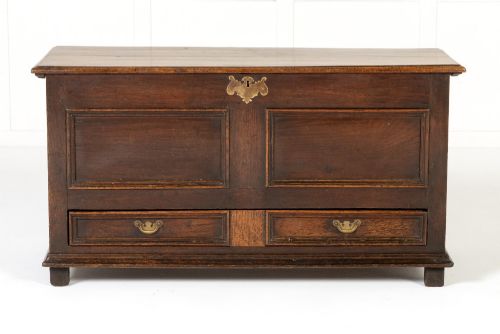
Buyers will most frequently encounter oak examples featuring panelled construction from the eighteenth century, alongside regional vernacular variants such as the smaller coffer bach or the drawer-fitted mule chest.
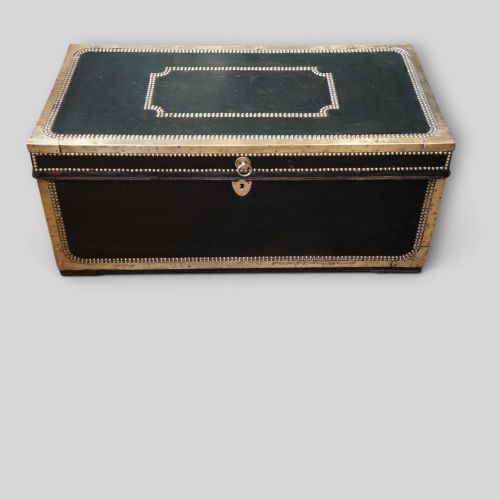
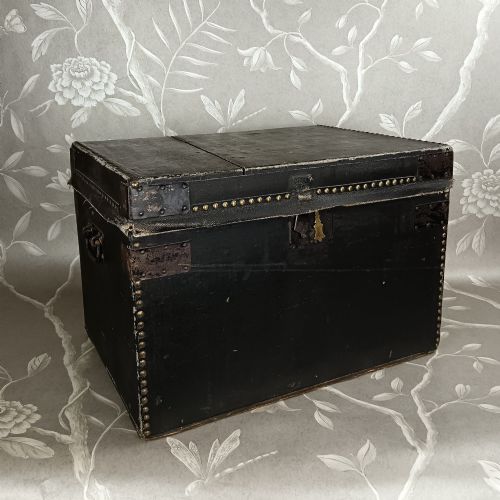
The selection also encompasses travelling trunks wrapped in leather with metal or brass studding, reflecting the portable demands of the period alongside static domestic storage.
How They Were Made
Cabinet makers utilised native timbers such as oak, elm, pine, and walnut, often joining panels by hand to allow the wood to expand and contract naturally. Regional pieces frequently employed locally available woods like Welsh pine or mixed vernacular hardwoods.
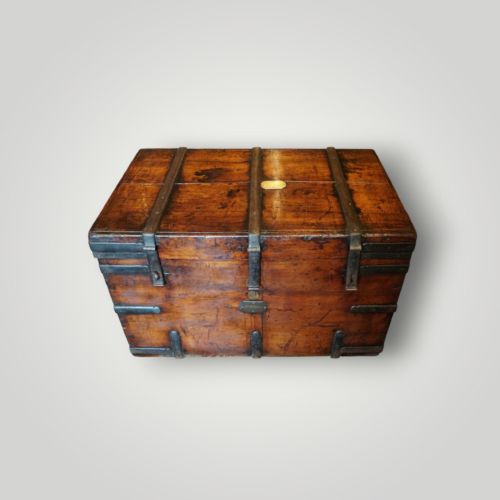
Travelling trunks and caskets relied on durable secondary materials, incorporating iron bindings, brass studs, and heavy leather coverings secured to wooden carcases for transit protection.
Surface treatments included simple wax finishes, carved ornamentation on panels, and occasional painted decorations applied to pine bodies.
Travelling trunks carry the authentic bumps, iron scars, and leather scuffs of eighteenth-century stagecoach journeys across Britain.
What Varies in Quality
The standard of timber selection and joinery distinguishes superior examples, with closely grained hardwoods and intricate panel mouldings indicating skilled workshop production. Simpler regional pieces display robust utility construction rather than refined decorative detail.
Hardware integrity and original fittings, including brass carrying handles, working locks, and iron corner brackets, heavily influence the overall execution of travelling chests and caskets.
Proportion and scale dictate the appeal of domestic chests, where balanced drawer arrangements on mule chests or harmonious panel divisions on standard coffers demonstrate thoughtful design.
Samuel Pratt·Wm. Insall of Bristol
The Georgian Coffer Trunk Glossary
- Coffer
- A large wooden chest traditionally used for storing valuables or clothing. These pieces often feature hinged lids and sturdy structural panels.
- Mule Chest
- A storage chest fitted with one or more drawers beneath the main compartment. This form bridges the utility of a coffer and a chest of drawers.
- Coffer Bach
- A small Welsh chest or coffer, typically constructed in oak and raised on short feet. They were traditionally made as marriage gifts or presentation pieces.
- Joined and Panelled
- A method of cabinet making where vertical stiles and horizontal rails frame floating wooden panels. This construction method prevents warping as timber ages.
- Travelling Trunk
- A reinforced box designed for personal transport, frequently bound in leather and metal with side carrying handles. These pieces often feature maker stamps or historical provenance.
Georgian Coffer Trunk: Frequently Asked Questions
What is a georgian coffer trunk?
A georgian coffer trunk is an antique wooden storage box produced during the eighteenth or early nineteenth century. These pieces served domestic and travel needs across British households.
They appear in various timbers including oak, elm, and pine, often featuring hinged lids and internal storage compartments for blankets or garments.
How were these chests used historically?
Households utilised these trunks for storing heavy textiles, household linens, and personal valuables before built-in wardrobes became common. Travelling variants accompanied owners on stagecoaches and ships.
Their robust construction also allowed them to function as makeshift benches or window seats within period rooms.
How do you style a coffer in a modern home?
Placing a coffer at the foot of a bed provides functional blanket storage while anchoring the bedroom decor. Alternatively, position one in a hallway or living space as a coffee table.
The warm tones of aged oak or mahogany integrate smoothly into both traditional and contemporary interiors.
How do you distinguish a mule chest from a standard coffer?
A standard coffer consists of a single top-opening compartment enclosed by panelled sides. A mule chest incorporates one or more functional drawers beneath the main storage well.
This addition of external drawers marks the key structural difference between the two forms.