


Georgian Clock Face
A georgian clock face brings the precise engineering of the eighteenth century into a room, framed in brass, painted iron, or carved timber.
Georgian Clock Face
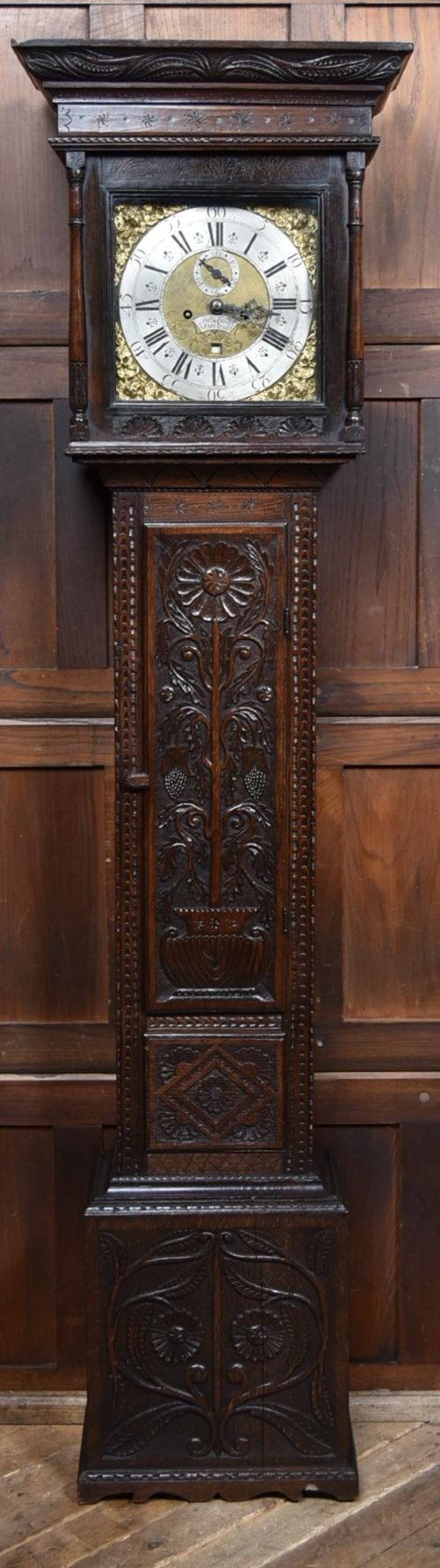
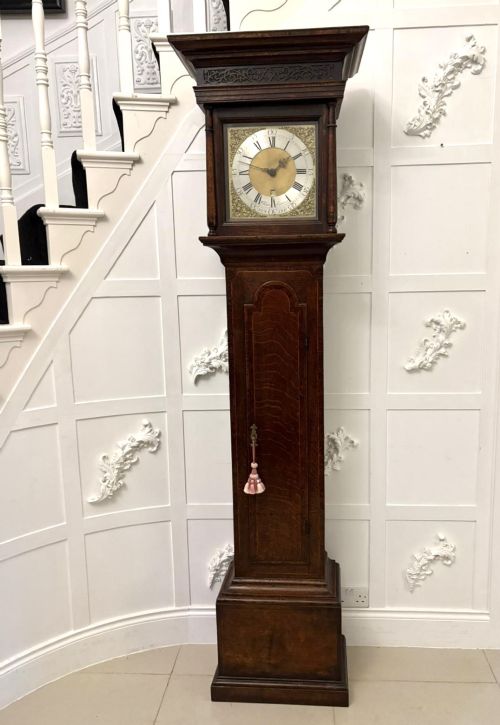
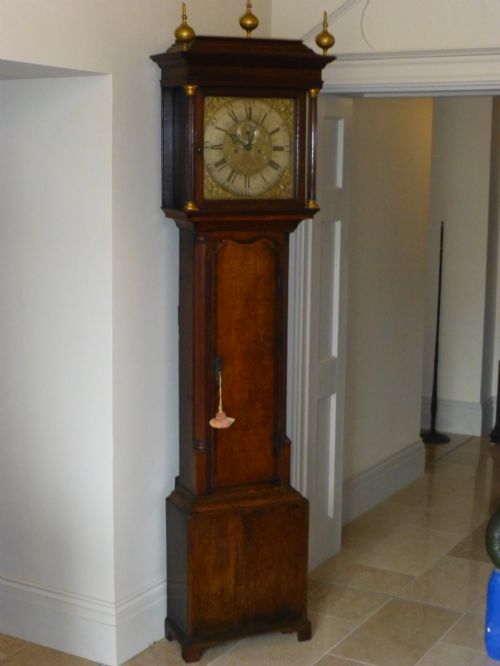
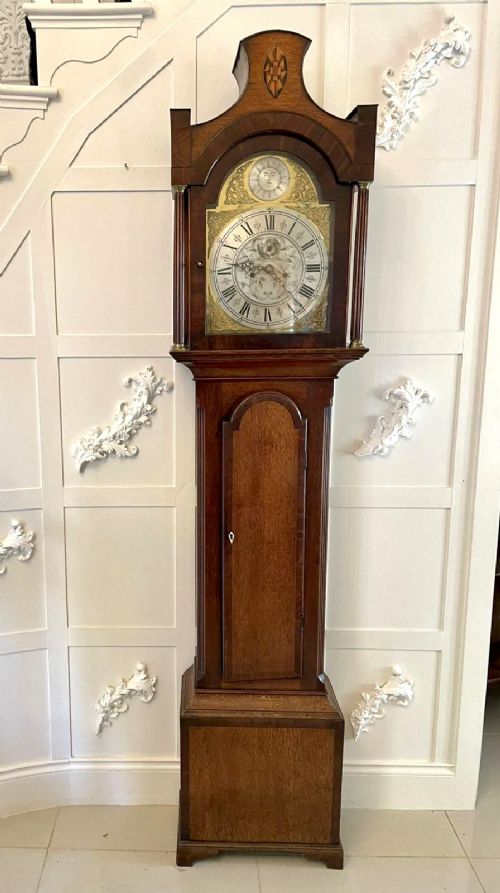
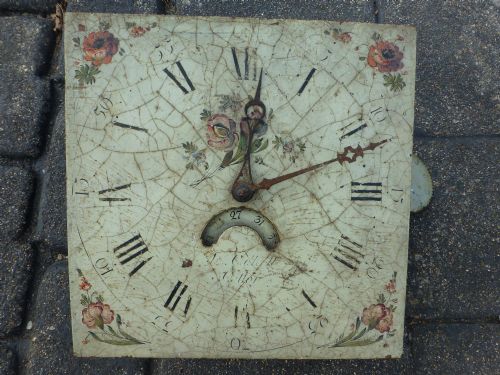
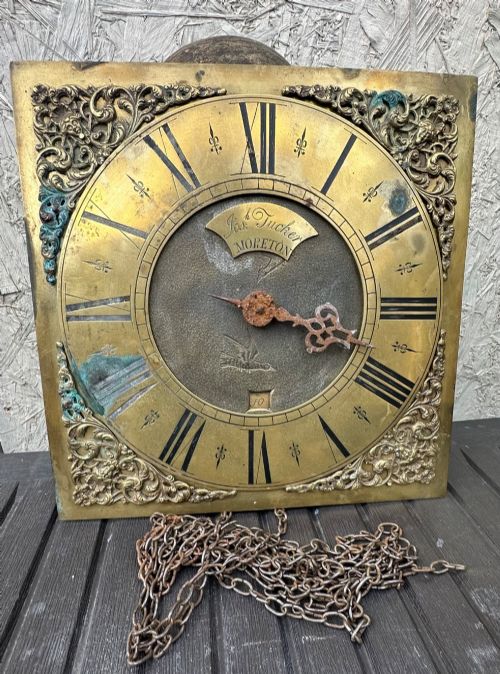
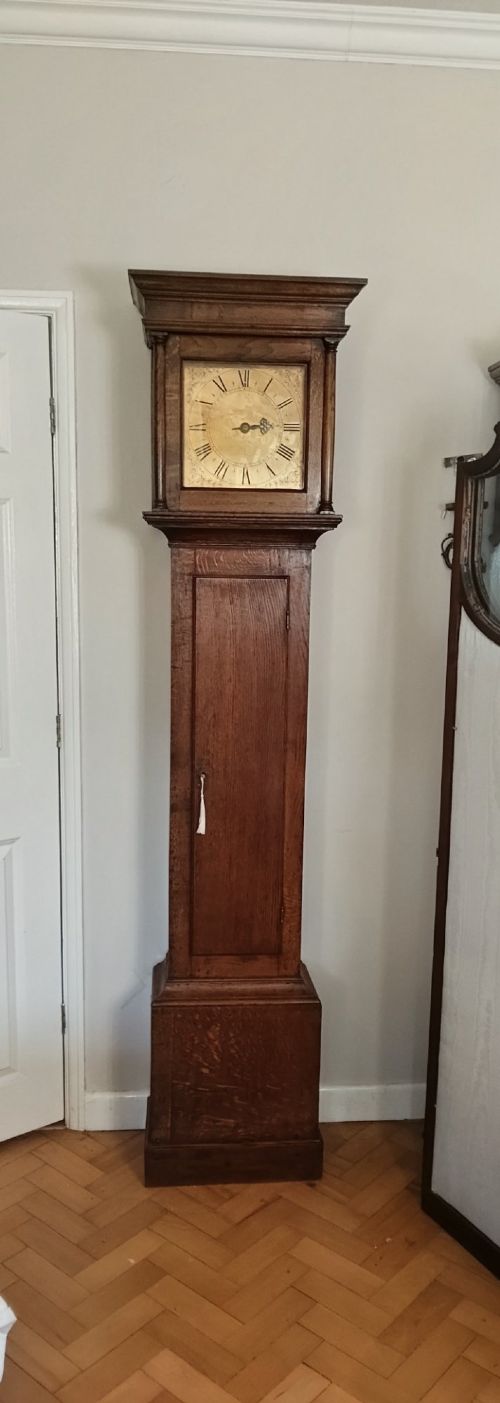
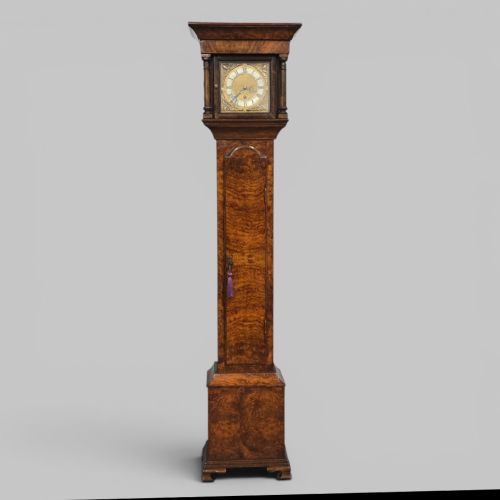
A georgian clock face sits at the heart of longcase clocks, wall clocks, and bracket timepieces originating from the eighteenth and early nineteenth centuries. These items appear primarily mounted within oak or mahogany cases, though surviving dials alone also present themselves for collection.
The regional makers recorded across these examples span English, Scottish, and Irish towns, producing brass and painted iron dials that indicate hours, minutes, and sometimes lunar phases. Buyers encounter both brass engraved plates and white enamel painted faces bearing the signatures of provincial and metropolitan clockmakers.
Materials and Construction
Makers fashioned these dials from cast brass or sheet iron, applying silvering to chapter rings and engraving floral motifs or maker details into the metal surface. Painted iron dials emerged later in the period, decorated with floral spandrels and subsidiary seconds or calendar dials.
Cases housing these faces rely on native timbers such as oak and walnut, alongside imported mahogany and burr veneers. Iron and steel components form the internal movements behind the dial plates, driven by weights or springs.
Several makers operated out of locations with lengthy names, ensuring their signatures stretch grandly across the dial.
Assessing Quality
Quality rests in the crispness of the engraving upon brass dials and the delicacy of the hand-painted details on white iron faces. Finer examples display signed work by documented makers with intricate cast brass spandrels set in the corners of the dial plate.
The integration between the dial, the movement, and the timber case dictates the overall standard. Superior pieces maintain their original matching components and retain patinated wooden surfaces without excessive restoration.
Jn° Smith·Smith of Chester·Joseph Gibson·William Betagh·David Morice·Samuel Young·John Pollard·Jn Wright Linton·Richard Northen·Robert Thomson·James Draycot·John Taylor·Standring of Bolton·William Webster·George Clapham·Jonathan Blake·Richard Peckover·John Douglas
The Georgian Clock Face Glossary
- Dial
- The visible face of the clock where hours and minutes are indicated by hands. It serves as the primary canvas for the maker's signature and decorative engraving.
- Spandrel
- The ornamental corner piece fitted between the circular chapter ring and the square edge of a brass dial. Early examples feature cast brass scrollwork or cherub motifs.
- Chapter ring
- The outer ring on a dial inscribed with numerals for the hours and minutes. It is often finished in silvered brass to contrast with the matted centre.
- Longcase clock
- A tall pendulum clock housed in a wooden case designed to stand on the floor. These items frequently incorporate brass or painted iron dials.
- Lunar moonphase
- A mechanical display on a clock face tracking the phases of the moon through a rotating disc. This complication often appears on high-grade provincial dials.
Georgian Clock Face: Frequently Asked Questions
What is a georgian clock face made from?
These faces are constructed primarily from brass plates with engraved or silvered details, or from painted iron surfaces featuring enamel numbers and floral decoration.
The materials shifted over the decades as provincial makers adopted painted white dials alongside traditional brass work.
How do I identify a regional maker?
Makers typically engraved or painted their names and towns directly onto the dial plate, often within the chapter ring or beneath the centre arbor.
Searching these names reveals records of provincial workshops operating across English, Scottish, and Irish counties during the eighteenth century.
What is the difference between brass and painted faces?
Brass faces dominate the earlier decades of the period, featuring cast corner spandrels and engraved chapter rings. Painted iron faces became prominent later, offering white backgrounds decorated with floral or lunar scenes.
Both styles accommodated eight-day or thirty-hour movements housed in tall wooden cases.
How should I care for a brass dial?
Keep the metal surfaces dry and avoid abrasive polishes that remove the historic patination and engraved detail. Professional horological conservation is recommended for cleaning the delicate inner movements behind the face.
Stable room humidity prevents timber cases from warping around the mounted dial.