
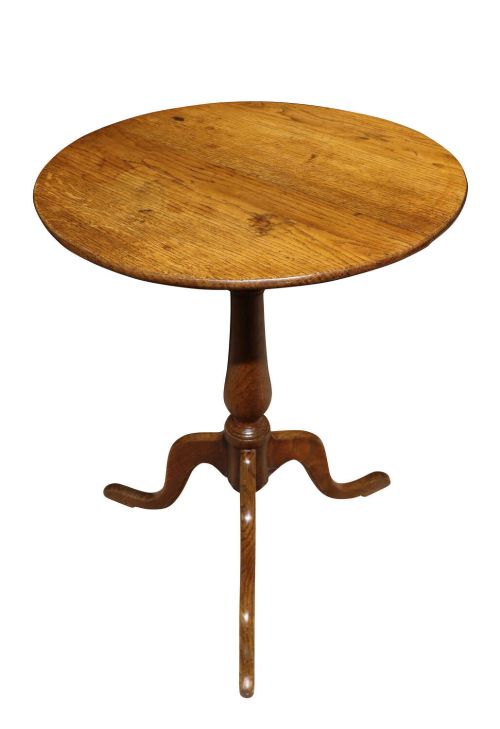
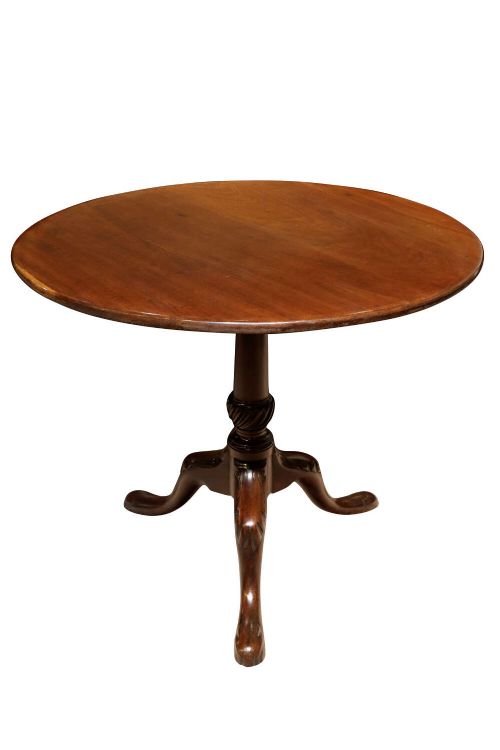
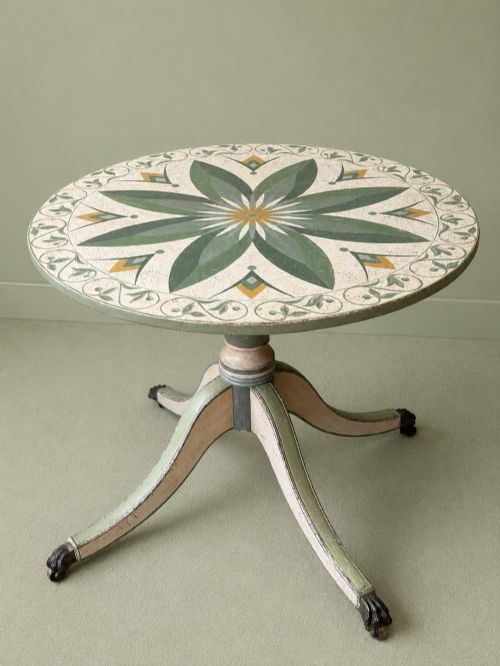
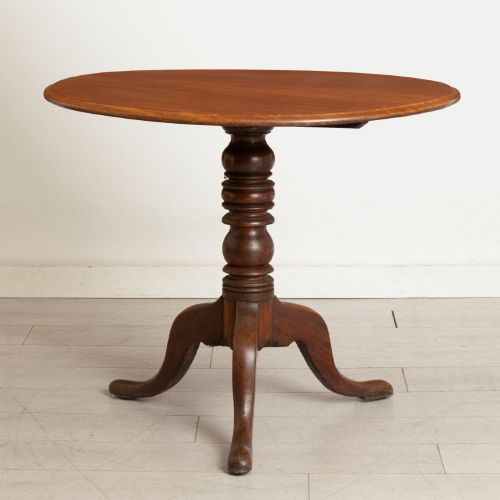
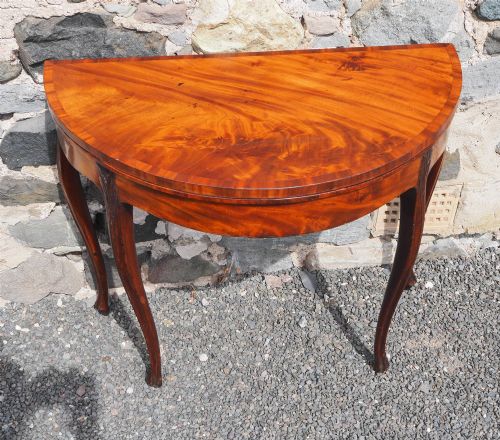
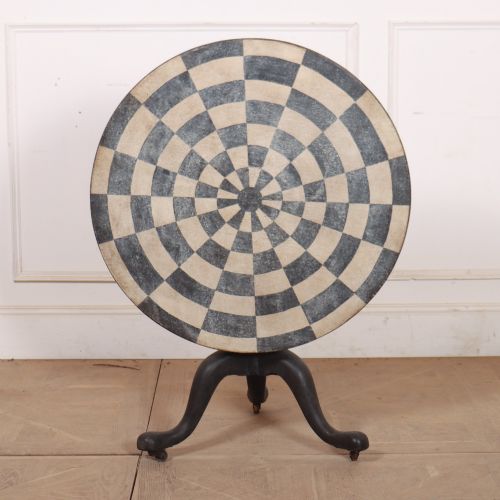
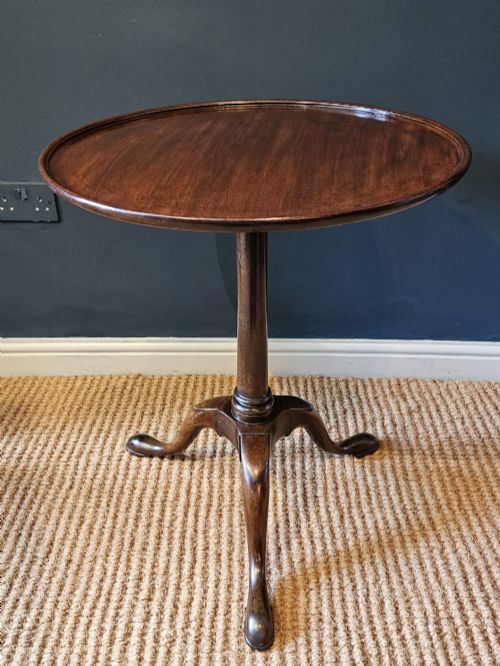
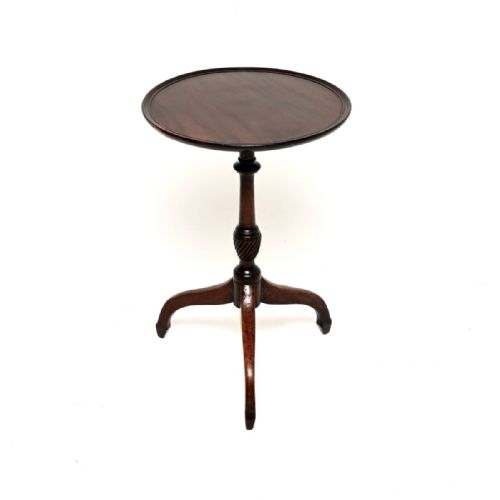
Georgian Circular Tea Table
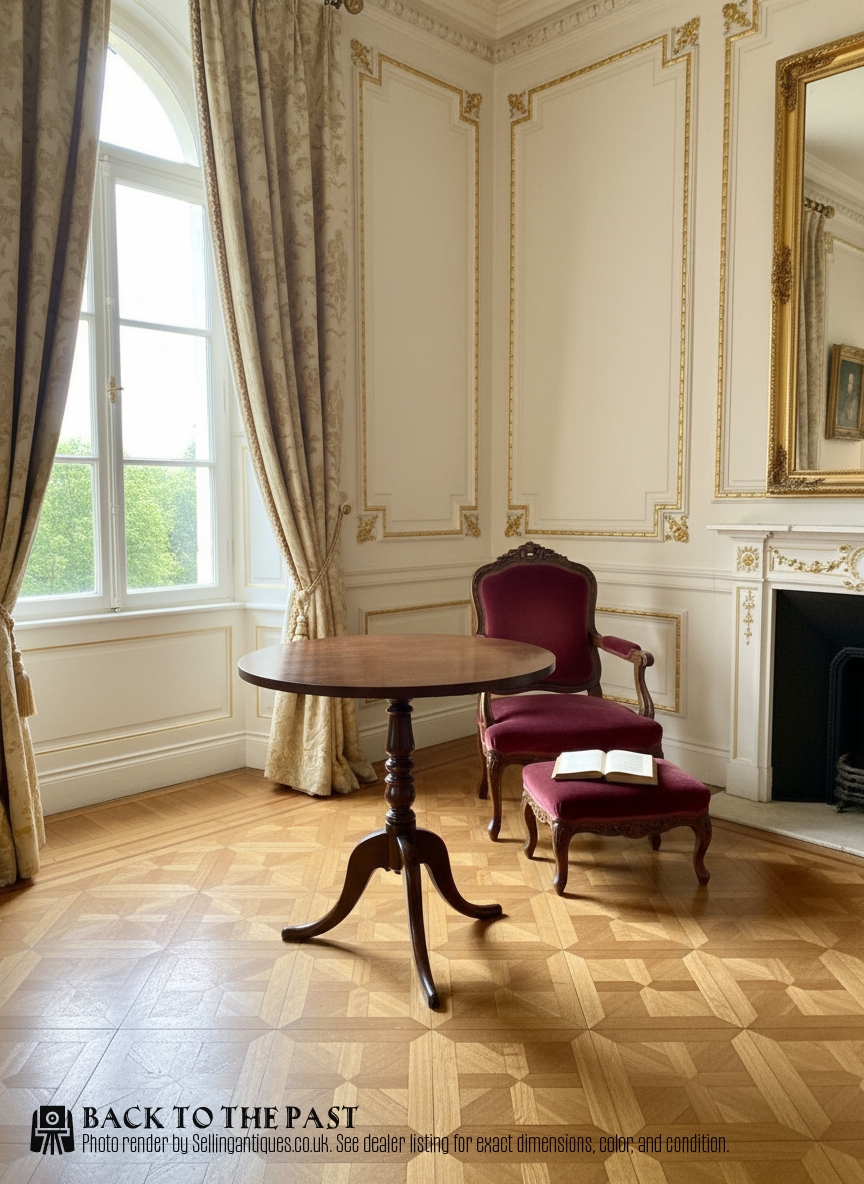
A georgian circular tea table brings centuries of social ritual and cabinet-making skill directly into a modern room.
How they were made
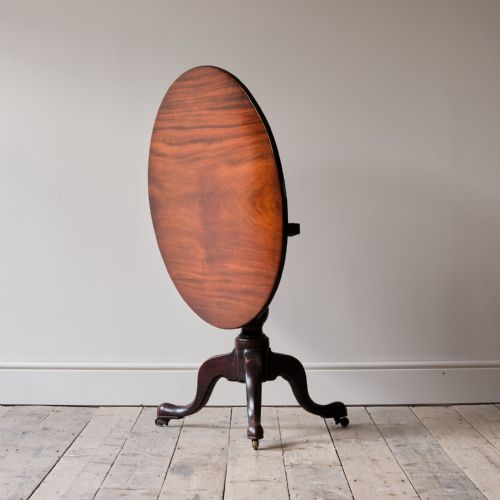
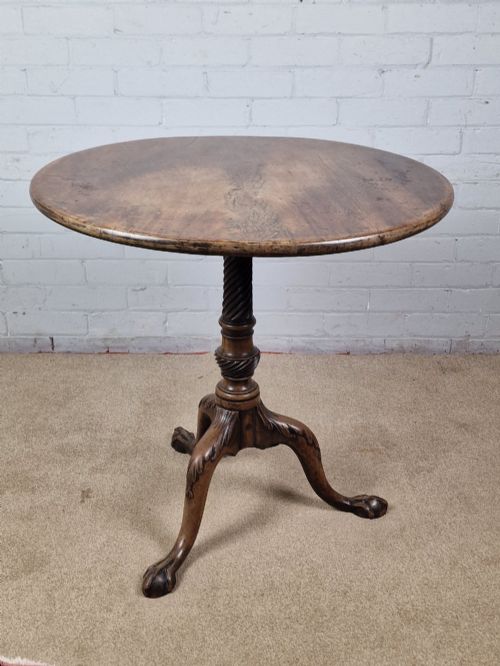
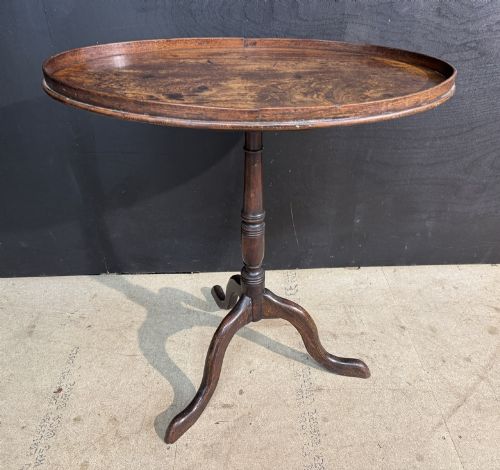
Cabinet-makers constructed these pieces using solid timbers and veneers fixed to sturdy central pedestals, frequently incorporating birdcage mechanisms or spiral twist columns to allow the top to revolve and tilt. Joinery relies on traditional dovetails, pegging and turned wooden components shaped by hand on a lathe.
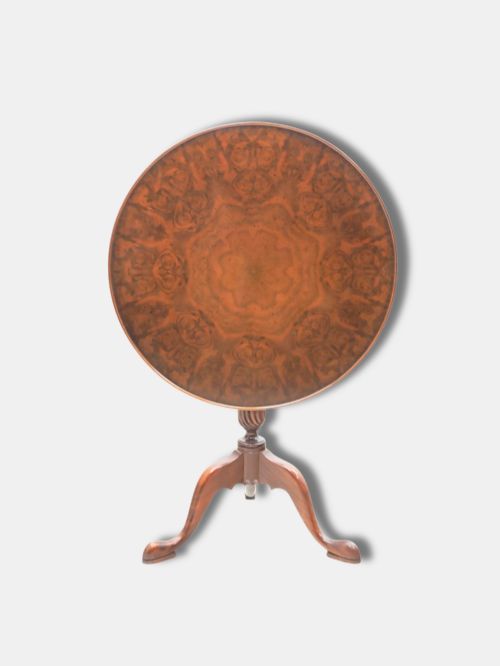
Surfaces receive polish or paint finishes that highlight the natural grain of figured mahogany, burr walnut or oak, while brass fittings occasionally secure folding mechanisms and catches.
What varies in quality
The distinction between standard examples and superior pieces rests on the choice of timber and the crispness of the carving, such as figured mahogany or red walnut paired with finely shaped tripod legs. Refined cabinet-making shows in the smooth operation of birdcage mechanisms, tight joints and well-proportioned turned columns rather than plain or heavy construction.
Georgian Circular Tea Table Retail Price Guide 2026
Typical asking prices for georgian circular tea table among the pieces listed under this phrase on Sellingantiques today, from the lower quarter to the upper quarter. They describe what is for sale here now, not the wider market.
Listings feature woods including mahogany, oak, walnut, elm and fruitwood, spanning the eighteenth, nineteenth and early twentieth centuries.
The Georgian Circular Tea Table Glossary
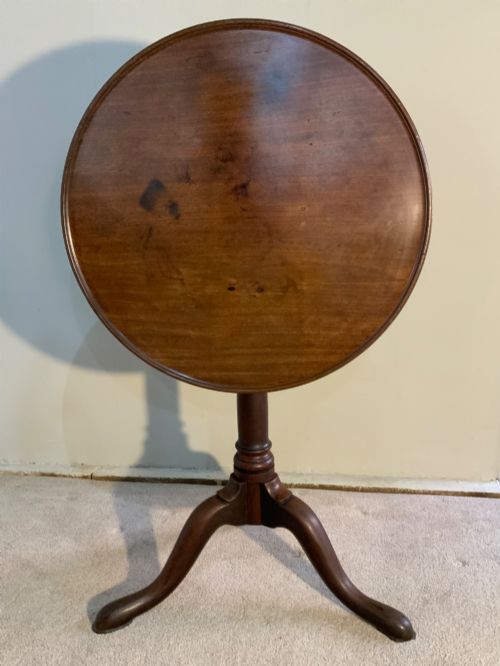
- Tilt-top table
- A table with a hinged top that pivots vertically to save space against a wall when not in use. This mechanism is also known as a snap-top.
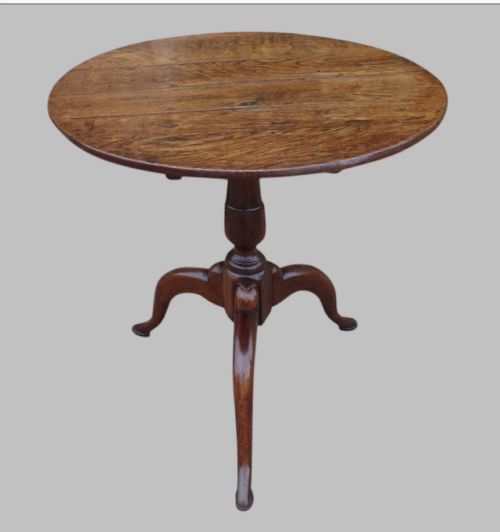
- Tripod table
- A small occasional table supported by a central pillar resting on three legs. These provide stability on uneven floors.
- Birdcage
- A revolving wooden framework beneath a table top that allows it to turn and tilt. It uses small vertical spindles resembling a cage.
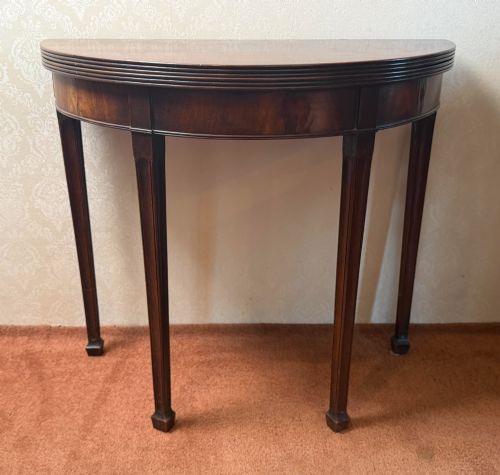
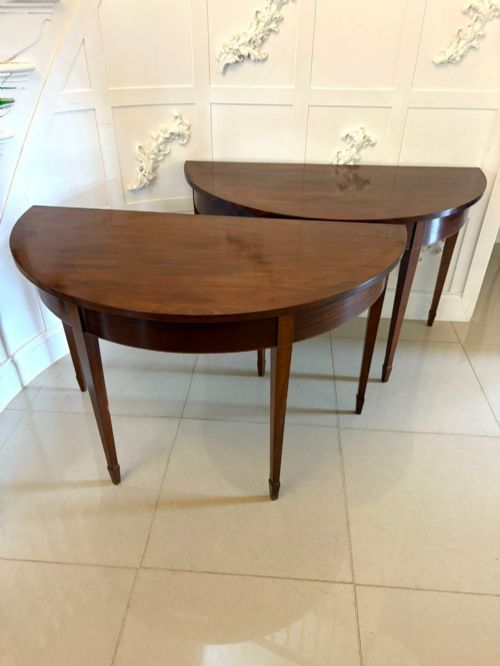
- Demilune
- A half-moon shape used for console and fold-over tea tables designed to stand flat against a wall. They often open out to form a full circle.
Georgian Circular Tea Table: Frequently Asked Questions
How were tea tables used?
These tables were placed in reception rooms to hold porcelain teacups, kettles and serving gear during the formal ritual of tea drinking.
When the tea service concluded, the top could often be tilted away to clear the centre of the room.
What is a birdcage mechanism?
A birdcage is a timber assembly beneath the table top containing small vertical posts that permits the surface to rotate independently of the column.
This clever engineering allowed guests to turn the table toward them to access items easily without moving the heavy base.
How do I spot a Georgian period piece?
Look for authentic timber construction methods, such as solid mahogany, oak or walnut, combined with traditional joinery like pegged tenons and hand-turned pedestals.
Stylistic details follow the reigns of Georges II, III and IV, though later revival pieces from the twentieth century also replicate these forms.