
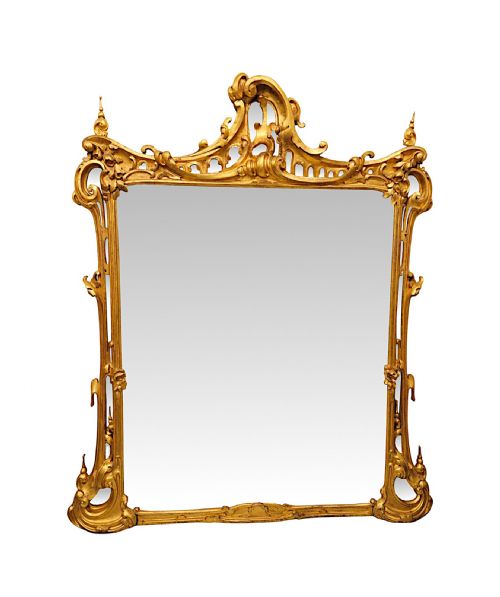
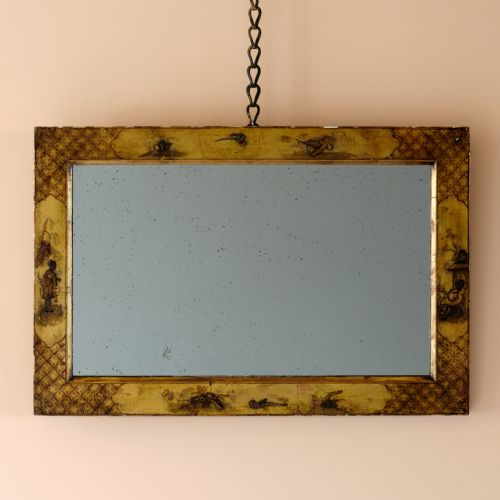
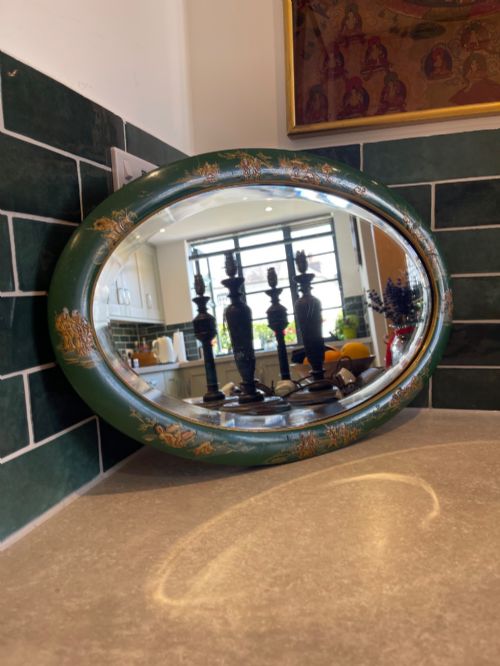
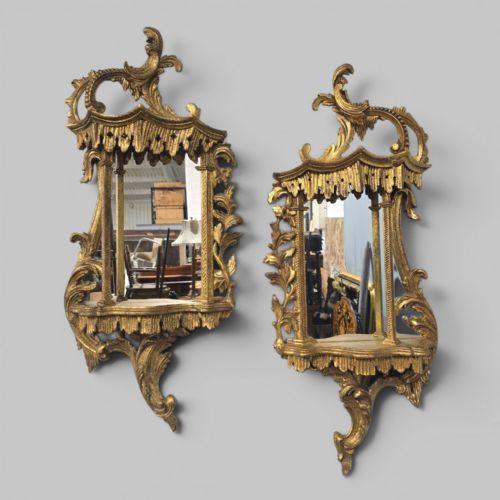


Georgian Chinoiserie Mirror
These pieces bring a striking Georgian chinoiserie mirror into your room, offering distinct lacquer work and period design.
Georgian Chinoiserie Mirror
When you search for a georgian chinoiserie mirror, you are looking at decorative wall pieces and dressing mirrors defined by distinct ornamental styles. The pieces on this page span the 18th century, Georgian, Victorian, and later revival periods.
You will encounter various forms including wall mirrors, overmantel mirrors, toilet mirrors, and dressing tables. These items combine historic craftsmanship with classical oriental decoration.
Originating from British and export traditions, these mirrors feature stylistic influences ranging from Chinese Chippendale to Rococo and Queen Anne. The assortment balances grand overmantel displays with compact toilet mirrors.
How they were made
The construction of these pieces relies on wood frames finished with lacquer, paint, or giltwood. Many examples employ black, cream, or red japanning to achieve their characteristic decorative surfaces.
Makers integrated mirror glass and wood alongside gold leaf or metal details. Reverse painting on glass also appears, showing specific historic techniques used to create intricate visual depth.
Materials recorded across the inventory include lacquer, giltwood, wood, mirror glass, and metal.
What varies in quality
The standard of a piece depends heavily on the execution of the lacquering and the depth of the carved woodwork. Finer examples display meticulously rendered figures and motifs rather than simpler surface decoration.
The integrity of the original glass and the preservation of the giltwood or japanned finish dictate the overall character. Pieces that retain their original surfaces without excessive modern intervention command greater appreciation.
The Georgian Chinoiserie Mirror Glossary
- Chinoiserie
- European interpretation and imitation of Chinese artistic traditions and motifs, popular in furniture and mirrors. This style frequently incorporates painted figures, landscapes, and architectural elements.
- Japanning
- A type of European varnish and finishing technique that imitated Japanese and Chinese lacquerwork. It is commonly found in black or red finishes on period furniture.
- Giltwood
- Wood that has been coated with gold leaf or gold paint. This material is typical of ornate period mirror frames.
- Overmantel mirror
- A large mirror designed to hang above a fireplace mantel. These pieces often feature wide proportions and elaborate frames.
- Toilet mirror
- A smaller tabletop mirror, often fitted with a small base or drawers, used for grooming. They date across the 18th and 19th centuries.
Georgian Chinoiserie Mirror: Frequently Asked Questions
Where should I hang a chinoiserie mirror?
These mirrors suit principal reception rooms, hallways, or above bedroom dressing tables where their decorative frames can be fully appreciated.
Ensure the wall fixings can support the weight of wood and glass constructions, particularly for larger overmantel examples.
How do I clean the lacquered frame?
Dust the surface gently with a soft, dry cloth to prevent any abrasion to the delicate lacquer or giltwood details.
Avoid using liquid cleaners or chemical polishes, which can permanently damage historic finishes.
What is the difference between japanning and lacquer?
Japanning is a European finishing technique using layered varnishes to imitate Asian lacquer, frequently heat-cured and decorated with raised motifs.
Actual export lacquer involved specialised tree saps applied in numerous traditional layers.
Are these mirrors fragile?
The combination of antique mirror glass and wooden frames requires careful handling during movement and placement.
Stable indoor environments with moderate humidity help protect the wood and lacquer from cracking over time.