





Gilt Oval Frame
When choosing a gilt oval frame, you are selecting a piece that brings warmth and classic proportion to any wall.
Gilt Oval Frame
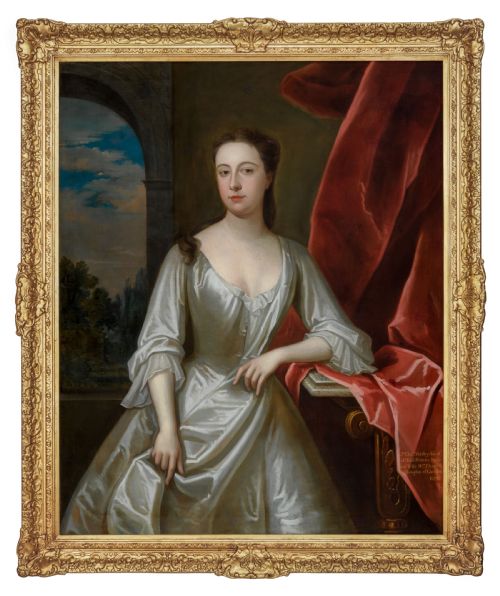
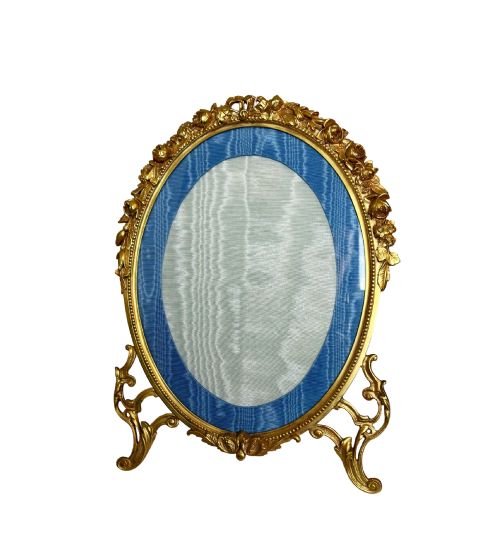
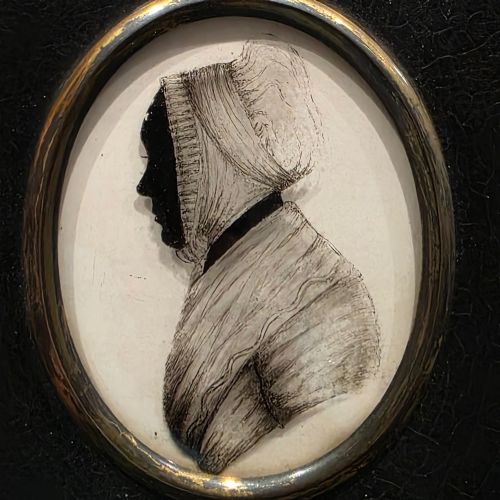
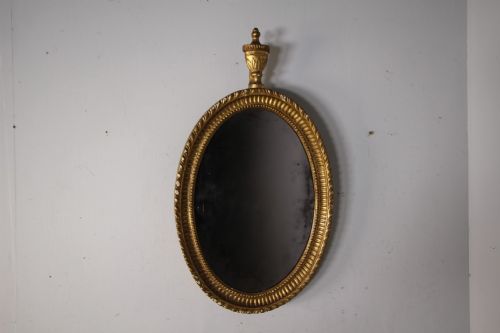
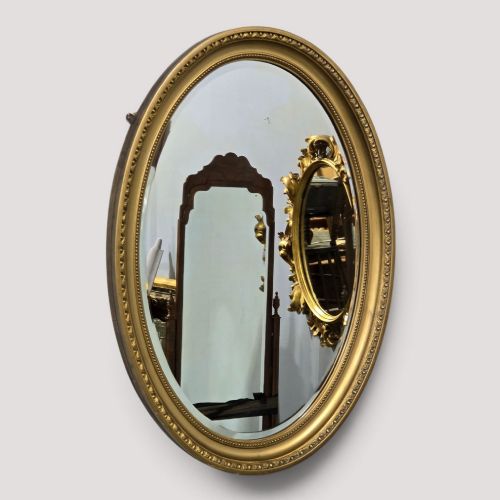
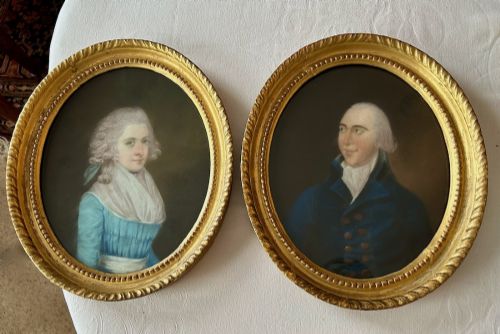
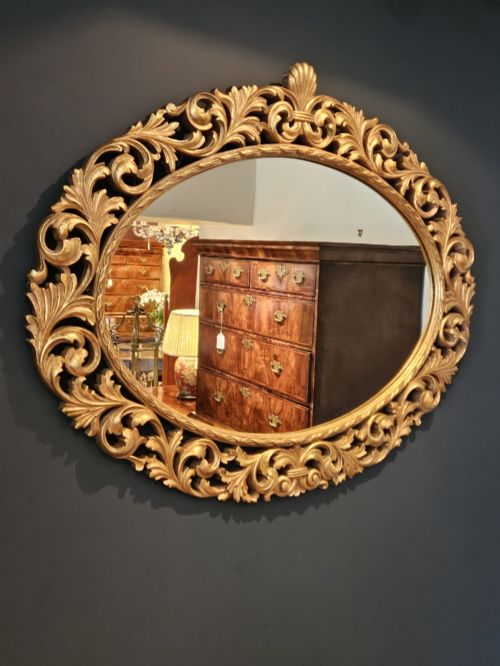
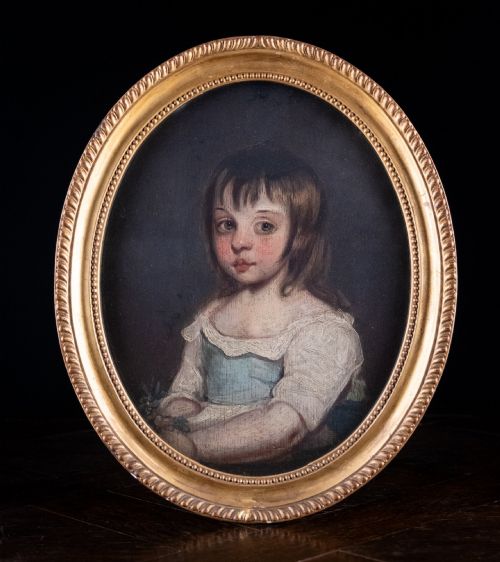
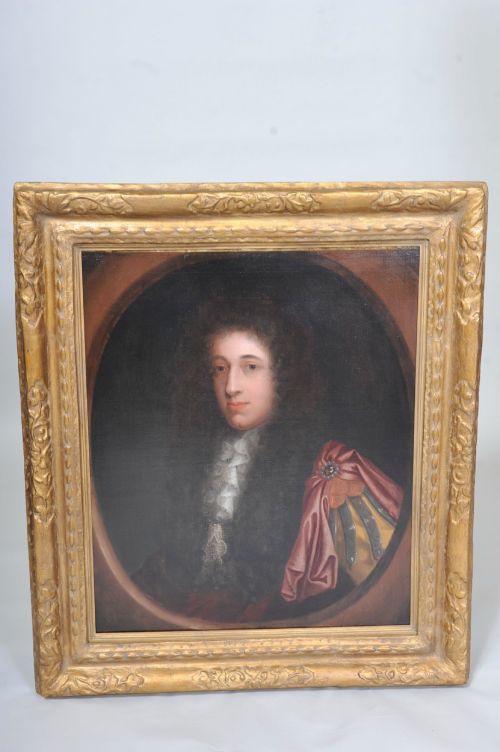
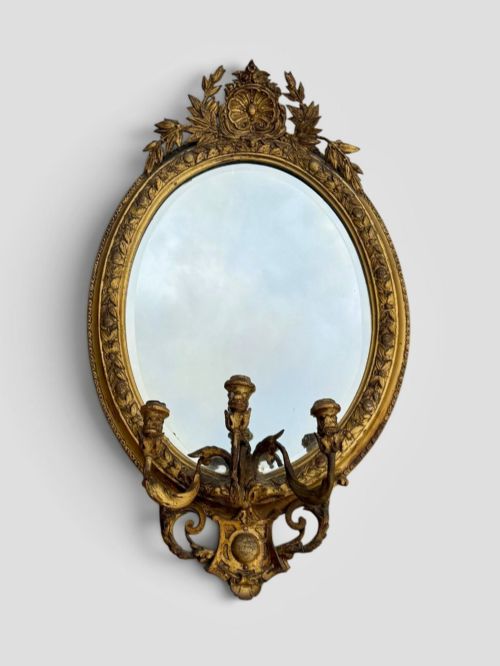
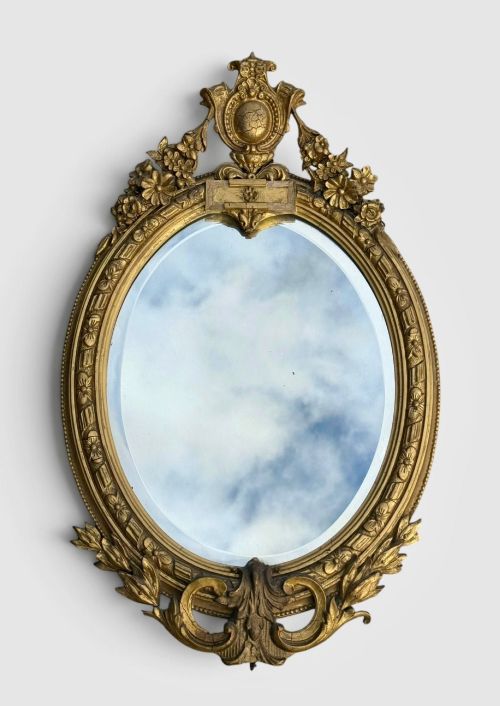
A gilt oval frame houses mirrors, oil paintings, portraits, and silhouettes created across the seventeenth, eighteenth, nineteenth, and early twentieth centuries. The selection on this page ranges from deep-moulded Victorian wall mirrors to Regency picture frames and Georgian carved timber designs.
Buyers encounter both functional mirrors and protective surrounds for fine art, including pastel portraits and miniature paintings. The curved profile of these pieces softens the geometry of a room while providing a period focal point.
Origins span English, French, and Dutch workshops, reflecting regional carvers and gilders who utilised classical revival styles, rococo curves, and restrained neoclassical lines. Each object carries the decorative vocabulary of its specific decade of production.
How They Were Made
Makers constructed the carcase from solid timber, commonly using wood or carved gesso applied over a wooden base to build up relief ornamentation. Gesso allowed artisans to shape intricate floral swags, scrolls, and bead moulding before applying surface finish.
The golden surface was achieved through the application of gold leaf or gilt bronze, sometimes complemented by parcel-gilt details or ebonised accents. Artisans also worked with composition material pressed into moulds for repetitive decorative motifs like rosettes and leaves.
Several portraits preserve the intense gazes of eighteenth-century sitters who sat patiently while artists captured their periwigs and lace collars.
What Varies in Quality
The depth of the carving and the crispness of the moulded relief define the upper tiers of quality. Hand-carved timber and layered gesso exhibit sharp, clean profiles, whereas mass-produced later pieces rely on softer, shallower composition mouldings.
The integrity of the original gilding surface dictates the visual weight and historical value of the piece. Surfaces that retain their original gold leaf without excessive later overpainting show superior preservation.
Sir Godfrey Kneller·Thomas Murray·Michael Dahl·John Scougall·John Russell·James Sharpes
The Gilt Oval Frame Glossary
- Giltwood
- Timber that has been coated with gold leaf or gold paint. This finish creates the characteristic luminous metallic sheen seen on period frames.
- Gesso
- A plaster-like mixture applied to wood frames and carved to form detailed relief ornaments. It provides a smooth base for subsequent gilding.
- Gadrooned
- Decorated with a carved, notched, or fluted ornamental band. This edge treatment often appears on Victorian and Georgian mirror borders.
- Patera
- A circular ornamental bas-relief resembling a classical libation dish. These flower-like rosettes frequently accent the corners or centres of frames.
- Regency
- A British design style dating from the early nineteenth century. Pieces from this era often feature clean neoclassical lines alongside bold, gilded surfaces.
Gilt Oval Frame: Frequently Asked Questions
How do I hang a heavy antique oval mirror safely?
Heavy frames require fixings suited to the weight of the timber and gesso construction. Secure the piece directly into wall studs using appropriate brackets rather than relying on standard picture wire.
Ensure the hanging wire or strap on the back is robust and secured to the frame's structural timber. Professional installation is recommended for large overmantel mirrors.
Can I clean the gilded surface without damaging the finish?
Dusting should be done gently with a soft, dry brush to prevent disturbing fragile gesso or flaking gold leaf. Avoid commercial cleaning sprays and water, which strip historic finishes.
Moisture can penetrate microscopic cracks in the gesso and cause the wood beneath to swell. Consult a professional conservator if the surface requires deeper cleaning.
How can I tell a Victorian frame from an 18th-century original?
Eighteenth-century frames typically exhibit hand-carved wooden ornament with deep relief and distinct tool marks on the reverse. Victorian pieces often incorporate composition material pressed into moulds for repetitive decorative motifs.
Examine the construction joints and the composition of the gesso layer underneath the gilding. Earlier pieces show greater variation in the hand-chiselled details compared to later moulded versions.
What is the best room for a gilt oval frame?
These frames suit spaces where the curved silhouette can break up straight architectural lines. Hallways, living rooms, and bedrooms benefit from the reflective light of a mirror or the visual weight of a framed portrait.
Keep pieces away from direct heat sources and high humidity to protect the wood substrate and delicate gesso. Stable environmental conditions prevent the gilt surface from cracking over time.