


Black Lacquered Wall Mirror
A black lacquered wall mirror brings deep tone and hand-painted detail into a room, offering both functional reflection and striking visual depth.
Black Lacquered Wall Mirror
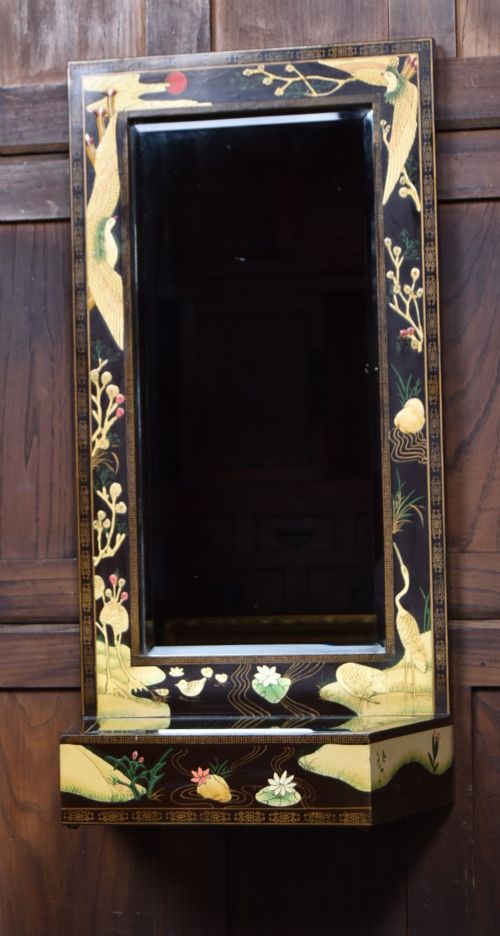
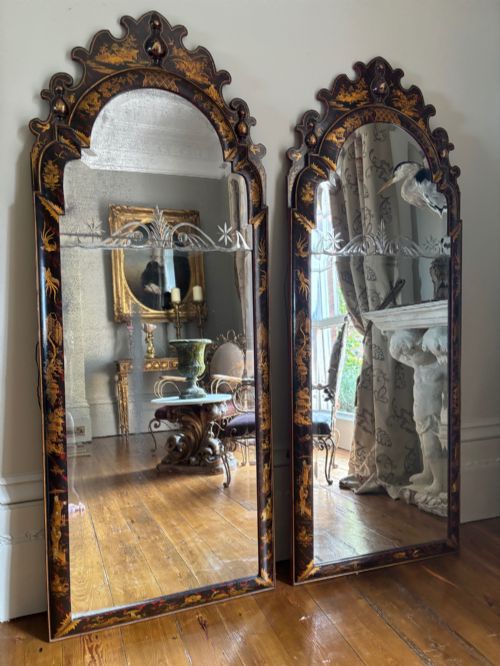
Chinoiserie and Queen Anne Revival styles dominate the pieces available, alongside Victorian Aesthetic Movement and Edwardian interpretations. Buyers most frequently encounter oval Chinoiserie mirrors and decorated frames bearing oriental motifs executed during the Edwardian period or around eighteen eighty.
The assortment includes specific regional interpretations, such as French Empire pieces incorporating gilt brass alongside black lacquer. Console tables paired with mirrors also appear, demonstrating how these reflective surfaces integrate with larger decorative furniture schemes.
How they were made
Makers built these frames using wood substrates such as ebonised timber or standard wood preparations coated in successive layers of black lacquer. Artisans applied gold leaf and gilt details to highlight raised decorative motifs, particularly within Chinoiserie schemes depicting figures, landscapes, and floral patterns.
Mirror glass of the period was set into these dark frames, sometimes utilising bevelled edges or large oval plates depending on the exact decade of manufacture. The combination of black lacquer and reflective glass creates a deliberate contrast that defines the physical construction of each piece.
Object forms span standard wall mirrors, overmantels, and console tables with integrated mirrors.
What varies in quality
Quality rests in the depth of the lacquer finish and the execution of the painted or gilt decoration across the wooden frame. Finer examples display crisp detail in their Chinoiserie scenes and robust construction in the underlying timber joinery.
The proportion of the frame relative to the mirror glass dictates visual balance, with superior pieces maintaining harmony between decorative borders and the reflective surface. Variations in the age and clarity of the mirror glass itself further distinguish individual examples.
The Black Lacquered Wall Mirror Glossary
- Chinoiserie
- European decorative style reflecting Chinese artistic influences, frequently seen on lacquered furniture and mirror frames with painted gold motifs. This style gained particular popularity during the Georgian revival periods.
- Ebonised wood
- Timber stained or finished to resemble expensive ebony, providing a dark foundation for gilt highlights. It serves as a common alternative to traditional lacquer in certain aesthetic movements.
- Overmantel mirror
- A large mirror designed specifically to hang above a fireplace mantelpiece. These pieces often feature wider proportions to span the width of the fireplace below.
- Gilt brass
- Metal alloy treated with a gold-coloured finish or gold leaf, used for decorative mounts and accents on frames. It contrasts sharply against black lacquered surfaces.
Black Lacquered Wall Mirror: Frequently Asked Questions
Where should I hang a black lacquered wall mirror?
These mirrors work effectively above mantlepieces, in entrance halls, or on prominent living room walls where their dark frames can anchor the surrounding decor.
Their reflective properties help bounce light around smaller spaces while introducing a strong decorative focal point.
How do I identify a Chinoiserie mirror?
Chinoiserie mirrors feature characteristic painted or raised motifs depicting traditional oriental scenes, landscapes, and figures rendered in gold or coloured pigments against a dark background.
They often draw inspiration from Georgian or Edwardian revivals of seventeenth-century aesthetic traditions.
What periods do these mirrors come from?
The pieces span multiple eras, including Georgian, Victorian Aesthetic Movement, Edwardian, and mid-century interpretations.
Edwardian and late nineteenth-century revivals account for a significant portion of the Chinoiserie frames available on the market.
Are these mirrors heavy?
Due to the wooden construction, lacquer layers, and mirror glass, these frames possess substantial weight requiring secure wall fixings.
Overmantel and large oval formats particularly demand proper brackets anchored securely into wall studs or masonry.