


Georgian Chair Back Sofa
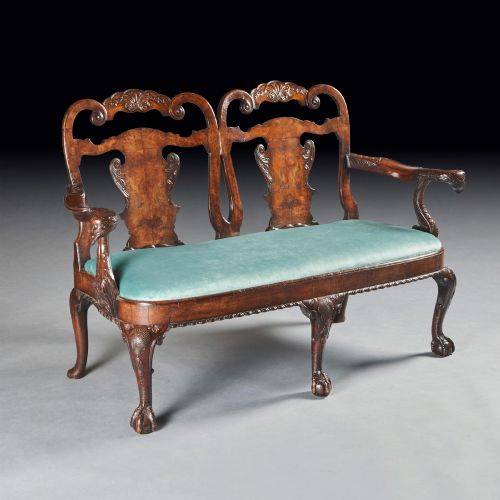
A georgian chair back sofa marries the upright grace of dining seating with domestic lounging, offering an elongated framework of connected backrests.
Georgian Chair Back Sofa
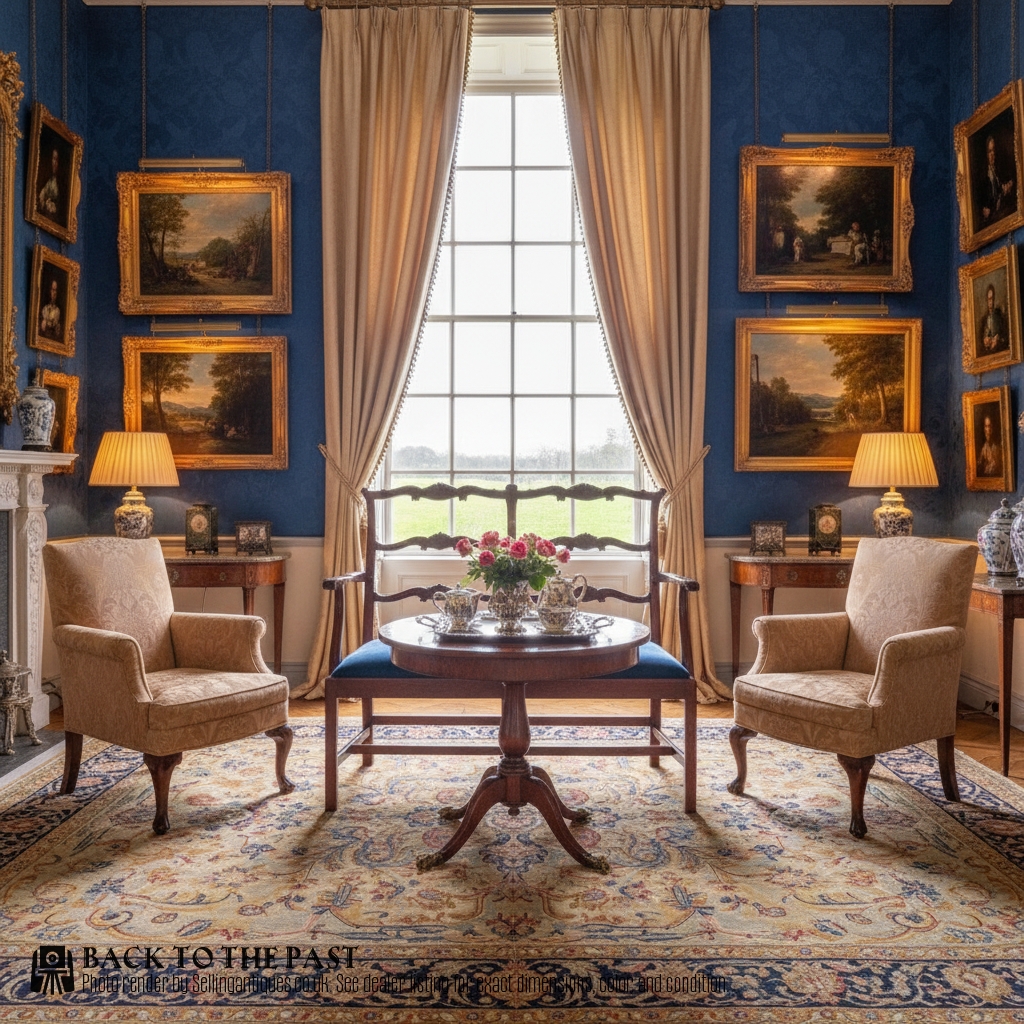
A georgian chair back sofa combines multiple joined chair backs into a single continuous seating frame, creating an elongated form designed for drawing rooms and parlours. These pieces span genuine period examples alongside later revivals, reflecting an enduring fascination with 18th-century aesthetics.
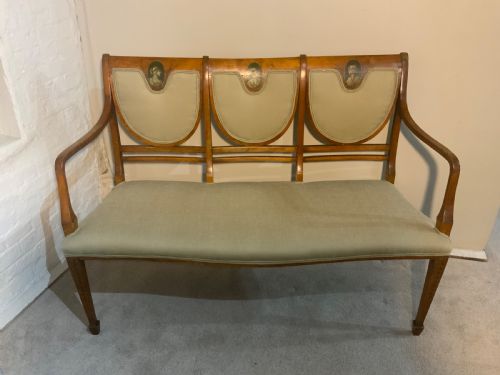
The layout typically involves two or three conjoined chair backs, often referred to as double-back or triple-back settees. Mahogany forms the predominant primary timber, frequently accompanied by walnut, satinwood, and oak across different periods of manufacture.
Makers utilised various regional interpretations and revival movements, resulting in pieces carrying Chippendale, Hepplewhite, and Regency stylistic cues. The configuration provides a lighter visual profile than solid-backed settees while maintaining formal seating proportions.
Materials and construction techniques
Cabinetmakers selected dense hardwoods such as mahogany and walnut to achieve the slender, pierced splats and delicate uprights characteristic of the form. These timbers provided the structural integrity required to support open-work back designs without excessive bulk.
Joinery relied on traditional mortise and tenon connections, ensuring the complex junction points where multiple chair frames met remained stable under weight. Carved details were executed directly into the solid timber framework rather than applied as separate ornamentation.
Upholstered drop-in or stuffed seats utilised traditional stuffing materials layered over webbing and hessian foundations. Decorative elements such as brass fittings, gilding, and satinwood inlay completed the surface enrichment on finer commissions.
Listings feature mahogany, walnut, and satinwood frames spanning the 18th, 19th, and early 20th centuries, including Chippendale and Hepplewhite revival styles.
Evaluating craftsmanship and proportion
Quality rests primarily in the crispness of the carving and the architectural balance of the conjoined backrests. Superior examples maintain fluid lines through the pierced splats and crest rails, avoiding stiffness in the repeated motifs.
The choice of timber grain and the integrity of the structural joints separate standard workshop output from exceptional commissions. Cohesion between the arm supports, leg configuration, and the overarching style dictates the visual harmony of the piece.
The Georgian Chair Back Sofa Glossary
- Splat
- The vertical central strip of wood within a chair back connecting the crest rail to the seat. It often receives elaborate piercing or carving in Chippendale designs.
- Crest rail
- The top horizontal member of a chair back, frequently shaped with curves or ears that dictate the stylistic period. On these sofas, multiple crest rails link across the length of the frame.
- Shield back
- A spade-shaped chair back popularised by Hepplewhite design, featuring a curved wooden frame enclosing delicate vertical bars or carved motifs.
- Settee
- An upholstered or wooden bench with a back and arms, designed to seat multiple people. In this context, it shares its footprint with the chair back sofa.
- Gilding
- The application of gold leaf or powder to a surface to provide a decorative metallic finish. This technique appears on Regency and revival painted frames.
Georgian Chair Back Sofa: Frequently Asked Questions
What is a georgian chair back sofa?
A georgian chair back sofa is an extended seating form where two or more distinct chair backs are joined together into a single frame. The design bridges the gap between conventional wooden seating and upholstered settees.
Such pieces typically feature carved mahogany or walnut woodwork, drawing inspiration from prevailing 18th-century cabinet-making styles and later Victorian or Edwardian revivals.
How do I date a chair back sofa?
Dating relies on examining the timber species, secondary woods, carving style, and construction methods. Genuine 18th-century examples display period-appropriate tool marks and timber ageing.
Revival pieces from the 19th and early 20th centuries often incorporate machine-sawn elements or use revival-specific proportions while copying earlier Chippendale or Hepplewhite idioms.
Were these sofas used in dining rooms?
These pieces were primarily designed for formal reception spaces, drawing rooms, and large parlours rather than dining tables. Their open backrests and decorative frames suited social display and lighter domestic interiors.
The elongated format allowed multiple guests to sit together while retaining the formal posture associated with individual parlour chairs.
How do I care for the wooden frame?
Maintenance involves keeping the wooden framework away from direct heat sources and sudden humidity fluctuations to prevent timber splitting. Regular dusting with a soft, dry cloth preserves the polished finish.
Avoiding harsh chemical polishes ensures the historical patina on mahogany, walnut, or satinwood surfaces remains undisturbed over time.