
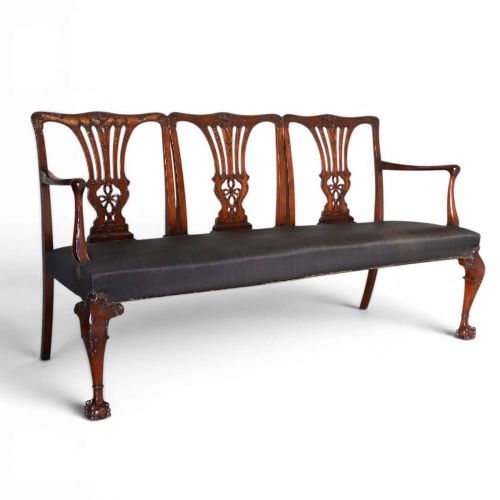


Chippendale Double Chair Bench
A chippendale double chair bench combines the pierced splats of dining chairs into a unified settee, offering timeless elegance and seating for two.
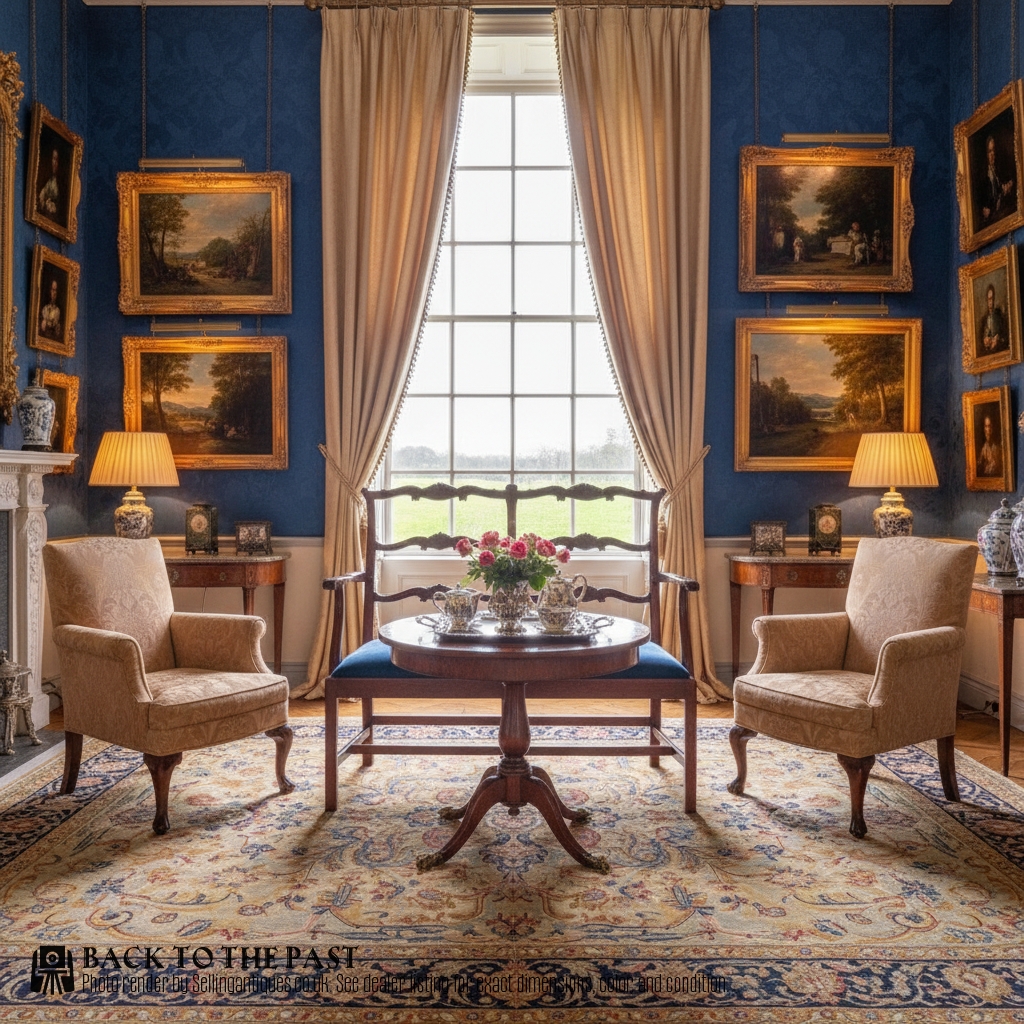
Chippendale Double Chair Bench
A chippendale double chair bench takes the form of a connected set of chair backs joined into a single long seat frame, often appearing as a chair-back sofa or settee. These pieces merge the comfort of a settee with the distinctive pierced splats and rhythmic design of traditional chair construction.
The versions most commonly met on this page span from eighteenth-century originals to later revivals from the nineteenth and early twentieth centuries. Makers across these periods utilised mahogany timber to build multi-seat settees and triple-back sofas that echo classic Georgian aesthetics.
The overarching style leans heavily on Chippendale, George II Revival, and Edwardian Chippendale Revival traditions. Buyers encounter everything from simple ladderback settees to elaborate carved mahogany frames fitted with fabric upholstery and velvet cushions.
How they were made
Makers built these settees primarily using solid mahogany, selecting dense timbers capable of holding intricate openwork carving along the splats and crest rails. Joinery relied on traditional mortise and tenon methods to ensure the connected chair backs remained rigid under daily weight.
Upholstered elements involved drop-in seats or pad seats covered in fabric, fabric upholstery, or velvet. Craftsmen padded the wooden frames to provide comfort while exposing the carved mahogany framework on the arms, legs, and back rails.
Some nineteenth-century makers squeezed three entire dining chair backs into a single domestic settee just to test how many splats a Victorian hallway could endure.
What varies in quality
Quality rests heavily on the depth and crispness of the timber carving, particularly along the pierced splats and the knees of the cabriole legs. Superior examples display sharp tool work and fluid lines, whereas lesser pieces show softer, shallower detailing.
The integrity of the timber framing and the proportion of the joined chair backs dictate the overall success of the piece. Well-balanced settees maintain structural harmony across multiple back sections without appearing awkward or overly heavy.
The Chippendale Double Chair Bench Glossary
- Chippendale style
- A design aesthetic originating from eighteenth-century cabinetmaker Thomas Chippendale, characterised by carved ribbon-back or pierced splats, cabriole legs, and ball-and-claw feet. It experienced multiple revivals during the Victorian and Edwardian eras.
- Chair-back sofa
- A settee whose back is constructed to resemble a row of joined chairs, typically featuring distinct vertical splats separated by open spaces. This form allows light to pass through the backrest.
- Mahogany
- A durable tropical hardwood prized for its rich reddish-brown colour and stable grain, which made it the favoured material for fine seating furniture throughout the eighteenth and nineteenth centuries.
- Splat
- The vertical wooden slat positioned in the centre of a chair or settee back, often shaped and pierced into ornate scrollwork or ladder patterns in revival pieces.
- Settee
- A long wooden or upholstered seat with a back and arms, designed to accommodate two or more people. In older terminology, the word often overlaps with sofa and bench.
Chippendale Double Chair Bench: Frequently Asked Questions
Are these benches comfortable to sit on?
Many examples feature upholstered pad seats or drop-in cushions covered in fabric or velvet, providing a reasonably soft surface for sitting.
The upright wooden chair backs offer firm lumbar support, though they lack the deep padding found in modern sofas.
How do I date a mahogany settee?
Dating relies on examining the timber grain, tool marks, and construction methods hidden beneath the frame and seat rails. Eighteenth-century pieces typically show hand-cut joinery and aged patination.
Revival pieces from the nineteenth and early twentieth centuries often incorporate machine-sawn components and different secondary woods.
Where should I place a double chair bench?
These settees work well in hallways, at the foot of a bed, or positioned against a living room wall where the carved back can be fully appreciated.
Because the backs are often decorative and open, placing them where light passes through the splats enhances their visual impact.
What is the difference between a sofa and a settee?
Historically, settees featured firmer wooden frames with partial upholstery restricted mainly to the seat pad. Sofas traditionally offered more comprehensive padding across the back and arms.
Over time, the terms blurred, particularly with chair-back furniture that emphasises exposed wooden framing.