
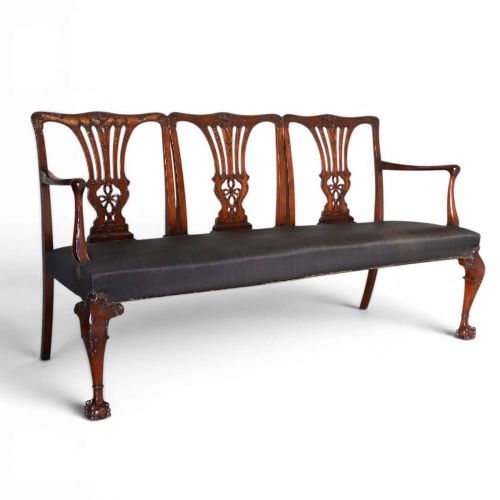


Mahogany Double Chair Settee
A mahogany double chair settee brings twin backrests and rich timber grain together into a singular, stately seating form.
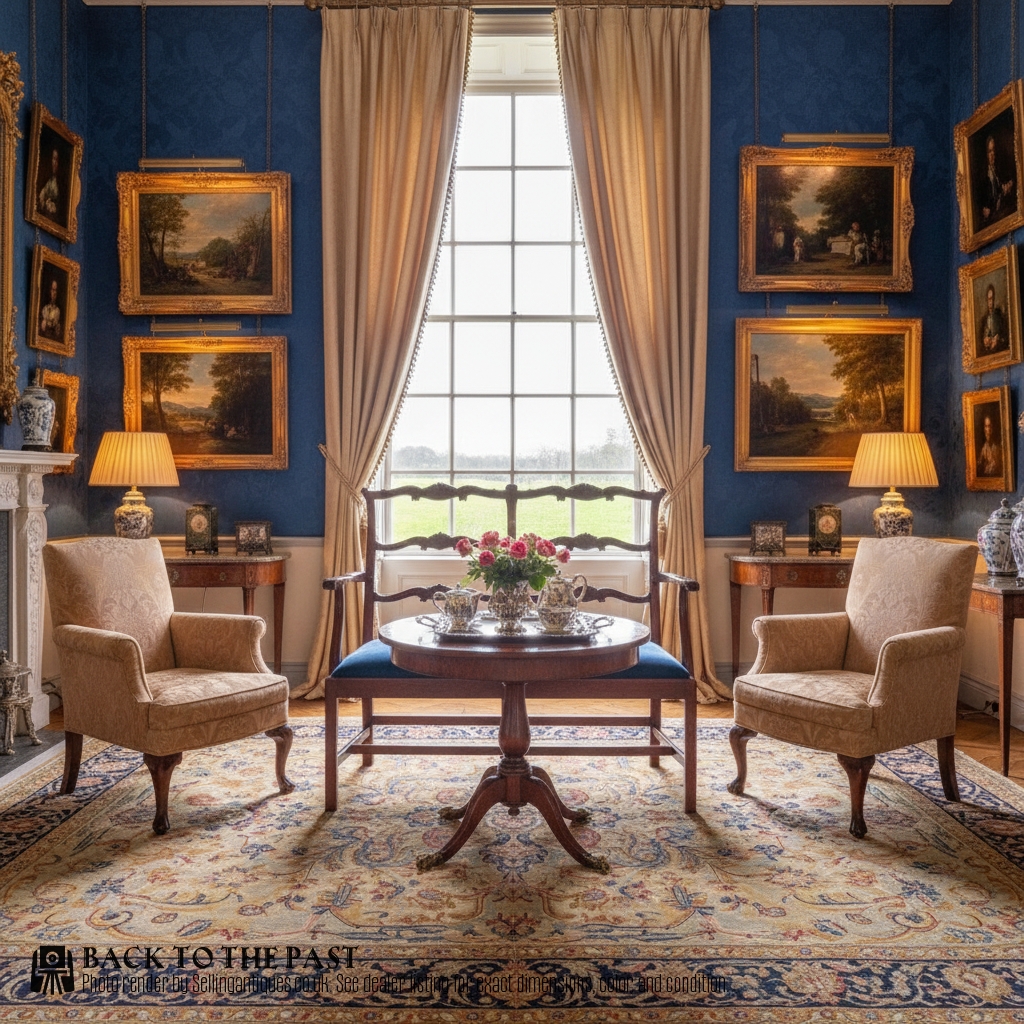
Mahogany Double Chair Settee
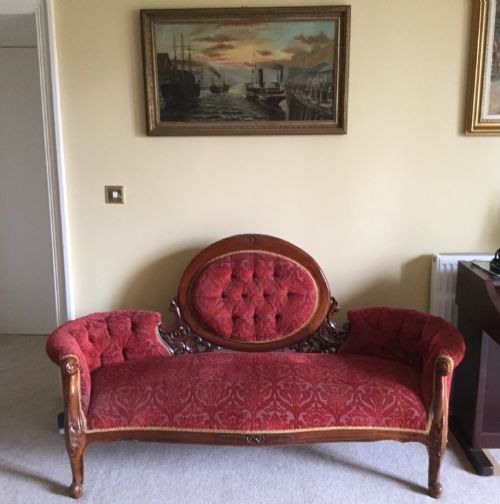
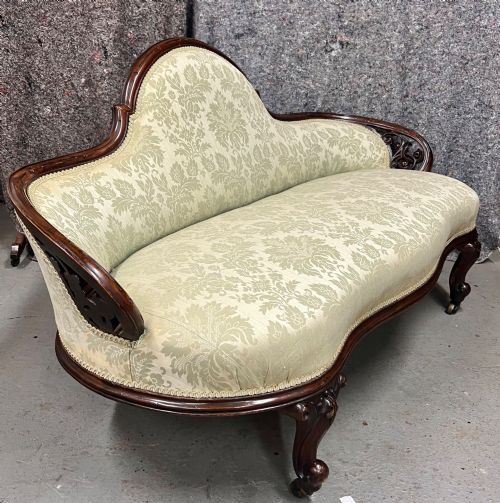
A mahogany double chair settee presents a conjoined two-seat form where the backrest mirrors the design of two separate dining or salon chairs united in a single frame. When searching for a mahogany double chair settee, buyers encounter examples spanning from the eighteenth century through the Victorian era and into Edwardian revivals. These pieces frequently adopt Chippendale, George II, or Hepplewhite styling, utilising the open chair-back configuration rather than a fully upholstered sofa back.
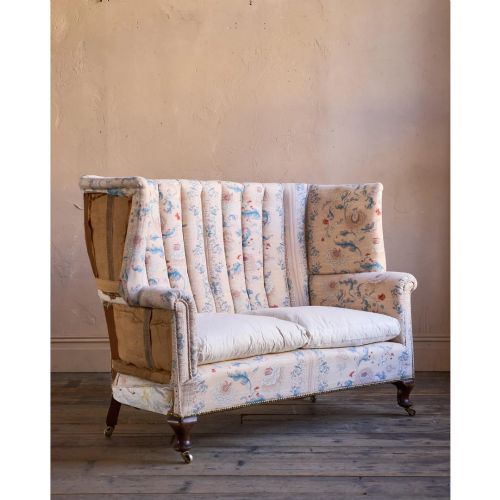
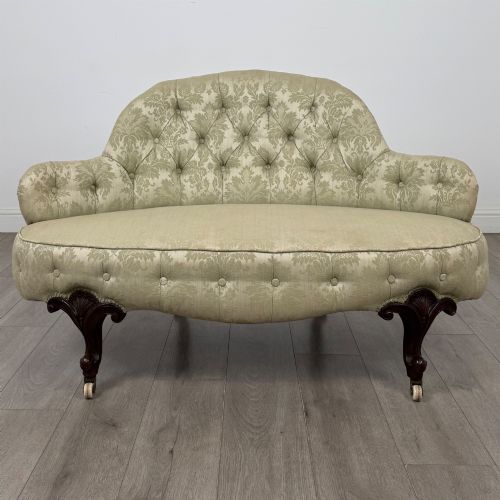
The materials recorded in these pieces rely heavily on solid and figured mahogany timber paired with various upholstery textiles such as damask, brocade, fabric, and hessian. Surviving pieces range from compact salon seating to grander triple-back and double-ended variations. Makers across the nineteenth and early twentieth centuries drew heavily on earlier Georgian design vocabularies, producing revival pieces that emulate eighteenth-century proportions and carving techniques.
Construction and materials
The structural framework of these settees relies on dense mahogany timber, selected for its strength in supporting intricate pierced splats and open chair-back designs. Cabinetmakers utilised traditional joinery to unite the twin backrests with sturdy arm supports and robust leg frames, often incorporating Marlborough or cabriole legs.
Upholstered elements employ traditional stuffing materials supported by sprung settee bases, hessian webbing, and top covers in fabrics like burgundy deep pile brocade, damask, or standard fabric upholstery. Decorative enhancements include satinwood inlay, brass accents, and hand-carved details along the top rails and splats.
Materials documented across the inventory include solid mahogany, satinwood, ceramic castors, brass fittings, and varied textile upholstery.
Factors influencing quality
Quality in these settees rests upon the crispness of the timber carving and the architectural balance of the twin chair backs. Superior examples display deeply figured mahogany grain, precise pierced splat carving, and harmonious proportions that echo their eighteenth-century prototypes without stiffness.
The integrity of the frame construction and the fidelity of revival styles also set finer pieces apart from standard workshop production. Consideration of the upholstery finish, from simple fabric to elaborate brocade and internal sprung bases, reflects the original tier of commission.
The Mahogany Double Chair Settee Glossary
- Chair-back settee
- A form of seating where the back is constructed to look like two or more joined chair backs, often featuring open splats. This style became popular during the Georgian period and saw widespread revival in the Victorian and Edwardian eras.
- Pierced splat
- The central vertical slat within a chair back that has been cut through to create an open decorative pattern. Master cabinetmakers shaped these with intricate scrolls and interlacing ribbons.
- Showwood
- Exposed wooden framing on a piece of upholstered furniture that displays the polished timber surface around the cushioned areas. It allows the grain and carving of the mahogany to remain visible.
- Brocade
- A rich, heavy shuttle-woven fabric featuring raised decorative patterns, frequently utilised for traditional upholstery. It adds texture and colour depth to antique seating.
Mahogany Double Chair Settee: Frequently Asked Questions
How do I date a mahogany double chair settee?
Dating relies on examining the timber characteristics, construction methods, and stylistic revival cues present in the frame. Eighteenth-century originals show hand-tooling marks and period-specific joinery, whereas nineteenth and twentieth-century revivals often incorporate machine assistance or distinct Edwardian proportions.
Comparing the carved details on the chair backs against documented Georgian or Hepplewhite design books helps clarify whether a piece is an eighteenth-century original or a later revival.
What is the difference between a settee and a sofa?
In historical terminology, a settee typically denotes a lighter, often wood-framed seat with a formal backrest, whereas a sofa traditionally implies a fully upholstered piece designed for lounging. Double chair settees specifically emphasise the wooden framework and distinct chair-back styling.
Many listings use the terms interchangeably, but the presence of twin chair backs clearly categorises these items as settees rather than deep-sprung upholstered sofas.
How should I care for antique mahogany furniture?
Maintain mahogany frames by keeping them away from direct sunlight and sudden temperature shifts, which can cause the timber to dry out or split. Regular dusting with a dry, soft cloth preserves the polish without chemical buildup.
Upholstered components benefit from gentle professional cleaning appropriate to the specific fabric type, whether damask, brocade, or standard textile.
Can these settees be used in modern interiors?
Their slender profiles and open chair backs make these settees well-suited for hallways, bedrooms, and smaller living spaces where heavy upholstery would overwhelm the room. The combination of carved mahogany and decorative fabric bridges traditional and contemporary aesthetics.
Many examples feature neutral or rich fabric upholstery that integrates easily into varied interior colour schemes.