


Mahogany Chair Back Settee
A mahogany chair back settee joins multiple chair frames into a single long seat, offering formal elegance and sturdy timber construction.
Mahogany Chair Back Settee
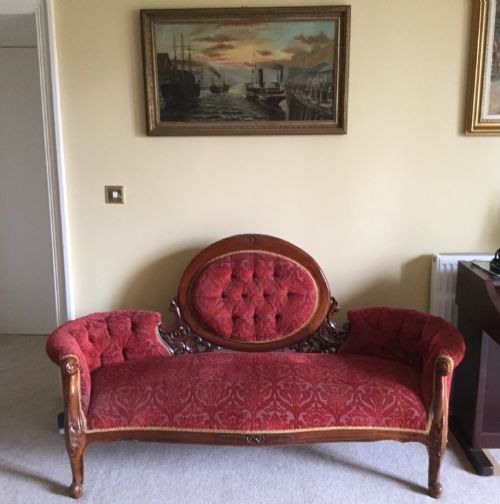
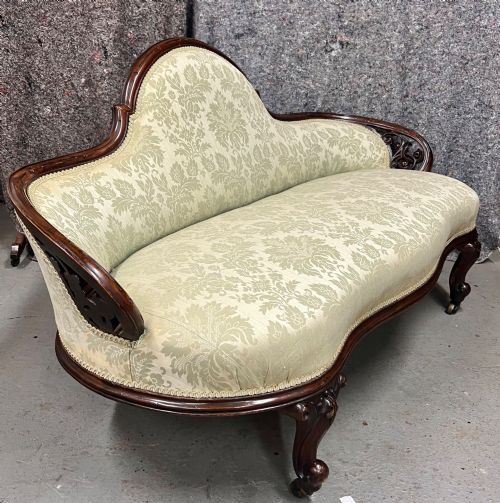
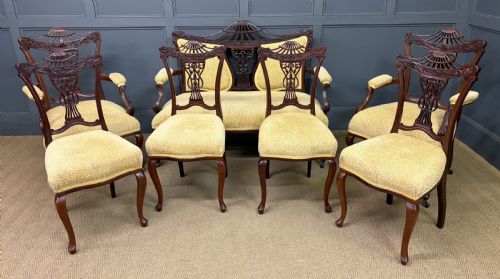
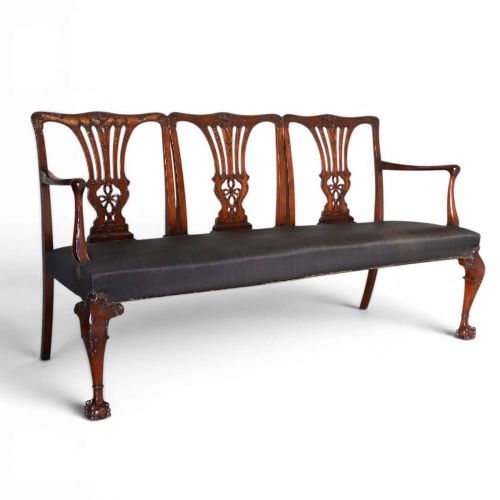
A mahogany chair back settee combines the open, carved splats of dining chairs with the extended frame of a sofa. These pieces emerge primarily in the eighteenth, nineteenth, and early twentieth centuries, drawing heavily on Georgian designs.
The most common examples on this page are double or triple chair back settees, alongside revival pieces from the Victorian and Edwardian eras. Makers often adopted Chippendale, Hepplewhite, and George II styles to shape the pierced splats and crest rails.
How They Were Made
Cabinet makers built the primary frames from solid mahogany, frequently incorporating satinwood inlay for decorative contrast on later revival pieces. Carvers shaped intricate details directly into the timber along the top rails and splats.
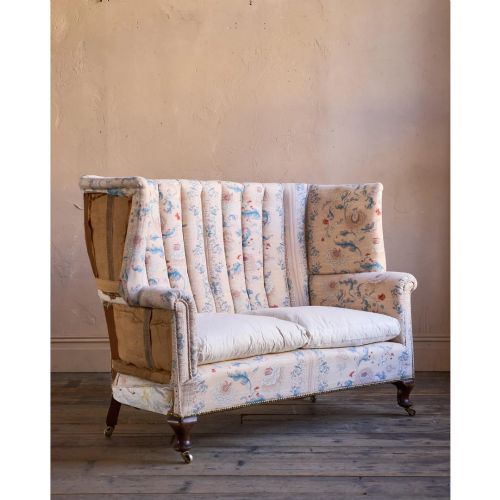
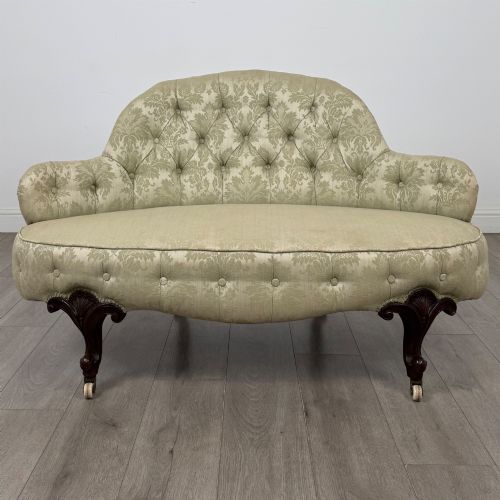
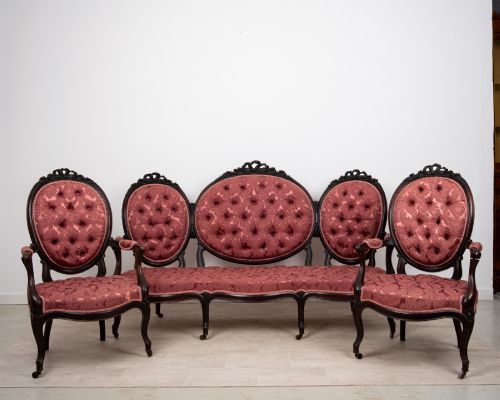
Upholstered drop-in seats or sprung bases utilised traditional stuffing materials such as horsehair or hessian, finished with textiles like damask, velvet, brocade, or leather fixed with brass tacks.
Mahogany Chair Back Settee Retail Price Guide 2026
Typical asking prices for mahogany chair back settee among the pieces listed under this phrase on Sellingantiques today, from the lower quarter to the upper quarter. They describe what is for sale here now, not the wider market.
Listings feature mahogany frames paired with diverse textiles, including damask, velvet, hessian, and leather.
What Varies in Quality
The crispness of the timber carving dictates much of the distinction, separating sharply defined interlaced splats from softer, moulded details. Selection of dense, richly figured mahogany timber also elevates the visual weight of the frame.
Structural integrity relies on the rigidity of the joined chair backs and arm supports, where tighter joinery prevents movement across the long span of the seat.
Holland and Sons
The Mahogany Chair Back Settee Glossary
- Chair back settee
- A long seat whose backrest is constructed to mimic a row of joined individual chairs. This format allows open woodwork to show through the upper frame.
- Splat
- The vertical central slat of a chair back, often pierced and carved in Georgian designs. Cabinet makers shaped these elements to provide lumbar support and decorative flair.
- Shield back
- A chair back shaped in the outline of a heraldic shield, popularised by Hepplewhite. This design frequently appears on lighter nineteenth and twentieth century revival settees.
- Showwood
- Exposed timber framing on an upholstered piece where the polished wood remains visible around the fabric edges. Early Victorian makers utilised this technique to display high quality mahogany.
- Satinwood inlay
- Contrasting pale timber inserted into recesses cut into the darker mahogany surface. This technique created fine geometric or floral borders on Edwardian examples.
Mahogany Chair Back Settee: Frequently Asked Questions
How do I style a mahogany chair back settee?
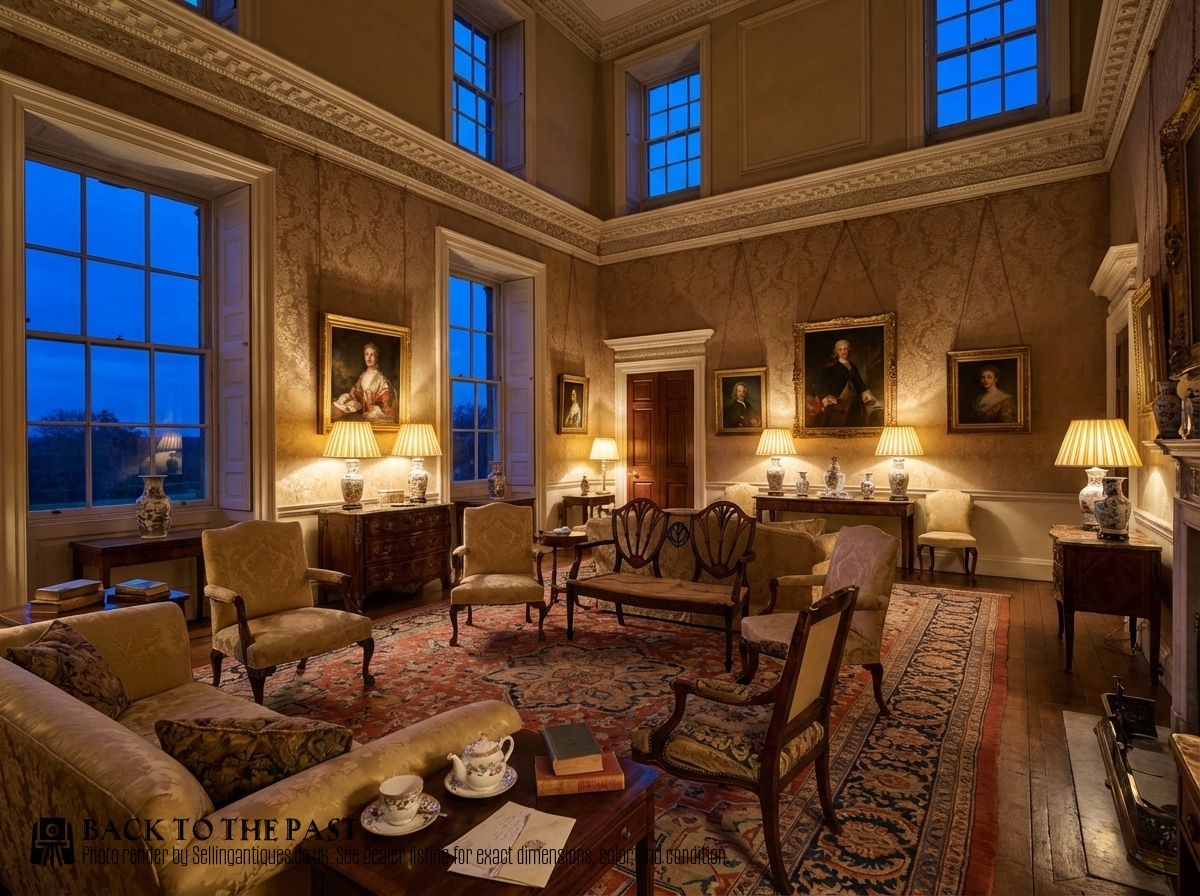
Position the settee against a plain wall to let the open fretwork of the backrest stand out without visual clutter. It works well in a hallway, bedroom, or formal sitting room where the timber frame remains visible.
Keep surrounding furniture understated so the carved crest rails and splats retain their focal point. Adding a small cushion can soften the seat while preserving the lines of the wood.
What is the difference between Chippendale and Hepplewhite styles?
Chippendale chair backs typically feature robust carved ribbon or ladder motifs with square or cabriole legs. The woodwork feels substantial and draws heavily on mid eighteenth century proportions.
Hepplewhite styles introduce lighter, more elegant geometries such as shield backs and tapered spade feet. These later revival pieces present a slender silhouette compared to heavier Georgian predecessors.
How do I care for antique mahogany timber?
Dust the carved woodwork regularly with a soft, dry cloth to prevent grit accumulation in the crevices. Avoid placing the settee near direct heat sources or strong sunlight, which can dry out and fade the mahogany.
Apply a microcrystalline wax occasionally to nourish the polished surface and protect the grain. Refrain from using silicone sprays that can build up a greasy residue over time.
Were these settees used for dining or lounging?
Most chair back settees were designed for formal reception rooms, hallways, or parlours rather than relaxed reclining. Their upright wooden backs encouraged a formal posture suited to conversation.
Over time, many examples received updated upholstery with sprung bases to increase comfort. However, the primary structural focus remained on the decorative appearance of the backrest.