
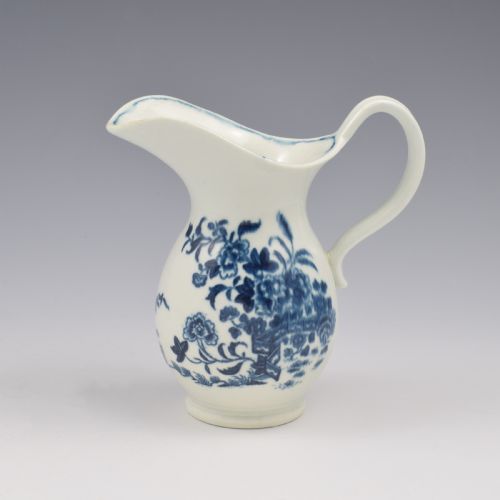
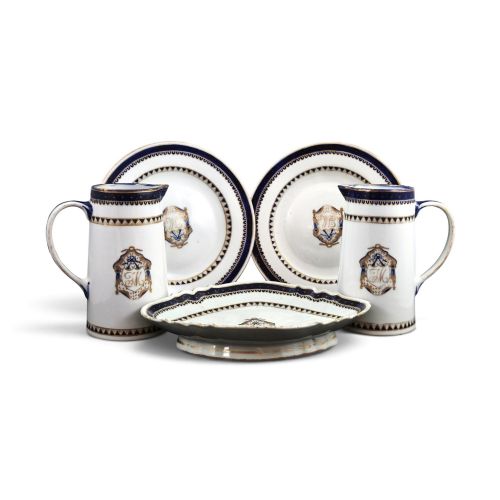
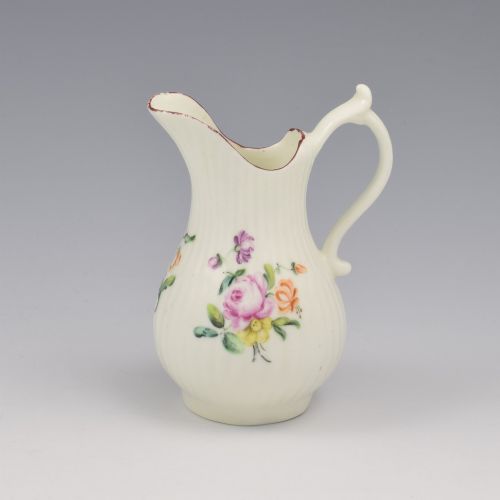
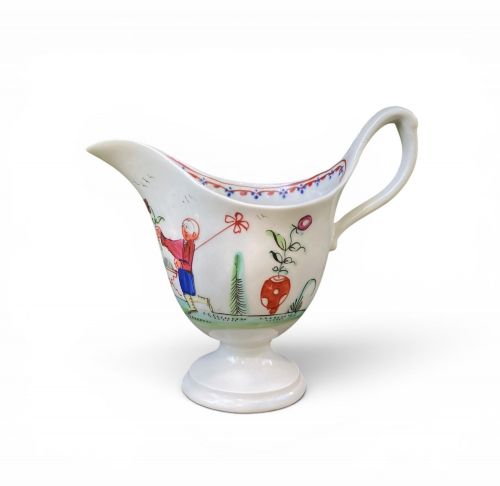


Georgian Ceramic Milk Pitcher
These georgian ceramic milk pitcher examples range from delicate porcelain ewers to robust creamware jugs, offering both refined table service and rustic charm.
Georgian Ceramic Milk Pitcher
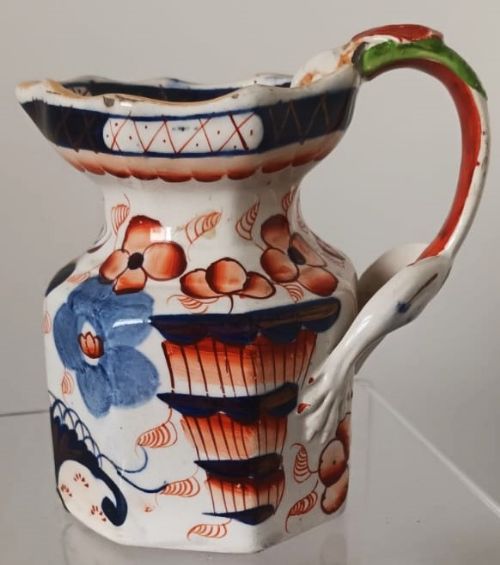
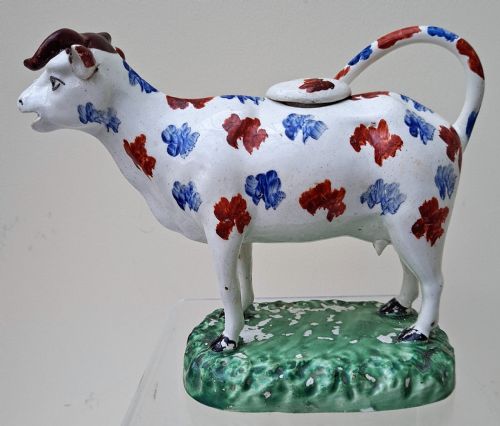
A georgian ceramic milk pitcher represents a diverse group of domestic tableware items designed for pouring milk or cream at the table. These pieces span the eighteenth and nineteenth centuries, taking the form of cream jugs, water ewers, and whimsical figural cow creamers.
The selections encountered here encompass soft-paste and hard-paste porcelain, pearlware, creamware, and black basalt pottery. Makers utilised varied aesthetics ranging from Chinese export commissions to vernacular folk art and neoclassical transfer decoration.
Buyers frequently encounter English factory productions alongside regional pottery traditions from Staffordshire, Yorkshire, and Wales. Forms vary from fluted baluster profiles to faceted bodies and clip-handled vessels.
Materials and production methods
Potters shaped these vessels using earthenware, pearlware, and porcelain bodies, applying lead glazes and enamel colours before firing. Factories such as Worcester, Derby, and New Hall relied on specialised clay and mineral mixtures to achieve translucency or durable opaque surfaces.
Decoration techniques combined hand-painted floral or armorial motifs with transfer printing and gold leaf detailing. Some forms, like the cow creamers, involved moulded figural construction paired with hand-painted surface additions.
Listings feature 18th-century, Regency, and Victorian periods, utilising porcelain, earthenware, pearlware, and black basalt.
Distinctions in quality
Superior quality in these pitchers is evident in the crispness of moulded details, such as fluted baluster bodies or mask spouts, and the precision of hand-painted or transfer-printed decoration. Finer porcelain bodies exhibit greater thinness and translucency, contrasting with thicker, heavier utilitarian earthenware.
The reputation of the manufactory and the complexity of the design scheme elevate certain examples. Armorial crests, topographical views, and carefully delineated enamel palettes distinguish high-status porcelain table service from standard domestic ware.
Dr Wall Worcester·New Hall·H & R Daniel·Leeds Pottery·Derby Porcelain·Chamberlain Worcester·John Rose Coalport·Crown Derby
The Georgian Ceramic Milk Pitcher Glossary
- Pearlware
- A refined earthenware developed by Josiah Wedgwood and adopted by other potteries, featuring a bluish glaze that pooled in recesses to create a pearl-like appearance.
- Creamware
- A fine cream-coloured earthenware perfected in the eighteenth century, particularly associated with Leeds Pottery and utilised extensively for tableware.
- Soft-Paste Porcelain
- An artificial porcelain composition fired at lower temperatures than hard-paste porcelain, common in eighteenth-century English manufactories like Worcester and Derby.
- Black Basalt
- A fine-grained, unglazed black stoneware developed in Staffordshire during the eighteenth century, prized for its classic neoclassical appearance.
- Transfer Printing
- A decoration technique where an engraved metal plate transfers a design onto paper, which is then stamped onto the ceramic surface before glazing and firing.
Georgian Ceramic Milk Pitcher: Frequently Asked Questions
What is a cow creamer?
A cow creamer is a ceramic pitcher modelled in the shape of a cow, often featuring a removable lid on the back and a milk-pouring opening through the animal's mouth.
These figural vessels were popular in Welsh and Staffordshire potteries during the Georgian period as both functional tableware and novelty display items.
How do I date a porcelain milk jug?
Dating relies on identifying paste characteristics, factory marks, stylistic influences such as Chinese export or neoclassical motifs, and known operational windows of makers like New Hall or Worcester.
Examination of the glaze, handle attachment, and base often reveals manufacturing traits typical of the eighteenth or early nineteenth century.
What is pearlware?
Pearlware is a refined earthenware body developed in late eighteenth-century Britain to compete with Chinese porcelain by offering a whiter surface.
A thin glaze containing a small amount of cobalt was applied, which settled blue in crevices and enhanced the illusion of a bright white finish.
How were these pitchers used?
These vessels served primarily at tea and dining tables for holding and pouring milk, cream, or water.
Finer porcelain examples belonged to matching tea and coffee services for wealthy households, while sturdier earthenware jugs saw general domestic use.
Are these jugs dishwasher safe?
Historic ceramics with hand-painted enamels, gilt highlights, and fragile earthenware or soft-paste bodies require careful hand washing.
Modern dishwashers and harsh detergents will quickly damage the delicate glazes and historical pigments on these antique pieces.