


Soft Paste Porcelain Jug
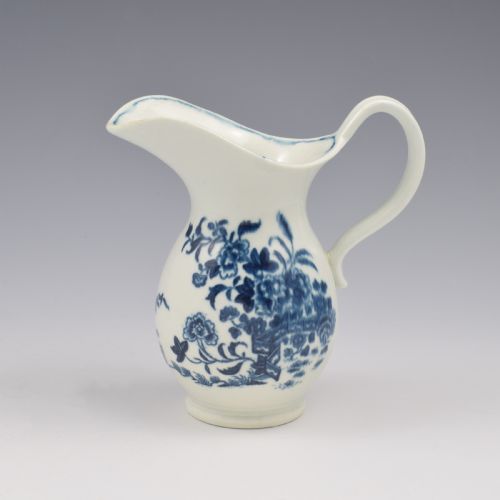
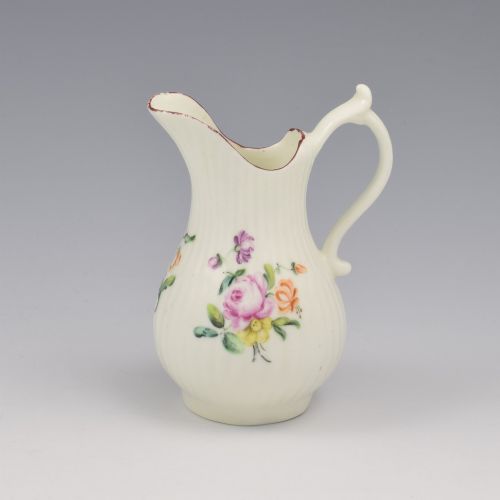
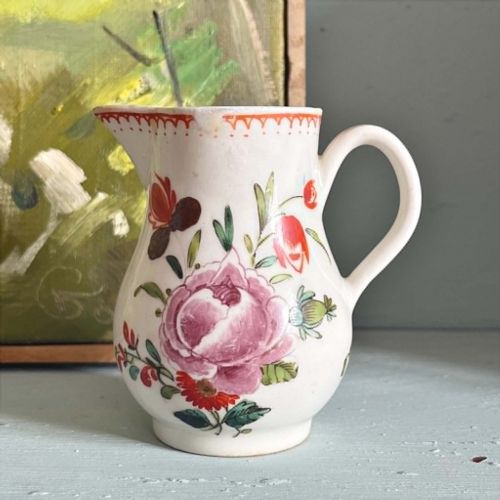
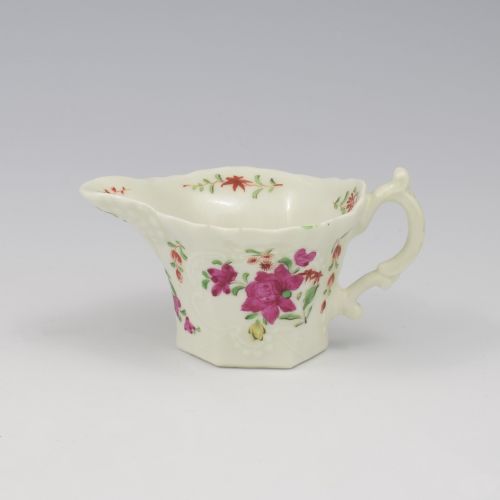
These soft paste porcelain jugs are 18th-century and Georgian cream jugs, sought after for their translucent bodies and hand-painted enamel decoration.
What they are
When you search for a soft paste porcelain jug, you look at cream jugs and ewers produced during the 18th century and the Georgian period. These small vessels served at the tea table to hold cream, featuring distinctive forms such as fluted balusters, boat shapes, and dolphin ewers.
The pieces you meet on this page include early Derby porcelain creations alongside Coalport examples from the pre-1800 period. Each item reflects the early British ceramic industry's experiments with soft-paste porcelain recipes before bone china dominated production.
How they were made
Potters built these vessels using soft-paste porcelain, a ceramic composition that vitrifies at lower temperatures than hard-paste porcelain. This body creates a warm, slightly creamy ground that absorbs enamel colours softly during the firing process.
Makers applied hand-painted enamel decoration directly over the glaze or within it, depending on the factory method. Forms like the fluted baluster and the dolphin ewer required careful moulding or throwing before handles and spouts were attached by hand.
Listings feature 18th-century and Georgian pieces created from soft-paste porcelain and enamel.
What varies in quality
Quality rests in the crispness of the modelling and the control of the enamel painting. Sharp details on relief work, such as the scales on a dolphin ewer or the clean lines of a fluted baluster, separate finer production from softer, worn moulds.
The success of the glaze surface and the precision of the painted enamels dictate the standing of a piece. Superior examples display vibrant, stable enamels without excessive kiln specks or warping of the soft-paste body during firing.
Derby Porcelain·John Rose Coalport·Royal Doulton
The Soft Paste Porcelain Jug Glossary
- Soft-paste porcelain
- A ceramic body made from a mixture of clay, glass frit, and other ingredients rather than natural china clay. It fires at a lower temperature and yields a warm, slightly translucent texture.
- Ewer
- A pitcher with a wide spout and a shaped handle, often modelled with classical or marine motifs like dolphins. These vessels add sculptural elegance to the tea service.
- Baluster
- A architectural form resembling a pillar or vase, curving gently outward near the base. Jugs of this shape appear frequently in 18th-century ceramics.
- Enamel
- Opaque or translucent glass fused to the porcelain surface through secondary firing. It provides the vibrant colours found on early English porcelain.
Frequently Asked Questions
What is a soft paste porcelain jug?
It is an 18th-century or Georgian ceramic vessel designed for serving cream at the tea table. These pieces utilise early British porcelain formulas rather than hard-paste clay.
Potters shaped them into forms like balusters and ewers, decorating them with hand-painted enamels.
How do I date an 18th century cream jug?
Dating relies on identifying the specific soft-paste body, form, and painting style characteristic of factories like Derby or Coalport. Early pieces often feature distinct handle attachments and unglazed foot rims.
Stylistic cues such as fluting or dolphin motifs align with Georgian manufacturing periods before 1800.
How were these jugs used originally?
They functioned primarily as cream jugs or small ewers during formal tea service in Georgian households. Servants or hosts used them to pour cream into tea cups.
Their decorative enamel work meant they sat proudly on the table as part of a matching or mixed ceramic set.
How should I care for soft paste porcelain?
Display these delicate jugs away from direct sunlight and areas prone to sudden temperature shifts. The soft-paste body and enamel decoration require gentle dusting with a dry cloth.
Hand washing in lukewarm water with mild soap is necessary if cleaning is required, avoiding dishwashers entirely.