

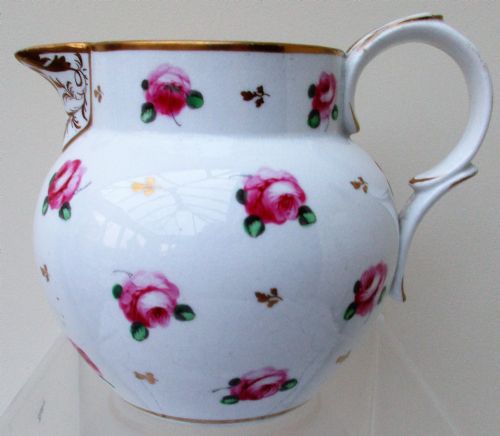
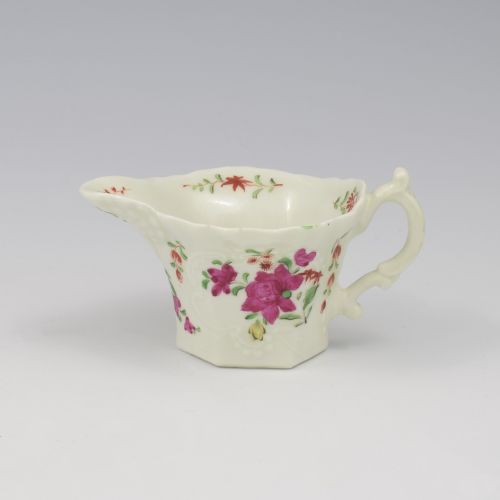


Vintage Porcelain Creamer
These vintage porcelain creamer pieces offer practical elegance for the table, bringing refined ceramic forms and hand-painted decoration into daily use.
Vintage Porcelain Creamer
When you search for a vintage porcelain creamer, you are looking at small pouring vessels designed for milk or cream, spanning periods from the eighteenth century to the mid-twentieth century. These items include specialised sparrow beak jugs, sauce boats, miniature hydra jugs, and pieces belonging to larger tea sets.
The selections on this page range widely in origin and age, featuring English establishments alongside continental European works. Forms vary from simple hexagonal sauce boats to ribbed bodies and rope edge designs intended for everyday service or display.
You are most likely to encounter traditional English porcelain and bone china forms, alongside pieces bearing hand-painted birds, insects, fruit, and armorial crests. These vessels reflect the changing domestic habits and aesthetic preferences of Georgian, Victorian, Edwardian, and later twentieth-century households.
How they were made
Makers utilised porcelain and soft-paste porcelain as the primary body for these vessels, occasionally employing ironstone for added durability. Artisans shaped these materials using hand-forming and moulding techniques to create distinctive profiles such as hexagonal walls and ribbed surfaces.
Decoration relied heavily on handpainted details, depicting natural subjects like birds, insects, and fruit directly onto the ceramic body. Many examples incorporate gold leaf, gold gilt, gold gilding, and general gilt highlights applied to rims, handles, and crests.
Vintage Porcelain Creamer Retail Price Guide 2026
Typical asking prices for vintage porcelain creamer among the pieces listed under this phrase on Sellingantiques today, from the lower quarter to the upper quarter. They describe what is for sale here now, not the wider market.
Object forms include sparrow beak jugs, sauce boats, hydra jugs, and complete three-piece tea sets spanning multiple English and European traditions.
What varies in quality
The distinction between standard domestic items and finer pieces lies in the execution of the painting and the complexity of the form. Hand-painted natural motifs such as detailed fruit, birds, and insects demonstrate a higher level of artisan skill than transfer-printed or plain wares.
Material composition and decorative embellishment also separate the ranges, with soft-paste bodies and extensive application of gold leaf or gold gilt indicating superior production. Furthermore, historical provenance associated with notable makers elevates the standing of an individual vessel.
Chamberlain Worcester·Royal Davenport·Royal Worcester·Masons
The Vintage Porcelain Creamer Glossary
- Porcelain
- A hard, fine-grained ceramic material fired at high temperatures to create a vitrified, non-porous body. It forms the essential substrate for these small pouring vessels.
- Soft-paste porcelain
- An artificial porcelain compound fired at lower temperatures than true hard-paste, common in eighteenth-century English manufactories. It possesses a warm glaze and a characteristic texture.
- Gilt
- A thin layer of gold applied to the surface of ceramics as an enhancement. It appears frequently along rims, handles, and painted borders.
- Armorial
- A design featuring a heraldic coat of arms or family crest. These motifs were often hand-painted on bespoke porcelain commissions.
- Sparrow beak jug
- A small eighteenth-century cream jug featuring a distinctive pinched spout resembling a bird's beak. This form allowed for precise pouring during tea service.
Vintage Porcelain Creamer: Frequently Asked Questions
How do I use a vintage creamer today?
These small jugs function perfectly for serving milk or cream alongside tea and coffee during formal or casual gatherings. Their compact size also makes them suitable for holding small floral arrangements on a table.
Take care when washing older ceramic pieces, avoiding harsh dishwashers to preserve delicate hand-painted motifs and gold gilt highlights. Hand washing in warm, soapy water with a soft cloth ensures the glaze remains protected.
What is a sparrow beak jug?
A sparrow beak jug is an eighteenth-century form characterised by a small, sharply pinched lip that resembles the beak of a sparrow. This specific shape was designed to control the flow of cream into tea.
These miniature pitchers are highly collectible due to their association with early English porcelain factories. They represent an innovative functional design from the Georgian period.
How do I distinguish eighteenth-century pieces?
Eighteenth-century items often feature soft-paste porcelain bodies, hand-painted underglaze blue decoration, or early polychrome enamel palettes. Examining the unglazed footrim reveals characteristics of the paste and firing methods typical of the period.
Makers such as those from Worcester or Liverpool exhibit distinct potting techniques and paste compositions unique to their respective eras. Comparing weight, translucency, and glaze pooling helps identify these earlier works.
Are these creamers part of larger sets?
Some creamers survive as standalone items, while others form part of matching tea sets or multi-piece groupings with sugar bowls. Complete three-piece sets provide a cohesive aesthetic for display or table service.
Individual jugs often survived independently even if their companion teapots or cups were lost over generations. Finding a matching sugar bowl and creamer together is a notable occurrence for collectors.