
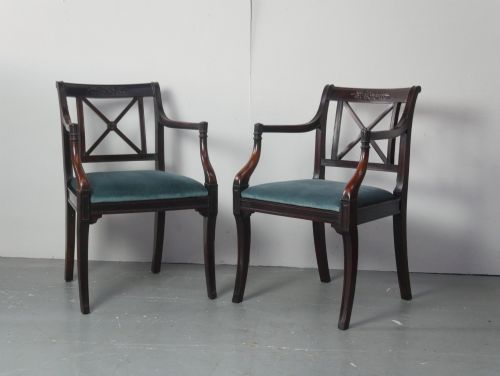
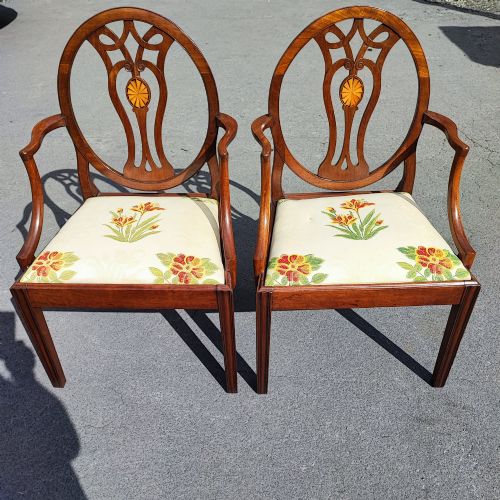
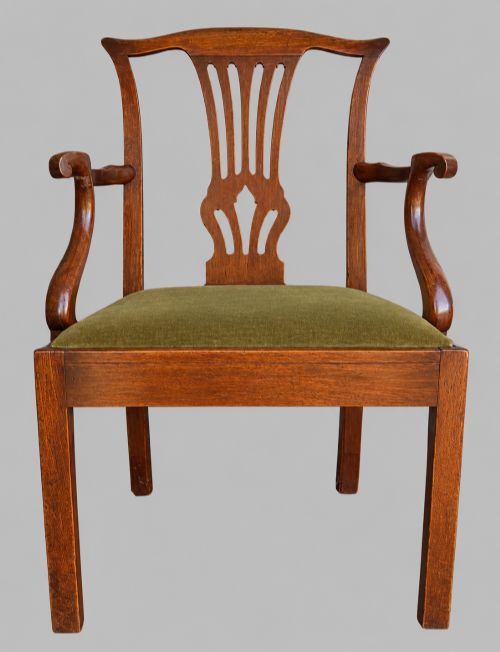
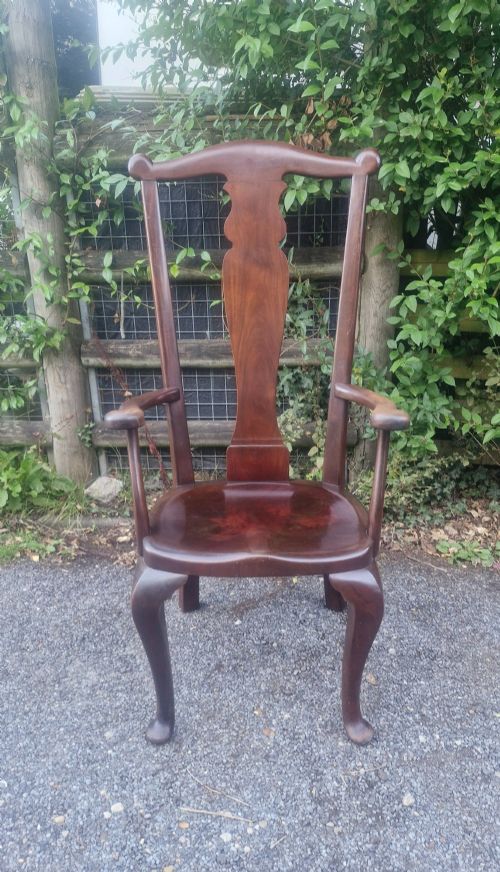
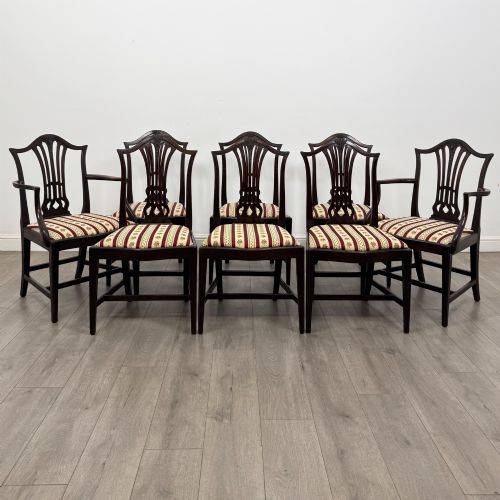
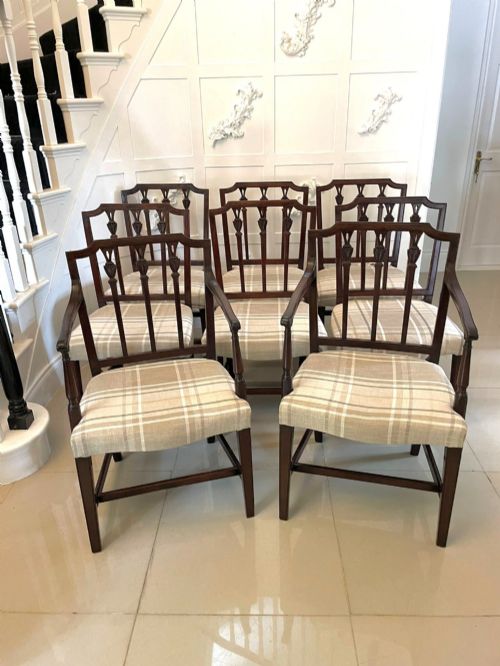

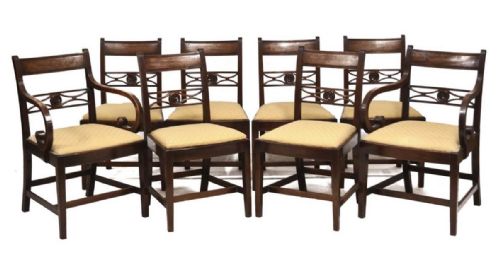
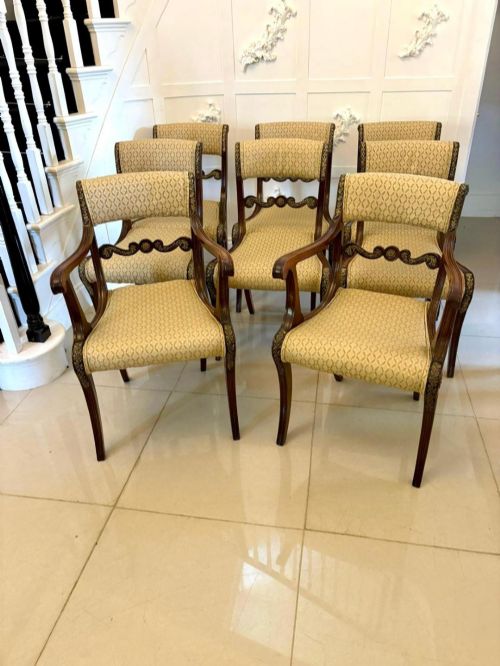
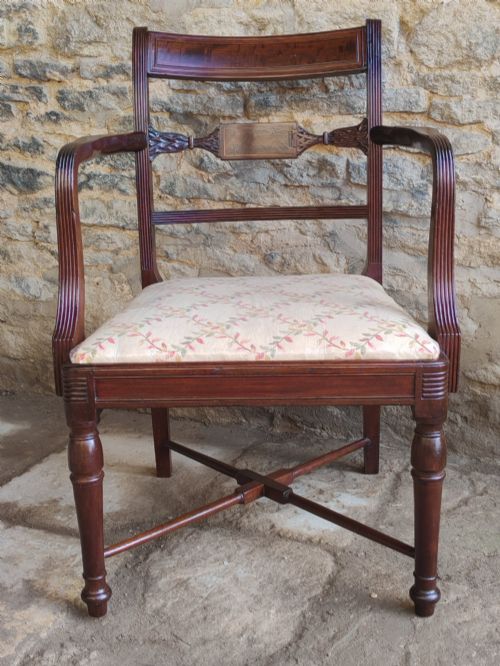
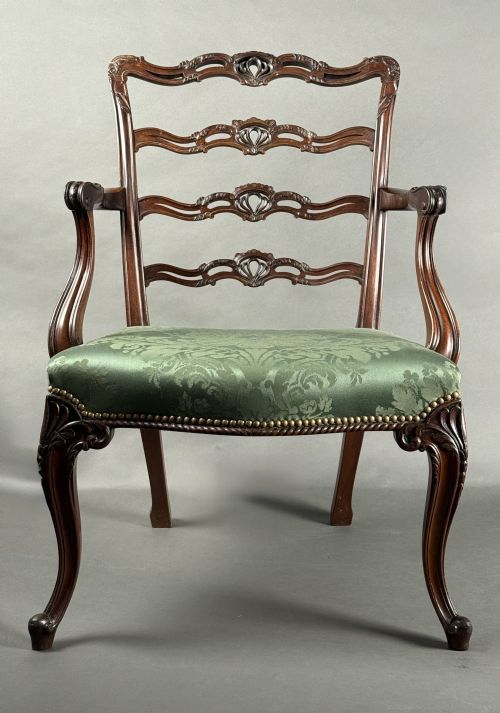
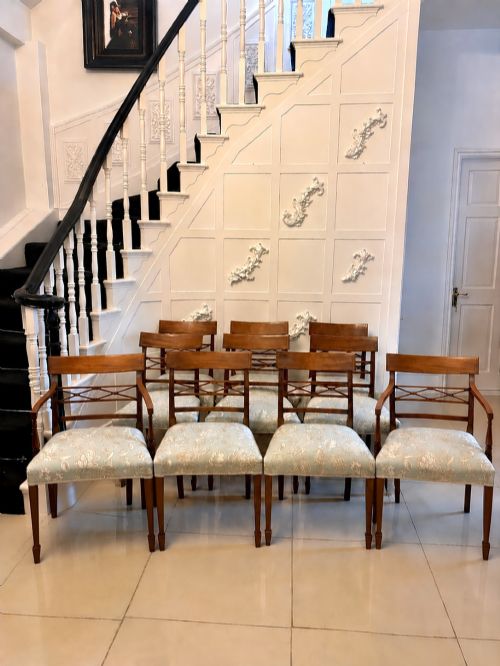
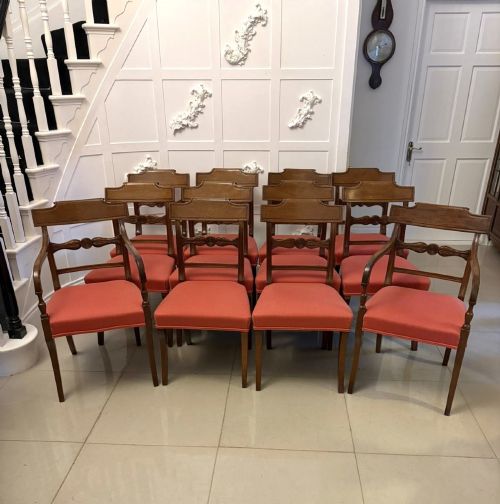
Georgian Carver and Dining Chairs
Georgian carver and dining chairs are solid mahogany or fruitwood seating built for the formal dining room, offering sturdy construction and classic proportions.
Georgian Carver and Dining Chairs
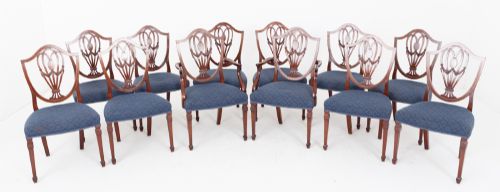
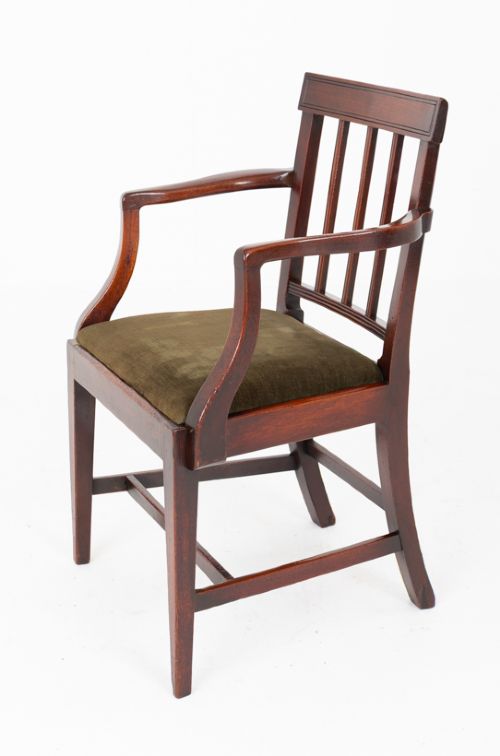
When you look for georgian carver and dining chairs, you encounter single dining chairs alongside armchairs or carvers designed for the heads of the table. The selection spans the eighteenth century through to later revival periods.
Most examples appear in mahogany, often accompanied by ash, elm, or fruitwood in country interpretations. Sets frequently combine a larger number of single chairs with a pair of matching armchairs.
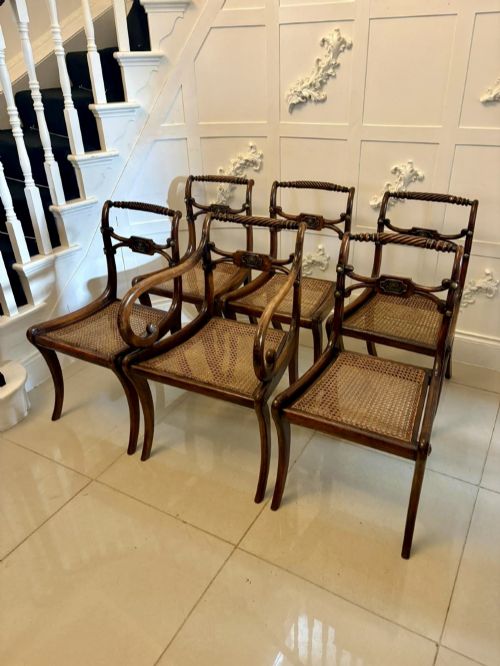
The forms encompass shield backs, ladder backs, and ropebacks, alongside distinct stylistic revivals from subsequent centuries.
Materials and construction
The primary timber is mahogany, selected for its density and suitability for intricate carving on splats and chair backs. Secondary woods such as ash and elm support regional country variations.
Seats integrate cane work or drop-in frames padded with fabric, leather, or velvet upholstery. Joinery relies on traditional pegging and mortise and tenon techniques.
The inventory ranges from eighteenth-century originals to twentieth-century revival interpretations.
Measures of quality
The standard of a piece rests on the crispness of the timber carving and the integrity of the frame construction. Superior examples retain original blocking and uncompromised structural joints.
Subtle details such as inlaid satinwood, brass accents, or rosewood roundels distinguish finer workshops from standard production.
Gillows
The Georgian Carver and Dining Chairs Glossary
- Carver
- An armchair designed with open elbows to accommodate formal dining attire, usually placed at the head of a table.
- Shield back
- A chair back shaped in the outline of a shield, popular in late eighteenth-century designs.
- Ropeback
- A dining chair style featuring carved wooden rails twisted to resemble knotted rope.
- Elbow chair
- An alternative term for an armchair, referencing the supportive wooden arms flanking the seat.
- Splat
- The vertical wooden strip down the centre of a chair back, often pierced and carved in distinct regional patterns.
Georgian Carver and Dining Chairs: Frequently Asked Questions
How do I spot a true carver chair?
A carver chair stands out by its fitted armrests, which match the dining chairs around it while offering wider seating for the head of the table.
These pieces were constructed to pair with standard singles, maintaining uniform timber and leg styles across the entire dining set.
Are these chairs suitable for daily use?
Solid mahogany construction and traditional mortise joinery provide the structural strength needed for regular dining.
Upholstered drop-in pads can be recovered easily to match modern interiors without altering the antique wooden frame.
How do revival pieces differ from original ones?
Revival items date from later periods such as the nineteenth or early twentieth century, yet replicate eighteenth-century proportions and stylistic motifs.
Examination of the timber grain, tool marks, and internal joinery helps differentiate the period of manufacture.