
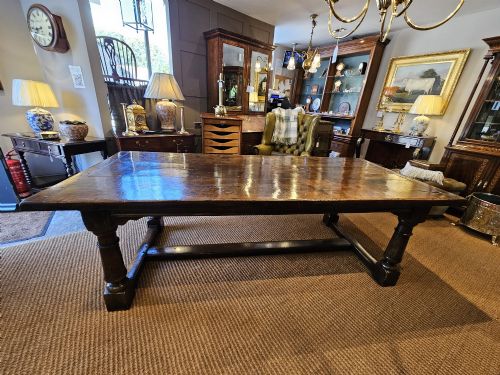

Georgian Carved Dining Table
A georgian carved dining table brings architectural proportion and dense timber grain into a modern interior.
Georgian Carved Dining Table
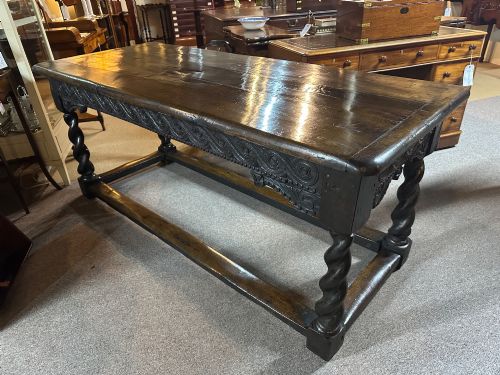
When you search for a georgian carved dining table, you encounter large timber dining surfaces dating primarily from the eighteenth and early nineteenth centuries. These dining tables range from substantial oak refectory forms to pedestal and drop-leaf variations constructed in mahogany and rosewood. The pieces reflect periods spanning the Georgian era into the Regency and William IV years.
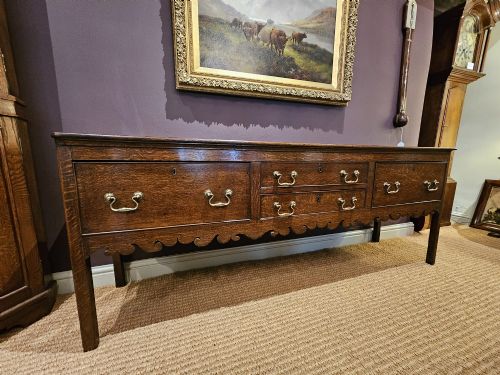
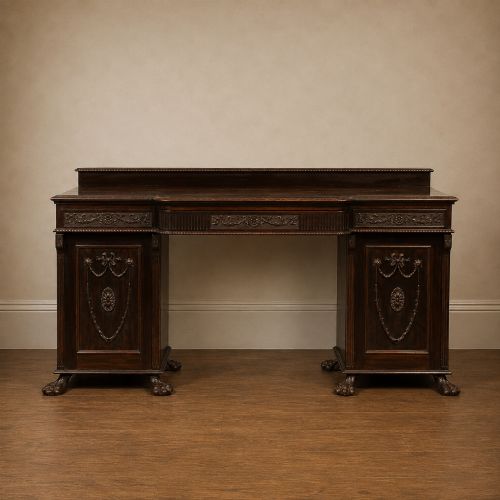
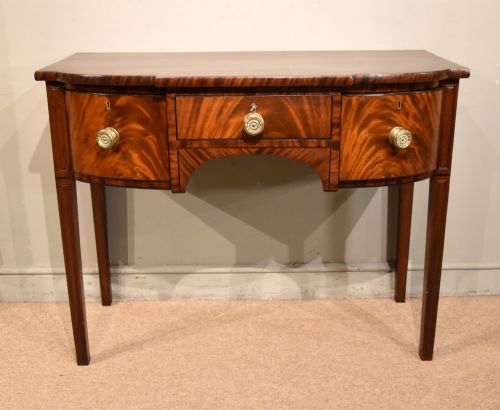
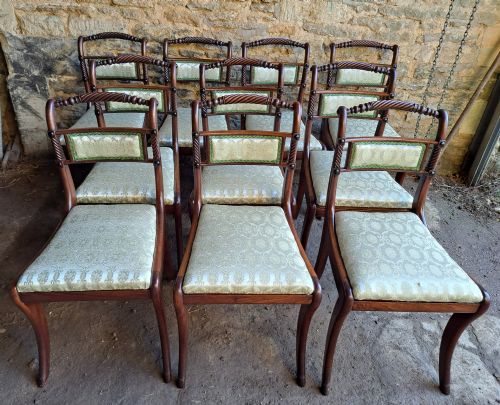
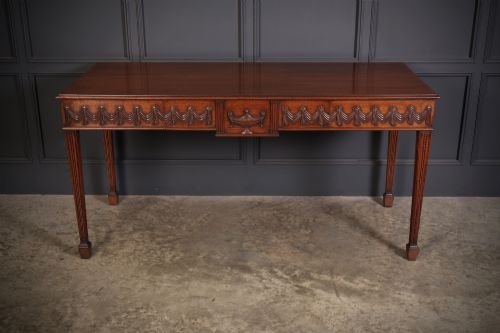
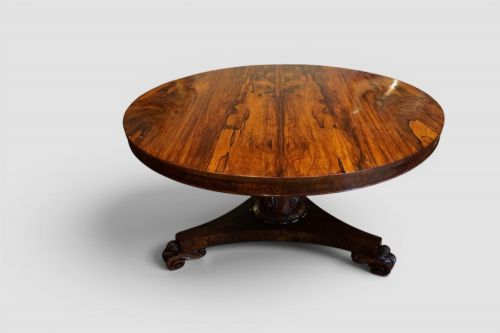
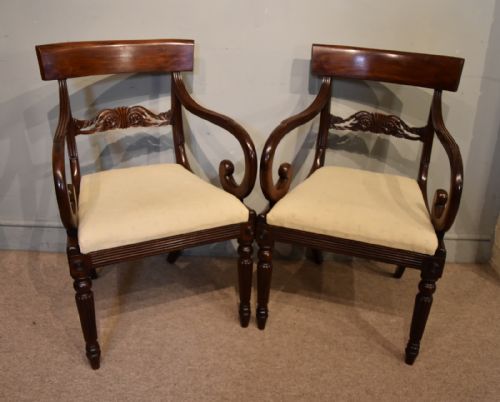
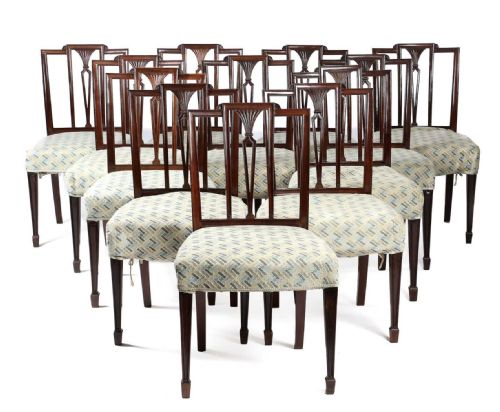
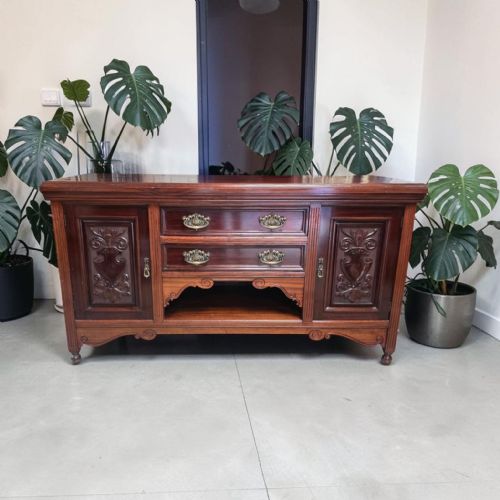
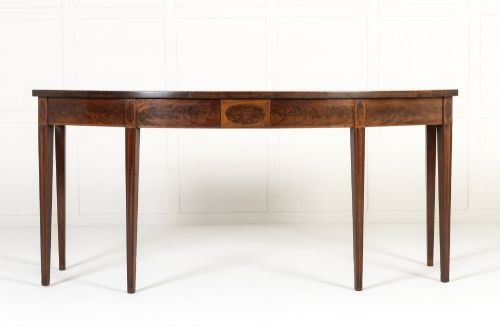
On this page, you meet pieces defined by carved detailing, including cabriole legs with hoof or pad feet, tilt tops with decorative borders, and pedestal bases with triform supports. Alongside the primary dining tables, the selection includes related dining furniture such as sideboards, serving tables, breakfast tables, and sets of matching dining chairs.
How they were made
Makers constructed these tables predominantly from dense hardwoods such as mahogany, oak, and rosewood, often utilising figured veneers to create varied surface patterns. Structural stability relied on traditional joinery techniques, paired with turned and carved wooden supports rather than modern fasteners.
Metal components appear primarily as brass castors on pedestal bases, alongside brass fittings on related pieces like cellarets and sideboards. Surface finishing involved hand-applied polishing methods that highlighted the natural grain and colour of the timber over decades of use.
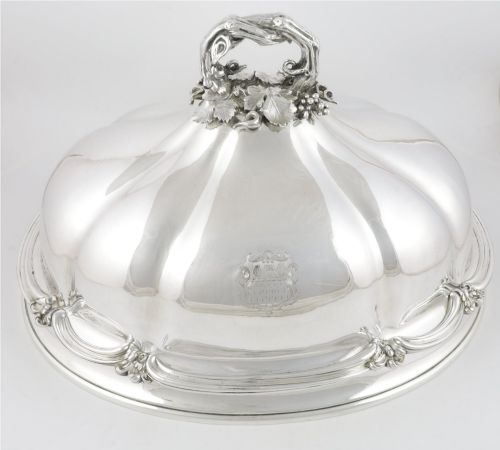
Among the heavy timber tables, a silver plate meat dome stands ready to conceal the roast.
What varies in quality
The degree of hand-carved detail on the legs, borders, and pedestals separates standard domestic examples from finer workshop productions. Crispness of execution in motifs such as piecrust edges, claw feet, or parcel gilt highlights indicates the skill level of the original maker.
The choice and figuring of the timber stock fundamentally shape the visual weight of the piece, with well-matched mahogany grains commanding attention over plain utilitarian boards. Structural integrity preserved through original joinery rather than later reinforcement maintains the historical character of the table.
Roberts Cadman·M. D. Miller & Sons
The Georgian Carved Dining Table Glossary
- Refectory table
- A long, narrow dining table originating from monastic dining halls and constructed heavily in oak during the eighteenth century.
- Tilt top
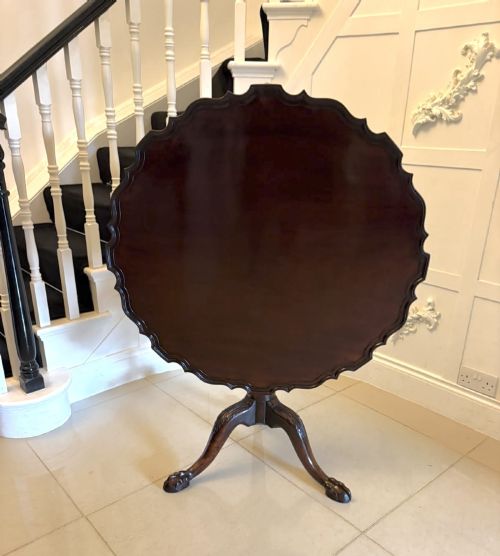
- A tabletop mechanism allowing the surface to pivot vertically on its central pillar for compact storage against a wall.
- Triform base
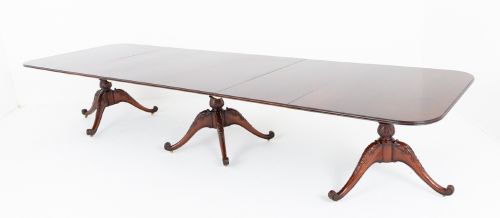
- A three-sided pedestal support common on Regency and William IV breakfast and centre tables.
- Cabriole leg
- A furniture leg featuring a double curve, typically swelling outward at the knee and tapering inward to a foot.
- Piecrust edge
- A raised, decoratively carved perimeter carved directly from the solid timber of a circular table top.
Georgian Carved Dining Table: Frequently Asked Questions
How do I seat eight people comfortably?
Selecting a refectory or pedestal table of sufficient length ensures adequate legroom between the supporting legs or trestles. Extending mechanisms or drop leaves allow the surface area to expand when dining.
Matching the table height with appropriate dining chairs prevents clearance issues for guests sitting along the sides and ends.
How do I care for polished mahogany?
Keeping wooden dining surfaces away from direct sunlight and heat sources prevents the timber from drying out and the polish from crazing. Regular dusting with a soft, dry cloth maintains the lustre without building up heavy chemical residues.
Using protective mats under hot dishes and liquids safeguards the antique polish from permanent ring marks and thermal shock.
What is a tilt top table used for?
A tilt top table served historically as a space-saving solution in smaller rooms, allowing the surface to pivot upright against a wall when not in use for dining. In contemporary settings, they function as display pieces or occasional tables that reveal their carved underside when tipped.
The catch mechanism locks the surface securely horizontal during meals while enabling quick pivoting whenever floor space is required.
How do I distinguish Regency from Georgian?
Georgian furniture produced during the eighteenth century often emphasises substantial oak construction, cabriole legs, and architectural mahogany proportions. Ornamentation draws heavily on classical motifs interpreted through Chippendale, Sheraton, or Hepplewhite influences.
Regency design, spanning the early nineteenth century, incorporates bolder classical revivals inspired by Greek and Roman archaeology. Rosewood, brass inlay, and heavier pedestal bases characterise this later phase.