
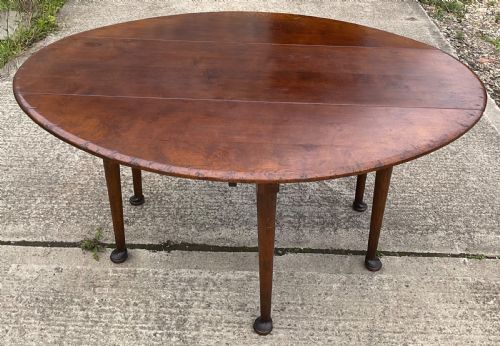


Georgian Mahogany Wake Table
A georgian mahogany wake table offers a generous oval surface that expands for company and drops down when the room needs its floor space back.

Georgian Mahogany Wake Table
A georgian mahogany wake table is a large drop-leaf dining table designed to accommodate multiple guests with long falling leaves supported by swinging legs. These pieces emerge chiefly from the eighteenth century, spanning the Georgian, George II, and George III periods, alongside later revival examples from around nineteen hundred.
The form typically presents an oval silhouette when fully extended, functioning as a substantial dining or entertaining centrepiece. Variants in the record include Irish pieces, hunt tables, and gateleg constructions built in solid mahogany or dense Cuban mahogany.
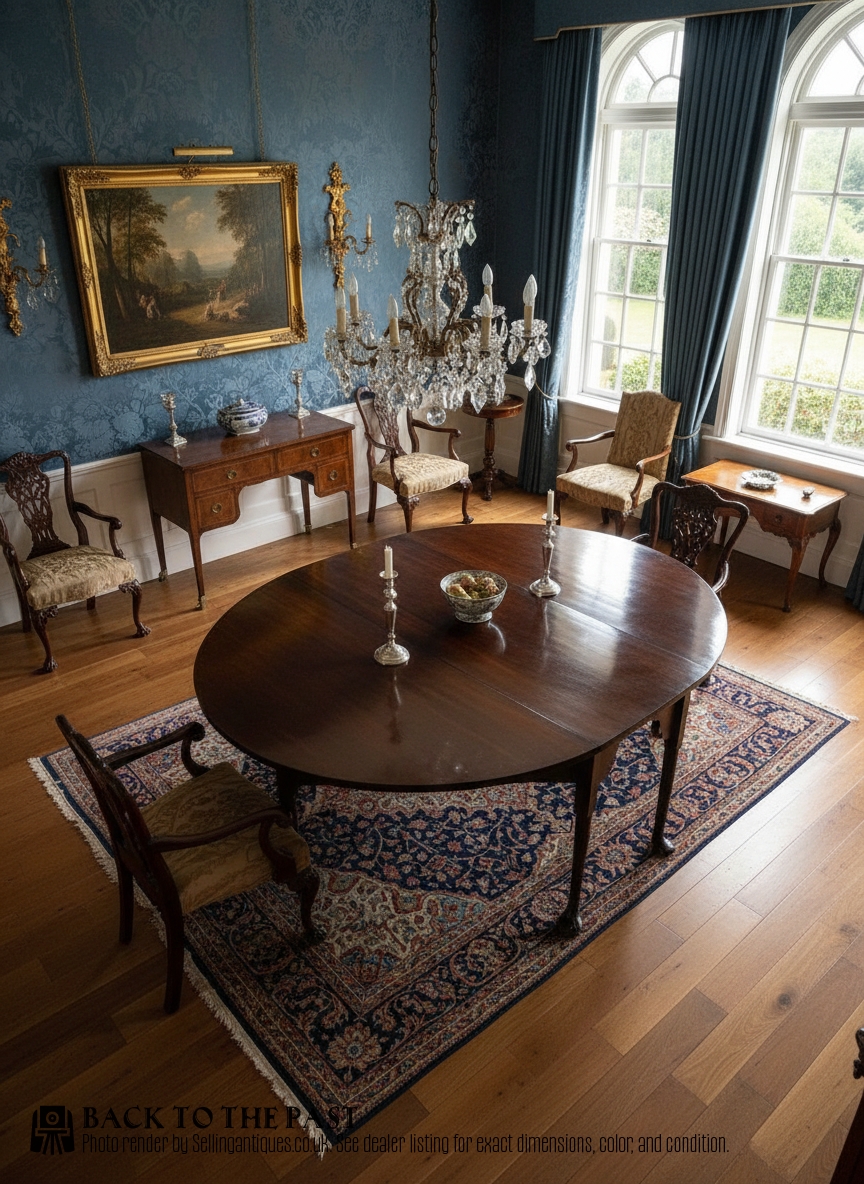
How they were made
Cabinetmakers constructed these frames using rich mahogany timbers, occasionally selecting Cuban mahogany for its density and deep figuring. Structural stability relied on robust timber framing, iron or brass fittings where appropriate, and intelligent gateleg or swing-leg mechanisms to support the heavy drop leaves.
Carved details appear on specific examples, particularly on cabriole legs terminating in pointed pad feet. Joinery was executed by hand to ensure the massive leaves aligned evenly with the fixed centre top when raised.
Several tables feature hidden extra legs that swing out like loyal hounds to catch a falling leaf.
What varies in quality
The distinction between standard examples and superior pieces rests in the selection of the timber and the refinement of the carved details. Tables featuring dense Cuban mahogany display richer grain depth and superior patination compared to simpler domestic equivalents.
Proportion and structural ambition also divide the range, with larger Irish formats and tables boasting carved cabriole legs representing a more sophisticated level of eighteenth-century craftsmanship.
The Georgian Mahogany Wake Table Glossary
- Wake table
- A large drop-leaf dining table traditionally built with extra leg supports to accommodate large gatherings. These tables fold down at the sides to save space when not in use.
- Drop-leaf table
- A table with a fixed centre section and hinged flaps that fold down. The flaps are supported by swinging legs or brackets.
- Cuban mahogany
- A dense, dark timber prized for cabinetmaking during the eighteenth century. It takes a high polish and shows deep figuring.
- Pad foot
- A simple foot shape where the leg terminates in a flattened pad resting directly on the floor. It often appears on cabriole legs of the period.
Georgian Mahogany Wake Table: Frequently Asked Questions
What is a wake table?
A wake table is a large drop-leaf dining table designed to seat many people for feasts or community gatherings. The extra-long leaves fold down so the table can be pushed against a wall when the room is needed for other purposes.
Most surviving examples date from the eighteenth century and are constructed from solid mahogany or Cuban mahogany with robust swing-leg mechanisms.
How do I date a georgian table?
Dating relies on observing timber characteristics, leg forms, and construction methods. Pieces from the George II and George III periods often feature specific leg shapes like carved cabriole legs with pad feet.
Later nineteenth-century pieces and nineteen-hundred revivals imitate these earlier eighteenth-century silhouettes but show different surface wear and internal timber seasoning.
Where were these tables used?
These tables served in large dining rooms, country houses, and assembly spaces where hosting large numbers of guests required flexible furniture. Their expandable surface made them practical for banqueting and hunt gatherings.
Irish workshops also produced notable large-scale examples that suited grand entertaining spaces of the period.
Are drop-leaf tables sturdy?
Solid mahogany construction and heavy swing legs make these tables remarkably stable when fully extended. The gateleg or drop-leaf mechanism distributes weight across multiple points on the floor.
Careful alignment of the hinges ensures the leaves remain level under everyday dining use.