
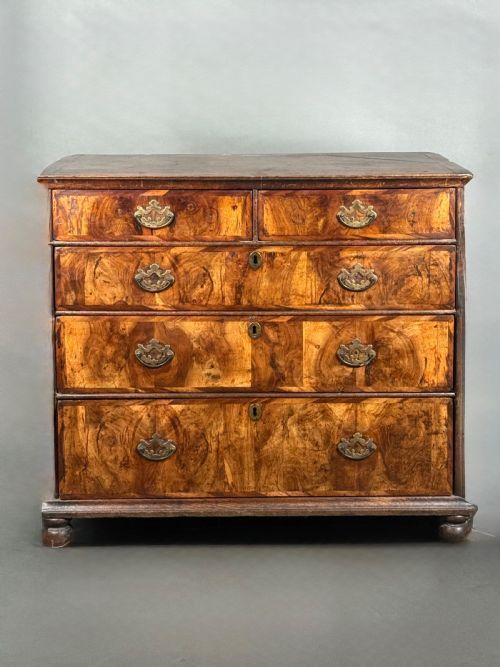
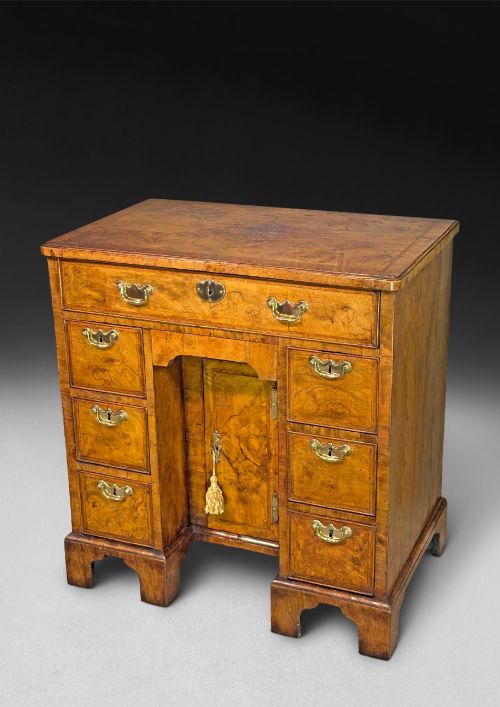


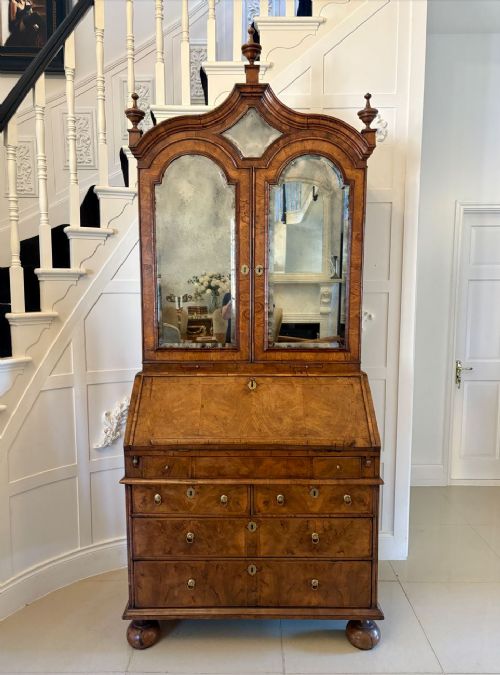
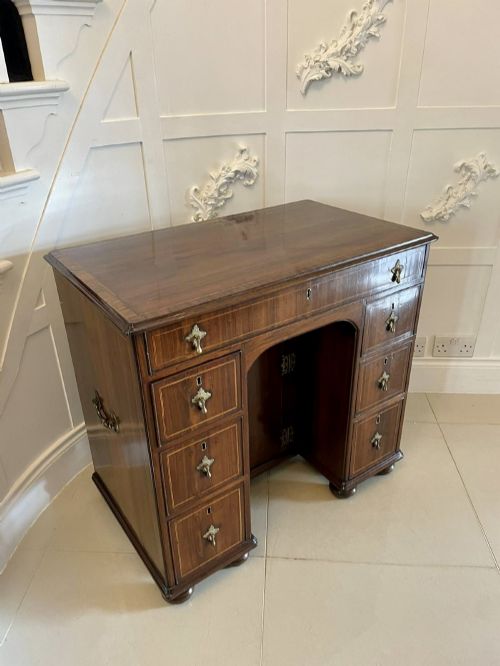
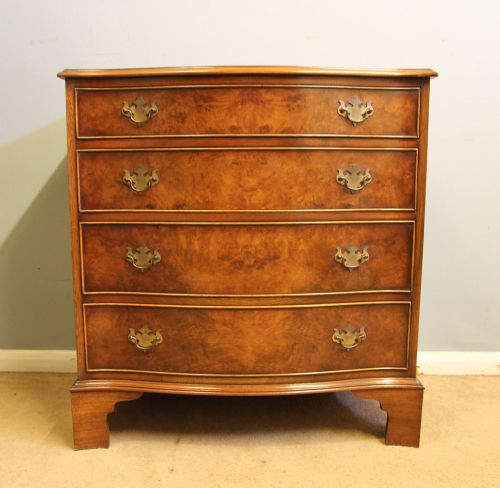
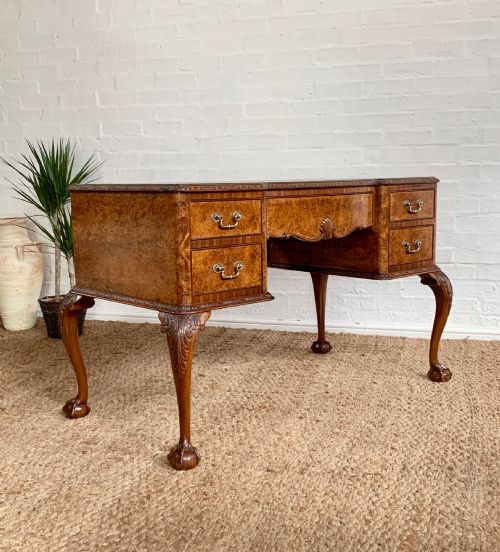
Georgian Burr Walnut Bureau
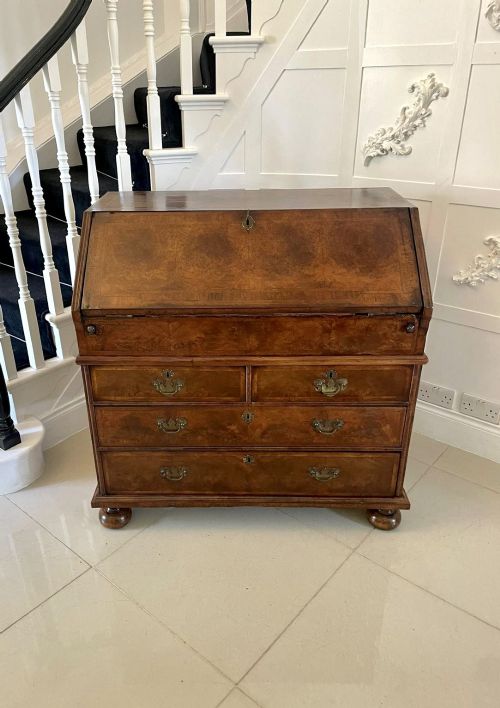
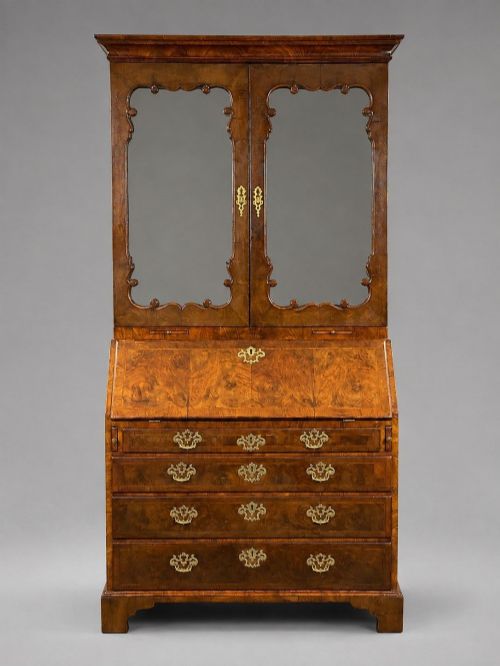
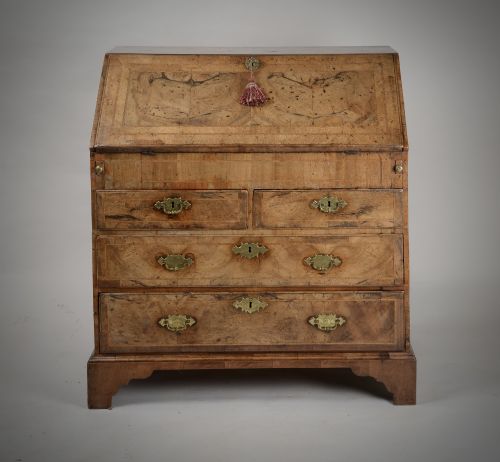
A georgian burr walnut bureau brings tactile depth and hidden compartments into a room, offering a sloping fall front that opens to a fitted writing interior.
Georgian Burr Walnut Bureau
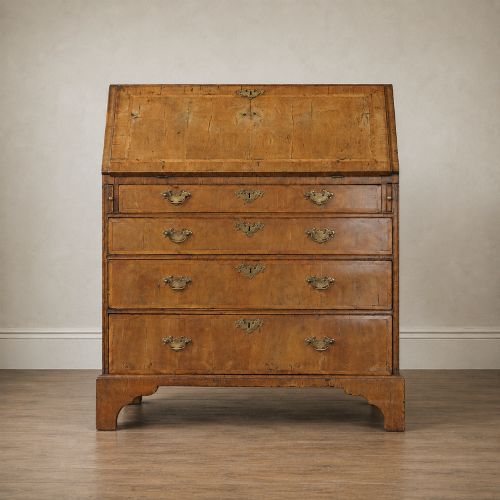
A georgian burr walnut bureau typically takes the form of a sloping fall front desk that conceals small drawers and pigeonholes for correspondence. These writing pieces emerge primarily from the eighteenth century, aligned with periods such as the reigns of George I and George II, alongside later revival pieces.
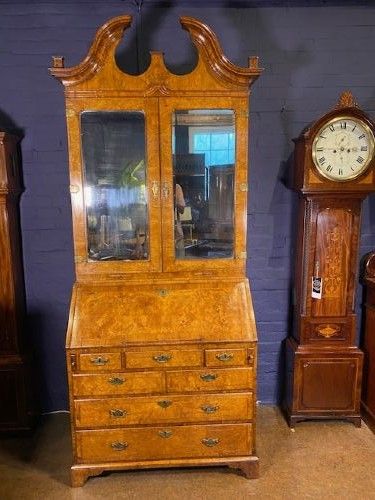
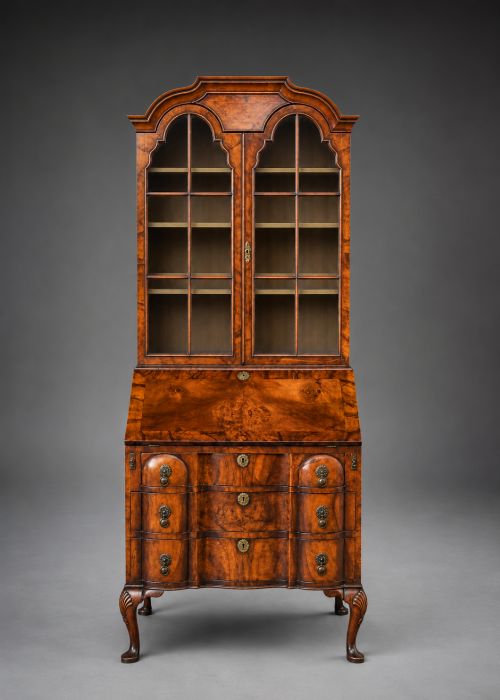
Buyers frequently encounter variants that include taller bureau bookcases with glazed upper sections, as well as compact fall front desks designed for domestic writing tasks. The selection spans authentic early examples through to later interpretations produced in the twentieth century.
The primary function centres on provision for private writing and organised storage through graduating internal compartments and lower drawer configurations. Each configuration reflects the domestic requirements of writing rooms and parlours across successive generations of cabinet making.
Materials and construction
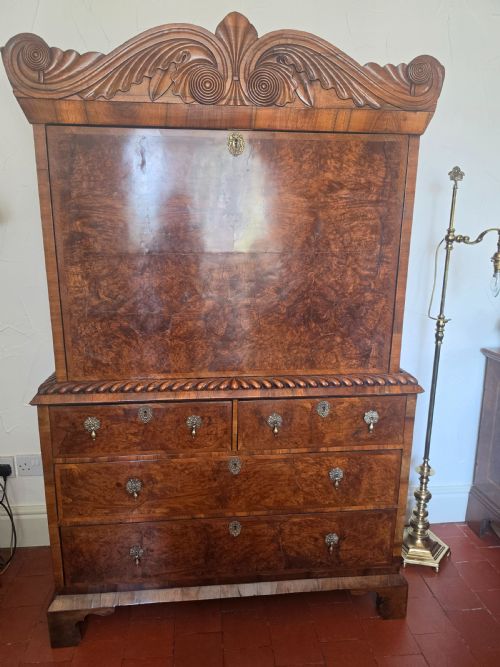
Cabinet makers utilised burr walnut veneers applied over solid foundational timbers like oak, selecting sections with swirling grain patterns to cover primary display surfaces. These veneers required careful sawing and placement to create symmetrical patterns across the fall front and drawer faces.
Detailed decoration often incorporated herringbone stringing and featherbanding to frame the figured walnut panels within distinct borders. Brass hardware such as escutcheons, drop handles and hinges completed the structural assembly of drawers and fall fronts.
The recorded pieces span multiple eras, including seventeenth century William and Mary work, eighteenth century Georgian production and twentieth century revivals.
Distinctions in craftsmanship
Superior pieces display continuous grain matching across the fall front and drawer fronts, demonstrating deliberate planning by the cabinet maker. Lesser examples show mismatched veneer patterns or unsympathetic later repairs to the fragile burr surfaces.
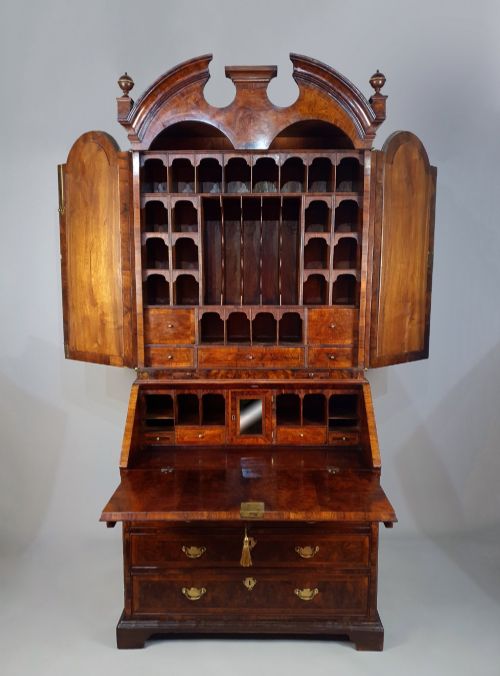
The complexity of the internal configuration separates standard writing boxes from exceptional bureau bookcases. Refined internal compartments incorporate secret drawers, sliding wells and miniature pigeonholes executed with tight joints and secondary timbers of high grade.
maples of london
The Georgian Burr Walnut Bureau Glossary
- Burr walnut
- A veneer sliced from the knotty growth of a walnut tree, prized for its swirling grain patterns and rich tonal variation.
- Fall front
- The hinged writing flap on a bureau that drops down to form a horizontal surface for correspondence and reading.
- Featherbanding
- A decorative inlay technique using small strips of veneer arranged in a chevron pattern to border drawer fronts and panels.
- Herringbone inlay
- A zig-zag pattern formed from contrasting strips of wood used to outline drawers and cabinet doors.
- Bureau bookcase
- A tall cabinet combining a sloping writing desk in the lower section with glazed shelving doors above.
- Escutcheon
- A protective brass plate fitted around a keyhole to prevent wear to the surrounding wood.
Georgian Burr Walnut Bureau: Frequently Asked Questions
What is inside a bureau?
Lifting the fall front reveals a fitted interior containing small pigeonholes, narrow document slots and miniature drawers designed for stationery and letters. Many examples also conceal a sliding well or hidden compartments beneath the central writing section.
These internal spaces showcase fine miniature drawer construction and small brass pulls, reflecting the private nature of eighteenth century correspondence.
How do I care for burr walnut?
Burr walnut requires stable environmental conditions away from direct sunlight and excessive heat sources to prevent the thin veneers from lifting or cracking. Regular dusting with a dry, soft cloth maintains the finish without introducing moisture.
Application of traditional wax polish helps nourish the timber and preserve the chatoyancy of the grain figures over time.
Are these desks practical for daily use?
The sloping fall front provides a functional surface for writing letters or placing a modern laptop during daily administrative tasks. The internal compartments remain useful for organising post, notebooks and small household items.
Care should be taken to support the hinged fall front properly when open to avoid placing excessive strain on the brass support hinges and walnut stays.
How do I distinguish eighteenth century pieces?
Early pieces from the Georgian era typically feature hand cut dovetails, oak secondary linings behind the walnut facades and original brass hardware fixings. The timber patination shows deeper warmth and softer wear patterns accumulated through centuries of domestic use.
Later twentieth century revivals often utilise machine cut elements, standardised fixings and brighter modern lacquers that lack the subtle surface texture of authentic period work.