






Georgian Bullseye Mirror
These georgian bullseye mirror pieces are circular wall-hanging glasses that bring depth and bright focus to a room.
Georgian Bullseye Mirror
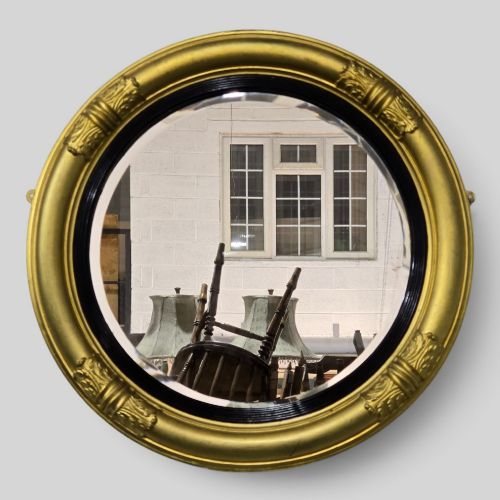
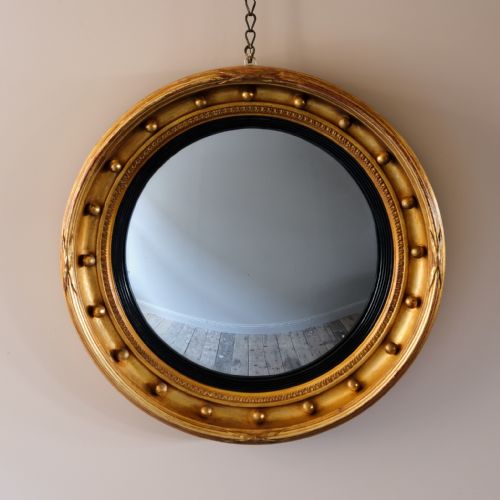
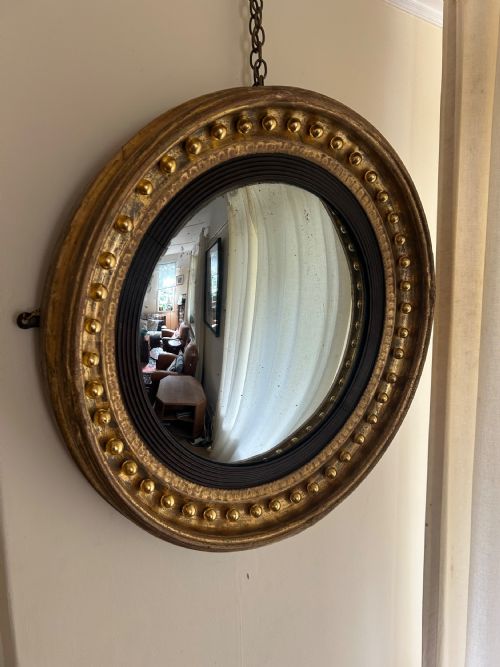
A georgian bullseye mirror takes the form of a round wall glass designed to reflect an entire room within its curved surface. The pieces appearing here span the Regency, Victorian, and later nineteenth century periods, alongside styles recorded as Georgian and Grand Regency.
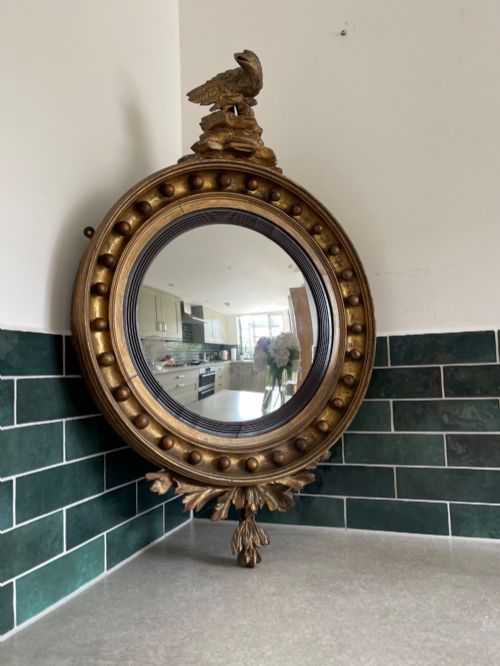
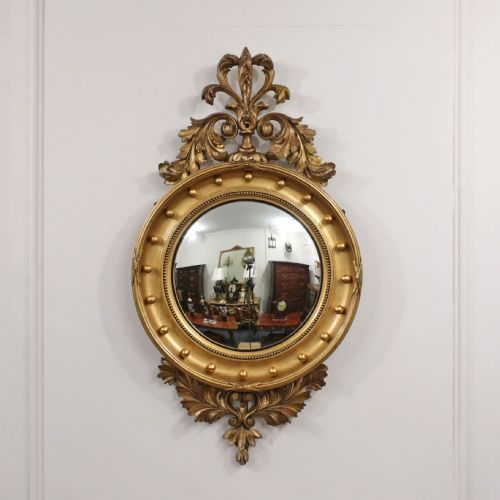
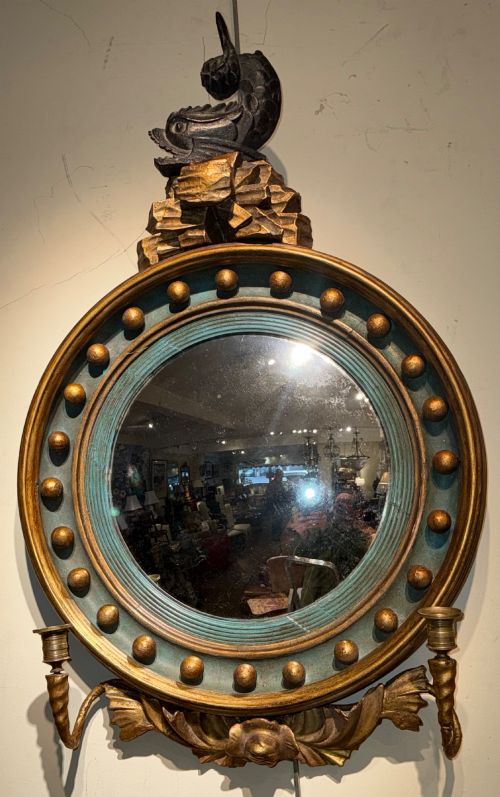
Most examples function as wall mirrors built in circular forms, frequently featuring giltwood frames. Buyers encounter both small specimens suited for hallways and large formats intended for principal reception rooms.
Origins stretch across the Regency era and into later nineteenth and twentieth century interpretations. The primary configuration relies on a convex glass plate set within a round moulded or carved frame.
Assessing quality in convex mirrors
Quality rests upon the crispness of the carved detail on the frame and the depth of the gilding. Finer pieces display sharply defined ornaments and careful application of gold leaf over gesso and wood.
The integrity of the convex glass plate and the proportion of the frame elements dictate the visual impact of the piece. Superior examples maintain balanced proportions between the circular glass and the surrounding moulded or carved border.
Several mirrors include perched eagles keeping a watchful eye over the room from the very top of the frame.
The Georgian Bullseye Mirror Glossary
- Convex mirror
- A round glass curved outward to produce a wide-angle reflection of the interior space. This form sits at the heart of every piece listed.
- Giltwood
- Timber coated with gold leaf or a gold-coloured finish. This material dominates the frames seen in the current selection.
- Composition
- A mouldable mixture used to form decorative details on frames. It allowed makers to produce intricate ornaments efficiently.
- Ebonised wood
- Timber treated to resemble ebony through a dark staining process. This material offers a sharp contrast to traditional gilt finishes.
- Regency
- A design period spanning the early nineteenth century known for classical revival forms. Many items on this page share stylistic traits from this era.
Georgian Bullseye Mirror: Frequently Asked Questions
Where should I hang a convex mirror?
These round glasses work well in hallways, dining rooms, and above mantelpieces where they capture light from multiple angles.
Because the curved surface reflects a broad field of view, placing one opposite a window or doorway maximises the illumination it brings to the space.
How do I identify a Regency period piece?
Look for specific construction traits such as carved giltwood frames, ebonised inner rings, and traditional timber backboards. Eagle crests and detailed composition ornaments also point toward early nineteenth-century manufacture.
Later Victorian and twentieth-century interpretations often show subtle differences in the weight of the frame and the composition materials used beneath the gilding.
How do I clean the curved glass safely?
Dust the frame gently with a soft, dry brush to protect delicate giltwood and composition ornaments. Avoid spraying liquid cleaner directly onto the convex glass.
Apply a small amount of mild glass cleaner to a soft cloth rather than the surface itself, ensuring moisture does not seep behind the edge of the frame.