






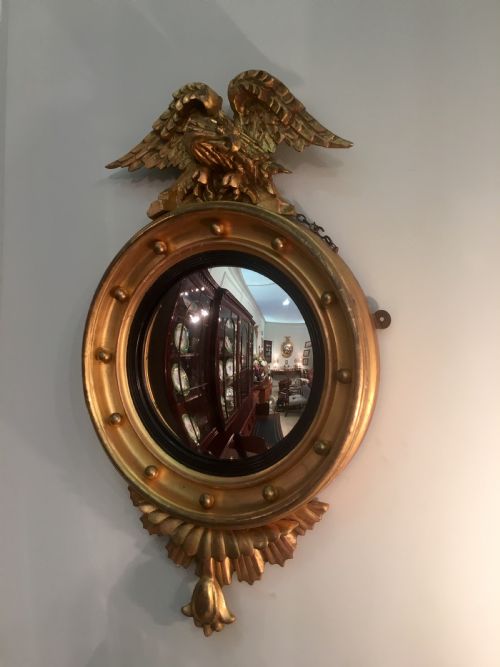
Vintage Ball Mirror
These pieces known as a vintage ball mirror deliver the curved, panoramic reflection that has caught the light in grand rooms since the Regency era.
Vintage Ball Mirror
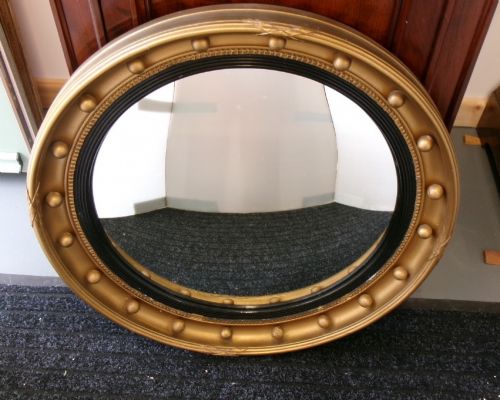
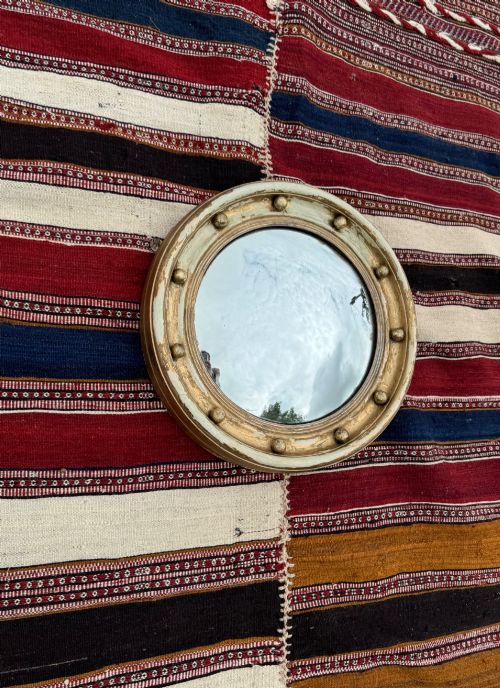
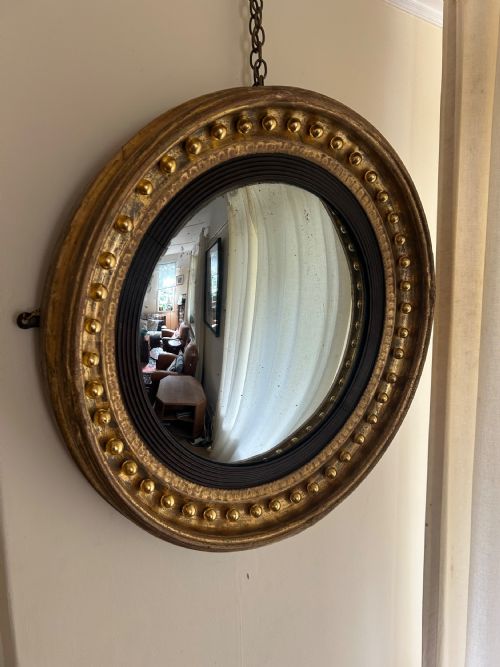
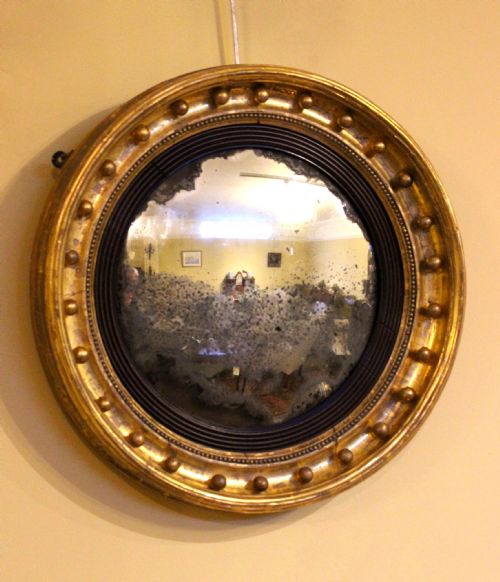
When you search for a vintage ball mirror, you encounter circular convex wall mirrors designed to throw light back into a room and offer a wide-angle view of the interior. The version you are most likely to meet on this page is a gilt-framed convex mirror from the nineteenth century, often referred to as a porthole or butler's mirror.
The evidence shows forms ranging from crisp Regency carved giltwood frames to Victorian examples and later twentieth-century interpretations in gilt metal. These wall mirrors appear in round formats, with occasional variations such as an oval shape or a prominent spread eagle surmounting the crest.
Origins span the Regency period through the Victorian era up to nineteen thirty, anchored firmly in British interior traditions. They function primarily as decorative wall pieces that punctuate dark panelling or light wallpaper with a bright, fish-eye perspective.
How They Were Made
Maker's workshops built the core structure from timber, utilising wood and gesso to build up the intricate mouldings and convex profiles before applying gold leaf or liquid gilt. Giltwood and ebonised wood frames provide the heavy, durable housing necessary to secure the curved mirror plate safely within the rebate.
The distinctive curved mirror plate itself requires specialised glass-blowing and silvering techniques to achieve the spherical distortion characteristic of these plates. Gilding relies on traditional hand-laying of thin gold leaf over prepared gesso surfaces, creating the warm metallic sheen seen across Regency and Victorian pieces.
Materials recorded across the inventory include glass, giltwood, ebonised wood, gesso, gold leaf, and gilt metal.
What Varies In Quality
The distinction between a standard piece and a superior one rests on the crispness of the carved details within the giltwood frame and the depth of the gilding. Hand-carved acanthus leaves and finely modelled crests, such as eagles or heraldic animals, demonstrate a higher level of artisan skill than cast composition ornament.
The integrity of the mirror plate and the weight of the timber frame indicate the original workshop's investment in materials. Original silvered glass with soft foxing carries the visual depth of age, while the tightness of the mitred joints and the preservation of the original gold leaf separate fine collector pieces from utilitarian examples.
The Vintage Ball Mirror Glossary
- Convex mirror
- A circular looking glass with an outward-curving surface that reflects a wide, fish-eye view of the surrounding space. It is the defining feature of the type.
- Giltwood
- Timber carved and coated with gold leaf or metallic powder to produce a brilliant golden finish. This material dominates the frames in this collection.
- Gesso
- A plaster-like mixture applied to wood frames to create a smooth surface for subsequent gilding and fine carving. It allows for sharp decorative details.
- Ebonised wood
- Timber treated with a dark stain or finish to imitate ebony. This treatment provides a striking contrast to gilt elements on nineteenth-century pieces.
- Regency style
- A design vocabulary characterised by classical restraint, symmetry, and gilded ornamentation popular during the early nineteenth century and revived later.
Vintage Ball Mirror: Frequently Asked Questions
What is a convex mirror?
A convex mirror is a round wall hanging featuring a curved glass plate that bends outwards. This spherical shape captures a panoramic view of the entire room in a single compact reflection.
Historically, these pieces were placed in reception rooms and halls so that hosts could monitor guests or servants discreetly from across the space.
How do I hang a heavy giltwood mirror?
Hanging these pieces securely requires fixing directly into solid masonry or locating the timber studs behind plasterboard walls. Due to the substantial weight of the timber, gesso, and glass, standard picture hooks are unsuitable.
Use heavy-duty steel mirror plates or brackets screwed firmly to the frame's internal structure to distribute the load safely.
How do I date a nineteenth-century mirror?
Dating relies on examining the construction of the wooden frame, the composition of the gesso, and the manufacturing characteristics of the mirror plate. Regency pieces often feature bold classical motifs and hand-carved giltwood, whereas Victorian examples tend toward heavier proportions and distinct moulding profiles.
Backboards, fixings, and the presence of original hand-applied gold leaf also offer reliable clues to the decade of manufacture.
Why are some mirrors surmounted by an eagle?
The spread eagle perched atop the frame is a traditional motif derived from classical symbolism denoting watchfulness, imperial power, and authority. In Regency and nineteenth-century interior design, this bird added vertical height and grandeur to the circular frame.
Craftsmen carved the eagle separately from the main hoop and pinned it securely to the top crest during assembly.