
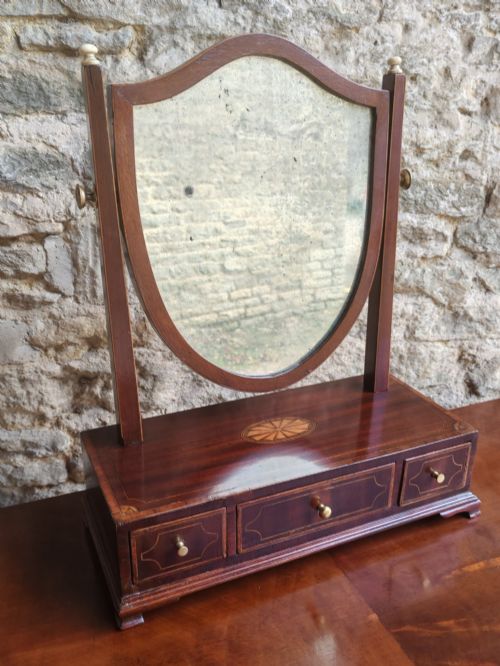


Georgian Box Mirror
A georgian box mirror sits on a dressing table to catch the morning light, combining a swinging glass plate with a small fitted storage base.
Georgian Box Mirror
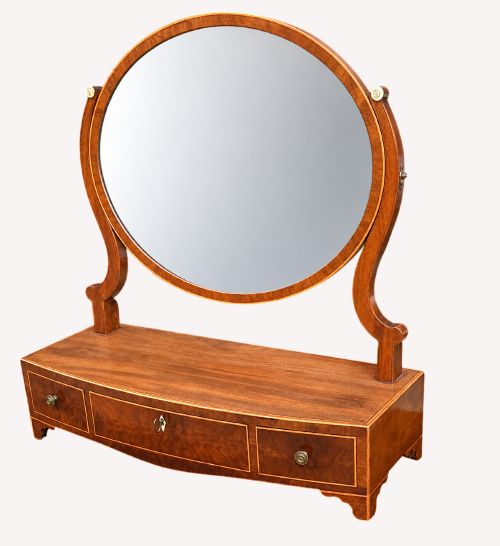
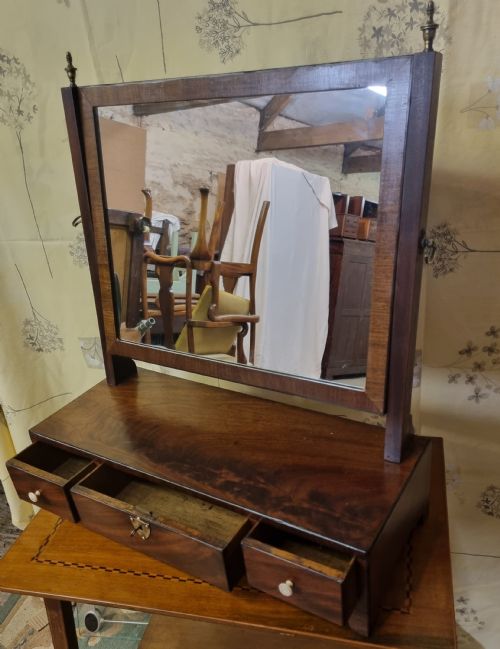
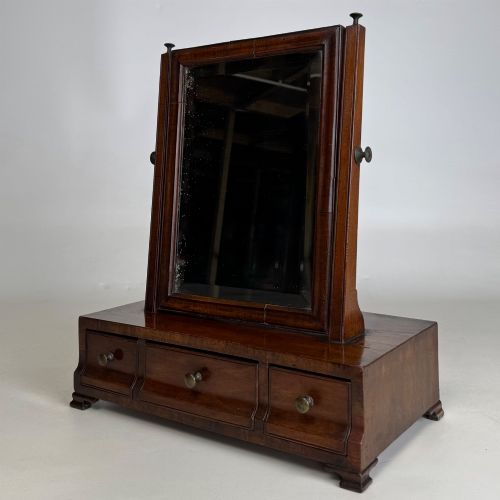
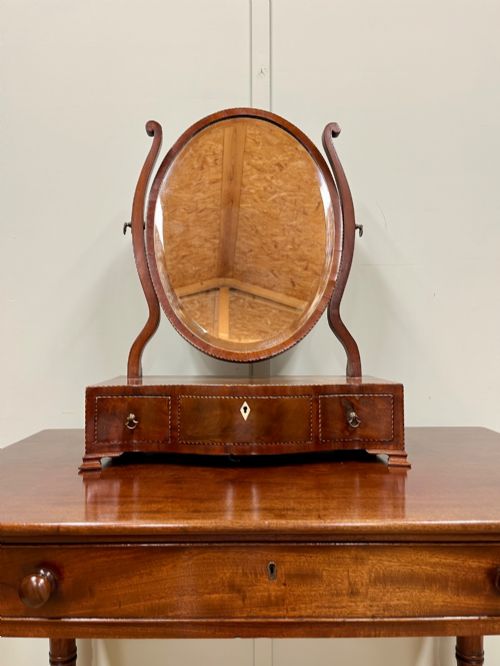
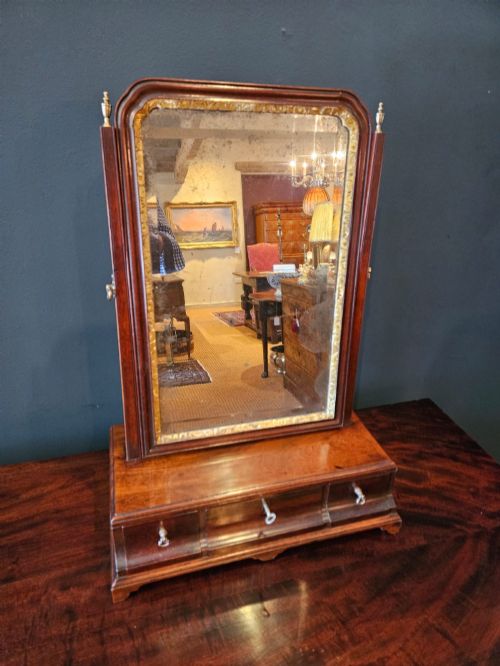
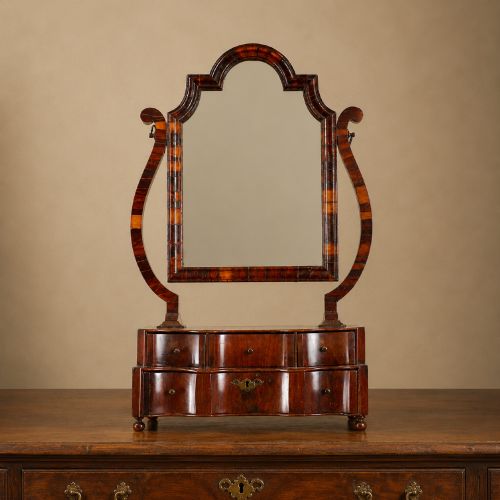
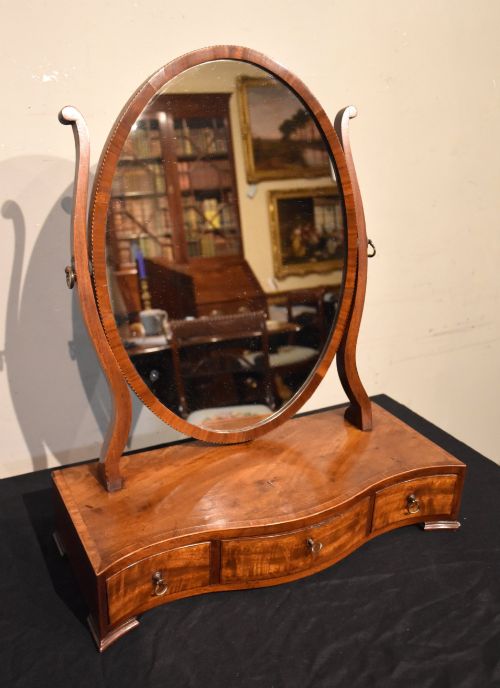
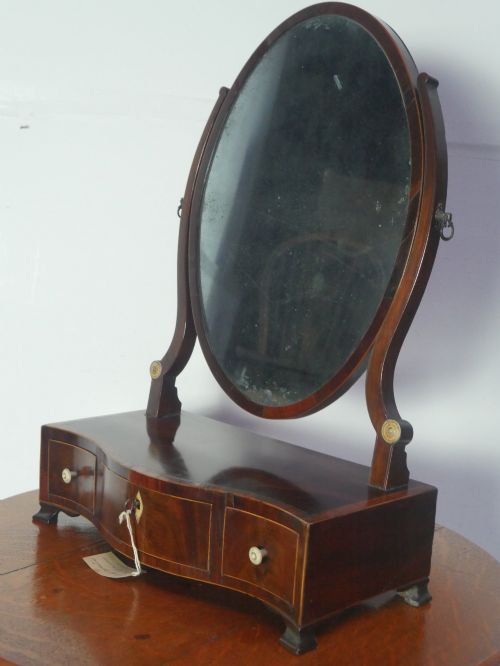
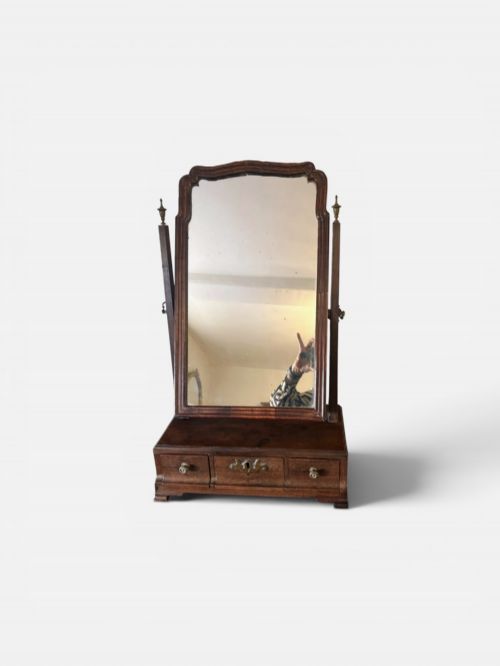
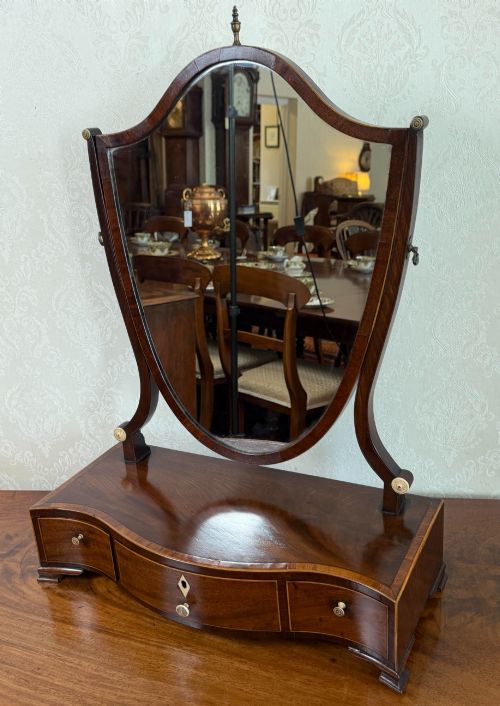
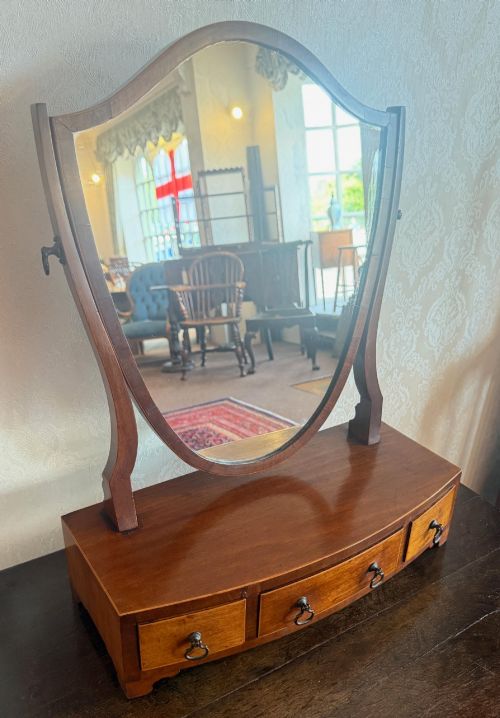
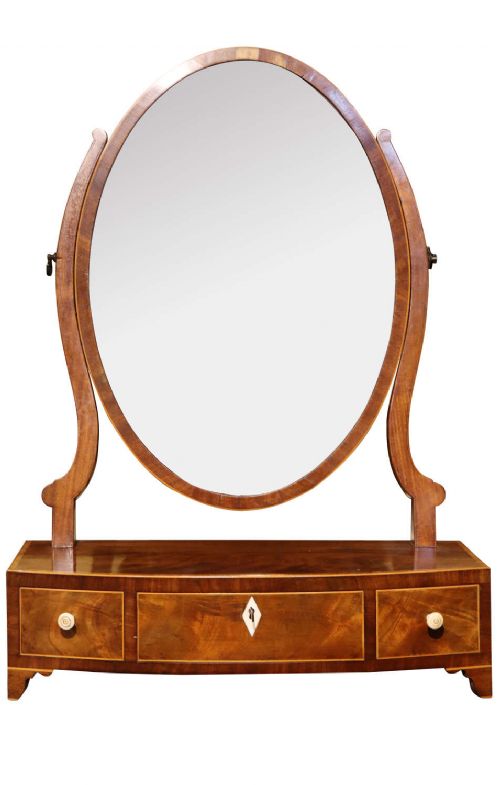
When you search for a georgian box mirror, you examine small table-standing glasses designed for personal grooming in bedrooms and dressing rooms. Most examples on this page date from the eighteenth and nineteenth centuries, spanning the reigns of Queen Anne through to the Regency period. These pieces combine a pivoting mirror plate held by upright arms above a small plinth base containing small drawers.
The primary forms appearing here include rectangular, shield-shaped, oval, bow-front, and serpentine frames mounted on box bases. Cabinetmakers built these items to sit upon larger chests of drawers or dedicated dressing tables, allowing users to adjust the angle of the glass. Walnut and mahogany predominate, often enhanced with crossbanding, inlay, or parcel-gilt details.
How they were made
Cabinetmakers constructed the foundational boxes using solid hardwoods such as mahogany and walnut, frequently incorporating secondary timbers like oak or pine for internal drawer linings. Veneers were sawn rather than sliced, applied to carcases with animal hide glue to create stable flat surfaces that resisted warping. Joinery relies on dovetails for the small drawer boxes and mortise and tenon joints for the upright support arms.
Mirrors utilise silvered glass plates set within moulded frames that pivot on brass screw pins or threaded bolts fitted with decorative nuts. Decoration involves contrasting woods like boxwood stringing, laburnum, satinwood, and harewood, alongside bone escutcheons and fine giltwood highlights. Metal fittings such as miniature brass bracket feet and small drawer pulls complete the construction.
Listings feature mahogany and walnut as the primary timbers, alongside rarer examples in harewood and giltwood.
What varies in quality
The refinement of the proportions and the crispness of the timber mouldings determine the standing of an individual piece. Better examples display carefully selected grain patterns on the drawer fronts and harmonious scaling between the mirror frame and the storage box below. Subtle details such as finely cut dovetails, original brass hardware, and delicate crossbanding separate finer workshop production from standard utility items.
The survival of original surfaces and mirror plates carries substantial weight in assessing these objects. Secondary wood choices, the precision of the box joints, and the elegance of the ogee or serpentine contours reveal the skill invested by the original maker. Pieces retaining their initial finish demonstrate greater integrity than those stripped or heavily restored in later eras.
The Georgian Box Mirror Glossary
- Toilet mirror
- A small table-standing glass designed for grooming, usually incorporating a box base with small drawers.
- Box mirror
- A portable dressing glass fitted directly onto a lidded or drawer-fitted wooden base.
- Crossbanding
- A narrow strip of veneer laid across the grain of the primary surface to form a contrasting border.
- Serpentine front
- A shaped furniture front featuring a central convex curve flanked by two concave curves.
- Parcel-gilt
- Partially gilded with thin gold leaf applied to specific carved details or mouldings.
- Dovetail
- A joint formed by interlocking wedge-shaped fingers used to construct sturdy drawer corners.
Georgian Box Mirror: Frequently Asked Questions
What is a georgian box mirror?
A georgian box mirror is a small portable dressing glass mounted on a wooden storage base with drawers.
Cabinetmakers designed these items to sit on tables for personal grooming and jewellery storage.
How do I date a georgian mirror?
Dating relies on examining the timber species, joinery methods, plate glass characteristics, and overall cabinet style.
Early eighteenth-century pieces often use walnut, while later examples favour mahogany with varied serpentine or bow-front outlines.
Where were these mirrors placed?
These mirrors stood on top of dressing tables, chests of drawers, or washstands in bedrooms.
Their portable nature allowed owners to move them around rooms depending on the available daylight.
What are the drawers used for?
The small drawers in the base held cosmetics, pins, shaving gear, and small personal valuables.
Secret compartments occasionally appear behind the primary drawers in finer examples.