
Vanity Mirror with Drawers
These pieces for vanity mirror with drawers combine personal grooming with small storage, sitting upon chests or tables to hold trinkets alongside glass.
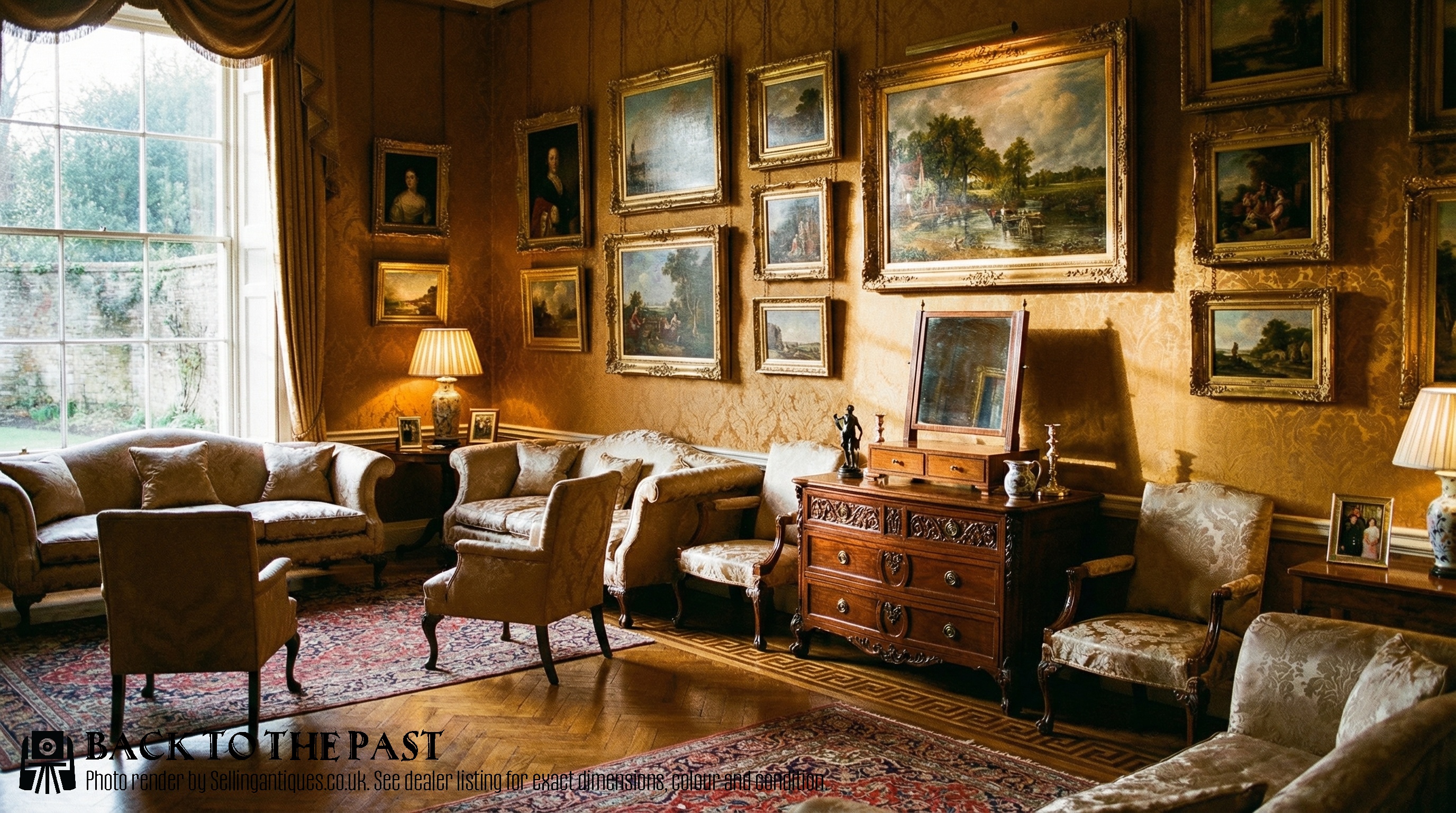
Vanity Mirror with Drawers
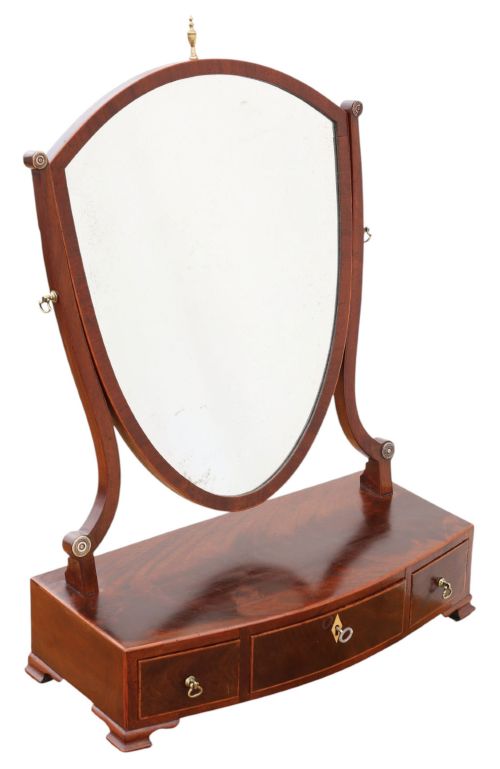
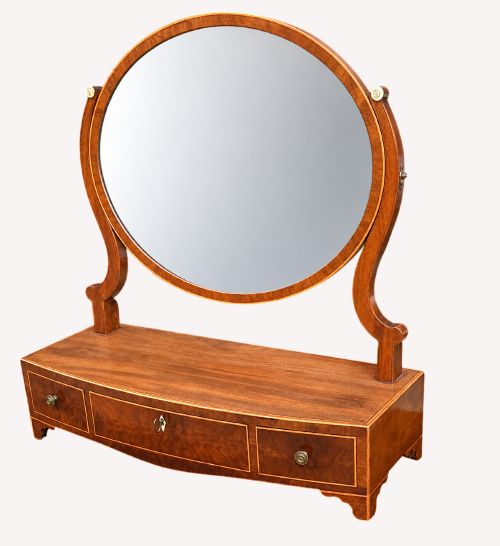
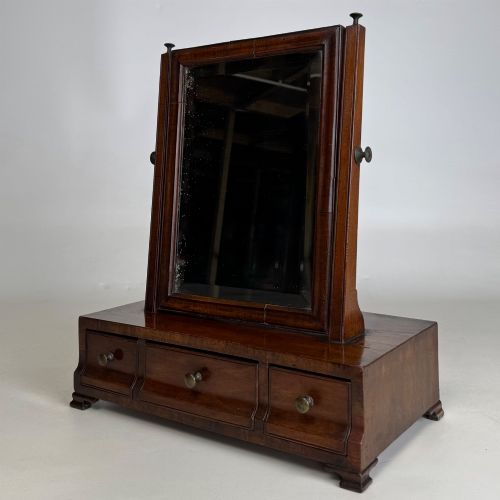
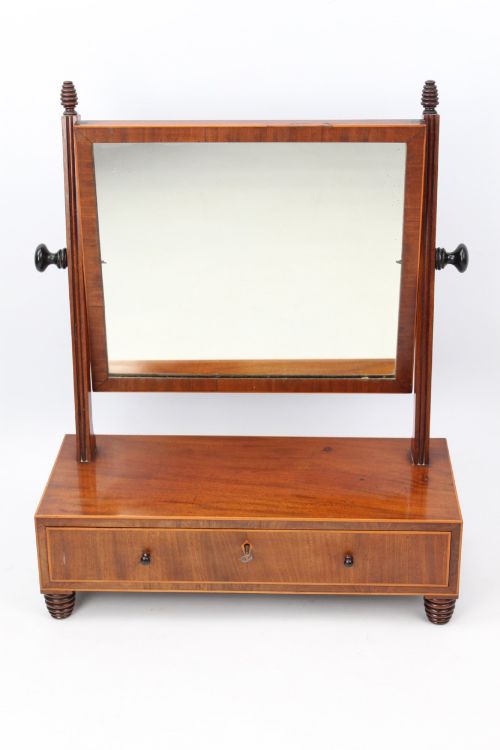
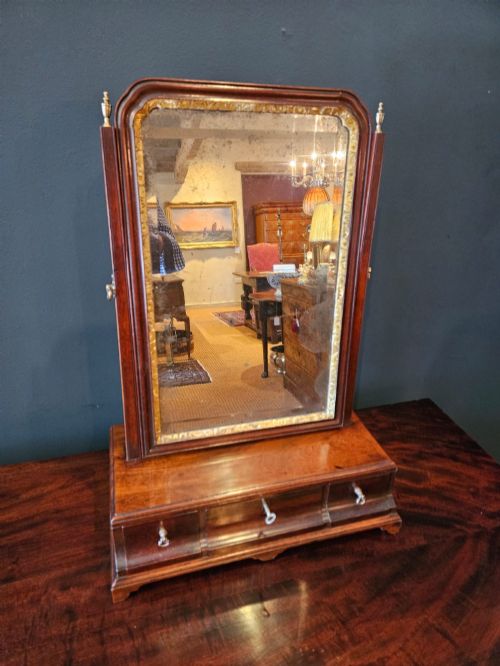
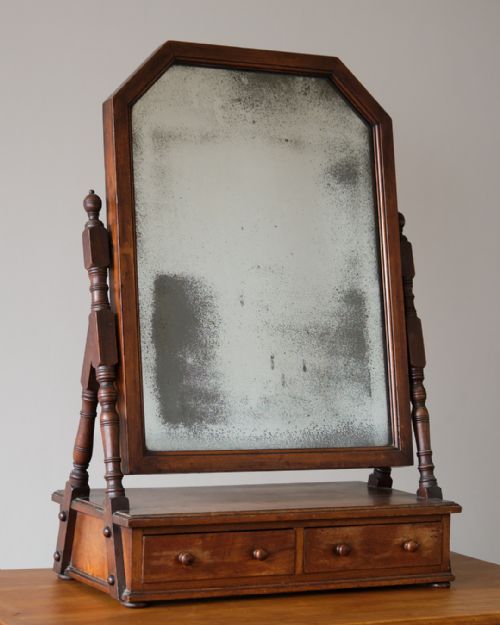
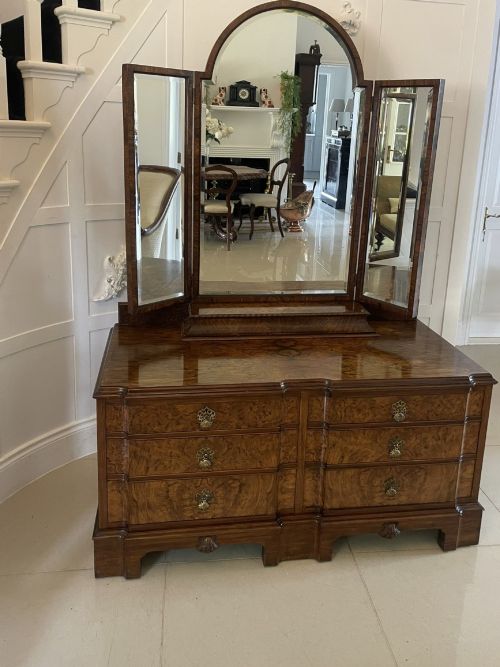
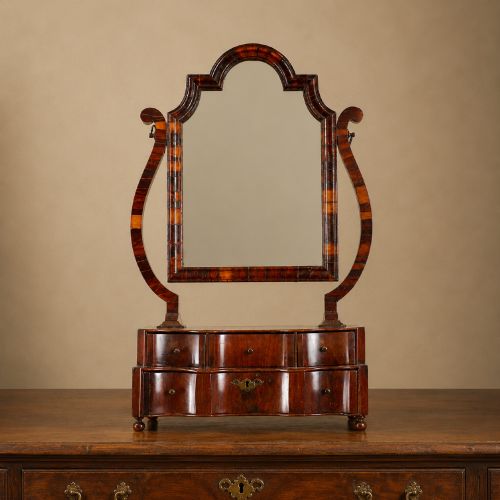
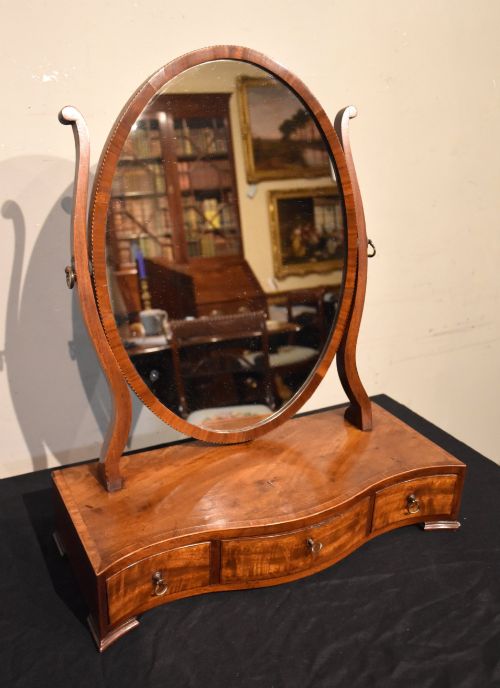
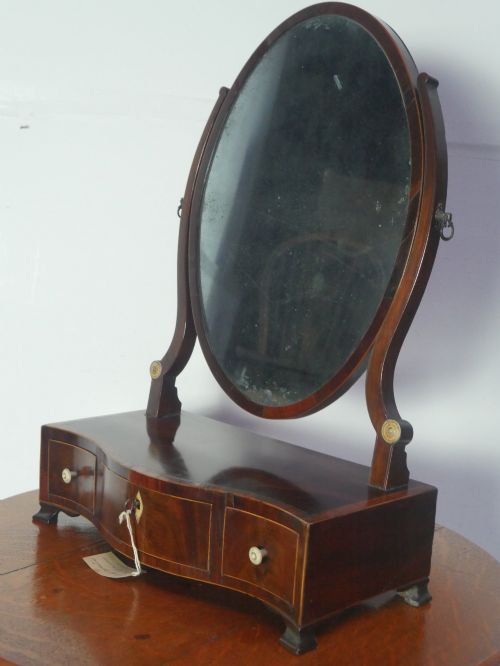
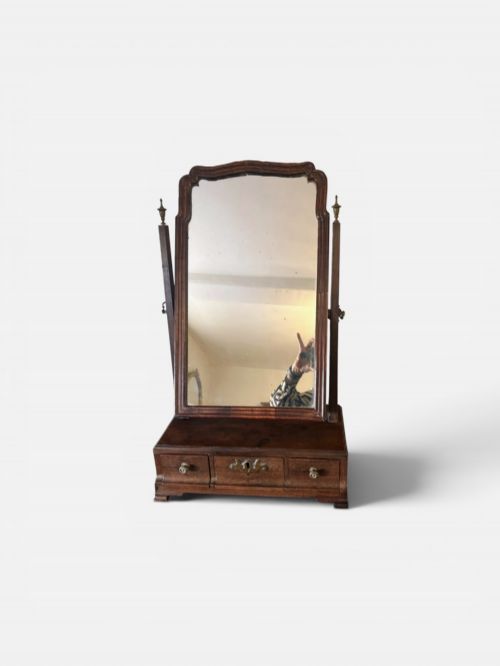
A vanity mirror with drawers usually takes the form of a swing mirror mounted on a small box base fitted with one or more small compartments. These objects appear most frequently from the Georgian, Victorian, and Edwardian eras, spanning the eighteenth and nineteenth centuries into the early twentieth century.
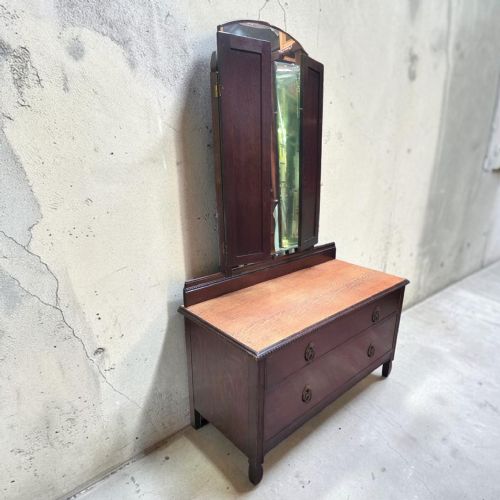
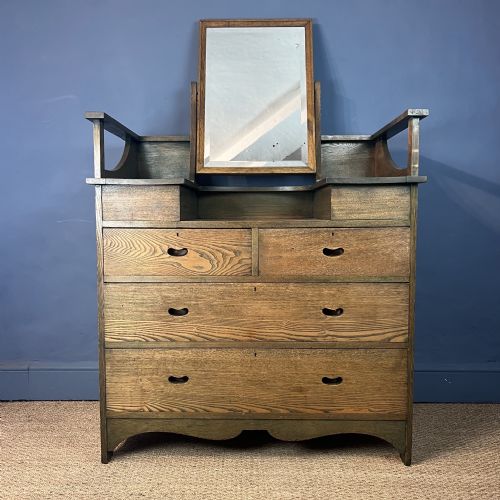
Makers fashioned these pieces in styles ranging from plain mahogany boxes to elaborate Queen Anne walnut, Regency designs, and Arts and Crafts interpretations. They serve either as tabletop dressing mirrors or as larger dressing chests incorporating built-in drawers beneath the glass plate.
Materials and Construction
Cabinetmakers built these mirrors primarily using dense hardwoods like mahogany, walnut, and oak, often enhanced by satinwood, burr veneers, or delicate marquetry inlay. Brass fittings such as swing pivots, knobs, and small escutcheons secure the moving glass frame and accent the drawer fronts.
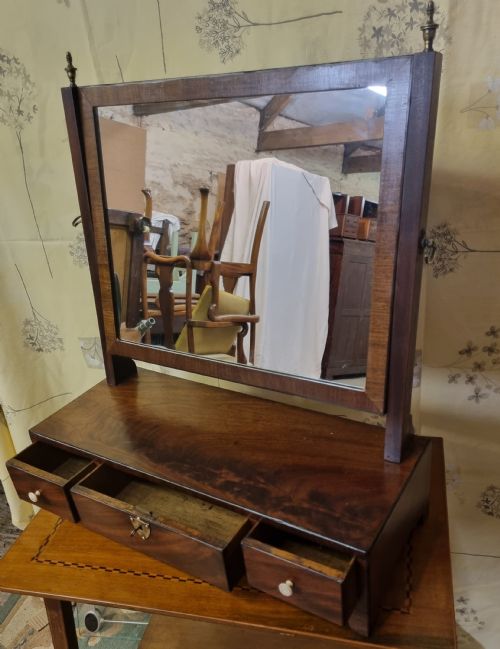
The glass itself is held within adjustable upright arms, allowing the user to tilt the reflective surface while accessing the fitted trinket drawers housed in the base below.
Some nineteenth-century examples hide tiny secret compartments behind the main drawers for stashing precious keepsakes.
Cabinetwork and Materials
The distinction between ordinary utility pieces and finer examples rests on the selection of timber, such as figured walnut or rich mahogany, and the crispness of internal drawer dovetailing. Superior pieces display thoughtful proportions, well-matched wood grain across the drawer fronts, and original brass hardware rather than later replacements.
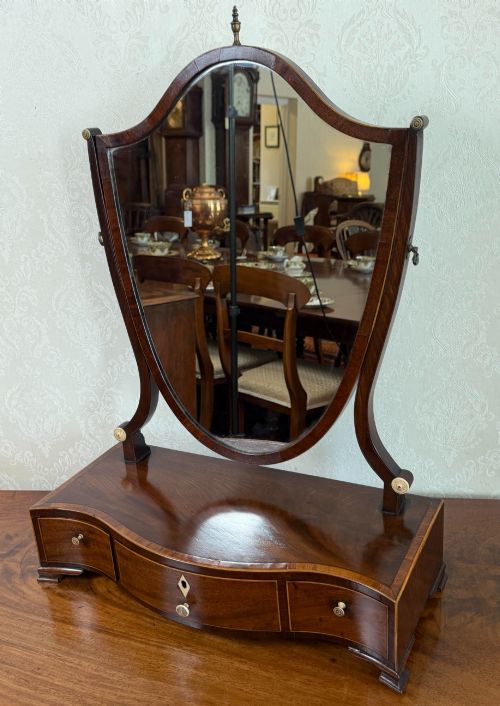
The treatment of the mirror frame also signals execution standard, with moulded edges, shaped shield contours, or subtle stringing marking out the more ambitious workshops of the Georgian and Regency periods.
Maple and Co·George Walton
The Vanity Mirror with Drawers Glossary
- Toilet mirror
- A smaller tabletop dressing glass designed to sit upon a chest or table rather than standing independently on the floor.
- Swing mirror
- A plate mounted on pivots between two upright arms, allowing the user to tilt the angle of reflection.
- Shield mirror
- A glass plate cut into the shape of a heraldic shield, popular during the late eighteenth century.
- Bureau fitment
- A small desk interior built into the base of the mirror stand, featuring tiny pigeonholes and small storage compartments.
- Marquetry
- Decorative woodwork where thin slices of various coloured timbers form pictorial or geometric patterns on the surface.
Vanity Mirror with Drawers: Frequently Asked Questions
What is a vanity mirror with drawers?
A vanity mirror with drawers is a tabletop or chest-mounted dressing glass featuring small storage compartments built into its base. These compartments were traditionally used to hold jewellery, cosmetics, and personal accessories.
They appear across the Georgian, Victorian, and Edwardian periods in various woods, combining practical reflection with compact storage for the dressing table.
How do I date a dressing mirror?
Dating relies heavily on timber choice, construction methods, and the overall outline of the frame and base. Georgian examples often utilise solid mahogany with fine dovetails, whereas Victorian and Edwardian pieces frequently introduce walnut veneers, painted pine, or Arts and Crafts styling.
Hardware details, such as the shape of brass support arms and the presence of hand-beveled or original mirror glass, also offer reliable clues to the decade of manufacture.
Where should I place a toilet mirror?
These mirrors suit dressing tables, chests of drawers, or sideboards where their compact footprints add vertical height and reflective light to a room. Their built-in drawers provide convenient containment for everyday small items.
Positioning them away from direct, damp heat sources protects the antique wood and preserves the silvering behind the original glass plate.
What is the difference between a toilet mirror and a dressing mirror?
In historical terms, toilet mirrors specifically describe smaller tabletop swing mirrors used for grooming, while dressing mirrors can encompass both these box-base table versions and larger floor-standing cheval glasses.
Both terms frequently overlap in antique listings, though pieces with integrated drawers are almost universally referred to as toilet mirrors or dressing table mirrors.