

Georgian Bowfront Table
A georgian bowfront table brings rhythmic curves and rich timber into a room, offering practical surface space with understated elegance.
Form and Period
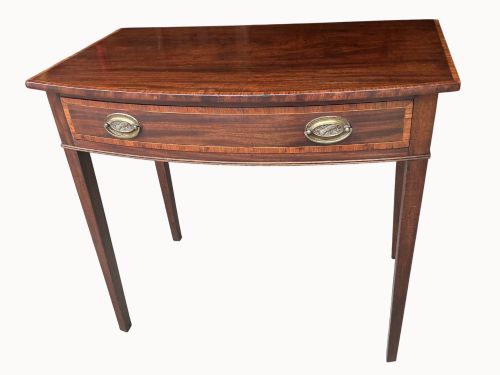
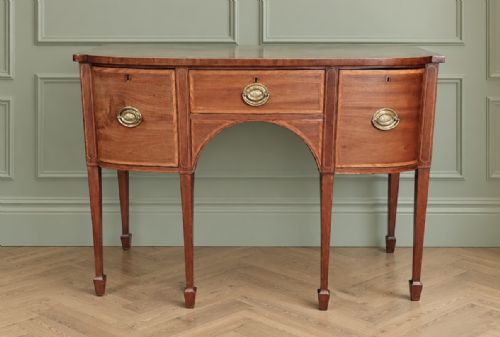
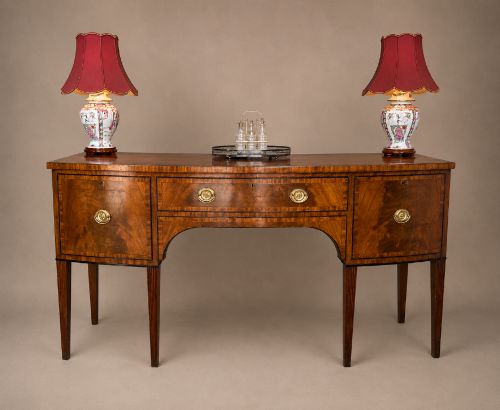
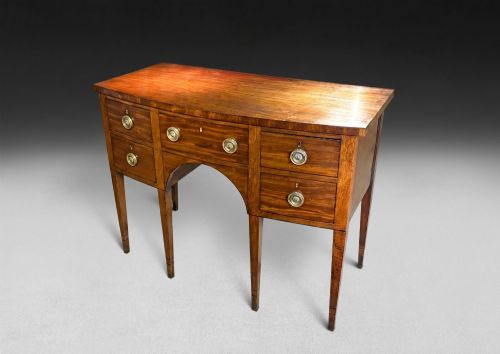
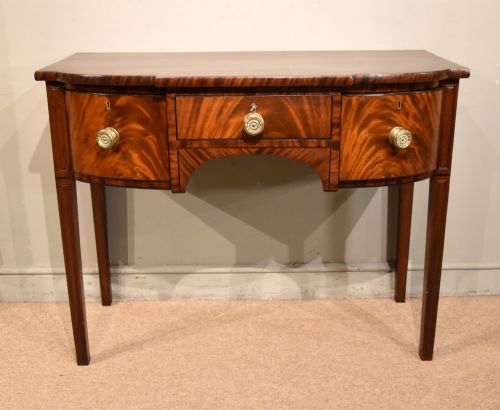
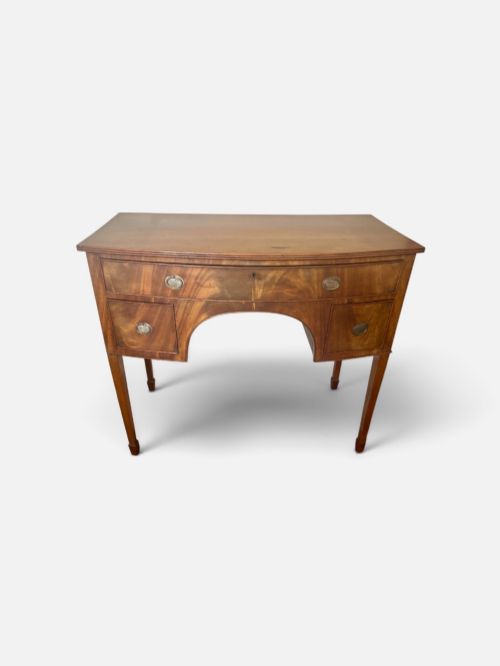
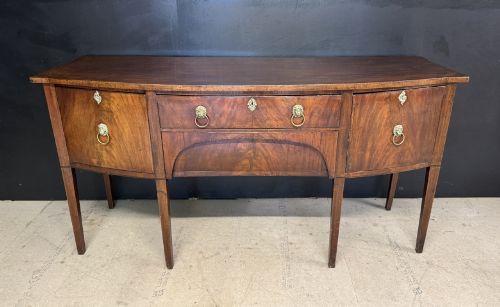
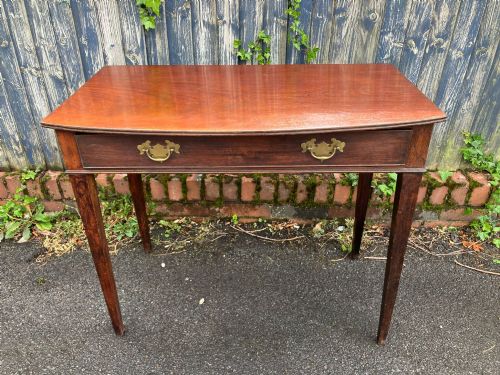
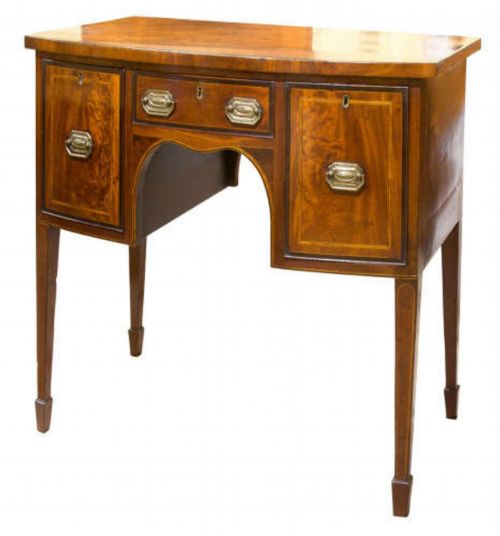
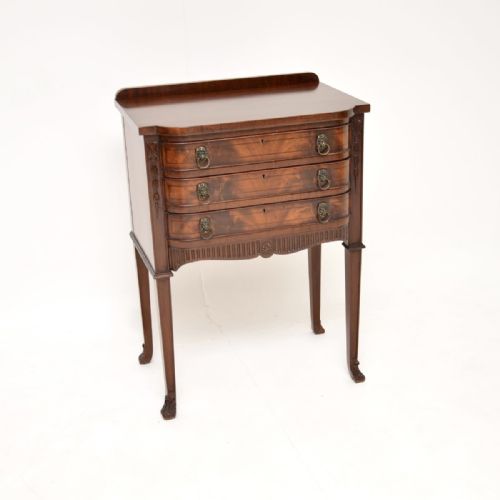
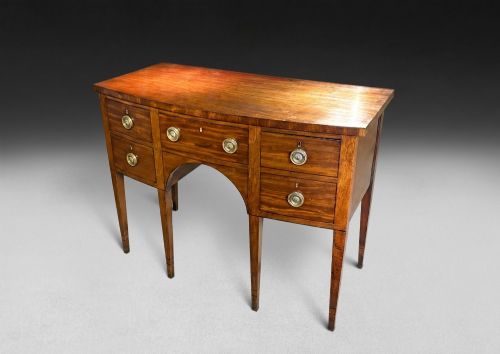
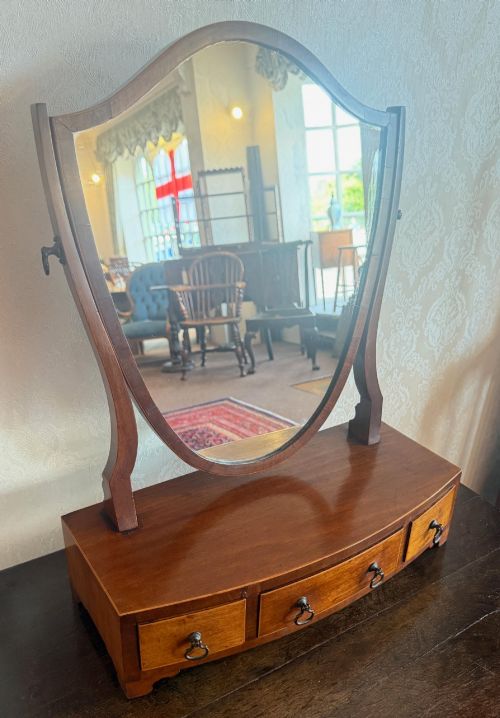
A georgian bowfront table combines a curved front outline with the balanced proportions characteristic of the period. These pieces appear primarily as side tables, dressing desks, and console tables.
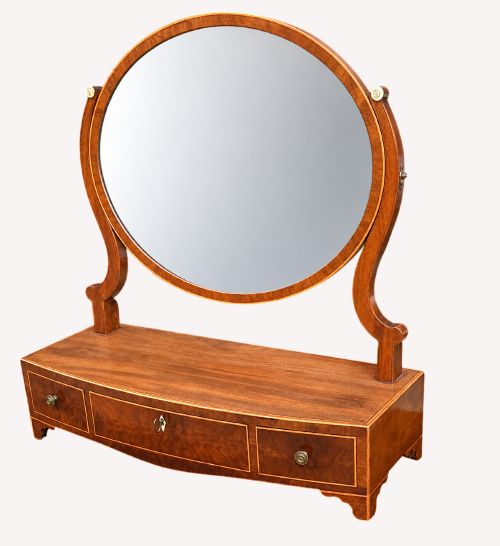
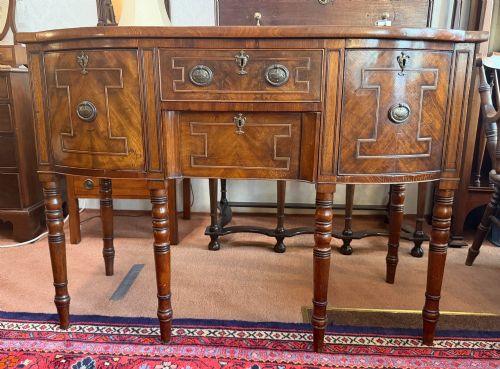
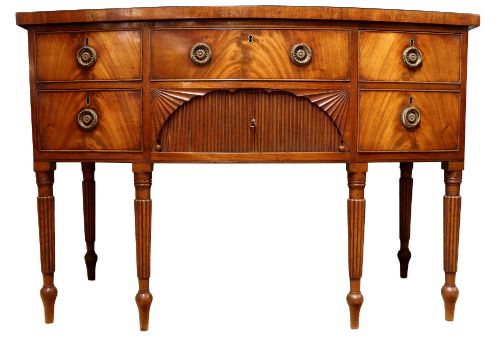
The inventory on this page consists predominantly of side tables and writing desks in mahogany, spanning the late eighteenth and nineteenth centuries. Examples range from simple domestic pieces to inlaid items reflecting Sheraton and Regency design influences.
Buyers encounter both authentic period pieces dating around eighteen hundred and later nineteenth-century interpretations. The curved drawer fronts provide soft architectural lines that contrast with standard straight-sided furniture.
Materials and Construction
Cabinetmakers built these tables using solid mahogany and mahogany veneers applied to secondary woods. Boxwood and general wood inlay provide fine line detailing along drawer edges and table tops.
Brass handles and escutcheons punctuate the dark timber surfaces on drawers. The curved front requires precise joinery to shape the timber without compromising structural integrity.
Retail Price Guide 2026
Typical UK retail prices for georgian bowfront table, calculated from the Sellingantiques database of over a million retail prices indexed since 2003. This retail price guide relies exclusively on Sellingantiques data; no external sources or auction records are used, so the figures do not describe the wider market.
The subtle curve of a bowfront gives small tables an unexpected politeness, gently bowing to anyone who walks past.
Craftsmanship and Proportion
Superior examples demonstrate meticulous attention to the grain alignment across the curved drawer fronts and top boards. Finer pieces incorporate delicate stringing and boxwood inlay that elevate the visual depth of the mahogany.
The refinement of the leg turning and the crispness of the edge moulding distinguish a workshop piece from basic provincial output. Structural balance and timber selection ultimately define the standing of each table.
The Georgian Bowfront Table Glossary
- Bowfront
- A convex curved front contour that projects outward in the centre, softening the rectangular silhouette of a piece of furniture.
- Frieze drawer
- A drawer situated directly beneath the main surface top of a table, often lined with mahogany and fitted with brass hardware.
- Stringing
- A narrow strip of contrasting wood inlay used to outline drawers, legs, or table tops for decorative emphasis.
- Sheraton
- A neoclassical furniture style characterised by straight tapering legs, refined proportions, and contrasting veneer inlays.
- Regency
- An English design phase spanning the early nineteenth century noted for classical restraint and structural clarity.
Frequently Asked Questions
What rooms suit a bowfront table?
These tables fit easily into hallways, bedrooms, and reception rooms where a shallow depth is beneficial. The curved front profile prevents sharp corners in narrow circulation spaces.
They function effectively as serving surfaces, writing desks, or dressing tables depending on the specific internal layout of drawers.
How do I identify the wood type?
Most examples utilise mahogany, which displays a warm reddish-brown tone and natural grain figuring. Closer inspection reveals whether the surface is solid timber or finely applied veneer.
Inlay work typically employs contrasting lighter woods such as boxwood to create geometric borders around the primary panels.
Are these tables suitable for daily use?
The sturdy construction of mahogany and traditional joinery allows these tables to support everyday items like lamps, books, and writing materials. Regular maintenance involves simple dusting and occasional waxing to preserve the timber.
Drawer mechanisms operate smoothly when kept clean and free from excessive moisture.
How do I distinguish regional styles?
Stylistic markers include leg shapes, inlay patterns, and overall proportions associated with specific design periods. Sheraton influences appear through delicate tapering legs and precise line inlay.
Later nineteenth-century interpretations often retain the classic bowfront profile while incorporating manufacturing methods characteristic of their production era.