
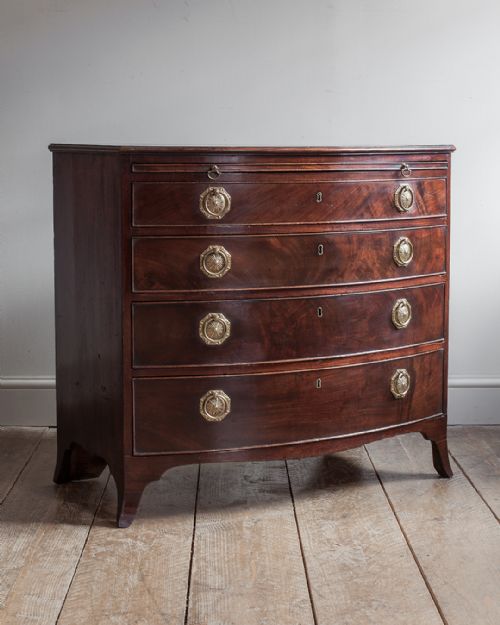
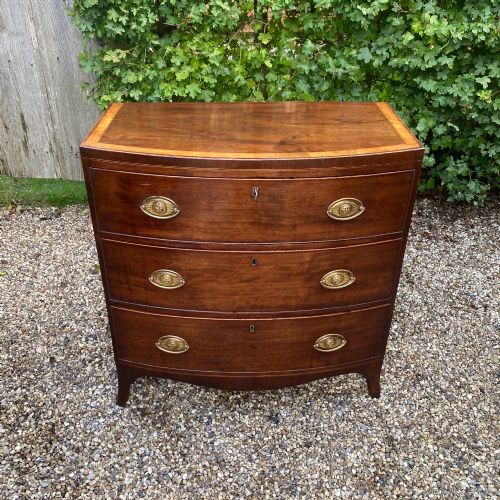
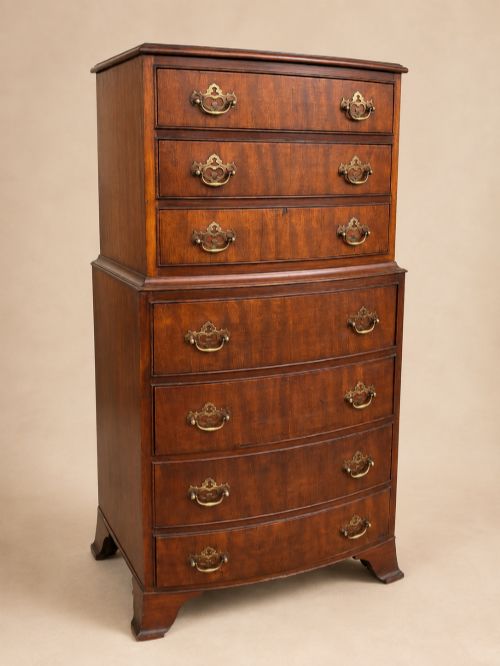
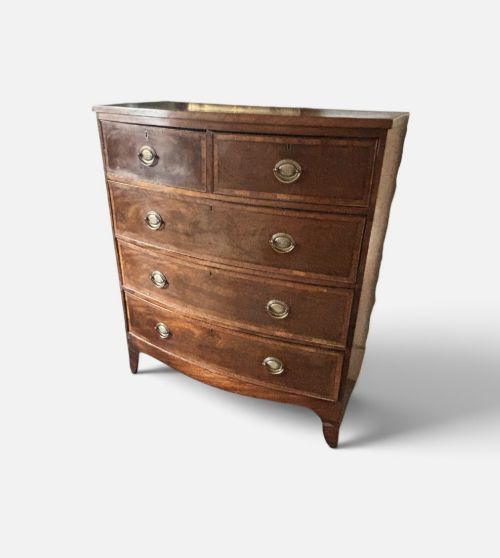
Georgian Bowfront Bedroom Chest
A georgian bowfront bedroom chest brings curving grace and practical storage to a room, offering deep drawers housed in classically proportioned timber frames.
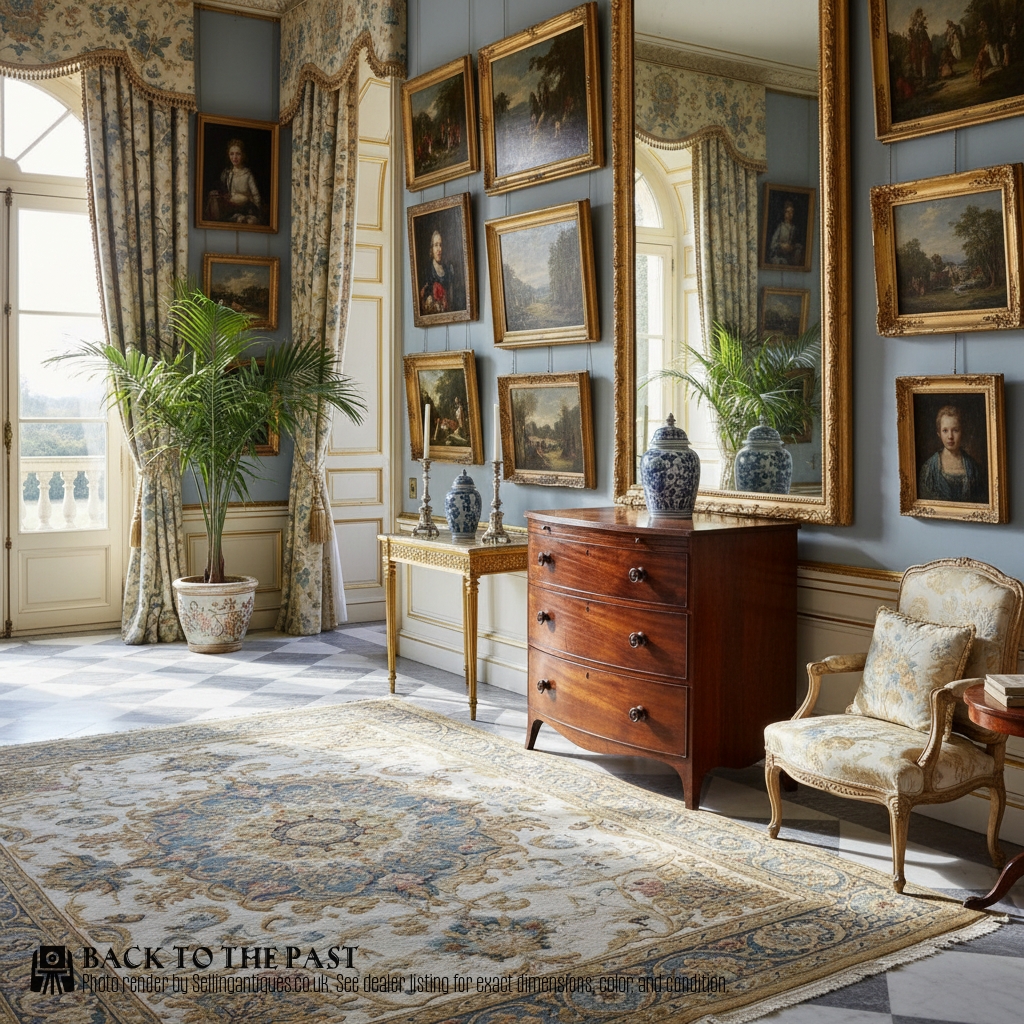
Georgian Bowfront Bedroom Chest
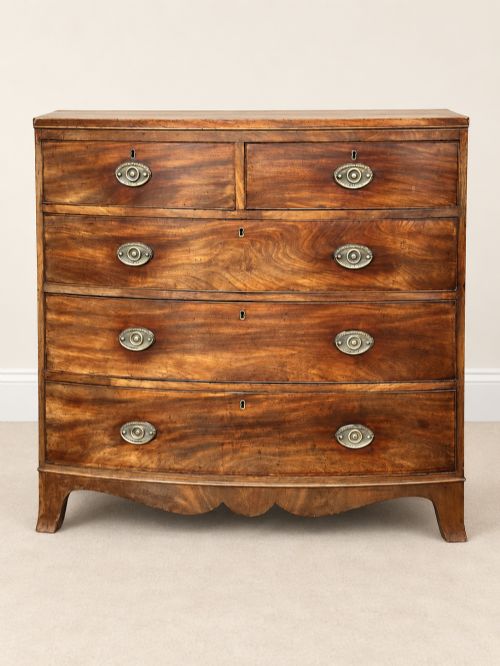
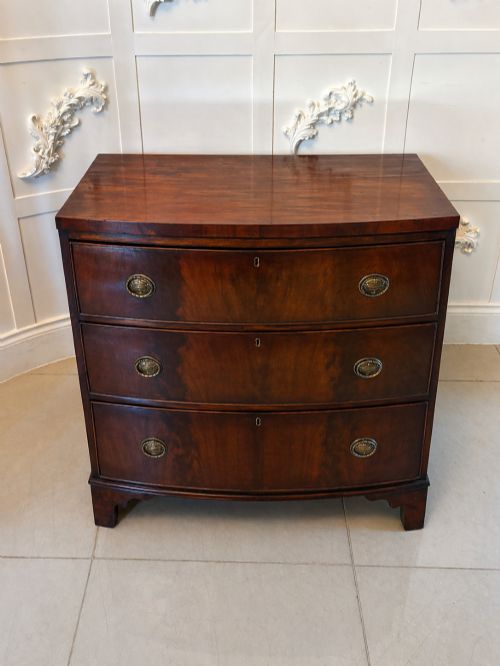
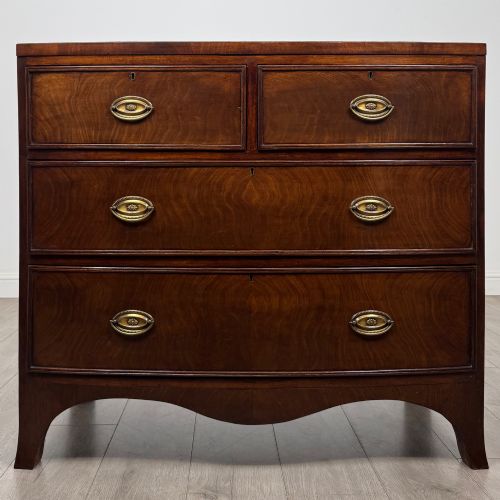
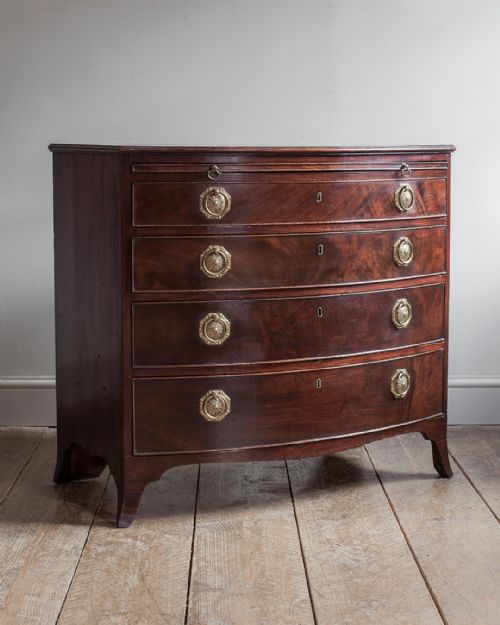
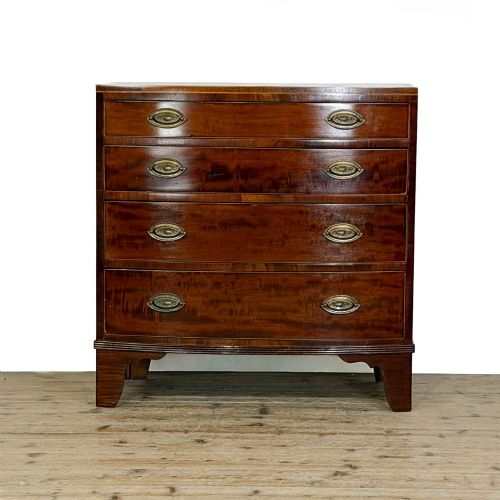
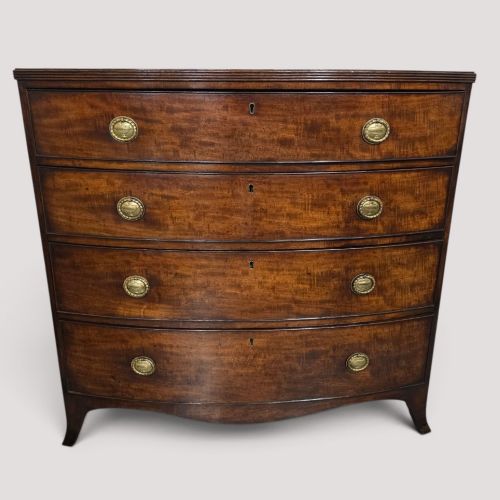
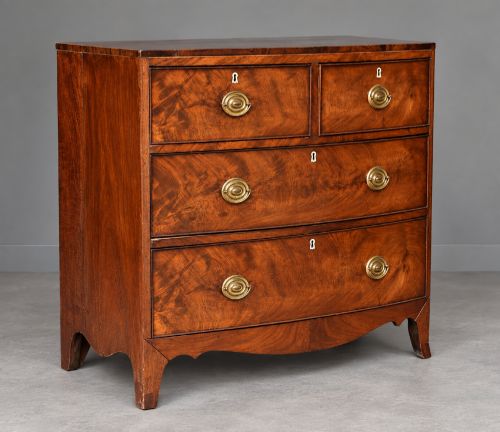
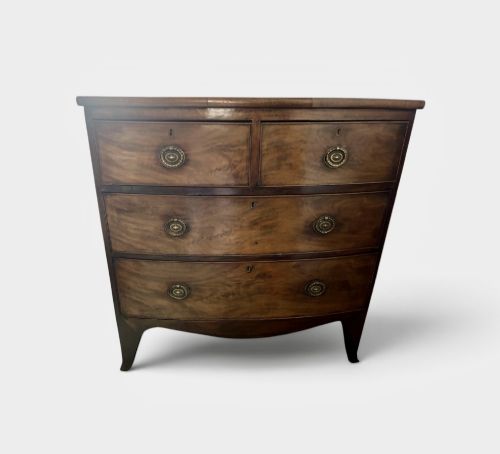
A georgian bowfront bedroom chest is fundamentally a case furniture piece designed for domestic quarters, featuring a distinctive rounded projecting front that softens the angles of a traditional bedroom. These pieces appear primarily from the Georgian, Regency, and George III periods, alongside later twentieth-century interpretations.
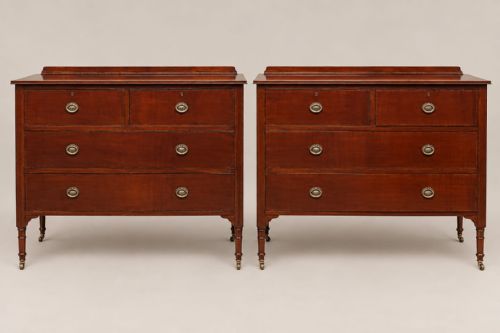
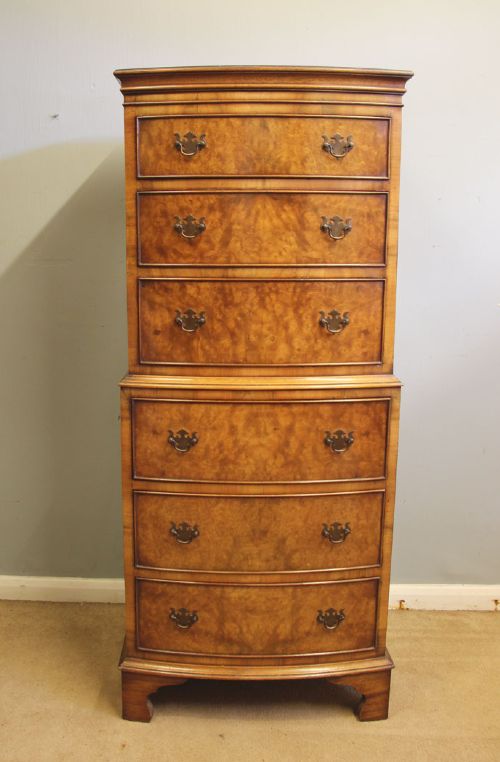
The standard form met on this page is a chest of drawers, though variations such as linen presses and chest on chest structures also emerge in the listings. Makers constructed these items in various proportions, including small and narrow formats suited to tighter bedroom spaces alongside larger Scottish and English examples.
Materials and Technique
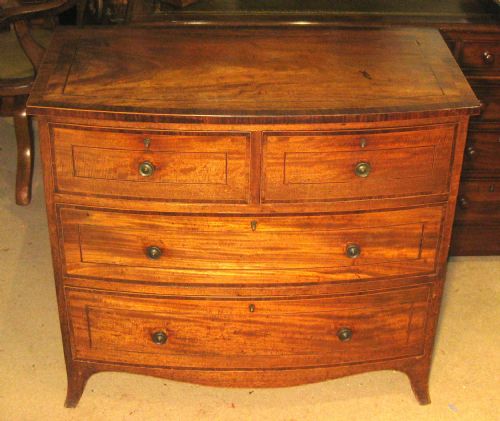
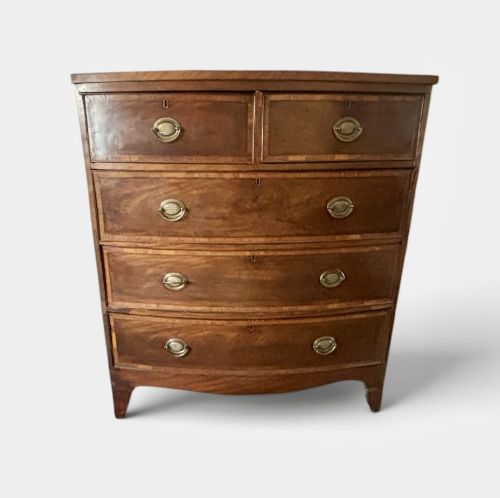
Cabinetmakers relied heavily on solid mahogany and flame mahogany veneer, often enhancing the curved drawer fronts with contrasting satinwood banding or crossbanding. Secondary timbers like oak appear within the internal carcase construction and drawer linings.
The sweeping curved front required precise carpentry to shape the solid timber and apply figured veneers smoothly across the bow. Brass hardware, including original swing handles and escutcheons, completes the structural assembly alongside hand-cut dovetail joints on the drawers.
Listings span multiple eras from the eighteenth through to the twentieth century, uniting Georgian and Regency designs with 1920 and 1930 interpretations.
Judging Quality
The distinction between tiers rests upon the choice of timber and the crispness of the cabinetwork. Pieces utilising highly figured flame mahogany or burr walnut with fine satinwood inlay display superior visual depth compared to plain mahogany variants.
Proportion and execution drive the standing of a piece, particularly in how cleanly the curved bow front meets the carcass and how smoothly the graduated drawers operate within their frames. Refined details like secret drawers and well-preserved original brasses elevate the overall standard.
The Georgian Bowfront Bedroom Chest Glossary
- Bow front
- A convex, outwardly curving front facade typical of these chests that requires specialist joinery. This curved profile maximises internal drawer capacity while softening the room's angles.
- Crossbanding
- A narrow strip of veneer laid perpendicularly to the surrounding grain around the edge of a drawer front. It creates a neat decorative border utilising contrasting timbers like satinwood.
- Linen press
- A tall storage piece combining upper sliding trays for textiles with lower drawers for garments. This form occasionally incorporates the characteristic curved bow front.
- Graduated drawers
- A sequence of drawers that decrease in depth from the bottom to the top of the chest. This arrangement creates a balanced visual hierarchy on the facade.
Georgian Bowfront Bedroom Chest: Frequently Asked Questions
Where did people place these chests?
These chests served primarily in sleeping quarters to store garments and linens, fitting neatly against bedroom walls where their curved fronts softened the room's geometry. Their substantial top surfaces also held dressing mirrors and personal items.
Today, they adapt readily to contemporary bedrooms, hallways, or living spaces, providing practical storage whilst retaining their historical presence.
How do I spot a George III period chest?
Pieces from the George III era typically display hand-cut dovetailing, solid oak drawer linings, and rich mahogany timbers with subtle figuring. Cabinetmakers of this period focused on proportion and refined timber selection rather than heavy ornamentation.
Examining the backboards, internal framing, and the timber grain helps distinguish authentic eighteenth-century examples from later twentieth-century revivals.
What is flame mahogany?
Flame mahogany is a specific cut of timber displaying a distinctive, flickering flame-like grain pattern that catches the light. Cabinetmakers reserved this decorative veneer for the most prominent surfaces, such as drawer fronts.
Pieces featuring this wood grain offer a more dramatic visual texture compared to straight-grained mahogany chests.